Silvertone Blues.
“A 50-year musical autobiography for the common man.“
By Robbie Leavitt
This story is rated “R” for Robbie, some foul language.
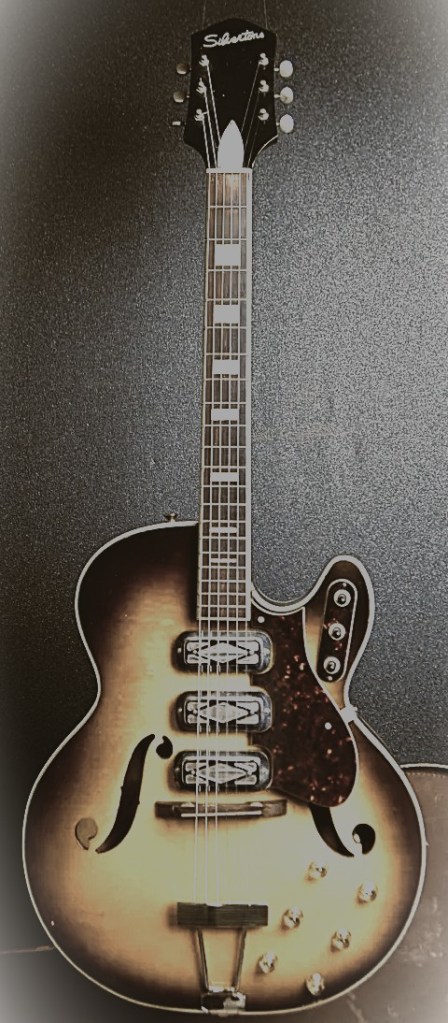
Silvertone Blues. A guitar story.
Silvertone Blues. That was the title of the album. The picture on the LP album cover was a hazy, smoky scene of an old Silvertone archtop electric guitar, leaning against an old, ratty, filthy couch. On the coffee table, empty beer bottles were strewn about with empty beer cans and an ashtray full of snuffed cigarette butts, and a half smoked joint. Newspapers, day old or older, were all about on the dirty coffee table and haphazardly strewn on the even more filthy shag carpet. In the daylight, the carpet might have resembled some color of green, otherwise you could not really tell the color.
The Silvertone guitar, the couch, the coffee table, beer bottles, ashtray, carpet, newspapers were all real, and often, an old Playboy magazine or three might be there with a few LP album record covers in disarray. If Silvertone Blues was a real album cover, not an album cover that only existed in my imagination, then on the coffee table, there would be perhaps a partial bottle of whiskey, along with a bra or other lingerie on the couch. These would suffice as the only required, clichéd, additional props.
Silvertone Blues. A guitar story, my guitar story……..
“Islands in the Sun”
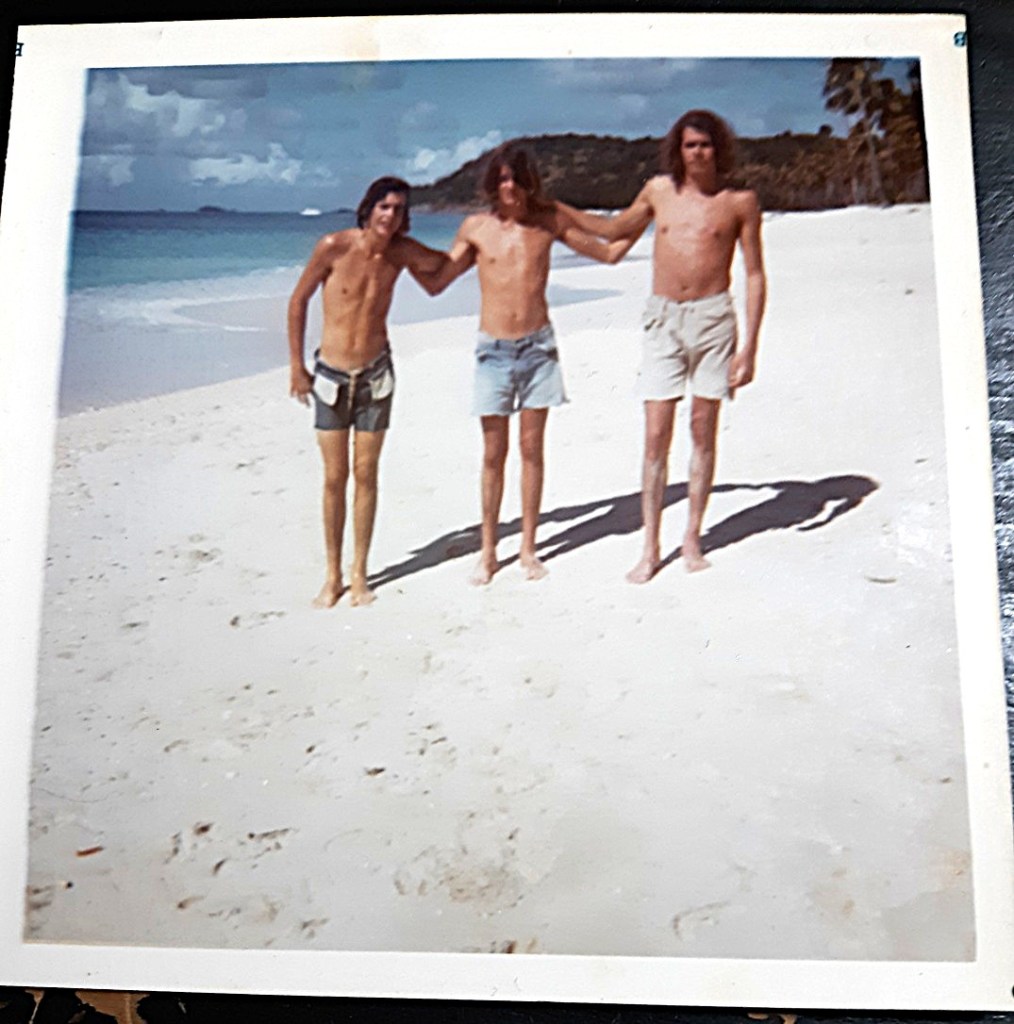
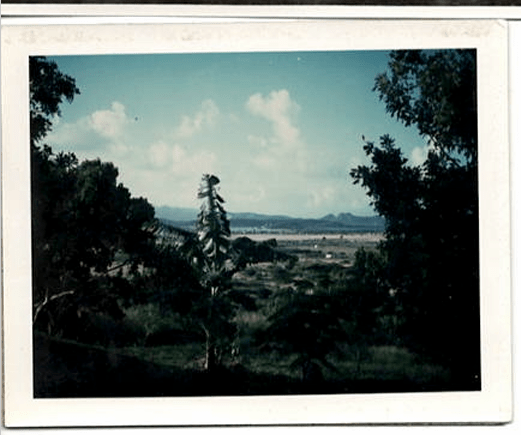
…..as a boy, after living in Peru from 1967 to 1970, ages 11-14, my engineer father was put on assignment to Antigua, British West Indies, working on the seawater desalination plant there. This was 1970, the world was much different back then. There were telephones and jet airliners and electricity and radio stations, but nothing of the interconnected digital world of today. Cruise ships often came into St. John’s harbor, they could be seen appearing on the horizon, meandering and lumbering into port. Antigua is a flat rock sticking out of the Carribean sea, 8 miles across by 14 miles long.
With coconut palm trees, mango trees, papaya and banana and plantain plants, sugarcane fields with the ruins of the stone windmill towers from the seventeenth and eighteenth centuries, miles of white sand beaches and turquoise waters, Antigua was packed with hotels and resorts. Other than some snorkeling and fishing and sailing, on this tiny island there was really not a lot of other things to do for a mid-teen boy….other than hang out with the cool black dudes and smoke pot and revel in music and the subcurrents of counterculture that the seemed to be surfacing in the world since the 1950’s and ’60’s.
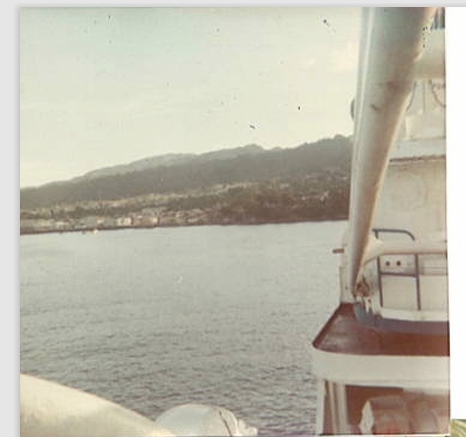
Calypso and steel drums were the music of the island, reggae was nascent in Jamaica, and mainstream in the world very soon after this, but not in Antigua in my time on the island. There were two rusty, blue freighters called the Federal Palm and the Federal Maple that would traverse all the islands between Jamaica and Trinidad & Tobago transporting freight and passengers…and the sailors would sell weed at ports along the way in two-ounce rolls in long tight sticks wrapped in newspaper.
We embarked on an island-hopping voyage on the Federal Palm to the tropical island of Dominica. Whereas Antigua was a flat rock sticking out of the ocean covered with white sand beaches and tourist hotels, Dominica is a mountaintop sticking up through the sea, covered in rainforests, ignored by tourists because of the black sand beaches and rugged coastline. In other words, a perfect place for some adventurous hippie boys to explore without their parents. Another adventure was had in the even tinier island of Montserat.
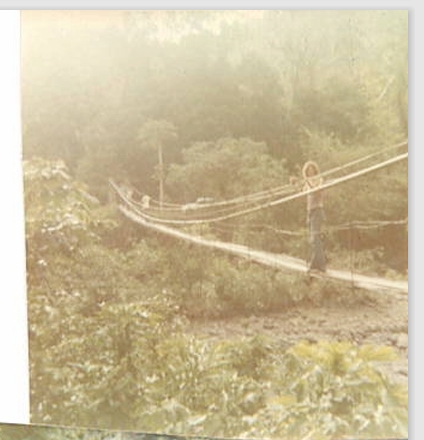
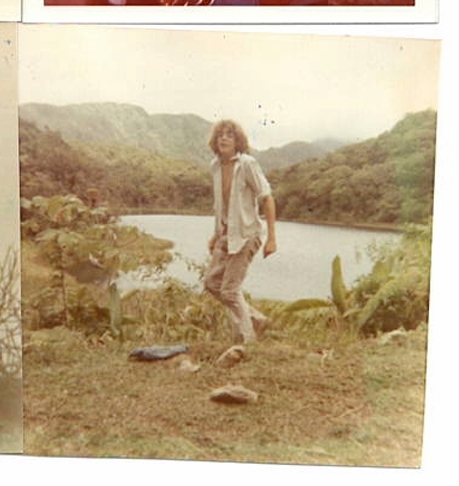
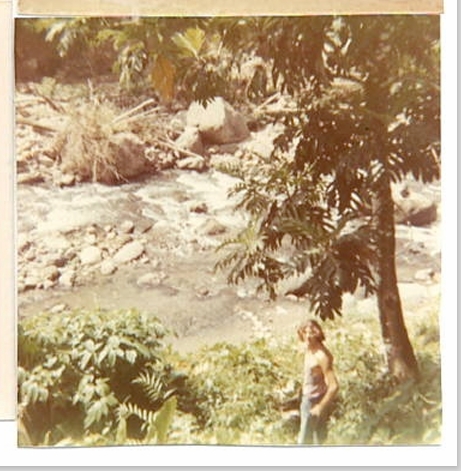
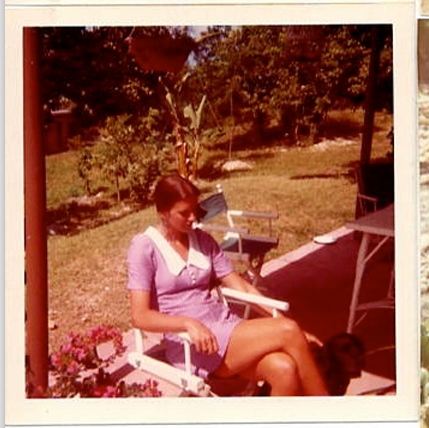
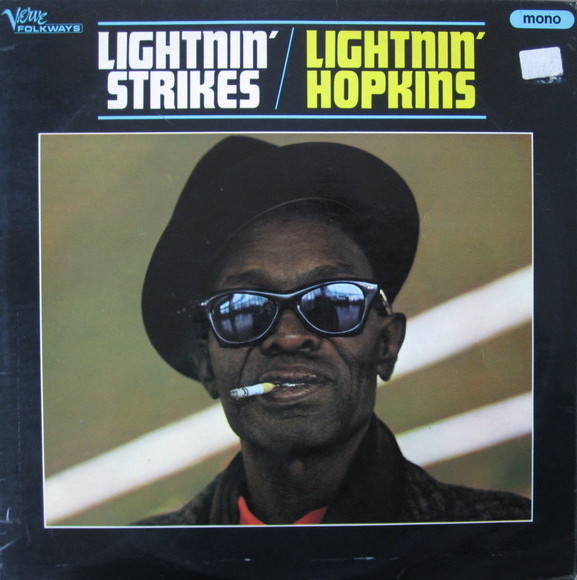
Music was very important to me as a teen boy, so when someone came to visit us on this far away island of Antigua, we’d always request they bring us a few LP vinyl records from the mainland, if we were lucky enough for them to bring any LP’s to us. In town, St. John’s, they did have a record store and one album I purchased there, that I still have, and it really is a timeless piece, is Lightnin’ Strikes, by Lightnin’ Hopkins. Another album I cherished was Chess Records – John Lee Hooker – The Real Folk Blues. It had “One Bourbon, One Scotch, One Beer” on it, long before George Thorogood did it, as well as a nice solo guitar and vocal piece “On the Waterfront”. I would listen to those albums late at night as loud as I could without waking the parents.
At one point in those two years in Antigua I acquired a mandolin to start playing music but soon took up guitar and learned to play the basic chords. My discovery of the connection of a person and a guitar started then, but I had no real interaction with others playing music and no discipline or direction. At fifteen or sixteen, I did write a short little instrumental song in C/F/G/Am that gave a hint of potential. A well-known guitarist, Keith Richards? once said that anyone who picks up and plays a guitar would be able to create original music.
◆◆◆◆◆
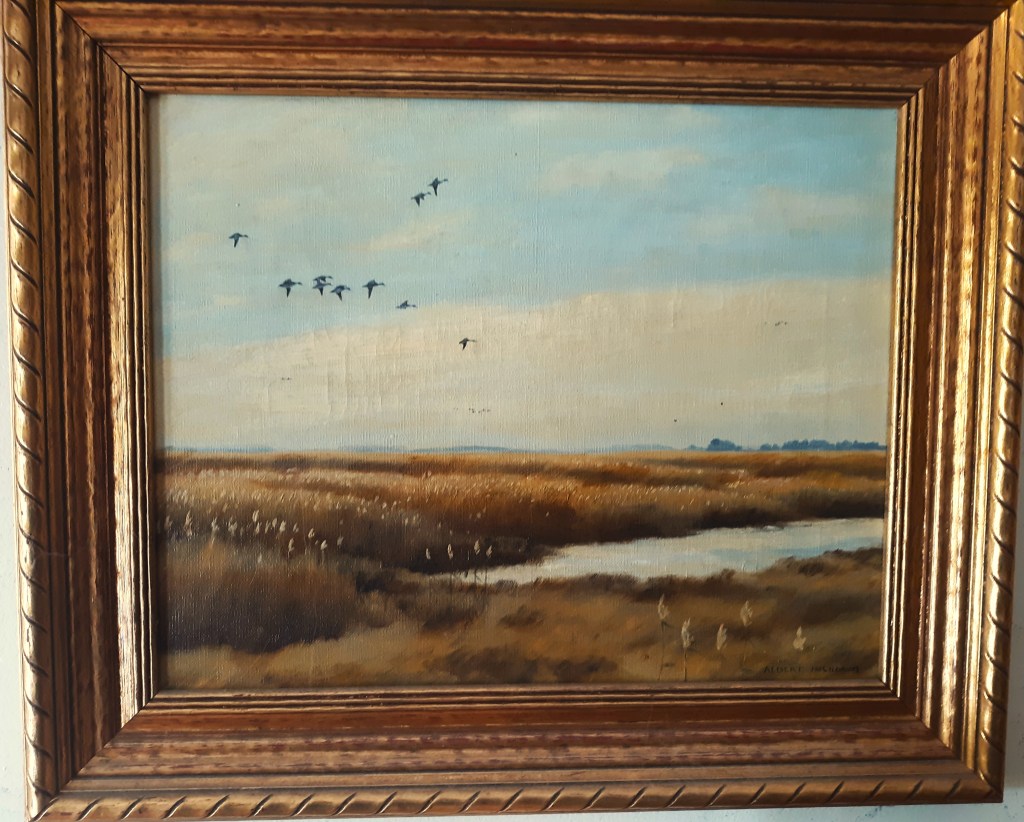
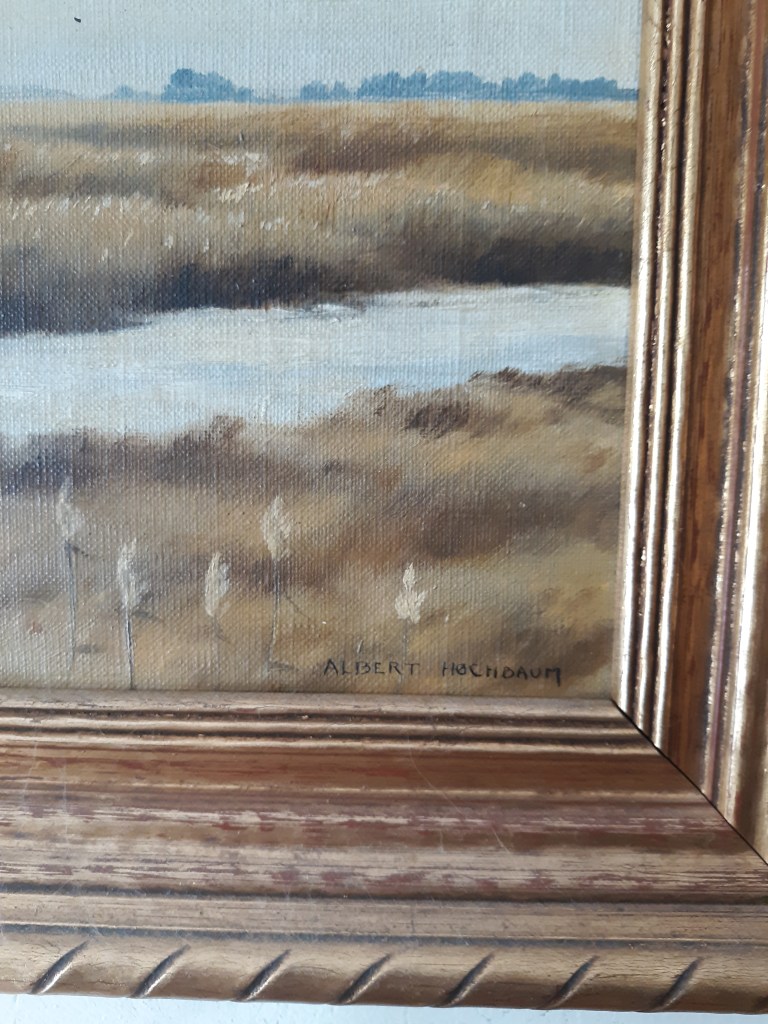
William Leavitt, Bill, my oldest brother, has been an artist in Los Angeles since the mid 1960’s, so I supposed there might be a little creative spark in the genes. My uncle, mother’s older brother, was Hans Albert Hochbaum, he was born in Greeley, Colorado and was an artist and conservation naturalist in the waterfowl marshes of Manitoba in the 1930’s, ’40’s & ’50’s. My mother always tried to instill the love of arts and culture and forced my twin brother and me to take piano lessons in Colorado when I was a boy, before the money ran out and my father ended up going to work for a company that shipped him overseas.
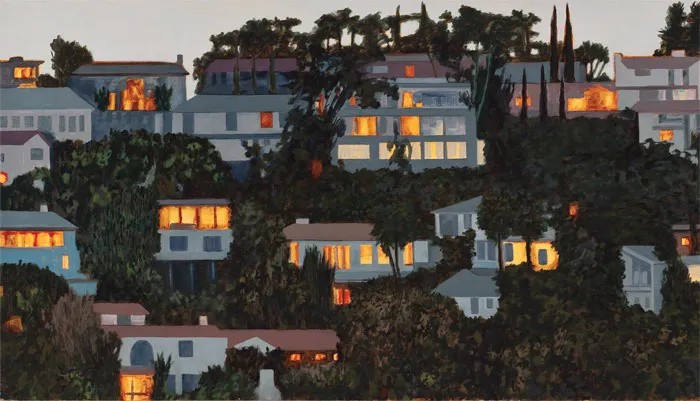
My father was what you might have called a “pocket-protector-pencil geek”, with an engineer’s mind and math skills to boot, learning engineering in the 1930’s, back in the days before computers, before calculators. As a boy in Littleton, Colorado, we had a piano in our living room. Dad was an only child, a loner, yet he had musical skills rarely exhibited. In the fog banks of my boyhood, I remember my father, out of the blue, sitting down and flawlessly playing “Someone to Watch Over Me” by George Gershwin, then immediately getting up and going to do something else around the house.
◆◆◆◆◆
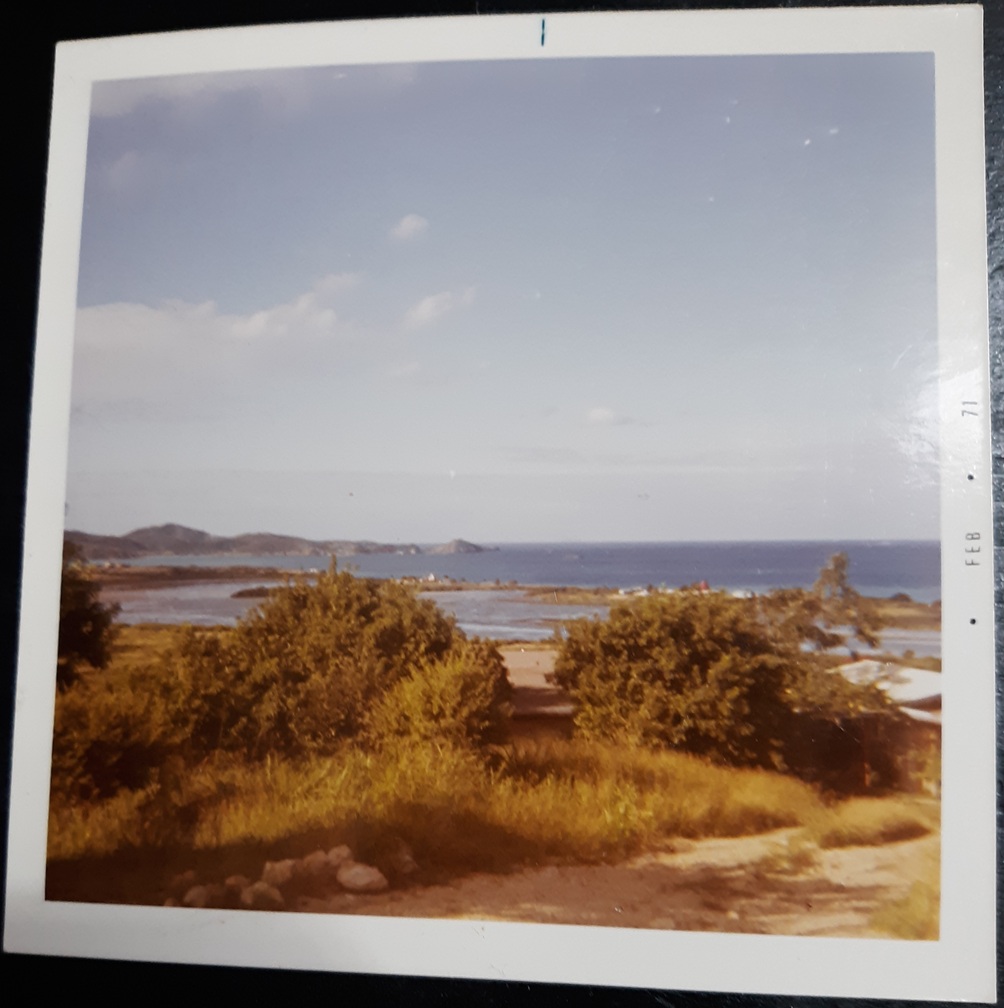
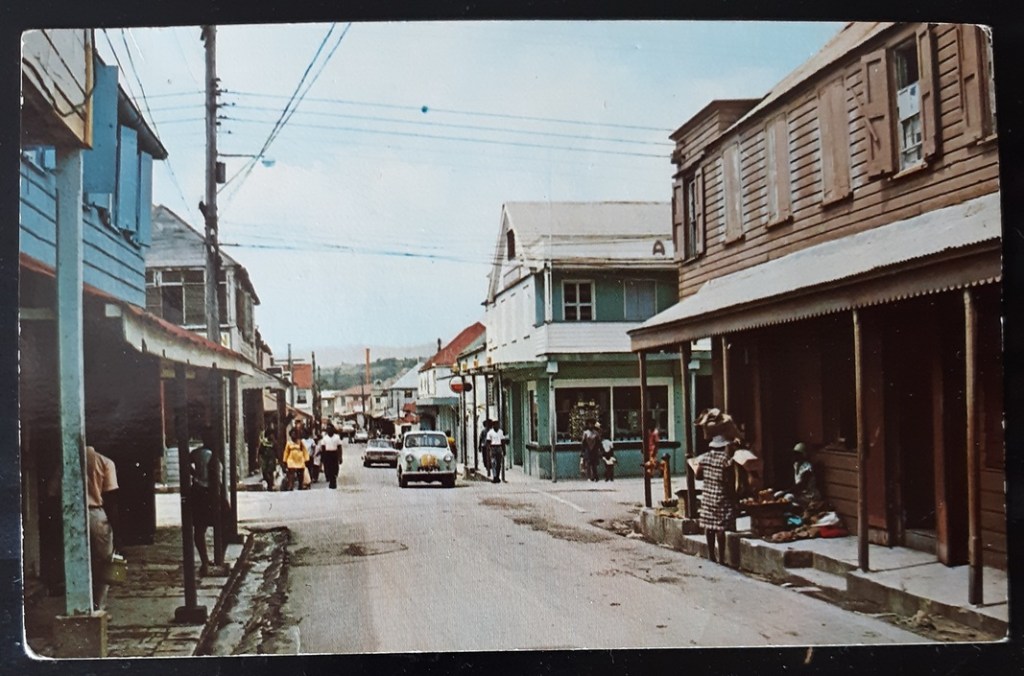
In Antigua, there really was no adequate school for two wayward American boys, for my twin brother Tom and me. We were mismatched in the Catholic Brothers of Ireland school, which we were kicked out of. In 1971 our parents shipped us off to Garden City, Kansas to go to high school there, living with Grandmother Leavitt. On paper, a good plan, but in reality, sending two free spirited sixteen-year-old twin boys to live with a dour, elderly, late seventy-year-old grandmother did not work, and she shipped us back after two and a half months. We missed a year of school and then had to take high school correspondence courses from a university in the U.S. Tom, and I were rather headstrong, good kids with good parents, but we were a load for them to handle.
The next assignment my father was given, was to the Philippines Islands in 1972 (his company was contracted out by U.S.A.I.D.- Americans for International Development). In that summer before travelling over to the Philippines, we spent part of the summer in Colorado, where I grew up before going overseas, and I washed dishes for a local Hispanic family at their Mexican restaurant. Betsy, my sister, who was twelve years older, lived in Boston and was getting married.
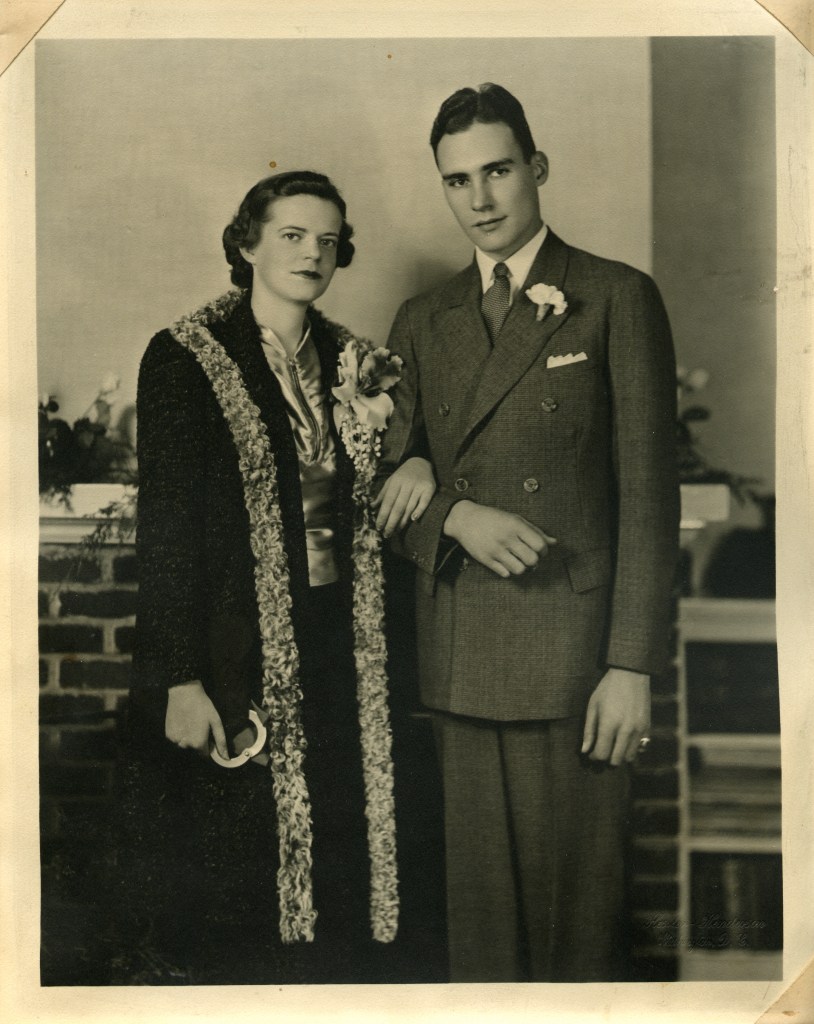
My parents, then in their late fifties, were in their forties when my twin brother Tom and I were born, the last two of six children. The last two of six children, and we weren’t even Catholic. In terms of a generational guidepost, both of my parents were born before World War One, both born in Colorado in 1913.
My parents did not want to deal with two rowdy teenage boys at my sister’s wedding, so we went to stay with an older friend living in California, Denny Carroll. Denny was a friend of ours we had met in Antigua. That he was older, my parents trusted him as a chaperon, as he had travelled with us on the voyage to Dominica. Denny worked for G.E., General Electric, and he was transferred about much like my father was. Denny was living in Carmel, and we spent the rest of the summer travelling up and down the coast of California and Oregon seeing music shows, camping, partying.
Being away from the parents for many weeks was heaven for two sixteen-year-old boys, soon to be seventeen. In that summer of 1972, we were in San Francisco and Denny took me and my brother Tom to see the James Cotton Blues Band. With the booming walking electric bass lines, the snap of the snare drum with the pounding of the bass drum, the howling harmonica and vocals, sharp guitar riffs…. music like that, back then, was a life event for me as a teenager.
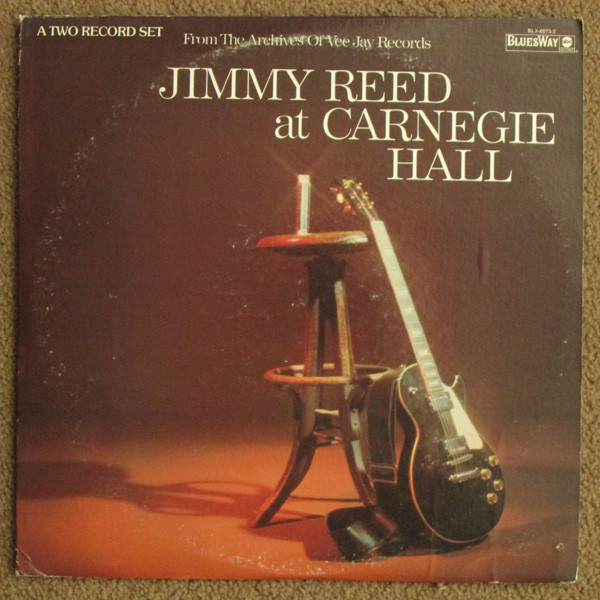
At that time in California, I had acquired an old Silvertone archtop electric guitar and small amplifier. This was quite a prized possession for a teen boy…except that someone broke into the house and stole it when we were out camping or travelling. When I did still have the guitar before it was stolen, I learned to play walking blues bass lines on the guitar and rolling Jimmy Reed shuffle lines. It was an awakening that I could play some of the music of my heroes – Jimmy Reed, Lightnin’ Hopkins, Muddy Waters and so many more.
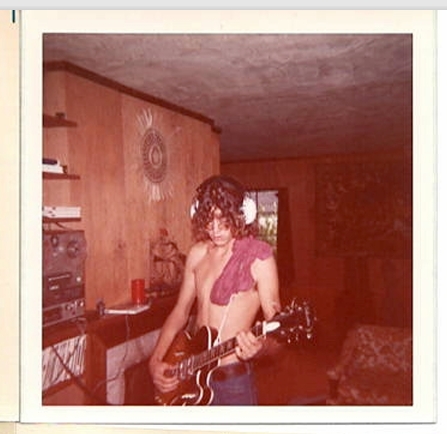
An acoustic guitar replaced the stolen Silvertone. We also saw a phenomenal Grateful Dead show in Berkley. When Denny took us to Los Angeles to drop us off at my brother’s house for our upcoming journey to the Philippines, in the newspaper we saw that Lightnin Hopkins was playing in a club one night. Drove all over L.A. trying to find the club, but we never did locate it in a massive city we did not know.
My father went over to the Philippines Islands a few weeks before we did, to secure housing, as we waited in California. With my father in Manila before we arrived, that country was placed in martial law by the dictator Ferdinand Marcos in summer of 1972. In the Philippines at that time, it was a bit like the wild west, where everyone had guns, and the politicians had private armies and there was a big military and police presence all about.
While attending the International High School in Manila my musical awakening began as I hooked up with fellow hippie kids in school. We were somewhat outsiders compared to all the other straight kids (back then, a “straight” kid meant he was not a ‘stoner’, rather than a straight kid not being gay). I was a good student on the honor roll despite having missed a year of school knowing I’d be in school an extra year.
In high school, my good friend was Bob Stewart, from Regina, Saskatchewan, Canada. He and I played a lot of music together on guitar. Bob was a songwriter inspired by folk artists and I always had a blues bent. As seventeen-year-old boys, we had a dynamic musical connection playing guitar together. My guitar playing blossomed and developed playing music with Bob. He was already an incredible guitar player and song writer; his flatpicking was at a professional level for being seventeen years old and his voice had a warm emotive character. We recorded a number of sessions on my father’s two track reel to reel recorder.
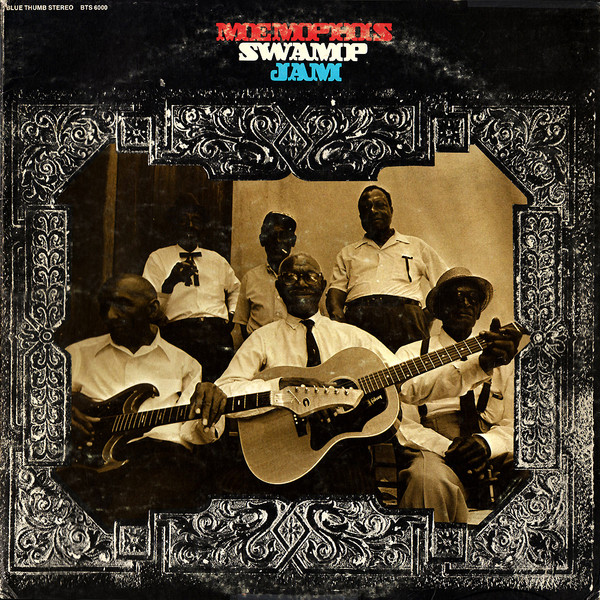
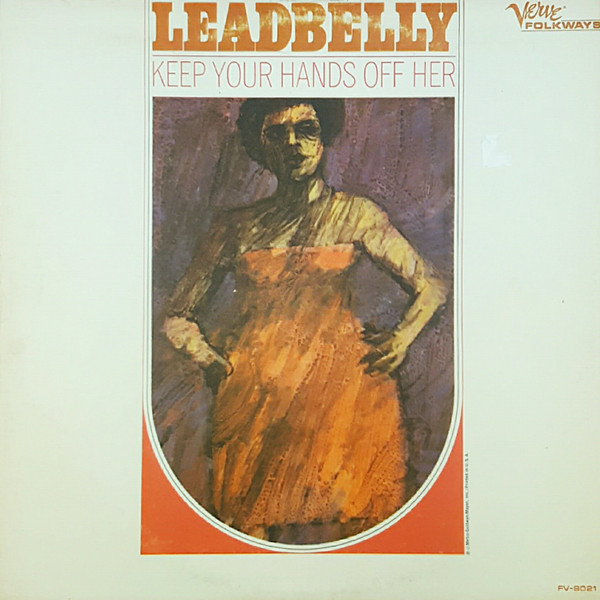
One thing I discovered was open tunings on guitar, and I learned to play slide guitar. A friend, Jim Chaney, gave me a brass bushing from an automotive part, it worked great for slide guitar and looked much like the commercial brass slides sold for guitar today. We loved many of the old blues artists and Lead Belly was one of our favorites, especially with his rustic folk and blues style. Bukka White, Furry Lewis, Fred McDowell were among our heroes.
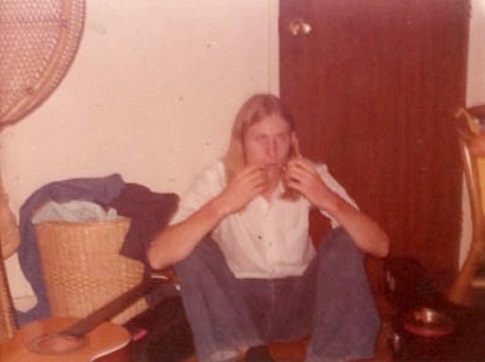
Bob’s songs were more of a folk and country style sound, and I played slide fills and licks in open tunings, along with rudimentary lead fills in standard tuning. We performed Bob Dylan’s “I Pity the Poor Immigrant” together at the high school talent show along with one of Bob Stewart’s songs, “Moonshiner”. The song “Moonshiner” was also played on a local radio station by the local DJ, Jake Corcuera. We were billed as “Bob and Rob from the International School”.
Moonshiner – by Bob Stewart
Another friend, Tracy Dixon, was a dynamic personality and superb harmonica player and we jammed, wrote songs and recorded a number of songs. With Tracy and Bob, it was a wonderful mix of musical discovery and musical companionship which imprinted a lifelong impact upon my psyche.
Baler Blues / recorded Manila Philippines, 1973
NOTE: throughout this story there will be a plethora of sound files spanning 50 years. Many were remixed for better sound quality. For those interested in full sound replication, perhaps best to listen through nice wireless headphones or other quality audio ….
Our group of friends were also surfers, and we traversed the Philippine Island of Luzon in search of decent waves. I had learned to surf in Peru and like some of our adventures in the Carribean islands of Antigua, Dominica and Montserat, the exploration of this country, the Philippines, on the other side of the globe, was one of our pastimes.
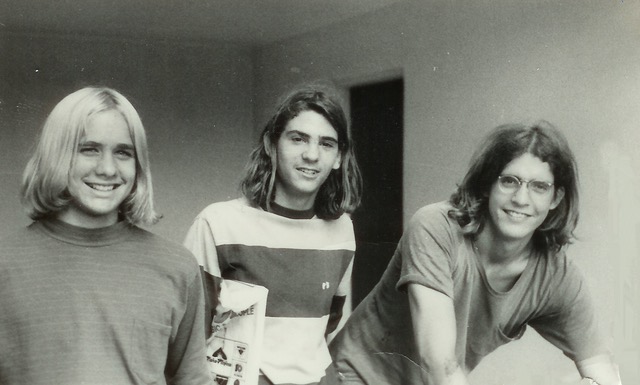
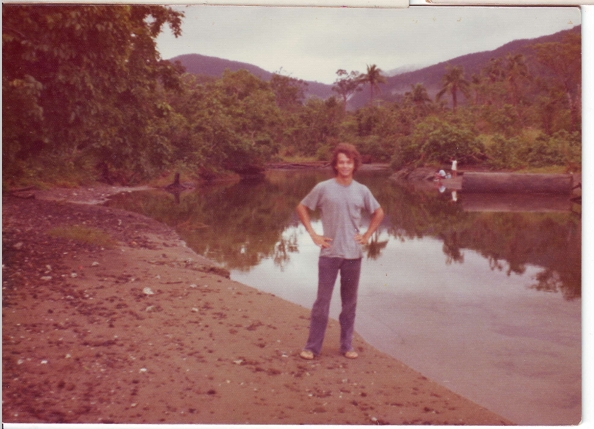
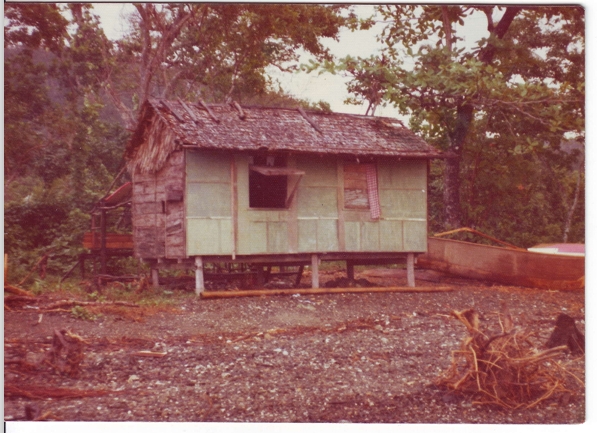
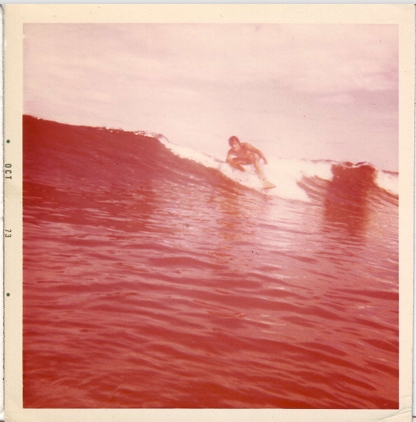
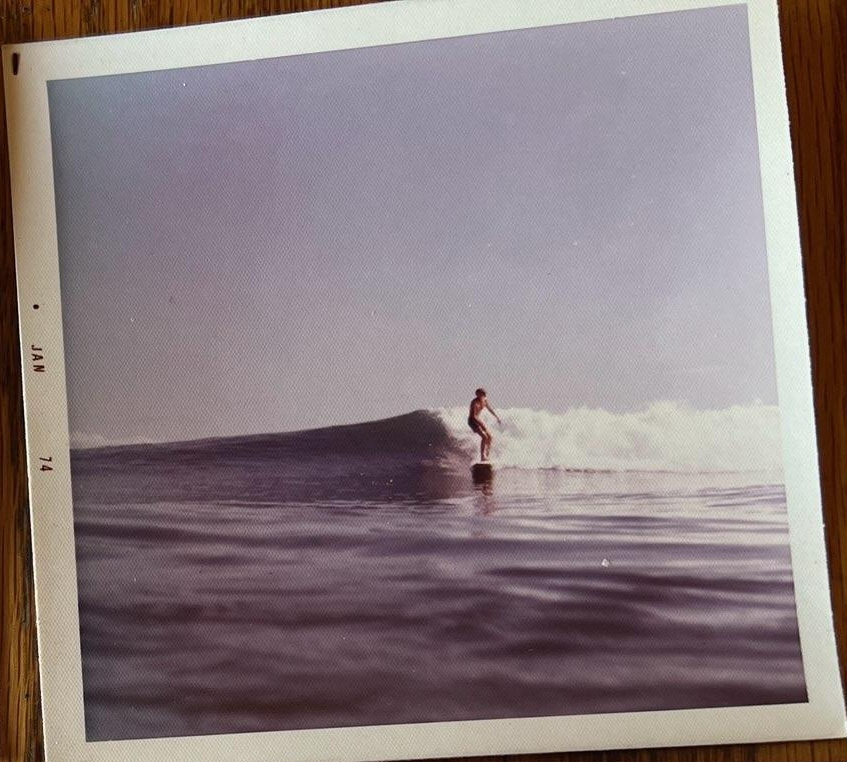
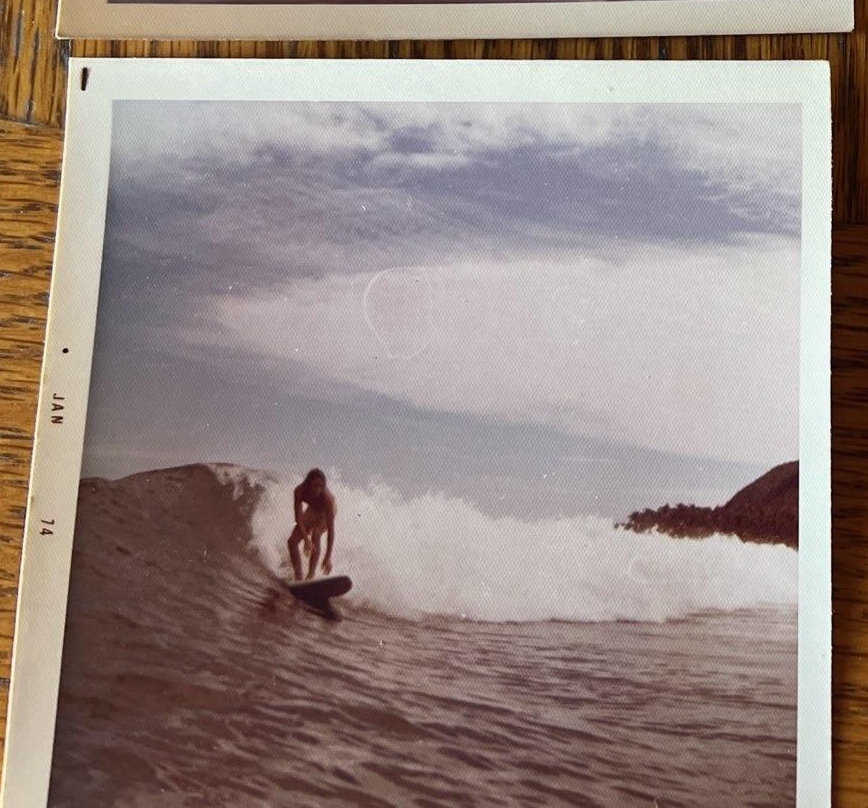
Somewhere in this time frame I played a little bass guitar. With Tracy amplified on vocals and harp, Bob on guitar and me on bass playing some blues bass lines, it was a fun diversion. During this time, I wrote an instrumental song on bass guitar in 7/8 time, a jazz/blues number called “Next Exit, Then Left”. Coincidentally during this time, 1972-74, a popular song was Pink Floyd’s “Money” also in the same time signature, but it was not a conscious connection on my part.
“….Back in the USA.”
Wanting to get away from the parents and strike out on my own, find my own way, I left the Philippines in 1974. My good surfing buddy from high school in Manila was George Halouska, a blond Czech kid whose father was transferred to Tokyo. On my way to Hawaii, I visited George in Japan. The night I was scheduled to depart on a midnight flight, before I left, we saw Fats Domino in a theatre in downtown Tokyo. In the style of old blues and jazz entertainers, his backup band opened with a few bluesy instrumentals before Fats burst onto the stage and tore the house down with rocker after rocker.
I spent a few months in Hawaii where Denny Carroll was now transferred, living on Oahu and working for G.E. In the summer of 1974, I returned to Colorado, at eighteen years old. Garden City, Kansas, was where I was born, but I grew up in Littleton, Colorado, ages four to eleven, till my father was sent overseas to Peru in 1967.
Now back in Colorado, I ended up working in the kitchen in the Mexican food restaurant of the Hispanic family that I had worked for washing dishes in the summers of 1970 and 1972 when my family was waiting on different overseas assignments. Working in restaurant kitchens and in hotels would become the mainstay of nearly the entirety of my working career, mostly, except a short stint in a machine shop.
During this time back in Colorado after my entire adolescence growing up overseas, I played some guitar with Scott Miller, the older brother of my best friend from grade school, Fred Miller. Scott was a wonderful songwriter and guitarist, and I enjoyed playing music with him as I had with Bob Stewart. I played slide guitar to his original songs and country songs like Hank Williams’ “Cheatin Heart”.
Scott by chance had a big musical impact in my life, and a particularly big influence towards classic country music as well as the “outlaw” country at the time of Willie Nelson and Waylon Jennings. As I had in the Philippines with Bob Stewart and Tracy Dixon, I did little reel to reel recording with Scott Miller. Through the years I eventually lost touch with Scott Miller, but in the recesses of my mind, I remember seeing him play once at an old rundown hotel on 17th and Wazee Street in downtown Denver. Can’t say for certain but he might have been with an ensemble called Homer Lee and the Wazee Three at that old hotel.
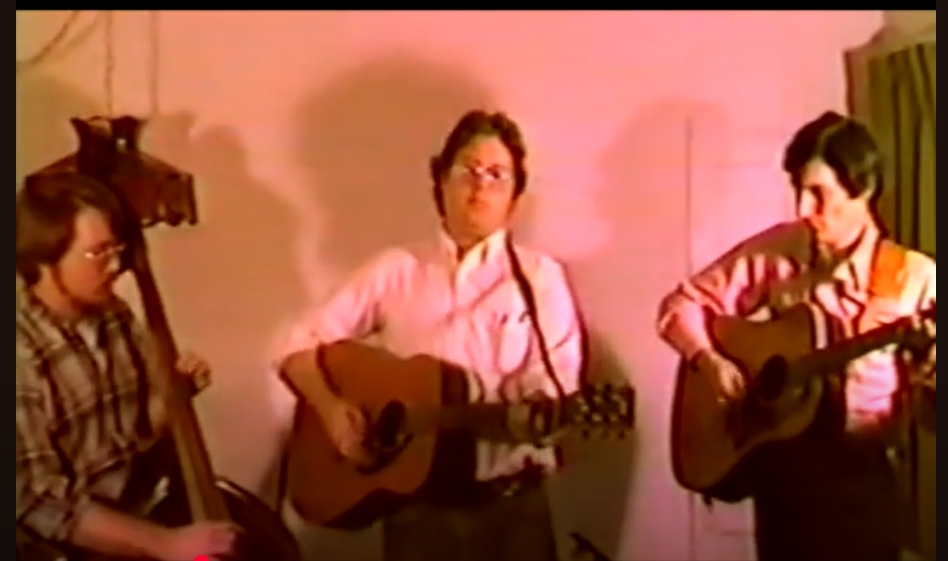
There really was no direction in my life at this time, though I did get in a few semesters of college. Now back in Littleton, Colorado, where I had grown up, I was the only one of my immediate family still living in Colorado. My family was far flung across the country; Betsy in Boston, Tom in Kansas City and Chicago, Bill in Los Angeles, Chip between being back in Peru and in Boston and my parents in Santa Fe, New Mexico, so there was no family grounding or family contact on a steady basis. I’d travel to Santa Fe several times a year on vacation or holidays, work schedules permitting, but otherwise I was on my own living in Littleton.
Career wise, I had become the kitchen manager for the Mexican restaurant. When I was fourteen, I started out washing dishes for the Trujillo family, also washing dishes for them again when I was sixteen and at 18 upon my return to the USA in 1974. Washing dishes taught me a work ethic, earning money at a young age. The cooks were always nice to me and happy to feed a hungry boy. Washing dishes was better than my first real foray into the working world at nine or ten when my mother dropped me and my brother Tom at the horse stalls of some friends of the family. With stall shovels we were tasked with cleaning a foot deep of horse manure from them. Honestly, I don’t recall any behavior I did to warrant this. Any work after that in my life was a breath of fresh air.
After washing dishes for a spell at eighteen, soon I worked my way up from prep cook to line cook then to kitchen manager. The owner, John Trujillo, was very good to me and I learned the same consistent work ethic and dependability that my father had. Johnny Trujillo was a very good guitar player with whom I would sometimes play music.
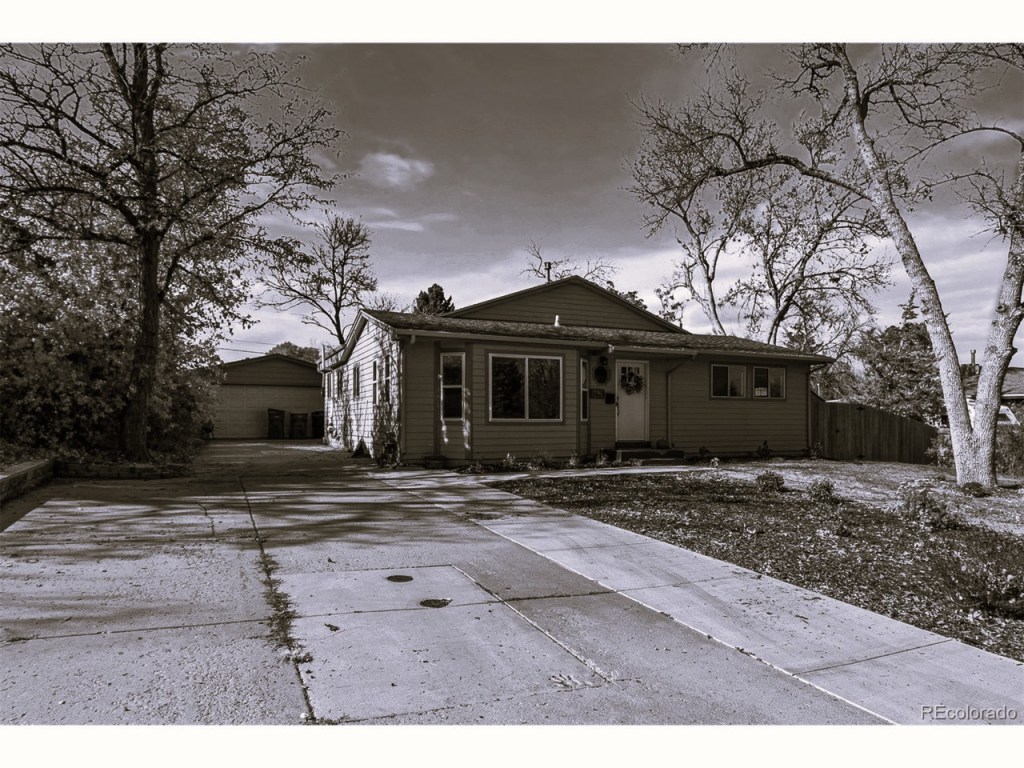
A girl I was dating became pregnant in 1977, so we got married and I had two daughters with her. Getting married at twenty-one, I was really still just a kid. My life seemed normal at the time, I had steady job, worked hard, we had a house in Littleton a few blocks from where I grew up. It seemed that I was like any other young man who was married young and started a family. While I tried to be a decent provider, whatever immature character flaws within me caused things not to be right in the marriage. My daughters were seven and five when Sherry and I were divorced in 1984, and she moved to Arkansas with her new beau.
For the next ten years it was a rather scattered time of working jobs in hotels and restaurants. During this period, it was also when I had a string of romances with four girlfriends: Peggy, Cheri, Sara, Deb. Looking back, my take on it is that if a person is somewhat screwed up, then maintaining decent relationships with other people may be at best, faulty. And I was pretty screwed up and aimless, with a little alcohol abuse, though I had stayed away from drugs for the most part in this period. I played a little guitar, loved music, but like the rest of my life, as a divorced man with no family nearby, other than employment, my life was quite aimless, undisciplined and scattered. My work ethic was good, I always had a job, a car and paid my bills. I still had a rather pedestrian Yamaha acoustic guitar and was doing really nothing significant with music.
As I began my thirties, I was with Sara, a dark haired, dark eyed beauty of Lebanese descent about ten years younger than I was. We were living together around 1986 and while the romance part was fine, the relationship part was whack. Sara would disappear for days at a time and then return with no explanation, as if it wasn’t a big deal. Neighbors said some guy in a green car would drop her off. She had a secret life and what little I knew about her there were some serious emotional and family issues. We argued a great deal and one night of extreme frustration while drinking, I smashed my Yamaha acoustic guitar, leaving the thing in pieces. I’m aghast to relate that I did such a thing, as I had always taken care of my possessions.
“Reunited and it feels so good….”
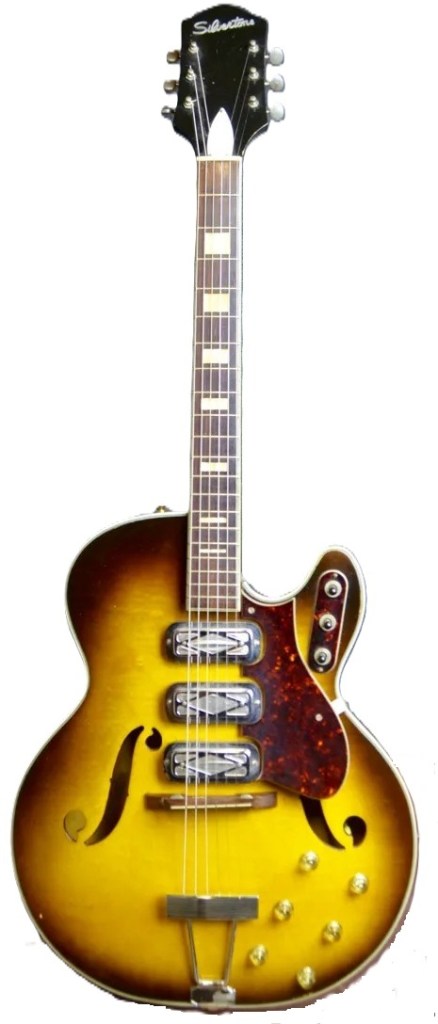
I was without a guitar for a rather long time in this period of aimlessness and I was too screwed up to be aware of it. One day I was playing pool with an acquaintance in the neighborhood, someone I knew, but not really well. As we played pool, I spied a guitar leaning in the corner of his basement. Asking about it, the acquaintance told me he did not play, it was his brother’s, who had passed away some while before. This fellow asked me if I wanted it, and I bought it for $25. It was an old Silvertone archtop electric guitar, very similar to the one I had as a teenage boy that was stolen in California. This was like being reunited with a long-lost old friend, getting a Silvertone guitar back in my possession.
After getting a small amplifier, my musical aimlessness slowly subsided. I really was not an outstanding guitar player at the time, to be honest, but the guitar did fill a void and gave me a satisfying spark of musicality. It was a fun guitar to play blues on, and I remember some late nights drinking and riffing on the guitar with Tuki, a gal that was a coworker at a hotel where I worked at the time. Those late-night drinking and music sessions were a blast that we both enjoyed; sometimes we were more than just friends, but she had a main squeeze, and we had no serious connection.
Somewhere in this time frame 1987/88 I had this other girlfriend, Deb. She was a skinny blond beauty that always wore a lot of dark eye makeup. Deb would turn heads whenever we were out in public. She loved the “hair bands” popular at the time – Def Leppard, Poison, Ratt, Cinderella, Bon Jovi. I had to learn to “love” listening to these bands if I had any hope of getting lucky. We went and saw Def Leppard at Red Rocks amphitheater, and it was actually a pretty good show. Deb loved Jack & Coke and Jack and 7, she could drink any man under the table. I tried to keep up but was no match for her abilities in that arena. Like many of my romantic connections at the time, this one also went down in flames.
The Silvertone guitar was becoming my close friend as I cherished a renewed interest in music and playing guitar. My life otherwise at this time was still rather aimless and scattered with a bit more alcohol abuse. In two different time frames, 1985/1986 and 1993/1994 I did make an effort to fit in some college that I had very much neglected earlier in my life. The 1985/1986-time frame was math, English and science. The effort and discipline needed to study and learn in school is a valuable life skill and stretching the brain muscle led me to decide upon becoming an executive chef. I would say it was a mild epiphany in that I realized I had a background working in the kitchens and in hotels and figured as top dog in the kitchen I would make more money.
I’d been fortunate enough working for many years for Johnny Trujillo in my twenties, running his kitchen in a high-volume Mexican food restaurant. This establishment served upwards of 350 full service dine-in meals a day on good China and in upscale dining rooms and always busy bar and cocktail lounge. Johnny Trujillo had a flair about running his business. This restaurant, called “Mission Trujillo”, was no hole in the wall Mexican restaurant. His theme was the welcome Spanish outpost as refuge from the dusty trail. Murals of conquistadors and desert scenes adorned the well-appointed interior adobe walls, with rustic planks in the ceiling as Spanish grottoes with candles were spaced in spots along the walls.
Johnny Trujillo was a graduate of one of the country’s best business schools, the University of Denver. He knew business and he had the artistic business flair to set himself apart. I’d grown up with his younger brothers in Littleton as a teenage hippie kid washing dishes for his dad and his family when we were back in Colorado between overseas assignments.
I had made my decision to become an executive chef, yet in the 1980’s, Denver was still pretty much a “cow town” with no culinary schools in the area. For years in my twenties, in the 1970’s, I had been a kitchen manager for Johnny Trujillo, but I had no real knowledge of standard classical cuisine. There was a chef named Jack Goldsmith who helped me locate an apprenticeship, though I did not meet him till many years later after I had earned executive chef ranking.
I was fortunate to apprentice under chefs that were kind to me and helped me along. John Graziano was an Italian chef that I apprenticed under, he was very good to me, helped me learn a great deal about classical cuisine, eventually I became his sous chef. John was a fun character and a veritable encyclopedia of classical cuisine from many regions of the world. Some of the Hispanic chefs I was around or worked with, Chef Iman Cruz and Chef Richard Marquez, they were very ‘old school’, and their kitchens were run much in the strict hierarchical fashion of the 1950’s/60’s & ’70’s.
Fine dining and classical fine hotels seemed to be vicariously imprinted into my psyche as a boy. My grandfather, William E. Leavitt, Papa Bill, was from an old family in New Hampshire, where his family ran a hotel (since well before the American revolution), the building of which is still there. He and my grandmother had settled in Garden City, Kansas, as he worked his way up to an executive for the Garden City Sugar Co. My parents lived in Garden City when I was born before we ourselves settled in Littleton, Colorado in 1959. Growing up in Colorado, when my grandparents came to visit us from Garden City, they stayed at one of two hotels: The Brown Palace in Denver or The Broadmoor in Colorado Springs. The Garden City Sugar Co. was owned by the El Pomar foundation, the group that owned the Broadmoor Hotel at that time.
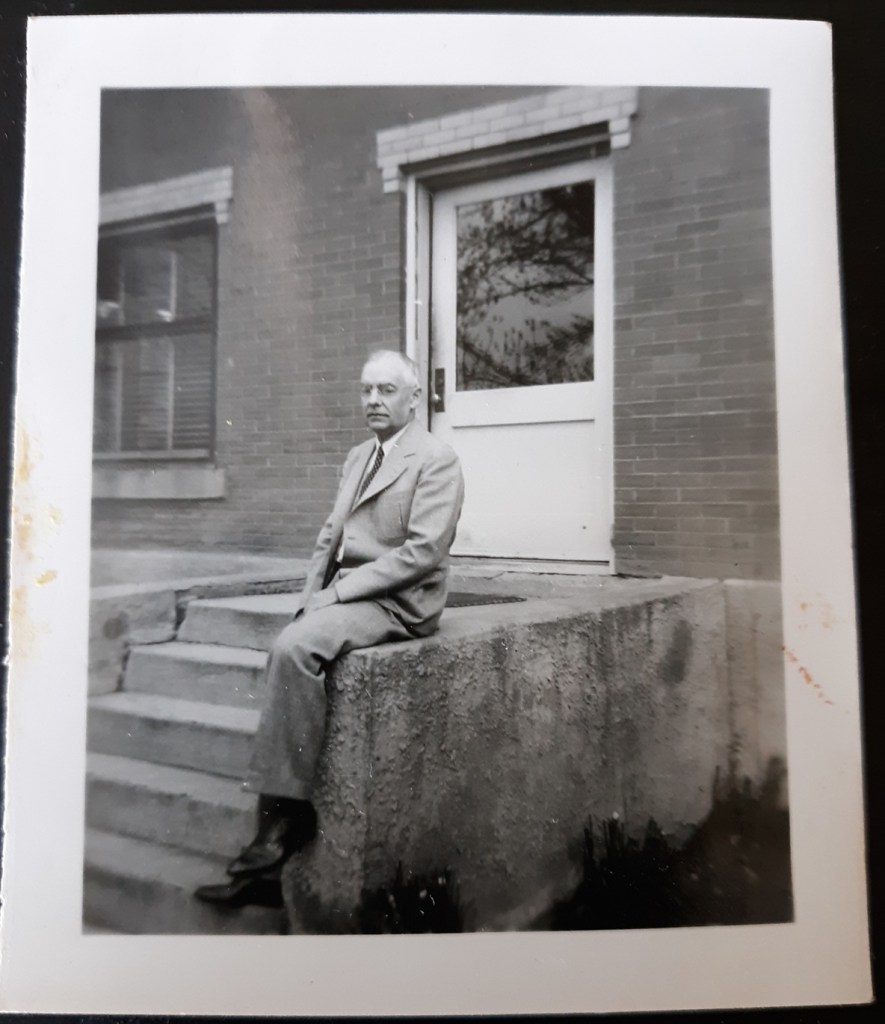
In my youth, being exposed to exquisite cuisine served on fine linen, fine China and real silverware in the staid dining rooms of The Brown Palace or The Broadmoor, served to make my own career working in hotels seem logical and unsurprising. While being waited on by impeccably uniformed waiters, imagine a wide-eyed boy with an elegantly served shrimp cocktail in a cocktail glass with a metal supreme ring, then being asked by the waiter if I would like “milk from a white cow or milk from a brown cow”. Chocolate milk more often than not was the choice.
By 1987, after apprenticeships and then as a sous chef, I took jobs as executive chef or sous chef in small hotels in the years that followed. Despite a better career path, I was still in an unsettled state that heavier drinking and now again drugs played a part. Psychologically, I believe that when my father died in 1989, some unresolved psychological family issues and alcohol abuse contributed to my state of aimlessness. Restaurant work as a chef can be taxing, substance abuse is common in the hospitality industry.
“Silvertone Blues“
As the calendar reached 1991, I left a grueling executive chef’s job at a small hotel and was ready for a change and decided to spend a few months in Europe. I’d been working in kitchens since I was fourteen, and while being an executive chef is glorified these days as a glamorous position, the job can be a demanding grind. Anthony Bourdain knew that, and I was no Anthony Bourdain, but the work and the conditions in professional kitchens were the same. Working long hours in a hot kitchen, nearly always short staffed, many times back then with uncaring management or ownership, the money in those days wasn’t always that good.
Few professional kitchens have air-conditioning and standing behind a battery of ovens, griddles, char broilers, deep fat fryers, steam tables and heat lamps would wilt the will of many unsuspecting aspirants in the kitchen. I’d been doing it for nearly two decades at this point. Throw in the mountains of dirty dishes from big holiday events that any good chef would always help bust suds along with his short-staffed crew, and a noble comradery with your co-workers was forged amongst the onslaught of work.
In anticipation of my decision of going alone to Europe for two months, I moved into the ratty, unkempt apartment of my longtime friend, Jim Holbrook. Jim and I had known each other since the mid 1970’s, before I was married to Sherry. He had never been married; his father had been killed in a truck accident on Interstate 25, and in many ways, he was as aimless and unsettled as I was. The apartment where he lived was right off Broadway and Littleton Blvd. and had rooms on two floors, with me taking a room in the dark, dank basement. Looking back, it is interesting to view an aspect of your life that now seems foreign. It was in this grungy apartment that the “Silvertone Blues” encompassed my life and would eventually pivot me in a better direction.
I went alone to Europe for two months in the spring of 1991; airfares were cheap after the Gulf war; I made work and living arrangements for my return prior to departing. I studied French fairly hard before departing, but once I landed in France, the language came at me so fast, it took a while to even converse on a rudimentary level. With a Eurail pass, a tiny knapsack with one change of clothes and very little money I journeyed through France, Belgium, the Netherlands for the first three weeks before catching a midnight train across Germany, daylight through the Alps before landing in Italy for a few days.
Another midnight train from Rome to Barcelona would find me in Spain for five weeks, where I knew the language from my childhood days in Peru. It was 1970 at fourteen that I had left Peru and had little opportunity to speak Spanish in the years since, until the 1980’s when an influx of Hispanic people filled the kitchens. My Spanish came back fairly well, even after not often speaking it for over a decade. I will say that in the many years I spent working in kitchens, it did take a while to understand the many dialects of Spanish from various regions of Mexico.
Spain was wonderful, but travelling by myself with little money was lonely. Upon my return to the states, I resumed working and partying with an unresolved, scattered aspect in my life. In the dank, grubby apartment where I was living in a basement room, my life was perhaps a bit too loose, having wandered away from a disciplined lifestyle working in management as an executive chef. The jobs I did have at this time were not as a manager or chef, just as a line cook or the like. There was no family or significant other around to ground me, guide me or hold me accountable. I’d known my friend Jim for many years, but his influence was far from beneficial.
Maybe something inside was eating at me, I don’t really know. Alcohol and now again drugs were a big part of my submersion into a dark period of continued aimlessness. I grew up in a family of love and culture, but there was also an unspoken darkness that resided in our family. My brother Johnny, who was eight years older, committed suicide in 1973 when I was seventeen. Dysfunction and chaos seemed normal while growing up, and to be honest, I was often left on my own devices without much firm guidance in the turmoil of alcoholism that resided in my father and my mother’s struggle to deal with it.
The 1960’s cookie cutter world of middle-class suburbia where I grew up in belied whatever family malady that was hidden and unspoken. As a very young boy, there were some abuses no child should ever endure, of which my parents had no idea.
Granted, I was headstrong and part of the 1960’s counterculture mindset, so, much of the waywardness is on me. I, myself, along with my twin brother Tom, had been part of the 1960’s drug culture since I was thirteen. Yet, I’d been stable, steady and conventional when I was married to Sherry, but in the years following the divorce, it seemed that I fell into a trap of an indulgent and way too loose of a lifestyle. Perhaps because I was married, a father and divorced by the time I was twenty-seven, I was now chasing a false luminous single lifestyle. I’d been a decent, responsible hard worker, but now a hedonistic, increasingly drug and alcohol fueled state of mind clouded my motivation in life choices.
Whatever dark, aimless lack of direction I had sunk into, the Silvertone guitar did provide an amount of grounding in music that I was missing in other aspects of my life. I loved playing guitar and many creative melodies and song ideas sprung out from within during this time. When you have nothing motivating you or no one else in your life, a guitar can often provide a refuge. On my return from European travels, I went through a few jobs and periods of unemployment but also began an expanded musical horizon. I can’t recall how it all came about when I started jamming on guitar with a co-worker named Buck, John Buckley, who was in his twenties. We sounded good together, and then seemingly out of nowhere a band was formed with a couple of high school kids, one on bass, the other on drums.
It was great fun, even though we were not all that disciplined or talented, yet we did win a “battle of the bands” at Heritage High School, the drummer and bass player’s high school. The Silvertone guitar was old, a little beat up and had its limitations as a guitar, and I picked up an old Gibson L-6S from a used guitar shop.
The band we started I called Black Bordeaux. I’d always liked French names. My first daughter is Dominique and the second is Noelle. If you look closely at my genealogy, it appears that my ancestors were some of those dudes from Normandy who crossed the channel and made life miserable for the Brits. Maybe that’s why I became a chef, the French lineage.
I wanted to call the band Black Cat Bone, but my friend Greg Livingston, who worked at the record store across the street from my apartment with the Silvertone Blues vibe, told me name was taken. Greg and I would also spend time playing music in my basement apartment off and on for the next few years. He played harmonica but was a little unsure of himself, so I told him let’s just play some blues together. I’d riff rhythm guitar blues songs in various keys over and over so he could work on his chops.
…..blues from the basement, 1991/’92/’93 era:
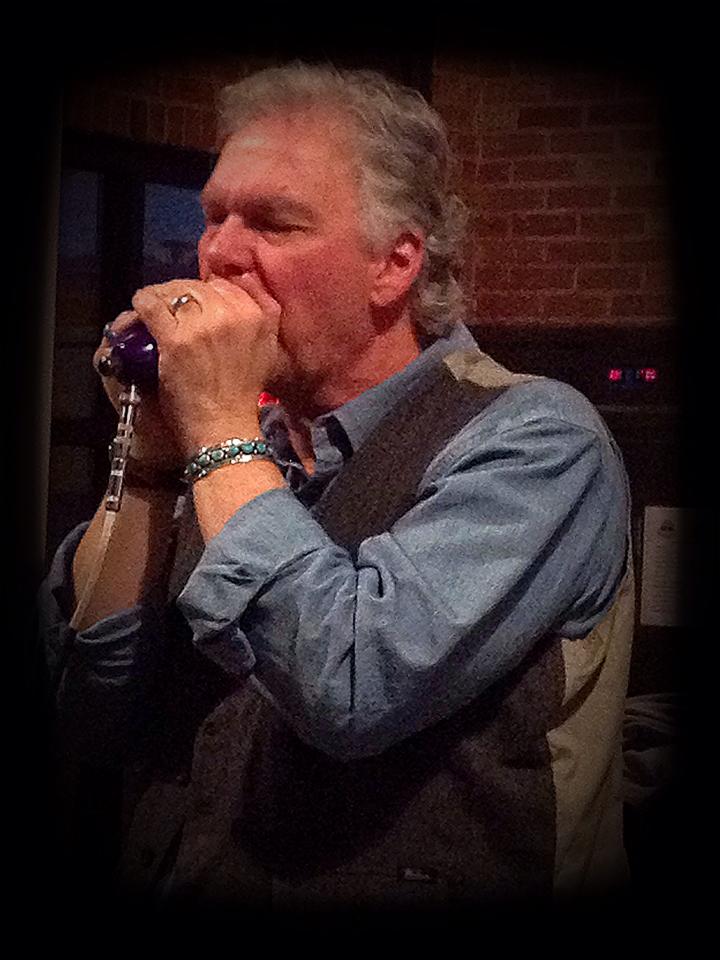
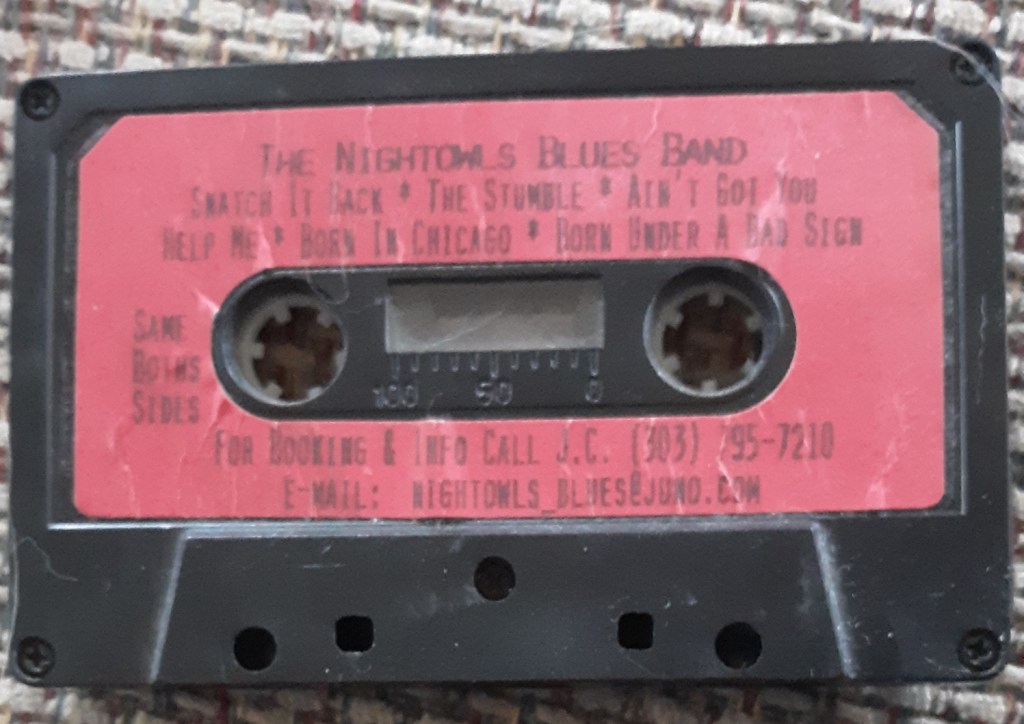
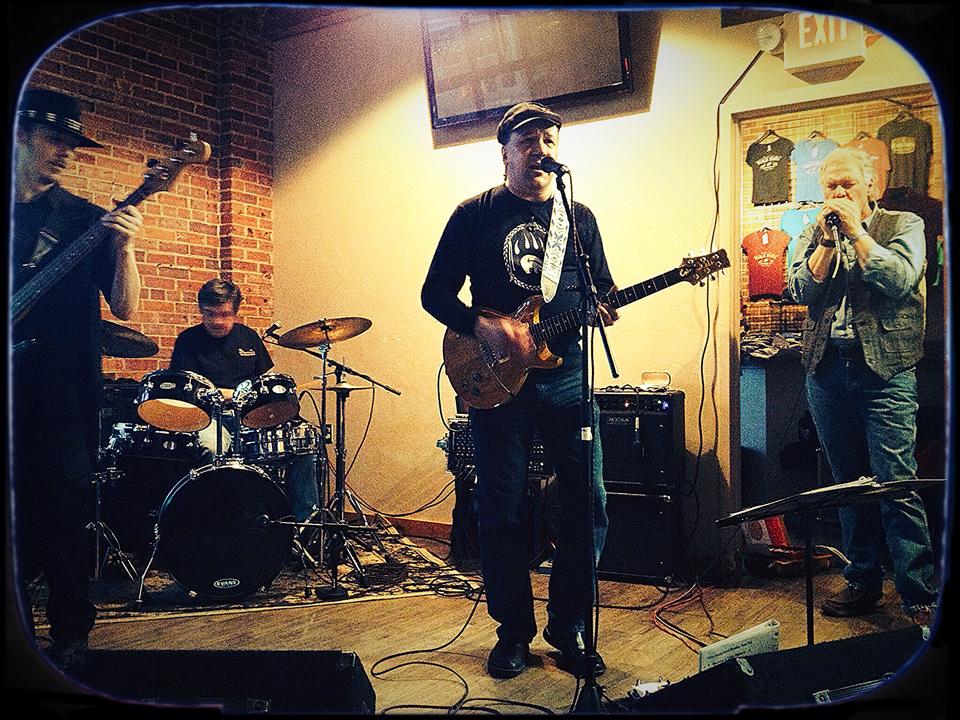
For a time, Greg was in a duo with another friend of his, with the duo called “Livingston, I Presume”. It was good duo, seriously, and it fueled his own musical drive. Greg ended up successfully playing electric blues harp in a band in Colorado called the “Nightowls” and also with Gary Small and the Coyote Bros. in Sheridan WY.
◆◆◆◆◆
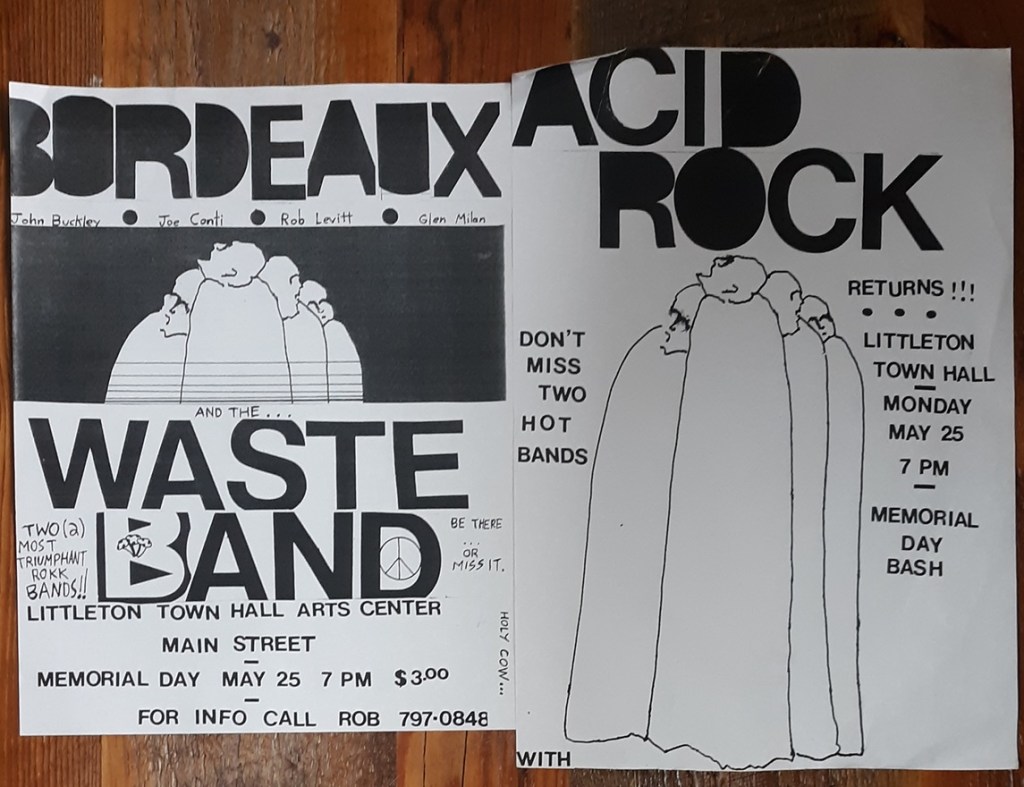
The band Black Bordeaux really did not gig, we just put on a few “shows” for high school kids, friends of the drummer and bass player, at a church where we rehearsed. It was actually a fun little set up, playing our “shows” on the low riser in the church with the high school kids as the “audience” sitting in the pews. Our band did play a nice set at the Mercury Cafe in downtown Denver that was a very good experience and whetted my appetite for stage performance, as did the exuberance of winning the “battle of the bands” at the drummer and bass player’s high school. Buck, the lead guitarist and vocalist for the band was mainly responsible for the honor, with his fun showmanship and most excellent guitar chops.
Playing electric guitar in an ensemble with another guitar, bass and drums is always a fun endeavor, especially if you can get it to sound good. Where we rehearsed was a small church I had gone to as a boy, and I helped the church out by doing minor janitorial and handy man work, thus giving me access. I had to apologize to the church for the beer cans the high school kids left in the bushes outside the church after we played. At this time, in 1991, I was thirty-six; Buck, a cocky ladies’ man who loved U2, was twenty-one. Joe on bass, loved Primus and Phish, and Glen on drums, were both eighteen. Glen on drums and Joe on bass were both very good musicians.
We did write some songs, at least I did at the time. I had written this song called “Stormy Eyes” that was a bluesy rock love song that incorporated imagery about two of my past loves, Sara and Deb. Buck sang it because none of the guys in the band said I could sing. The high school girls that came to see us perform at the “shows” in the church, loved the song and would plead “play Stormy Eyes, play Stormy Eyes” before we’d start our “show”. The Beatles had nothing on us. It was a fun song to play; the rhythm guitar lines I played were perfect for the excellent lead guitar that Buck played. It had a little Led Zepplin vibe to it and was a bit loud and heavy.
There were a few other songs during this time that I had written that we played. If I am merciful to the world, they may never again see light of day, unlike “Stormy Eyes” which I might resurrect. One of the songs was a totally made-up song called “Heather”, a cheesy “bro-country” rocker: ……“Heather, you change just like the weather, I love your lace and leather”. I’m thinking Heather was a receptionist at the hotel where I worked who wouldn’t give me the time of day, I couldn’t blame her.
Another song was “Firebird Blues”, a Jimmy Reed inspired song with a rolling blues bassline; I was driving a beat-up old Firebird in those days. In the sports world of this era, the Atlanta Braves were all the rage, and I played slide guitar on a song called “Tomahawk Chop”, a song with nothing to do with baseball or the Braves.
Firebird Blues © by Rob Leavitt
– a short sound byte, 1993, recorded in the “Silvertone Blues” basement apartment
Rob Leavitt, guitar, vocals / Greg Livingston, harmonica
Another high school kid that I was friends with, he had a band that I’d go see his band play in like an ice rink or warehouse. I was proud of the kid and his band; they played songs like “Carol” and “Little Queenie” from the Rolling Stones “Get Yer Ya Yas Out” album with great skill. Black Bordeaux played average renditions of the Stones “Live with Me” and “Honky Tonk Women”, but we played a pretty good rendition of “Sympathy for the Devil” with Buck really lighting up the lead guitar solos and a great vocal vibe.
I helped put on a show in May of 1992 for Black Bordeaux at a local theater with another band. It was choppy, disjointed, alcohol infused show, playing live is much different than the relaxed atmosphere of a rehearsal setting. Later in 1992, in our naivety, we also played another, more organized “battle of the bands” at this place called the Buffalo Rose, a nice old music hall in Golden, Colorado. We had to use their backline of amplifiers and drum kit and just bring our own guitars. We were nervous and didn’t play all that well. That was the last time we were together as a group.
“Cooking up a Storm”
Now this time frame was 1991/1992. In the convoluted aimlessness of my life, drugs and alcohol were in the forefront, with my love of playing music right up there. My employment status was poor, and I knew I needed to fall back on my background working in kitchen management, where the money was better than my current situation. I was fortunate in that I began working as a sous chef for Eef de Held, a Dutchman, who was the executive chef at a nice country club in town, Glenmoor Country Club.
He was good to me, and I learned a great deal about the upper echelon of restaurant/club/hospitality work. I learned how to be a good part of a good team and learned valuable kitchen organizational skills, that up to that point, I was severely lacking in. When you must put on holiday buffets for 800 to a thousand people at a high-end country club, you better have your shit together.
During this time, there was music, lots of partying and work. I did not have much money in the bank, had a crappy car, lived in the crappy “Silvertone Blues” apartment with my slacker friend who had trouble holding a job and I had no romantic relationships. I was not necessarily unhappy, just aimless, goal-less and plodding my way to nowhere. Manuela was a coworker at the club, whom we called “la bruja”, the witch. She would increasingly give me grief when I came in with a hangover, often telling me in her Spanish accent “Roberto, jou reallys look-es like “sheet”….”. I was a decent employee and never missed work, even on little sleep and quite often hungover.
My dad had been an alcoholic and somewhere in the deep recesses of any logical thought I might still have had, I was growing weary of always feeling like and looking like “sheet” every day. In these deep recesses, I feared ending up like my father. Nothing really changed until after a four-day bender in early February 1993. I came hungover into work one day and did just an absolutely horrible job on an important event and really let down my boss, Eef, the Dutch chef. At the end of my shift, he called me into his office. He did not really have to say much, I was mortified at my performance, and I broke down, telling him I was sick and needed help.
That afternoon after work, I went to see a therapist named Hope Hebda. I had been in contact with her but had never been to her till that day. She was not clinically licensed, more like ‘biblically’ licensed, but the effect was the same; being able to talk with someone about what is going on, can really help. After spending the afternoon with her, with the turmoil swirling inside me, that evening, I made a decision. I walked over to the liquor store, bought two 40-ounce bottles of malt liquor, fired up the Rolling Stones “Get Yer Ya Yas Out” album on headphones, smoked a bowl and told myself to “enjoy it tonight, because this will be the last time you ever drink”. And it was. Never again have I touched alcohol or drugs.
Coming clean after decades of drinking and drugs is not easy physically or emotionally and takes a lot of work to change your life. But my life slowly did change for the better. The band with the high school kids had gone away and I was soon out of the ratty “Silvertone Blues” apartment on my own, away from the bad influence of my slacker friend. My boss, Eef, was cool, and he allowed me to go to school in the mornings as I wanted to finish up some college and get a degree. One of my electives was classical guitar. It was a joy to learn and be able to play guitar music written hundreds of years ago. Classical guitar takes discipline and application, studying it, is in itself, a valuable life skill. Being back in college and studying classical guitar helped give me focus and a positive direction.
“Jacob’s Ladder”
…in the span of less than two years….
….from early February 1993 to late October 1994, what went on in my life set a course to where I am today, mainly in terms as a person but also in music. The “Silvertone Blues” apartment was sold, and I was forced to move, a good thing. While attending at a music study with Neil Haverstick at Swallow Hill Music center, a fellow guitarist offered me a room to rent in his basement in his house in central Denver near Cherry Creek. Though we met at a music event, I never played much guitar with this gentleman.
In starkly flying out of the clouds of aimlessness and substance abuse, working for Eef de Held at Glenmoor Country Club was a godsend. It grounded me and gave me stability and decent steady income along with the ability to return to school. Despite any defects and flaws in my character and lifestyle, as an employee in a good working situation, I had always enjoyed the stability and comradery that steady employment gave me to fill in the void from a lack of family contact and influence.
After leaving the “Silvertone Blues” apartment, a friend at work introduced me to a friend of his named Jeff Miles. We were both in college at the same local school. Jeff was much younger, but we hit it off well on many levels, especially musically. He was a wonderful guitarist with many musical ideas and had a vast knowledge of musical theory that I did not have. We bonded in music and traded musical ideas accompanying each other on guitar on each other’s original songs.
In musical entities that I had been in or in loose associations with, I always had an inclination for rhythm guitar. In that, I had always taken an attitude to be consistent and dependable on rhythm guitar allowing for the lead guitar to shine. That was the case with me and John Buckley in Black Bordeaux and was true for Jeff and me. We formed a very loose configuration of a band with a friend of his on bass, Jeff Martinez, and sometimes a drummer.
Concurrently, when I was living in central Denver, while I was at times playing music with Jeff Miles, it was then when Greg Livingston brought me over to some friends of his, Bud Hall and Mike Fogerty, to Mike’s old house in north Denver. An ensemble of sorts congregated with Bud Hall on guitar and vocals, Mike Fogerty on drums, Greg Livingston on blues harp and me on guitar and slide guitar.
Bud was very good; he knew and played a lot of cool old blues, and 1960’s & ’70’s rock songs and Mike was a lively drummer who kept fantastic time with fun ornamentation licks. Mike had a one of those funky old early 1900’s brick houses that was narrow and went up three stories and was on an old street with ancient elm and cottonwood trees. We’d wind our way down the narrow staircase behind his kitchen and played music in his basement.
After the way Black Bordeaux with Buck and the teenagers simply faded away, this new electric band entity gave me an expression on guitar that I had always loved. Bud Hall was a task master, leading the musical gatherings in a very direct and forceful manner. It caught me a little off guard, yet I was determined to be able to be a good part of what was going on because I knew that I could do it. That Greg Livingston and I had been playing music together for a good number of years, it helped both our confidence. I knew guitar and blues and how to interface with others in a band setting. My rhythm guitar playing and slide guitar were decent enough, though I never was that fluid or dynamic on lead guitar.
This congregation of playing music was more than just “jamming”, Bud drove the bus, and I worked hard to keep up. We only got together a small number of times, but I remember learning the slide guitar part to the Rolling Stones version of “Love in Vain” on my stereo in my basement room in central Denver. In that, I was able to demonstrate capability playing these songs that Bud would reel off in rapid-fire succession. Sometimes I had to stand up to him in his demanding style, but he was a consummate musician, and he contributed gladly on lead and rhythm guitar to some of the songs I brought to the table; Muddy Waters “Louisiana Blues” plus my compositions “Heather”, “Jump and Shout” and an open G tuning slide guitar vamp.
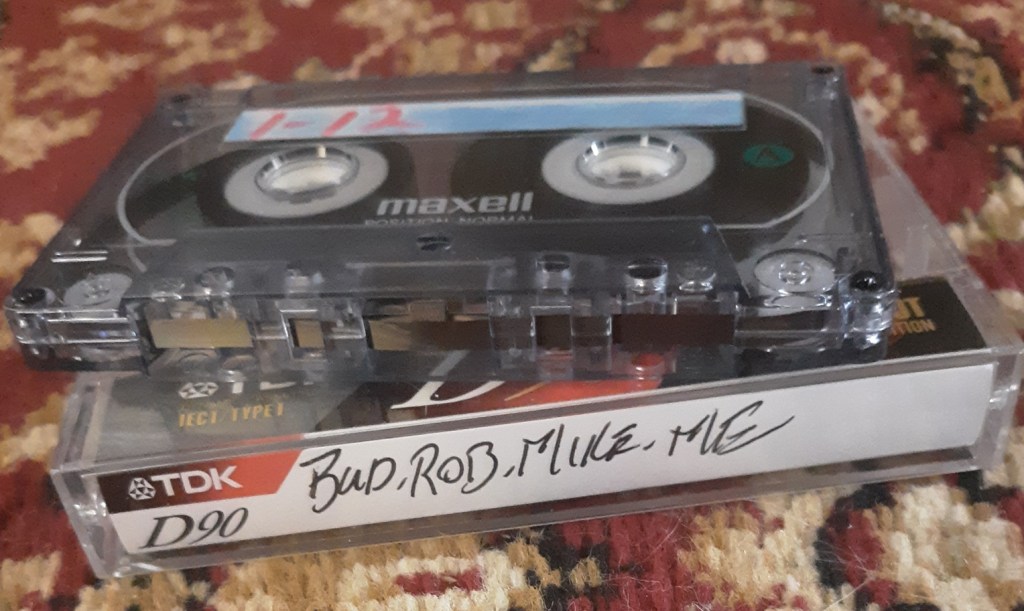
An old cassette recording remains with over eighteen well played and decently recorded songs from this period. As had been my habit, I had an affinity for recording music that I played with others since my high school days in the Philippines. Greg Livingston may have called this ensemble “The North Denver Allstars“, I’ll just run with that moniker after all these years. If a bass player had been added to the mix, it might have been a worthy band, but for whatever reason this assembly fell by the wayside. In this period of flux in my life, I had to move again, settling in Englewood on Lincoln Street in a small duplex.
◆◆◆◆◆
In the other musical configuration happening nearly at the same time, teaming up with Jeff Miles and Jeff Martinez was outside the box of any musical expression I had been around. Jeff Miles was exuberantly fun in his music and compositions, very unlike the straight-ahead blues and rock and roll I had been playing. Perhaps where I was coming from in my life with clearer mind and body, the creative expression that began in Black Bordeaux blossomed being around Jeff Miles with me being able to develop some decent songwriting in both lyrics and melodies.
One of the songs I wrote during this period was about coming clean called “Bend It”; …..”let me tell you what it takes, got to bend it till it breaks / let me tell you what it’s like, on the darker side of night / The time has come to come around / Take those things and put them down / You told me once just believe, believe in things we cannot see / I told you things about my life, all those things that weren’t so nice / You told me you didn’t want to know, just take those things and let them go”.
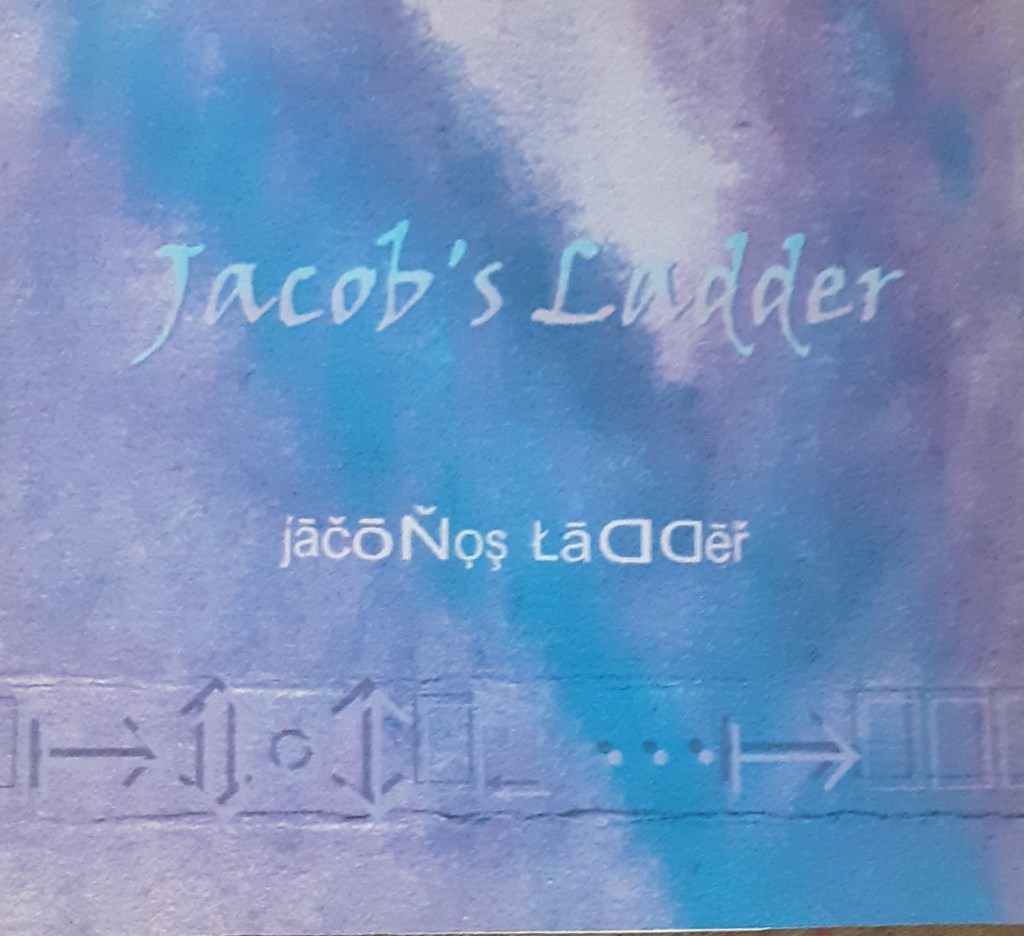
We gave ourselves the name Jacob’s Ladder and rehearsed in the very small basement of the duplex where I was living in Englewood. Jacob’s Ladder was a nod to a psychedelic movie of the same name and the music had a psychedelic bent. This was thrilling for me to again make music in an ensemble. Jeff Miles, Jeff Martinez and I would all contribute compositions, theirs bordering on heavy metal and mine of a rock bent. It was truly quite dynamic and artistic, but it didn’t last very long, and we never performed out.
Jeff Martinez was an elite bass player with professional jazz and heavy metal chops. Both “Jeffs” were very open to my new compositions as they influenced me by their musicality. We did some cassette tape recording, and these two fellows contributed greatly to the unique sound of recordings. Likewise, I was able contribute to their compositions and expand my playing style.
This music of the two Jeff’s was vibrant and a new form from what I had been playing, bordering on the fringes of Avant Garde. In my teen years in the Philippines, additionally to blues and folk, we listened to jazz, to Herbie Hancock and the group Weather Report. Guitarists John Mcglaughlin, Gábor Szabó and Stanley Jordan and jazz sax players like Stanley Turrentine and Grover Washington Jr. were in my ears as well during this time. Being clean and sober helped me absorb with clarity the newness of this music with Jeff Miles and Jeff Martinez. My cultural and musical upbringing in the 1960’s and 1970’s in that psychedelic music and cultural social onslaught, it had always given me a bright fascinating artistic outlook.
In this loose configuration as Jacob’s Ladder, our equipment and gear were quite lacking, though the music and compositions stuck with me. Here are a few clips of the tunes from Jeff Miles and Jeff Martinez that we recorded:
Kilgrew by Jeff Martinez and Jeff Miles
Attn: k-mart shoppers by Jeff Miles and Jeff Martinez
With Jeff Martinez playing the bass line to “Next Exit, Then Left”, the bass line for the song that I wrote in the Philippines twenty years prior in 1973, and with a drummer, they helped give life to my composition that I always carried inside me. For years I loved listening on cassette tapes to the musical creations I had recorded of this period of music.
Next Exit, Then Left ©, a surviving recording 1994
Jeff Miles, guitar / Mike Ansbury, drums
◆◆◆◆◆
…. recordings with the North Denver Allstars
Love in Vain
Greg Livingston, harmonica / Rob Leavitt, slide guitar
Here’s “Heather”, the ‘bro-country’ rocker written in the Black Bordeaux days. On the cassette recorded with Greg Livingston, Bud Hall and Mike Fogerty, “Heather” was one of the highlights. I can’t say enough about how much I love Mike Fogerty’s drumming, he might have been the most fun and lively drummer I ever played with, I’ve played with quite a few great ones. ….”Heather”, a cheesy “bro-country” rocker? Yes. Tons of fun? even more so.
Heather © – by Rob Leavitt
Greg Livingston, harmonica / Mike Fogerty, drums
◆◆◆◆◆
A date in time….
In late fall 1994, I had finished college and in late October started dating my future wife, Staci Martin, who I knew while working at Glenmoor Country Club. We had previously played golf together a couple of times, and with her father’s love of golf, she was a much better golfer than I was. We once attended a classical guitar concert that I had an interest in, but our dating in the beginning was just socializing.
One Friday afternoon at work I ran into her in the mailroom, told her I was going to see a blues band play in a bar near my house that night. Surprisingly, she agreed to tag along. On this first real date together we walked my dog Duke, then met Greg Livingston at the local bar where the blues band was playing. Later on, during that first date I pulled out my guitar and played a few of my songs; luckily, I didn’t chase her away. Staci and I have been together ever since that first night.
After three to four years playing electric guitar music in a very life changing and turbulent period of my life, the lure of classical guitar was calming, it stuck with me, giving me stability and structure as my career path brightened and expanded as a chef. For a time, the electric guitar music was then over with, and I studied classical guitar into the early 2000’s. Staci, and I were married in 1997 with my classical guitar teacher Tammy Hammond performing music at the wedding held at the cabin of Staci’s folks in northern Colorado.
At this time, I had been promoted and began working as executive chef of Glenmoor Country Club where I had worked under the Dutch chef. I was at that club for eight years, before moving on as executive chef in a high-powered steak house for two years, then taking a job as executive chef at one of the top country clubs in the Denver area, the Country Club at Castle Pines. I worked at the Castle Pines club from 2000 to 2010, a minor feat for an executive chef to stay at one location for that long. My own experience working at Castle Pines was stable and consistent, though around me it was turmoil with nine food and beverage managers and six general managers in those ten years.
An interesting side note was that while I was working at Glenmoor Country Club as sous chef, a group of employees would get together from time to time when the club was closed and jam a little music in one of the catering rooms. The general manager at this time, John Welch, was a musician who would sometimes join us, and he took some interest in me as a musician. His girlfriend at the time was a DJ at the Boulder radio station KBCO.
Out of the blue one afternoon, he came to me and told me he was taking me up to the radio station to see Leo Kottke in Studio C. It was a little awkward as a sous chef with lots of work needing to be done, to be dragged away for this, but it was a good experience sitting quietly on the floor of the studio seeing and hearing Leo Kottke play. Back in 1974 when I spent a few months in Hawaii after leaving the Philippines before returning to Colorado, I had seen Leo Kottke perform at a small outdoor amphitheater in Honolulu.
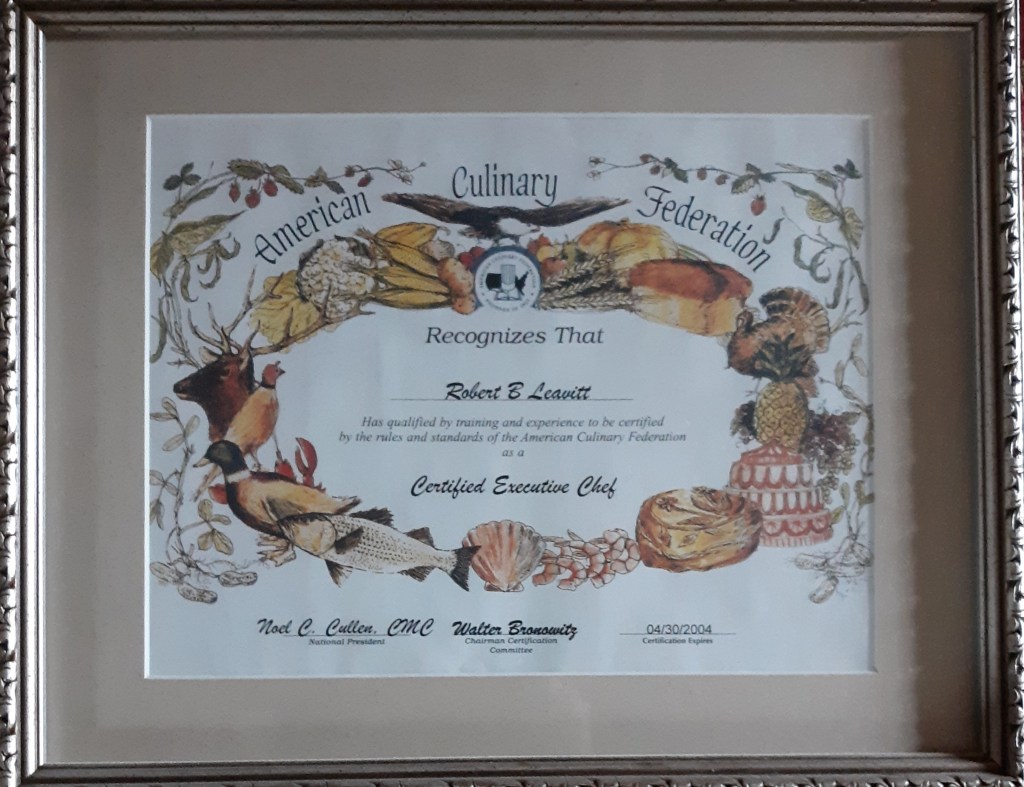
Financially and career wise I was fortunate working at the Country Club at Castle Pines, especially with me not having a culinary degree, basically having worked my way from dishwasher to executive chef in my working life, based on determination and belief in myself. What did help me was a C.E.C. certification I obtained through the American Culinary Federation in 1999. A C.E.C., Certified Executive Chef certification, is based on employment verification, examination and college and industry credits.
Ten Years…..
Ten years in real time means a lot of water passes under the bridge and a lot of a person’s life is lived that a few sentences or a few paragraphs would be impossible to reveal all that went on. In the ten years from 1993 to 2003, a lot went on in my life; shedding the impact of the “Silvertone Blues” lifestyle, marriage, a solid career path as an executive chef, home ownership and a small internet business, Bon Jour Gourmet.com, that I ran in my spare time. Working as an executive chef was pretty grueling, so spare time was somewhat limited. In those ten years music was always important and a big part of my life. Yet playing guitar was limited to classical guitar and there was very little interaction playing organized electric guitar music with others after Jacob’s Ladder and the North Denver Allstars.
My life changed a great deal in those ten years. The chaos, aimlessness, inconsistent scattered lifestyle that held me back to some degree by drugs and alcohol and was replaced by calmness and stability and a bright wonderful marriage. Staci and her family were grounded, sensible and kind to me. It was good to be part of a good family in close contact, something that truly had been missing from my life since I moved back to Colorado at eighteen. Perhaps opposites did attract for Staci and me, as our upbringing and families were worlds apart.
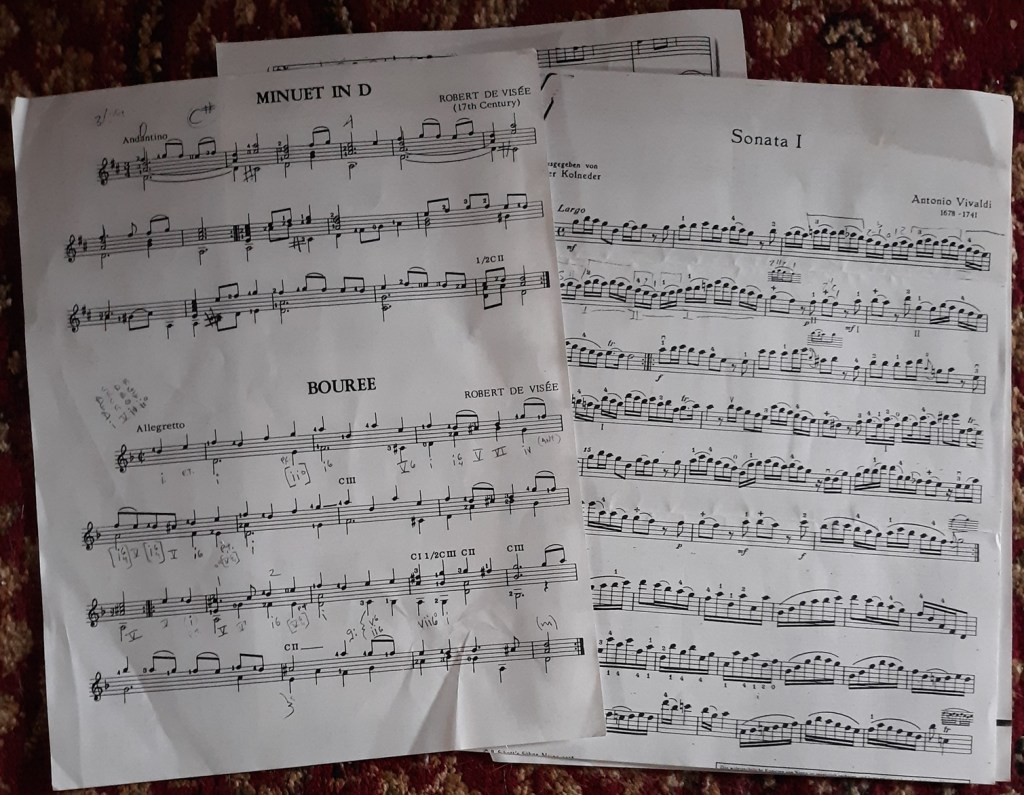
Studying classical guitar requires discipline and application and served to keep me focused. In the vast realm of music, through classical guitar I discovered baroque music. The order, style and ornate beauty of baroque music seemed to mirror the new steady calmness of my life. In classical guitar, the guitar pieces of baroque composers Gaspar Sanz and Robert de Visée are timeless. Julien Bream’s “The Baroque Guitar” is a seminal exhibition of guitar music of that era.
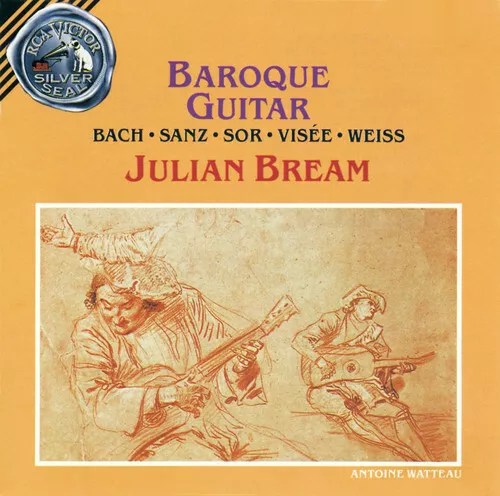
Guitar composers Fernando Sor, Matteo Carracci, Mauro Giuliani, Dionisio Aguado from the classical era (1750-1820) also provided me with an excellent pallet of work to study from.
My love of recording and creating new pieces of music never waned during those ten years and took on a classical guitar bent.
Daybreak Suite © by Rob Leavitt
Variations on a Theme © by Rob Leavitt
Some of the Bach pieces and the in-depth studies of Fernando Sor tested my capabilities, but I was able to read music and manage some the etudes of Carracci, Giuliani, Aguado as well as some of the pieces by Gaspar Sanz and Robert de Visée. Additionally, I listened to and absorbed a lot of baroque music that was not guitar music, again mirroring order and structure in my life.
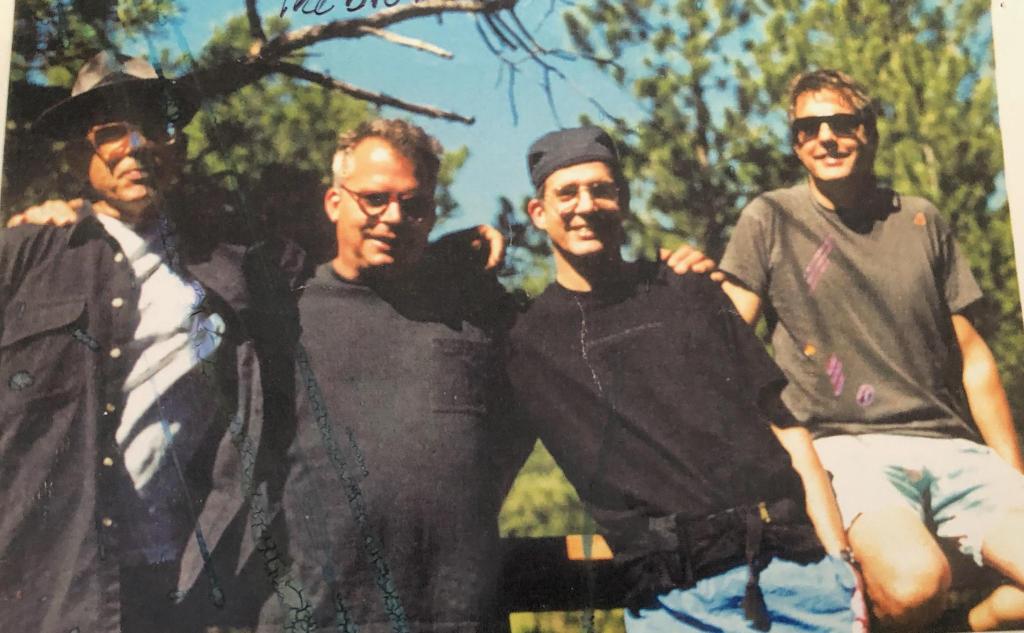
The new “Jakobz Laddr“

Somewhere around 2003, one day I picked up my Gibson L6S guitar, plugged it into a small amp and started riffing away. Guessing the lure of an electric guitar is hard to shake. It was one of those satisfying musical moments, playing electric guitar with a bit of amplification, alone by myself, much as I had often done back in the “Silvertone Blues” days in the grungy apartment, and years before when I first was reunited with the Silvertone guitar living in the small house in Littleton.
From there I began playing electric guitar more and more around the house. Not quite fifty years old at this time, I still felt youthful with a love of what it feels like and what it sounds like with an electric guitar in my hands. Perhaps this was my own “mid-life” moment, absorbing the satisfying tone and timbre of amplified guitar. Ever since I had the first Silvertone guitar at age sixteen and was able to play blues on it, that specific musical lure had always resided within me.
Growing up in the Boomer generation, electric guitar music was in my ears before I knew what it all meant. Before I was even eight years old my older brother Johnny was playing The Animals and Rolling Stones on his stereo. He liked the somewhat earthier music, and I remember when he played Dylan’s “Ballad of Hollis Brown” on his stereo, it scared the shit out of me as an eight- or nine-year-old boy. Like many of my generation, we saw The Beatles live on the Ed Sullivan Show, I was eight years old. In that era of the Beatlemania craze, my dad, with a band saw, cut out likenesses of the Beatles guitars from particle board for the brothers Rob, Tom and Chip to horse around with.
In 2003, I started playing music with guy named Cameron who was trying to put a band together. The whole thing was poorly formed and was lacking members. Basically, it was just me and Cameron, who just wanted to play lead guitar and not sing. That pretty much left everything up to me, so I cobbled together a few songs but the whole thing was pretty flat, no chemistry, no verve.
We played one “show” at a clubhouse in a park near his house with another guy on drums, not sure there even was a bass player and mercifully it got rained out. I could see that it was not going anywhere and told him that I was begging off to pursue other endeavors. Cameron had lined up a gig at a wine bar with a friend of his on harmonica, and I said I would commit to playing it. I offered to bring a small PA and microphone, but he insisted we wouldn’t need it, which I questioned. In the crowded wine bar playing acoustic guitars where we could barely be heard, Cameron admitted at the end that the PA would have been good.
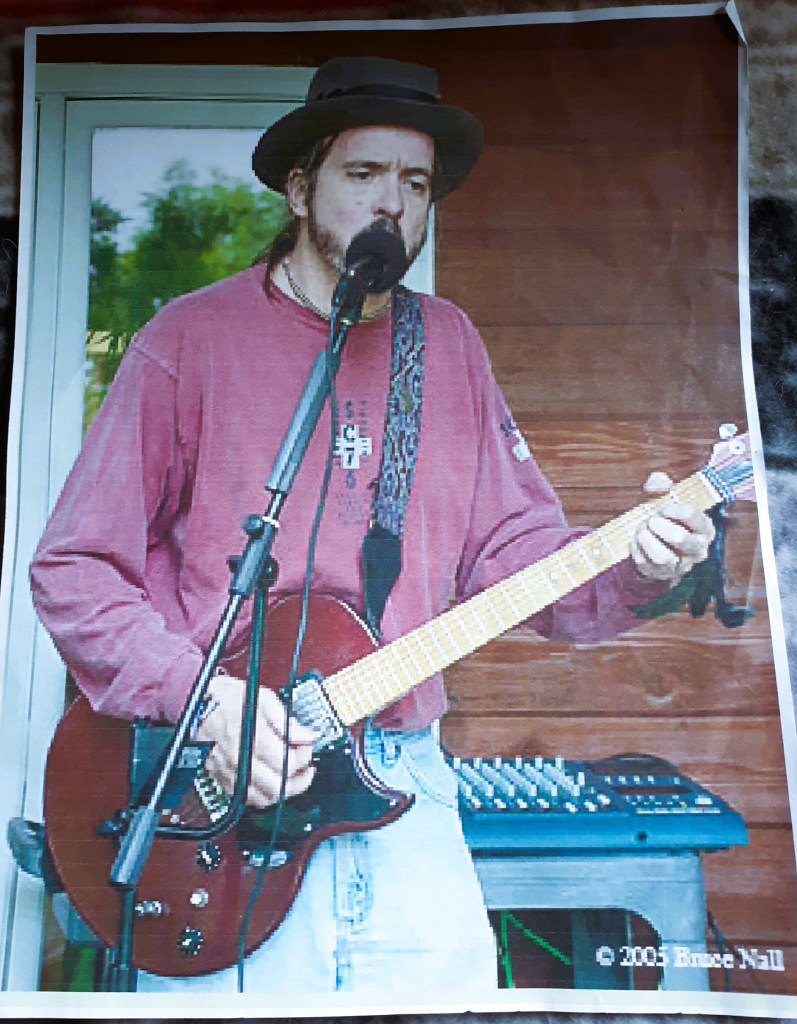
About 2004, for a while I hooked up playing music with this fellow on bass, Bass Bob, as he called himself, and we initially had a fun connection. We started out working on songs together, he was into classic rock and loved “skiffle” music and I was just finding my way back into electric guitar music alongside a bass player. It started out slowly and The Rolling Stones “Satanic Majesty’s Request” album brought out a few quirky songs; “Citadel” and we toyed around with “2000 Light Years From Home”. I remember one session over at his place joking around with a rap version of “Born Under a Bad Sign”. (…cue up a rap beat and…..”I was born…uh huh, …under a bad, bad sign). My apologies for bringing that up.
Sometimes a friend of Bob’s, Ray, would join us on lead guitar and we’d work on blues and rock songs along with some of my old Jacob’s Ladder songs. I was living in a big suburban house and had plenty of space in an unfinished basement, and I enlisted a very talented coworker from the country club, Juanito, on drums. Actually, we did a number of fairly decent tunes, “Season of the Witch” from the Al Kooper/Mike Bloomfield the Super Sessions LP, Neil Young’s “Cortez the Killer” and Hendrix’ “Voodoo Child”, and a few of the old Jacob’s Ladder songs, like this loud version of “Let Me Go”, counted off here by Juanito.
Let Me Go ©- by Rob Leavitt
Juanito Dominguez, drums / Ray, lead guitar
“Bass Bob” was pretty good on bass with a decent voice, Juanito was very good on drums and Ray, the lead guitar player was pyrotechnically loud. This itineration of an electric ensemble played an eclectic variety of songs, some blues and some of the earlier Jacob’s Ladder songs, but we never really jelled, and the personalities and motivations were vastly different. I’d had a taste of playing electric guitar in a band with Black Bordeaux, with the first Jacob’s Ladder and with the cats in the North Denver Allstars, so a certain fascination befell me in it.
Things pretty much dissipated with “Bass Bob” bailing out for other pursuits. Juanito and I were good friends at work and tight together musically and I had other ideas and ambitions. Juanito was such a good musician, and I’d heard him play bass with us all fooling around. Can’t remember exactly how I got back in touch with Jeff Miles, but we reconnected after nearly ten years and started playing music together again. At first it was just Jeff and me playing music, jamming and riffing, reconstructing songs from our previous stint together.
My nature had always been towards order and structure, so in teaming up with Jeff, he had numerous songs and song ideas that I was able to herd into cohesive pieces, sometimes adding my lyrics to his music. We added Juanito on bass guitar to the mix and the new “Jakobz Laddr” was fairly reborn. Juanito loved Jeff and his guitar playing and it was an easy-going ensemble as we played together in my basement when we could, every other week or so.
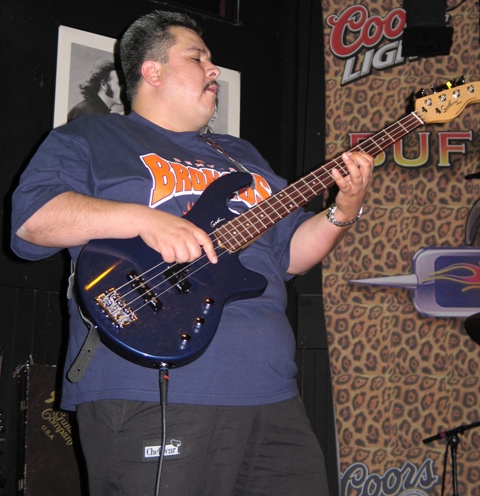
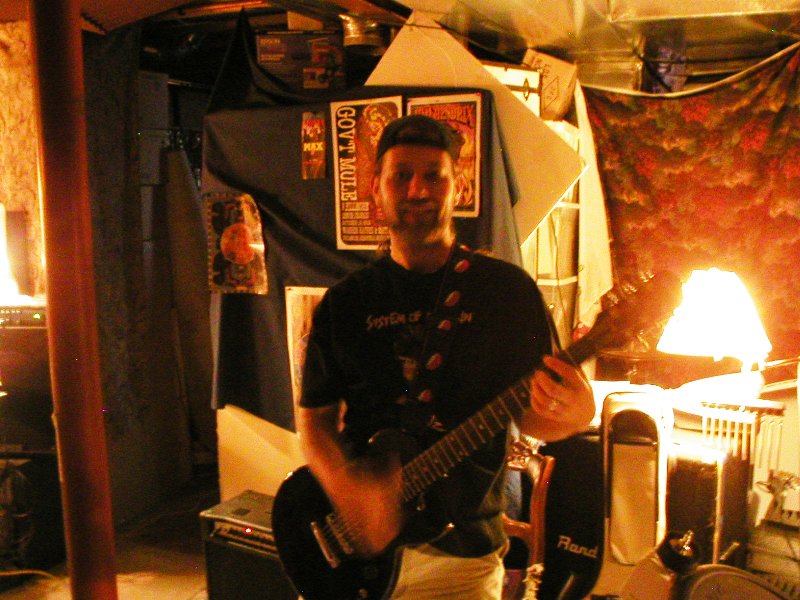
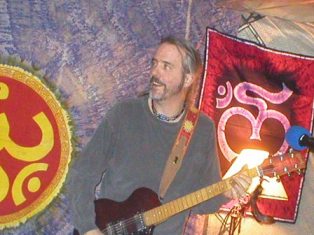
In my professional life as executive chef at a high-powered country club, therein was a great deal of pressure, stress and expectations that were involved in the position. At the same time, this high money club was going through much turmoil in an ownership change and a string of general managers along with the seemingly never-ending revolving door of food and beverage managers. I maintained well and from past experiences knew to fly under the radar in employment disruptions and just do the best job possible in chaotic work situations. I’m sure my involvement again with electric guitar music and that I had a hippie streak in me since my teenage days, led me to grow my hair out in a long ponytail as an unspoken reaction to the turmoil that surrounded me at the country club.
In my blood, I’ve always had a desire to perform. In some of the aforementioned musical entities, there were some live performances – in high school with Bob Stewart, winning the battle of the bands in Black Bordeaux with Buck and the high school kids and our set at the Mercury Cafe, plus some of the ‘performances’ that we put on at the church where we rehearsed, for beer guzzling high schoolers. So, with this new incarnation of Jakobz Laddr, I was the one that was the push and force to get us out to perform. That we had no cred, no experience, really nothing more than my desire to perform, I pushed us to seek performance venues.
With that as a backdrop, for an original music band with average equipment, less than average vocals (mainly me), about the only options were to perform at some of the ‘open stage’ venues that were available for electric acts. There was no pay, just getting signed up for usually a half hour or forty-five-minute set at a local tavern. Factor in hauling your instruments and amps to play for that short of time is one thing; if you have a drummer, then unless the venue had a ‘house’ drum kit for use, hauling a full drum kit to play for forty-five minutes is fairly laborious.
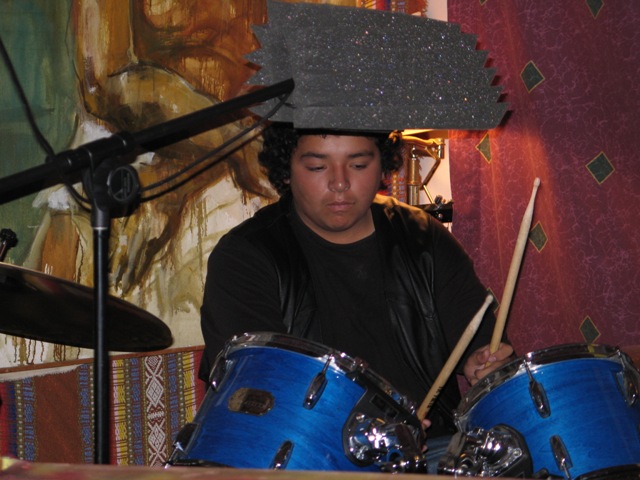
Up until this point, with me now thinking of getting the band performing out, our drummer was Rey, Juanito’s fifteen-year-old Hispanic nephew that Juanito would sometimes drag along to rehearse with us on drums. That in itself was a problem going into clubs that served alcohol.
It was decided to put an ad in for a drummer and we found one in Graham Knight, a fellow in my age range, forties/fifties? It was a good fit, he was a good drummer and a fun guy, and like Juanito, Graham was enamored with Jeff’s personality and guitar playing. In 2006 and 2007 we played out at open stages every so often at taverns and clubs. We had recycled some of the songs from Jacob’s Ladder ten years prior and created new compositions, pursuing songs in a bluesy psychedelic style.
VIDEO: Jakobz Laddr at the Buffalo Rose / Confinement by Jeff Miles
Jeff Miles, guitar / Graham Knight, drums
The Toad Tavern, the Buffalo Rose, the Larimer Lounge, Andolini’s, The Cricket on the Hill, Sancho’s and Quixote’s (two Grateful Dead bars way downtown Denver, I lived in the far south suburbs) and the nearby Platte River Bar and Grille in Littleton, were a few of the locations I remember playing at. It was a lot of work and dedicated effort to do all this at over fifty years old – put together a viable rock band with many original songs, herd everyone into some sort of direction and also perform out in public – yet my drive and love of music pushed me to do this.
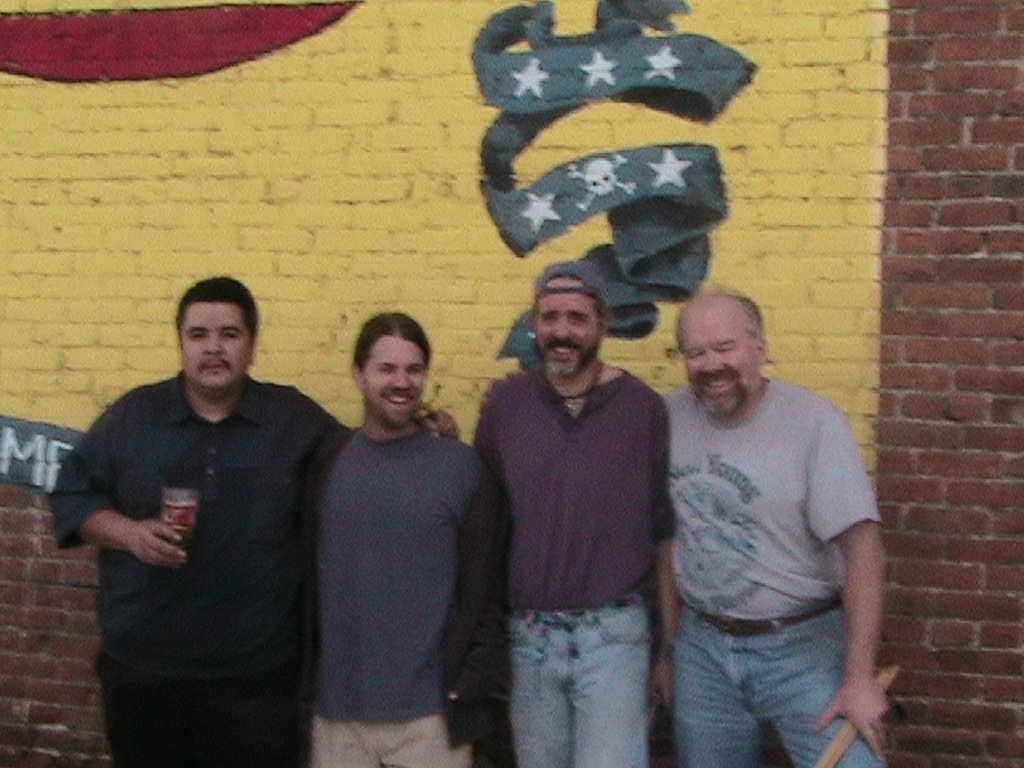
Jakobz Laddr – Duppy Conqueror
– (Bob Marley & Wailers)
Juan Dominguez, bass / Graham Knight, drums
The Platte River Grille was a great venue to play at in the summer out on a nice large patio under huge cottonwood trees and the open stage was run by a friend of mine, ‘Smitty’, Steven Smith. Smitty had at one time run a small music shop in Littleton called Crescendo Music, where I had once purchased a nice Guild guitar.
◆….Yet another interesting side note; ……I’ll try to stop with the “interesting side notes”, sorry about that…. the Platte River Grille was built on the spot where a rundown, old, late nineteenth, early twentieth century, ornate, two-story wood framed house with huge bay windows once stood. At one point in 1975, I rented a one room apartment in that house that once stood there on South Santa Fe Drive across from Arapahoe Community College. I remember that my twin brother Tom had come up to visit from Santa Fe New Mexico with Bob Stewart, Peter Barquin and Tad Donahue, high school buds from the Philippines. As I was the only one with a job and a car, there were many groggy mornings getting up, stepping over crashed out boys on the floor so I could get up and go to work….◆
Performing at these open stages was always a challenge of hauling gear, waiting to get on stage and set up to perform, then the unknown of how good the stage sound might be, could we hear ourselves and how good were we going play. Stage nerves always played a part for inexperienced, amateur musicians such as us. One thing I learned, was to open our set with an easier song that we knew well, to gain confidence in performing and to shake out the nerves, shake out the “cobwebs”.
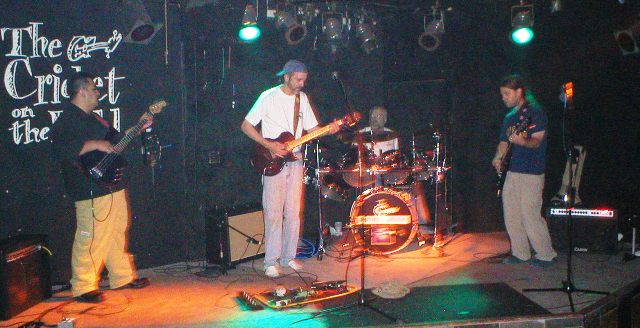
Cricket on the Hill, Denver
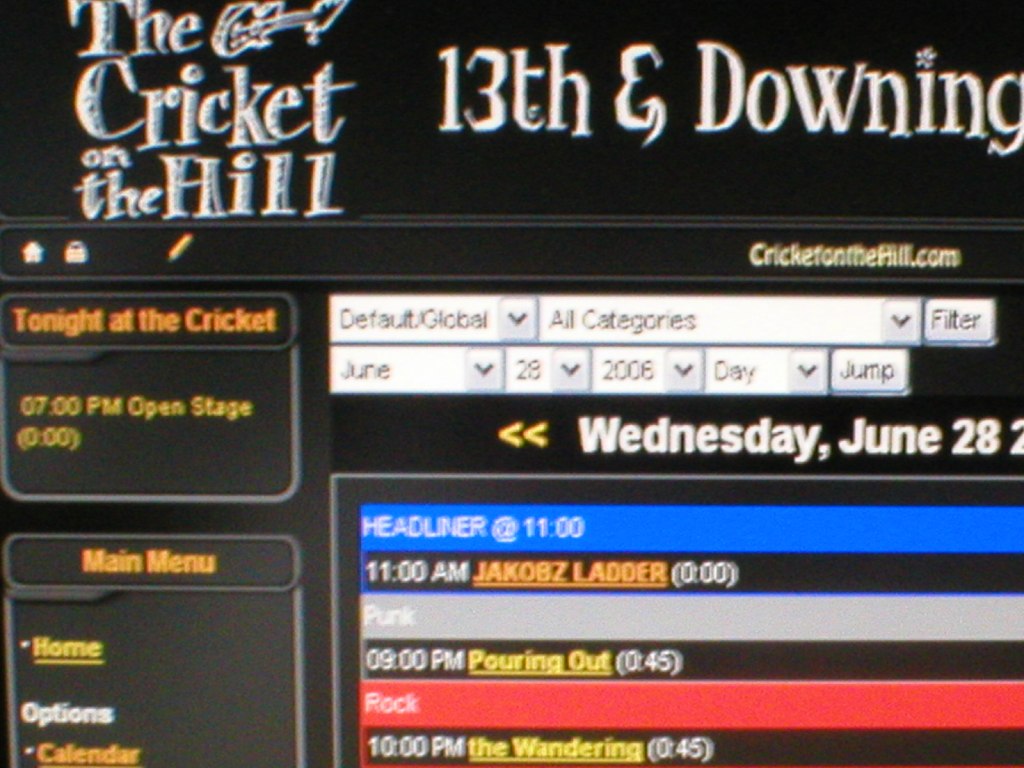
June 28th, 2006
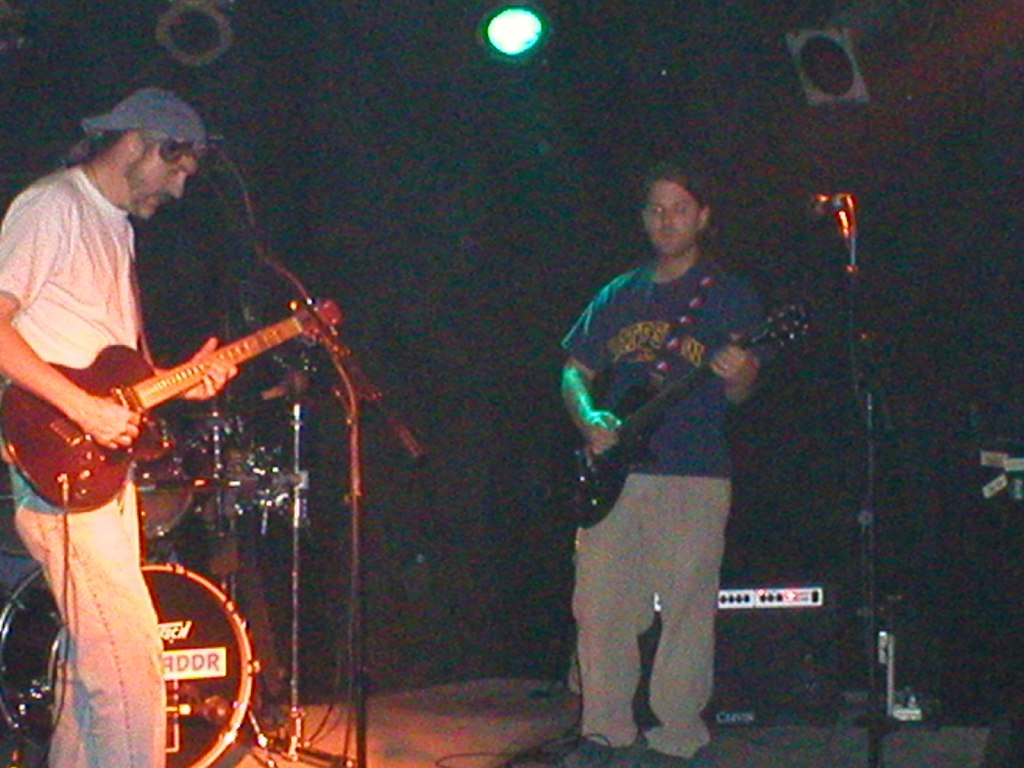
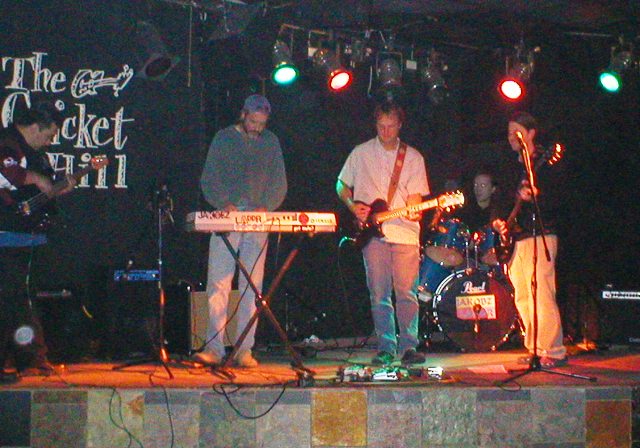
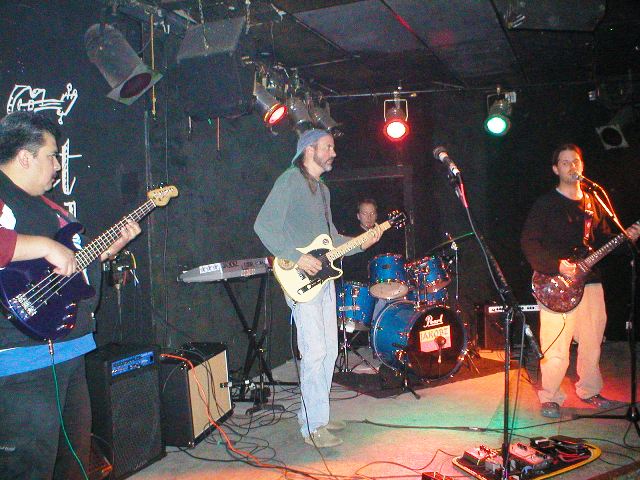
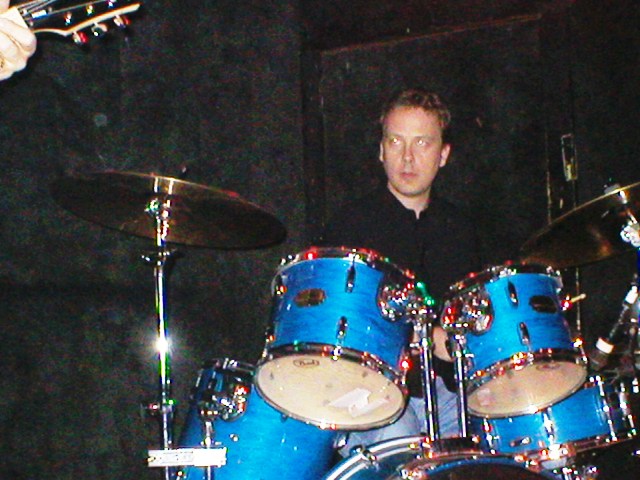
With Graham as our drummer, in 2006 into early 2007 we might have played out six, seven, eight times at some of the clubs mentioned above. At some point later in 2006, Graham mentioned that he would like to bring Alora, his significant other into the band, insisting that it wouldn’t be a “Yoko Ono” or Donna Godchaux type of thing (wife of Grateful Dead keyboardist Keith Godchaux). Both Graham and Alora did not particularly care for Donna Godchaux as a member of the Grateful Dead from that era. You can probably guess where this is leading…
In my naivety and easy-going nature, we went along with it; she played keyboards and had a nice voice, but for an unpolished amateur jammy type of band, it was probably a mistake. She fit in well enough, and we let her sing a song or two. Our repertoire was not that big, playing out for 45 minutes or so it didn’t need to be. We had a fun gig with Alora in December 2006 at the Buffalo Rose, playing some of our original songs like the reggae infused “Lion 222”, a song with Jeff’s music and my lyrics, along with some blues songs and jam songs.
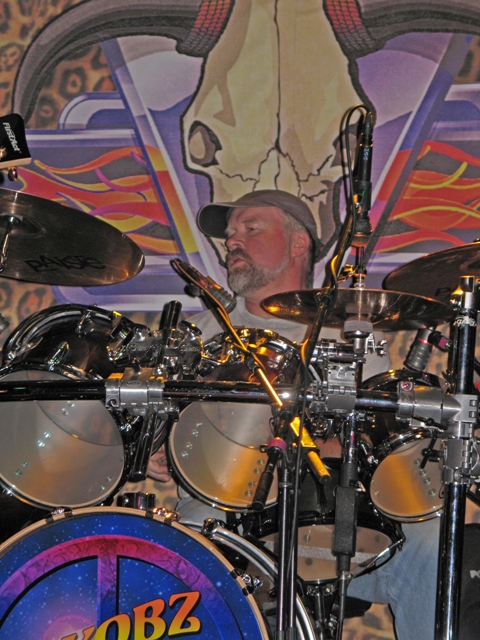
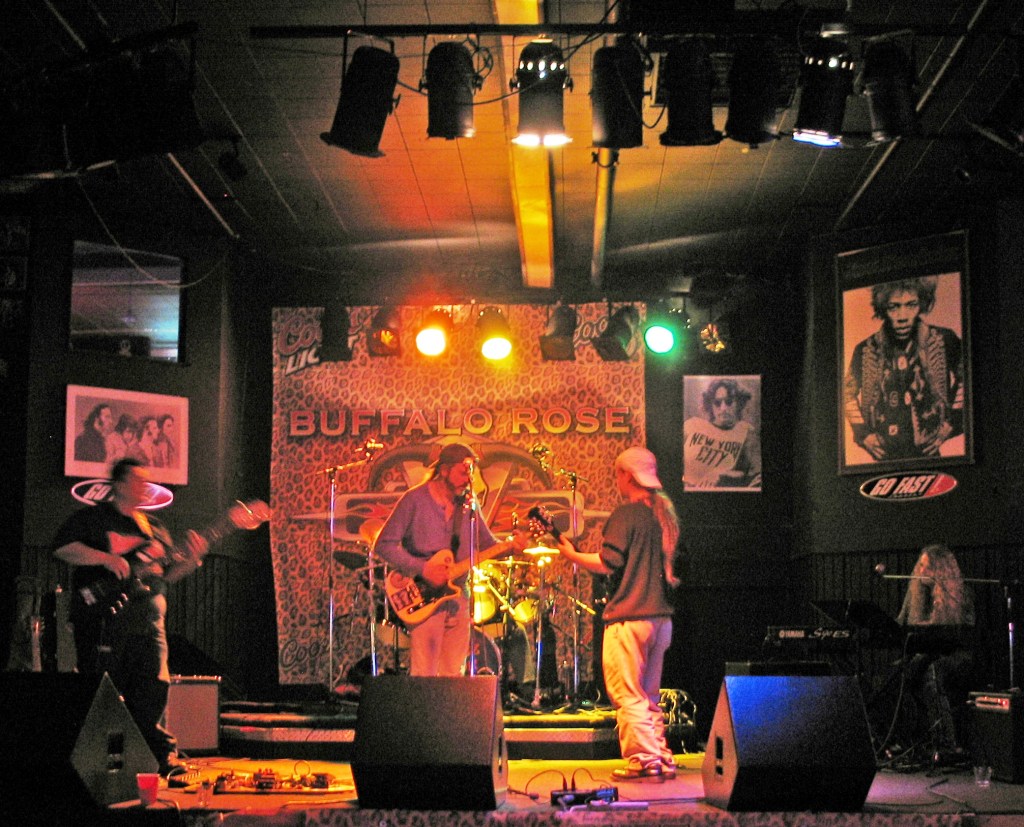
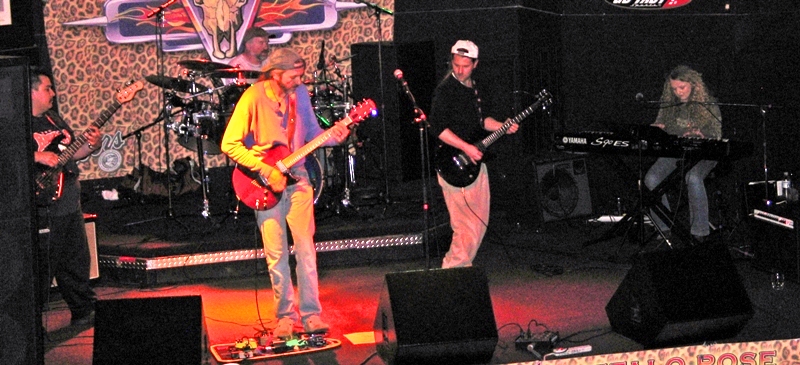
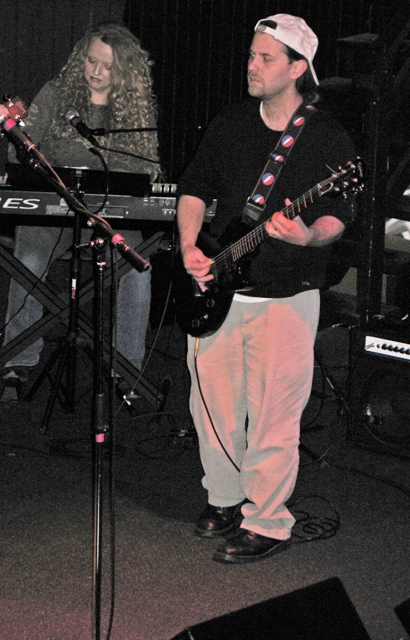
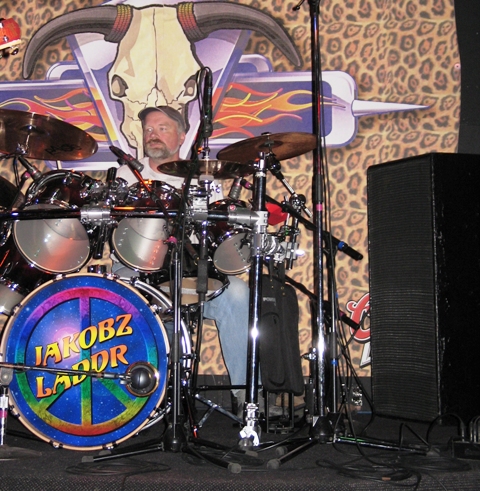
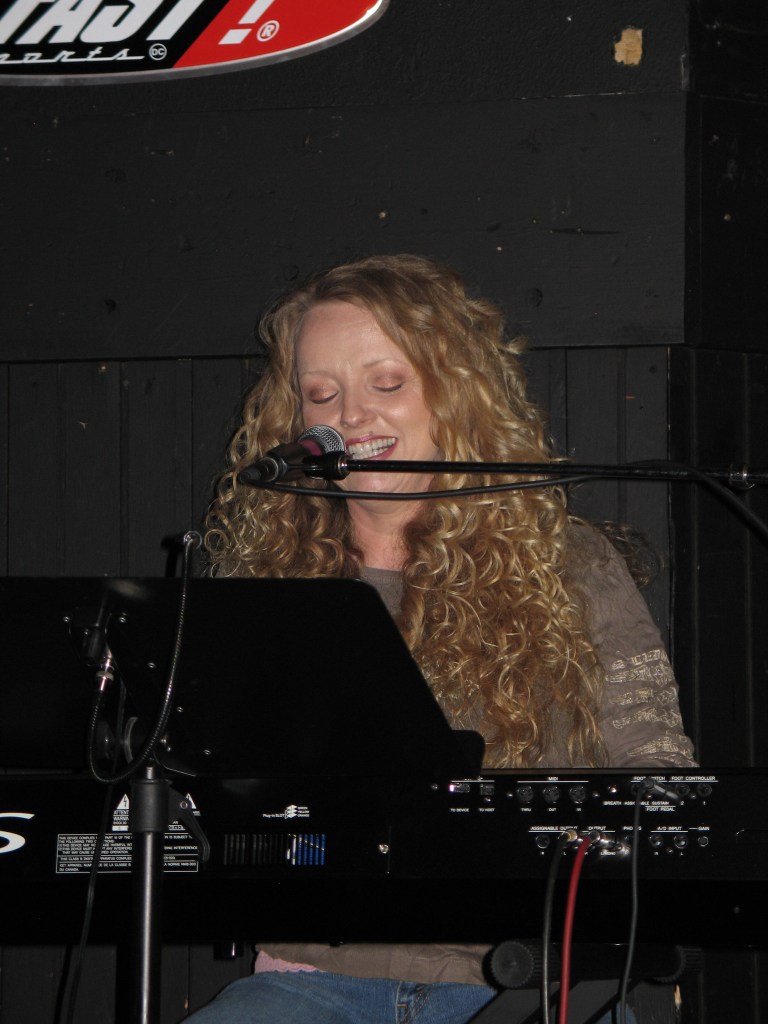
Once summer 2007 rolled around, Smitty was kind enough to let us play a decent length set up to an hour every now and then for his open stage on the Platte River Grille patio. I’d always invite Smitty to join us for a few numbers; there’s nothing he can’t play, and he made us sound better anyway. Alora was indignant about it at first, until Smitty got up and shredded, and the crowd loved it. He was so much fun to play music with and was so easy going and kindhearted.
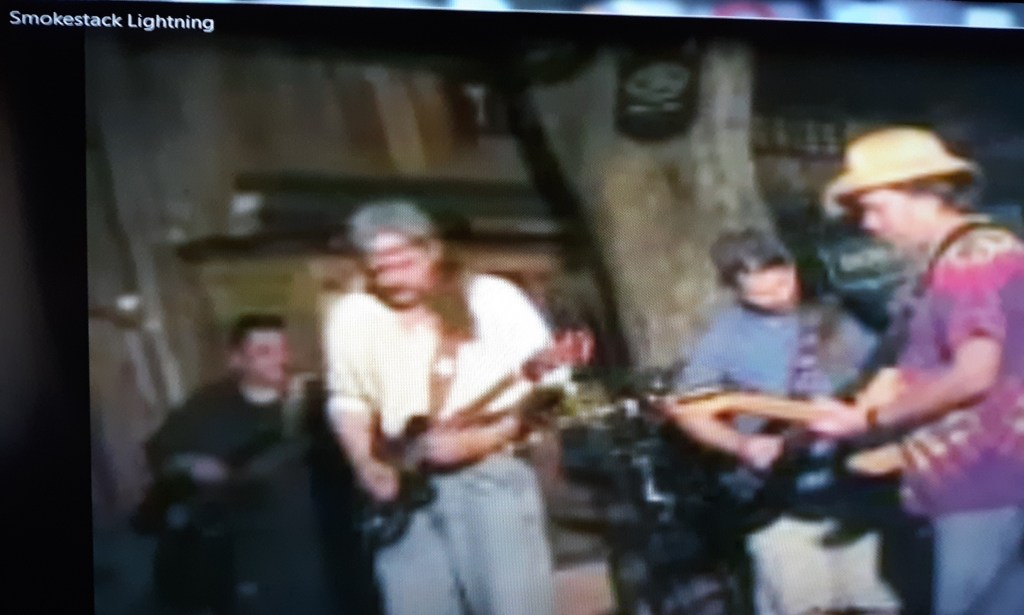
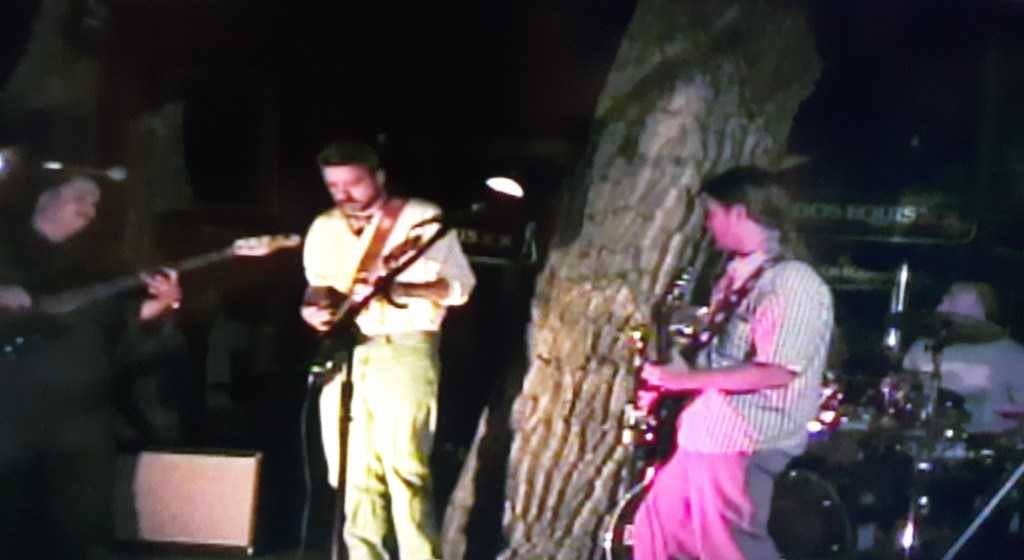
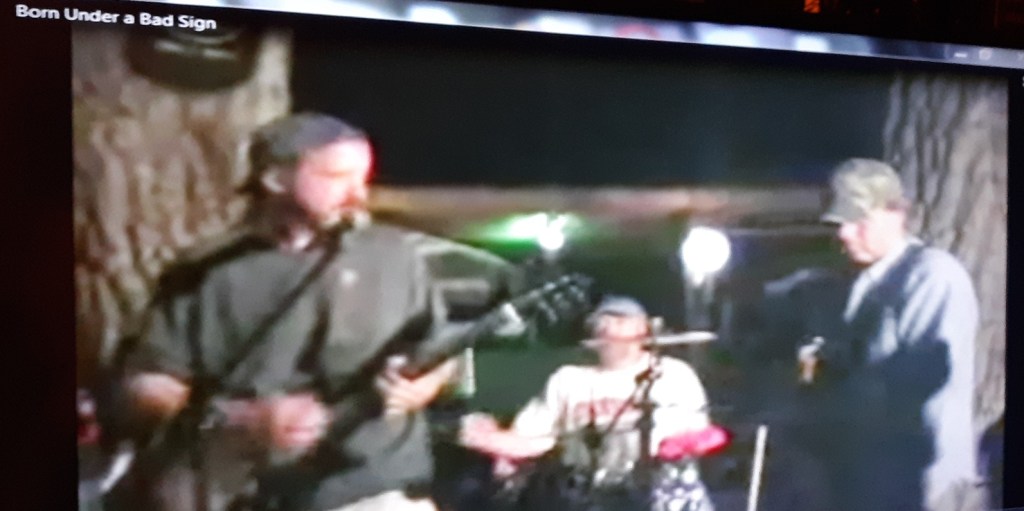
Under the cottonwoods at the Platte River Grille
Thinking it was the second time we played the Platte River patio that summer and there was a gal whom I’d seen before at the Platte River open stage, she played fiddle with some acoustic players. She was always really chummy with Alora. That evening, Staci was within earshot when the fiddle gal told Alora “What are you doing with these stiffs, you should be the star of the band”. Not surprisingly, Alora got a very big head over this and promptly quit the band shortly after that. It was a little awkward then with Graham, but he did play drums with us for a set in September at Herman’s Hideaway, an old club on South Broadway in Denver that I had always wanted to play at.
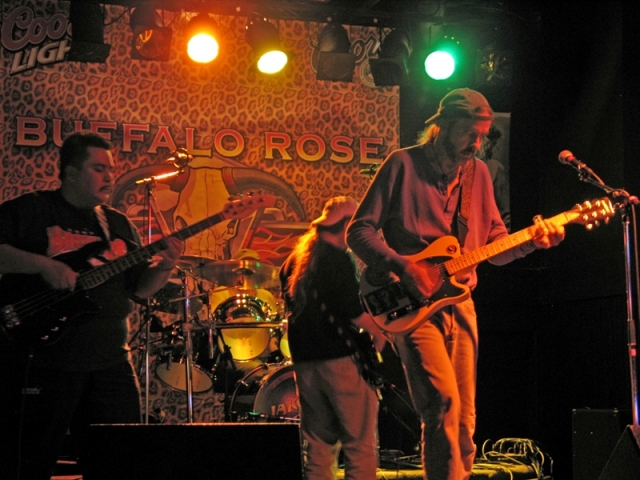
Then, due to my never-ending drive and push to get a real gig, a real, full three set, paying gig, I landed one in Golden, at the Buffalo Rose in early October. I will qualify the “real, full three set, paying gig” comment. Yes, it was a real full three set gig, the paying part was that we’d have to set the door price, take cash and the club sold drinks and took that cash. Good enough for me, just happy to be at this point, after all the 45 minute “open stages”. So, with the knowledge that we had this gig, after telling us to buzz off because we weren’t good enough for her, Alora wanted back in the band. She sent me a three-page email with a list of grievances and demands for her to rejoin the band. What’s a band without a little “band drama”?
Sorry, Alora, after all the work I put in organizing practice and writing set lists, pounding the payment to get anyone to let us play, booking the open stage shows, now booking this full gig, maintaining and hosting the website, hosting practice, not to mention writing and arranging songs, you’re not going to weasel your way back in the band after blowing us off like we’re not good enough for you, then giving a big tirade to get back in. Sorry, ain’t gonna happen. I was polite and short in my reply, saying it was not such a good idea. Graham? He came over the Monday before the Saturday gig, took his drum kit from my basement where we rehearsed and bailed on us.
Hmmmmm, what’s a Robbie to do? Finally got us a bigger gig and now this. Well, first thing I did was call Smitty. Asked him if he knew anyone who could play drums on short notice, I’d pay cash. Told Smitty I’d pay him to sit in with us the whole gig, he was always so good to me, twas the least I could do. Regardless of the drama and unfortunate occurrence, I wanted the show to go on and for it to be good.
Smitty knew a lot of people, he ran a music store, he taught music lessons, he was involved in many musical activities. Smitty came through for me and got us a drummer, got him the directions to the Buffalo Rose and the guy showed up on time. It was so long ago, don’t even remember his name, Marc?. Great drummer, I loved his playing. We weren’t playing complicated music; it was blues and rock. If there were passages that I thought that he should know about; I’d let him know what to look out for before we started playing the song.
My twin brother Tom flew out from Chicago to play harmonica for us. Tom played great; it was a fun gig. As with many of our gigs, Staci videotaped them. This was 2007, so, yes real video tape. Juanito on bass, played amazing, as always. Jeff on guitar, Mr. Natural, was easy going and smiled the whole time. Very glad Smitty was there because he tied it all together, he played great lead guitar along with Jeff, while I sang and played rhythm guitar. My youngest daughter Noelle took cash at the door and left the second the show was over. Her boyfriend, Shawn Riley, had sat in with us a time or two on drums when we played at the Cricket on the Hill.
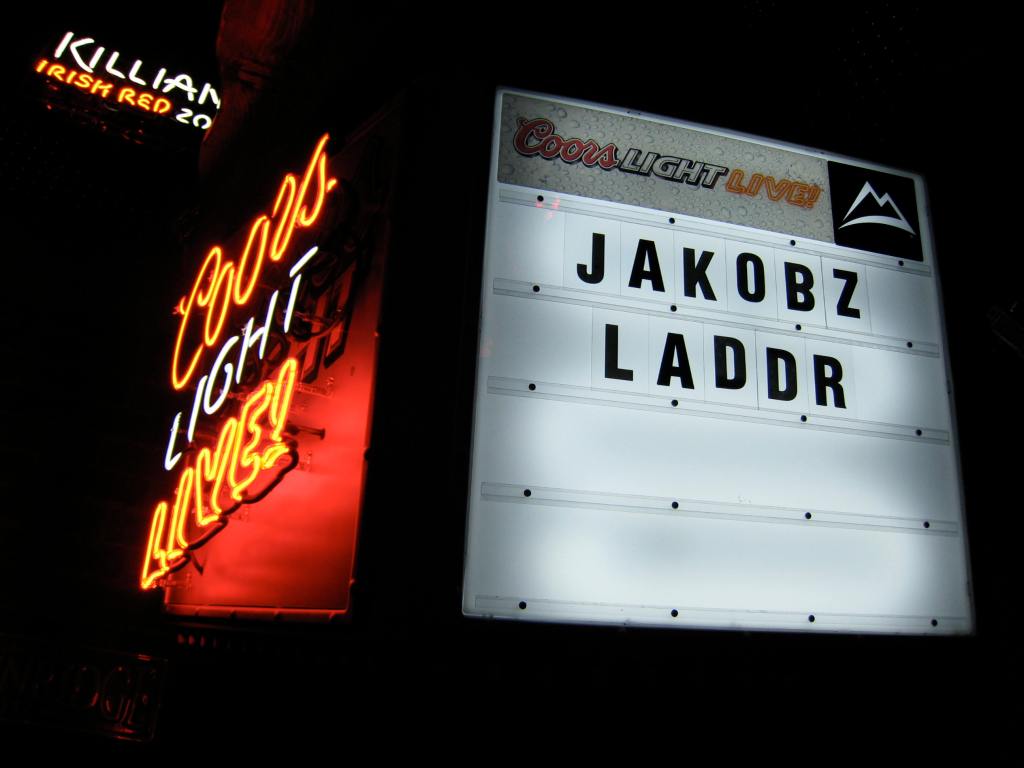
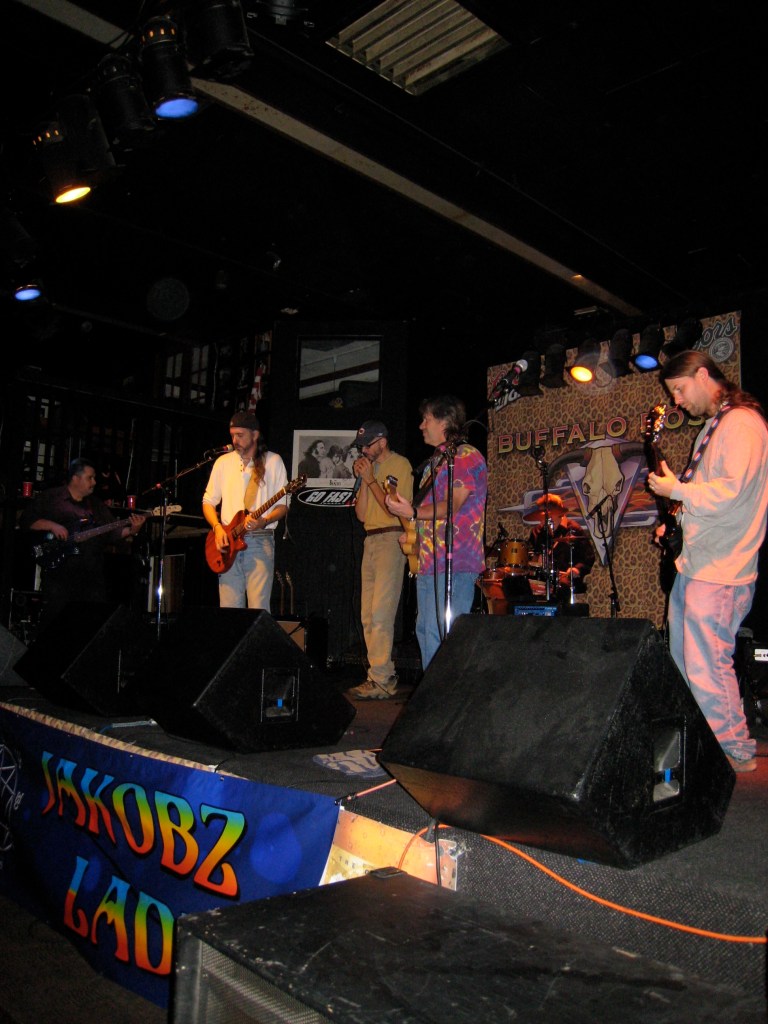
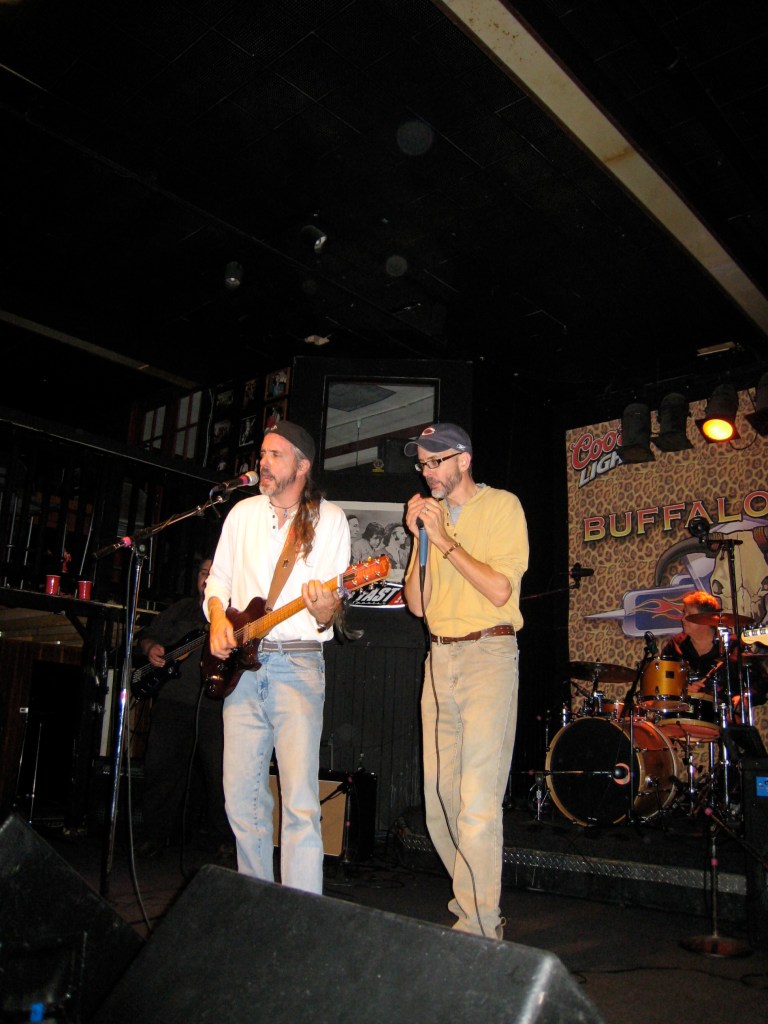
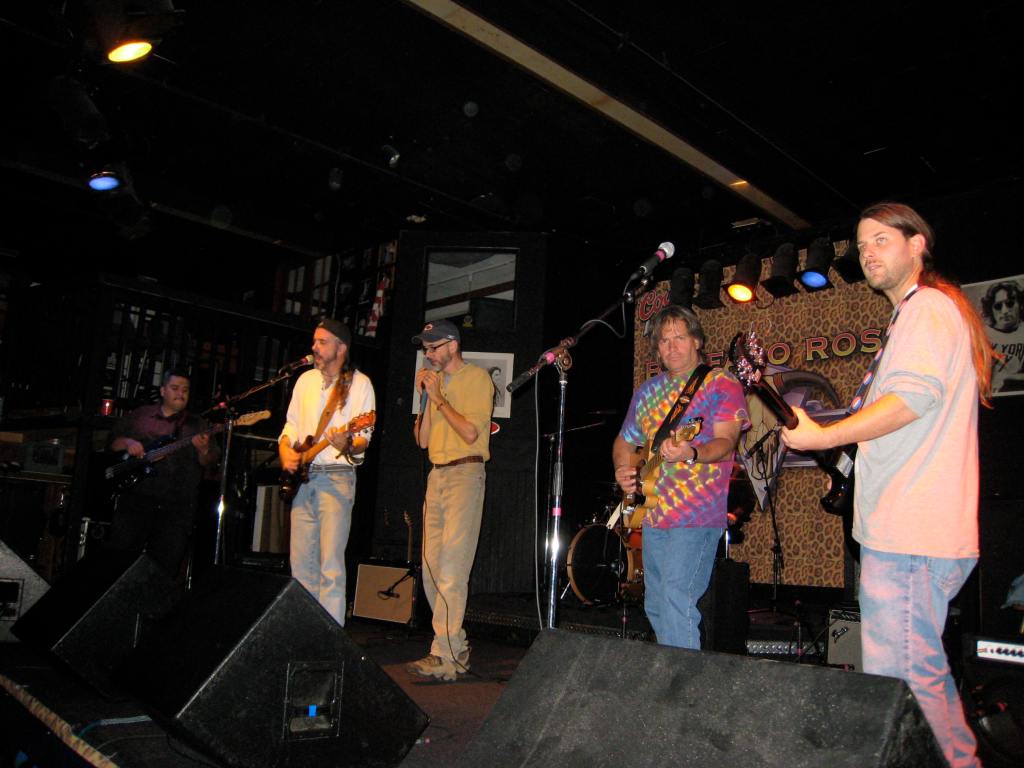
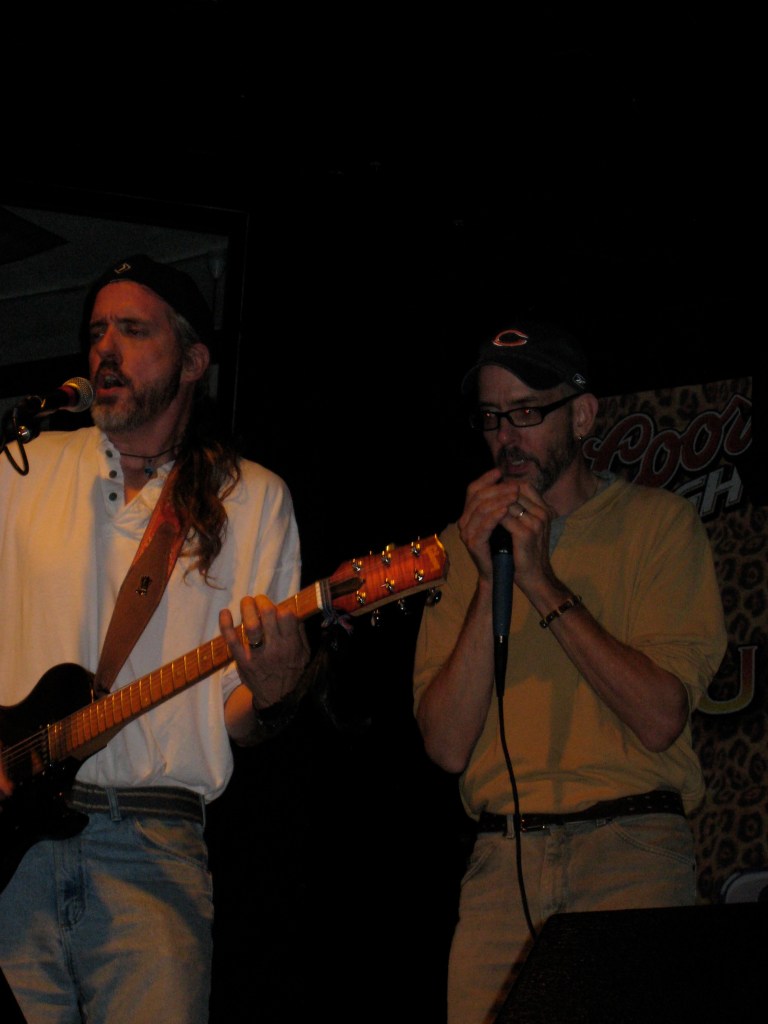
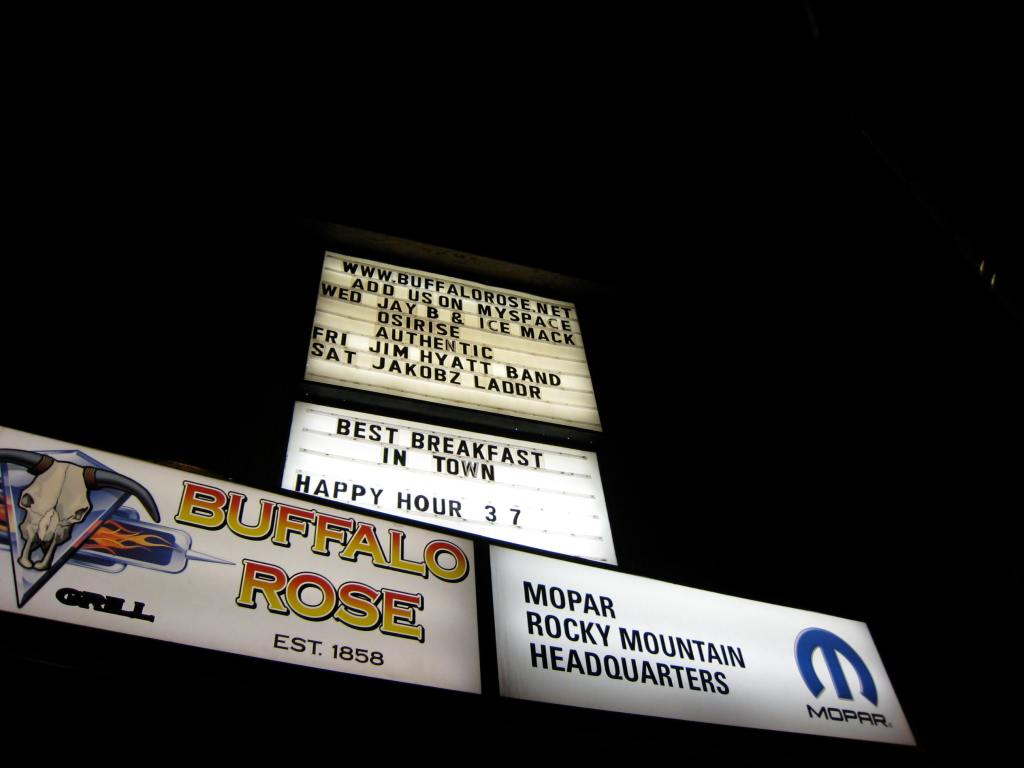
And that was it, the last Jakobz Laddr show. After chugging so hard to get there, once the drama and implosion took place, to paraphrase BB King, “the thrill was gone”. Didn’t hear from Jeff forever, he slipped into his own world and disappeared, did not return calls. I worked with Juanito, but he was always busy with work and family. A long break was not a bad idea, but soon enough, for me, the itch to play music and create, move on with things, this itch returned. Tried to get a new set of dudes over in the basement to play, to see what shook out. With Jeff Miles, there was always friendship and instant musical chemistry. Yet, you can’t just put a bunch of guys together and expect immediate results. What I liked to play in Jakobz Laddr might not be of any interest to the next guy.
“Roadhouse Blues”
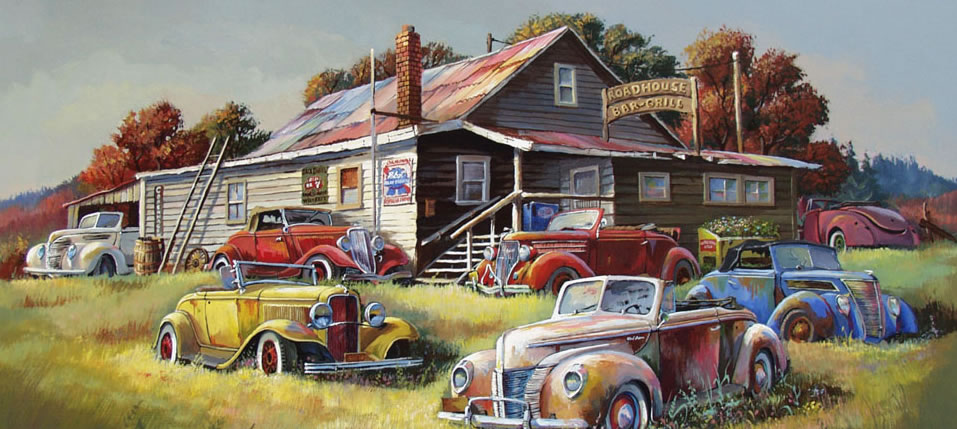
In early 2008, I ended up in my basement with a few guys, but it always seemed that there were three guitar players and no bass player. Juanito was pretty much over Jakobz Laddr and did not come around. So, as I had done several times in my life, after the clarity of the situation appeared, it was time to change course. I had made a determined decision to become an executive chef when my career was stagnant, and I was going nowhere. I had changed course in my life when I decided to quit drinking. I told myself to back off and take it slow with Staci when I was dating her, don’t push things in relationships as I had done in the past, wait at least two years, then if things were still wonderful and if the relationship had blossomed, then think about marriage.
I’m not sure what it was that drove me, what that desire was to be part of a musical ensemble, to do the work to be organized and play good music, rather than just “jam” every so often with other musicians, yet really having nothing to show for it, no results. I wanted to gig; it was a desire that drove me. So, what struck me, was to seek out an opportunity to play bass in a blues band. The whole thing of playing music, organizing, driving the bus for Jakobz Laddr had been satisfying in many ways. But the bus had crashed and despite my efforts, I couldn’t get it out of the ditch.
At this juncture in my professional life as an executive chef for a high powered, big money, exclusive country club, I had to have my shit together and guide and direct a staff, produce excellent cuisine for a demanding clientele, exhibit fiscal expertise for the board of directors and management. So now, musically, the appeal of just being a “piece part” in a band, play a role but not have to do all the many things required to drive the bus, this seemed like a good change.
With this in mind, that is what I did, I went looking for a band to play bass in. I’d played some bass in the Philippines in high school. Sonically, the walking blues bass lines on albums by Champion Jack Dupree and Muddy Waters “Live at Mister Kelly’s” were always in my ears in high school days. In my late teens and early twenties one of my old grade school buddies, Dave Filter, gifted me a bass and I “jammed” on bass with other guys. From playing the guitar and blues most of my life, I knew blues bass lines.
Bob Stewart, my high school buddy from the Philippines was out in Colorado in 1976 and we did some recording. I played bass on quite a number of songs with him and some slide guitar as well. A lot of the songs were his own compositions, and some other songs were like “The Midnight Special” and the Band’s “Up on Cripple Creek”. One of the songs I played on bass with Bob was “Going Away” by Utah Phillips. The song had only been out since 1973, and Bob gave the song a loving intensity. I played slide guitar in open G tuning on a song of his called “Time Slips By”, an introspective song of his with poignant lyrics and a wonderful melody, a truly phenomenal song. Bob was a fabulous guitar player with skinny “Robert Johnson” like fingers and a knack for superior flatpicking.
With this as a backdrop, I started searching for a band to play bass in. I was a decent rhythm guitar player who could keep good time. Guitar players are a dime a dozen. Good, even great lead guitar players are not uncommon. I wasn’t a great lead guitar player. I could play excellent melodic leads over some of Jeff Mile’s and my own creative psychedelic multi chord songs, but a fluid, dynamic blues and rock lead guitar player, I was not. I was not going to front a band and flash Hendrix or Clapton. I’d played with a lot of guys who could, but that wasn’t me. Those guys that can flash Hendrix and Clapton will always need a bass player and a drummer so that they can flash.
Initially, I hooked up with some guys in Castle Rock, not far from where I worked. It was two guitar players and a drummer, and I sat in with them on bass guitar. It was in this empty office space that one of the guys had access to. The room was like fifteen by twenty feet, no furniture, thin industrial carpet, cinder block walls, two small windows …with a drum kit, two guitar amps, and me with a bass amplifier, no wonder my hearing is so bad. I went in cold, not even sure they gave me a song list beforehand. What they were playing, like some Allman Brothers and Robin Trower, I could pick up and do okay, even though I had heard the songs, I’d never played them.
They loved me, said I was miles above the last guy they had. During a break, the one guy who brought me on told me, “the drummer hates the blues, so we just tell him it’s classic rock, Allman Bros., you know”. Not sure we all played together a second time, I did jam in my basement with the guitar player a time or two, but he was in the middle of a divorce and had like a seven-year-old daughter that was of more concern than playing music.
Another connection I made was also in Castle Rock. It was with an outstanding guitar player who could sing very well. He was a big, intense dude and he could crush Clapton and Albert King and Stevie Ray Vaughn on guitar with a voice to match, he sang with conviction. He was a little intimidating and condescending to me and as I was relatively new to much of the material, my bass lines were a far cry from what I could eventually play. We played a set I got us from Smitty at the Platte River Grille, and we played very well. I thought I was in, but his drummer was his friend, a novice as well, older still, a retired judge. The guitarist brought in another guy on bass to work with “the judge”, instead of me.
With that fizzling, I hooked up with a drummer and lead guitar player. The guitar player was okay; he could play some Albert Collins and BB King. It was a more straight-ahead blues direction than the “office cubicle/don’t like the blues” guys, but not as talented as the guitar player with the “judge”. It was an okay fit for me, close to what I was looking for.
The guitar player, Scott, didn’t want to sing, but I didn’t think he had that bad of voice. The drummer, Stu, was good and taught drums, but at times was a showoff and would often subdivide the division of beats as much as possible. The other guys in the band would call him out on this in rehearsal. It’s blues, a strong kick drum and snap of the snare, tasty tom fills and judicious cymbals, and know how to use the high hat, keep the beat, not overpower everything, less is more in some regards. Washing everything out with crash cymbals just because you have them is never the answer.
This by now was well into 2008. Somehow in my neighborhood, I hooked up with a harmonica player, I might have seen an ad and wanted to check him out. A Chicago style blues band needs a good harmonica player, right? At this point it was just me on bass, plus the other two guys on drums and guitar. This guy on harmonica, Rick Davis, was very, very good. He had true blues chops on harmonica, a good rig also, bullet microphone and tube amp, the real deal. Rick was really good and an instant hit with Scott and Stu, so we were getting somewhere. Playing blues in a band with a tasteful, adept blues harp player is a thrill and puts you in touch with all the blues greats that played that music. That show I was at in San Francisco in 1972 with the James Cotton Blues Band still reverberated inside me.
That we didn’t have a singer was problematic. They never asked me to sing, thankfully, and doubtful I had the ability to play bass and sing, let alone the range to make it dynamic. Rick Davis played harp and was not a singer.
With now four in the band, adding a fifth that only sings, adds another element of personality, commitment and availability. The more the merrier does not always apply in band situations. In this case, it was necessary. A guitar, drums, bass, harmonica, and vocals are a pretty clean sound, good separation of elements. I’ve always enjoyed a two-guitar sound, and keyboards on top of that can be nice, but again “more the merrier” here was not really needed.
For a while, before Rick Davis joined us, like at a benefit show, we had a guy from Austin named John singing. He was good and had fun showman chops, but again the commitment, availability and personality meshing were not there. Plus, I think he saw through the “starry eyed” idealism of Scott and Stu, a couple of white boys that were more suburban than “blues cred”. Thinking before Rick Davis came up with the “Roadhouse Joe” name, Scott was calling the band “Mescalero“.
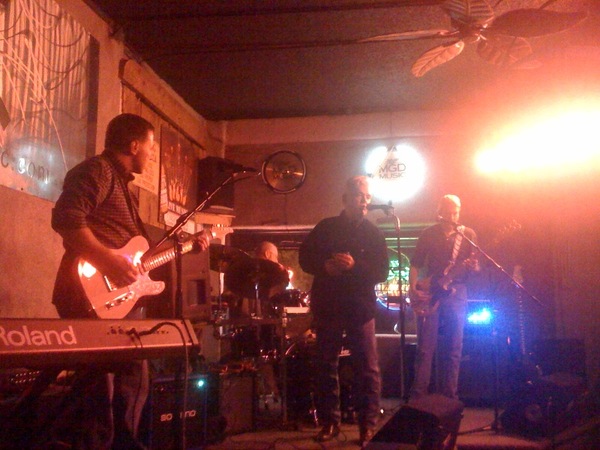
Stu Aaron/John/Rob Leavitt
We auditioned a few other guys, and as I had done in Jakobz Laddr and many other musical configurations that I had played in spanning many years, I recorded nearly every rehearsal, a bad habit of mine. I always liked to know what we sounded like and hear what I could improve on with my chops by listening to the rehearsal recordings. My daily drive into work was an hour round trip, so listening to the rehearsal recordings made the drive fun. The other guys in this band were kind of pompous and picky and no one singer floated their boat. After all, it was Scott and Stu driving the bus, though Rick eventually wrested control.
Upon listening to the audition recordings, I told them to give this guy named Hunt another listen, told them I thought his voice fit pretty good; decent, throaty, good range and dynamic. What do you know, they agreed with the lowly bass player and Hunt was brought into the band. All the rehearsals were over in Scott and Stu’s neck of the woods, central Denver, I lived in the very far south suburbs.
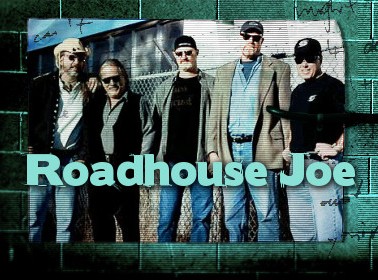
From there it was a fairly decent, cohesive blues band, with the name “Roadhouse Joe“. One of the skills that would serve me later in my musical life was the necessity of listening to recordings to learn bass lines and song arrangements. For the most part, with standard blues structure on many songs it was fairly easy, though there were a few songs like James Brown’s “Cold Sweat” and Cream’s version of “Outside Woman’s Blues” that took a little effort to make fluid.
For me, it was a joy to hold down the bottom and playing bass lines on songs like “Born Under a Bad Sign” were infinitely fun to play. I was learning nuances of bass playing, chromatic step ups, half tone lead ins, turnaround variances, and descending bass lines. I used a fun descending bass line on Albert Collin’s “Too Many Dirty Dishes”.
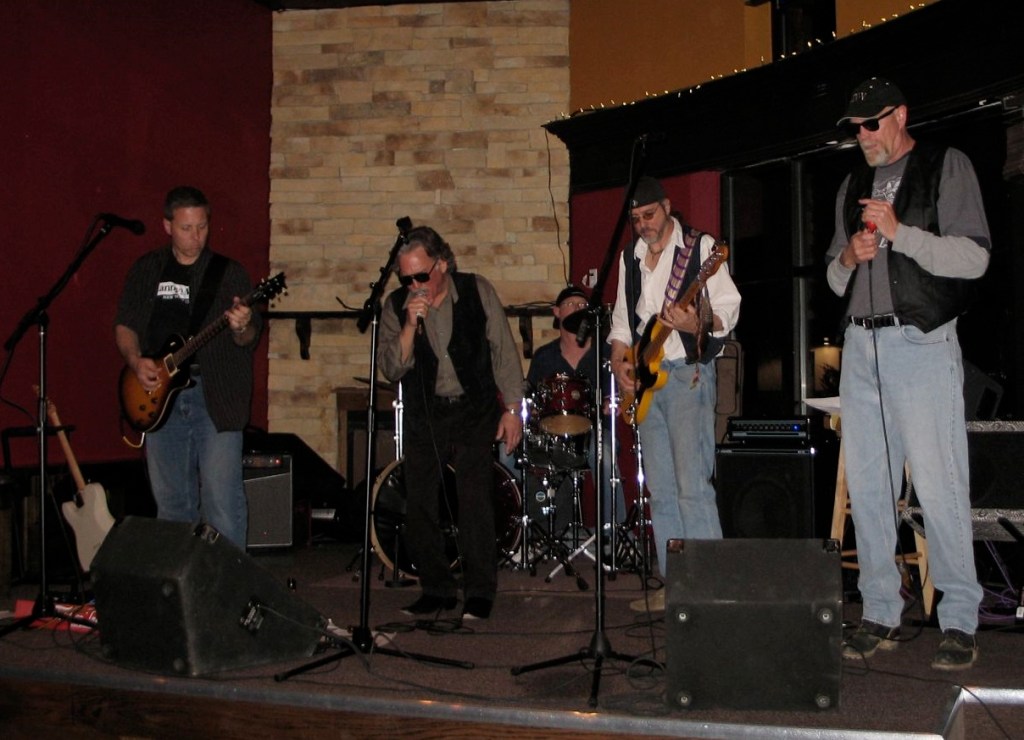
L-R – Scott Mishoe / Hunt /Stu Aron / Rob Leavitt / Rick Davis
My role was cut and dried; hold down the bottom and keep good time with the drummer. No one told me what to play and I gave it a dedicated conscientious effort and took pride knowing my parts to make the whole sound good. I had a decent rig, like a 200-watt Acoustic head over a 15″ speaker and tweeter cabinet. Not expensive, but good enough for what we were playing. And I always gave it a warm and heavy of a sound without making waves.
The descending bass line I played on “Too Many Dirty Dishes” boomed and gave life to the song. At the outset I was using a Godin four string bass, again, not expensive but decent. As we moved along and got better, I bought a new Fender P51 reissue Precision bass with a maple neck and fretboard. With flatwound strings it was a very nice bass to play.
At this point, I did what I set out to do, play bass in a blues band and not have to “drive the bus”. We gigged a fair amount that were nearly all paying gigs. In a span of about eight months, I remember pocketing over a thousand dollars in band earnings. In this time frame 2008-2009, I was still executive chef at the country club and still working mainly the 11am to 8/9pm shift to cover both lunch and dinner. In the busy summer season at the club a fifty-hour work week was a light one; sixty hours in a week and working six days in a row were not uncommon. If there was a gig that I could arrange to make, I’d get my morning sous chef to work the evening shift along with the PM sous chef to cover for me.
We recorded a CD in my basement as I had a sixteen-track digital recorder; Rick the harp player was very savvy with the technology, and we recorded a high-quality disc, with decent artwork. For me, the recording and the band was a little antiseptic and sterile, didn’t seem to have much soul, was kind of put on and forced, even though we actually were pretty tight and played well.
Too Many Dirty Dishes – Albert Collins performed by Roadhouse Joe
Rob Leavitt, bass / Scott “Hunt” Huntington, vocals
Scott and Stu were about ten years younger; I was in my early fifties. Scott was a bit cheesy and was just not someone I bonded well with. It’s not that we didn’t get along, we did, but he was getting an undeserved big ego over things, so I kept to myself and filled my role as bass player. I had little say about material and knew not to offer up anything, though I was adept at helping with arrangements to help with passages and parts that needed work. Can’t remember if I wrote the setlists, I may have contributed for a while. Rick, who I brought into the band, had assumed the lead role and was very tight with Scott and Stu, bordering on being a little pushy. Hunt was along for the ride, and I don’t think he took it all that serious, he was kind of a piece part like me.
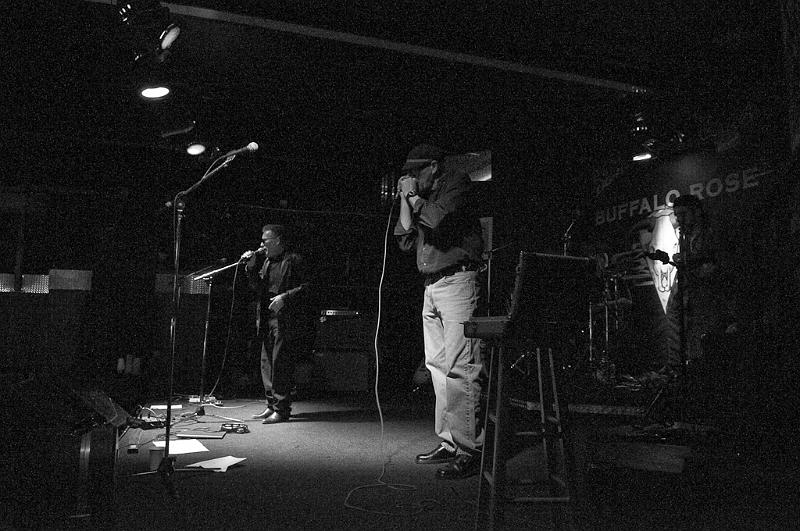
One show at the Buffalo Rose (as you’ll see, this was a place I’d played at a lot spanning many years), Hunt went out between sets and got high with a friend. He was pretty baked as we started the next set and as we began playing “Outside Woman’s Blues”, Hunt started belting out the words to “Born Under a Bad Sign”. We kinda had to nudge him, whisper in his ear and let him know the error.
With this atmosphere, I plodded along with them, still contributing in a professional manner, but not entirely enamored with it all. Often at rehearsal I was beat from working so many hours in the kitchen, and I practiced the best I could, often sitting down and might have seemed disinterested. Perhaps this was because of my uncertain relationship with Scott. I loved playing bass, playing blues, gigging, performing, but something did not seem quite right. Bands famous and not famous get tired of playing the same songs over and over. We all had jobs and worked, and new material did show up now and then.
Roadhouse Joe was the type of band that you only had to see once. We were good enough, professional enough, but there was no real life to the shows that changed from one show to the next. Perfunctory and rote. I knew Hunt could play guitar and bass, I offered up to play guitar on a song or two, switch things up a bit, give it a two-guitar sound here and there. But as gatekeeper guarding his role as guitarist, Scott flatly said “it ain’t gonna happen in this band”.
I wasn’t planning on leaving the band but as is often the case, similar to when you have a job, curiosity leads you to peruse the want ads to see what other employment opportunities are. Same thing in a band, you can always look out of curiosity. Playing in a band has elements like having a job. You commit time and energy working with other people for a common goal. In a band, in return, sometimes you get a little cash and hopefully a lot of fun.
There was this cat, Al Chesis, a very good harmonica player and a superb front man. He could bring it, work a crowd. Let’s talk about a good front man. A good front man is someone who can captivate an audience, excite an audience, be a focal point making everyone seem better and the band more exciting as a whole. Roadhouse Joe did not have that. Hunt was a very good singer, but our rendition of “The Thrill is Gone” was flat, trite and uninspiring. Perfunctory and rote. “Too Many Dirty Dishes” was always good and fun, crowd pleaser, but as a whole, the band seemed a bit stale.
Scott knew Al Chesis, idolized him and sucked up to him. A lot of Scott’s motivation to have a blues band struck me as kind of a “wanna be” vibe to be like Al. I saw this ad online Al had put up for musicians. I conversed with him a little online just to check things out, maybe sit in and play with some other musicians now and then and gave my honest feelings about Roadhouse Joe. Big mistake. We had this outdoor gig in Parker not far from where I worked. It was for some kind of event in a gazebo, some folks in attendance knew me from the country club. My wife’s sister Pam and my brother-in-law Paul came in from Greeley to see us play.
I called Rick on my cell; I was not familiar the area. He was short, curt, rude, and basically hung up on me. During the setup, he was a real prick to me. He had a tendency to be moody, so it didn’t register to me. After the gig while collecting my cash, Scott was a prick asking about if we could practice a certain day that I’m sure he knew I couldn’t make, then he threw up his hands in fake exasperation, being a wad.
We had a gig for the following Friday. Thursday at work I was down in the employee locker room on the shitter when my cell phone rang. It was Stu, told me I was no longer in the band. Nice of Rick for him and Scott to make Stu do the call. No asking me “hey Robbie, what’s up?”, just cutting ties in anger over nothing, being pompous amateurs, really. I’m sure Al Chesis was amused as he had passed on my opinions to Scott and Rick.
I did talk with Hunt; we were sort of friends as the two ‘outside’ pieces in the band. Some guy off the street filled in on bass for the Friday gig, guess it was pretty ugly according to Hunt. Hunt didn’t care; he was just bidding time and went whichever way the wind blew. Time to move on, I had put a lot of time and effort in the band, but as I was not part of the Scott/Stu/Rick triangle, adios. Won’t say that I wasn’t shocked and a little hurt, I was. I’d been fired from jobs before; this was not much different.
After I had basically taught myself bass for a blues band, now getting jettisoned, I was a little numb. Jakobz Laddr had imploded and now after a two-year stint in a blues band I was back to zero, starting over. In Roadhouse Joe I plucked the bass strings with my thumb, it gave me accuracy and control, confidence. Some bass players play with a plectrum, a pick. True professional bass players play/pluck the strings with their fingertips, alternating fingers on alternate strings. That seemed foreign to me, as guitar had really always been my instrument.
With no band commitments, nothing in the works, I set out to be a better bass player. I knew that fronting a band like Jakobz Laddr again was not even a remote possibility. With spare time, when I had it, I’d practice chromatic scales and bass lines on the bass, no amp, just sitting on the couch plucking the strings with my fingertips getting them to work, watching a ball game with sound off.
The exit from Roadhouse Joe was late summer 2009. It wasn’t until November 2010 that I had the motivation and desire to seek out another band opportunity. I’d been working ten years as executive chef at the same country club, since October 2000. It was about 2007, when I told Staci that when the ten-year mark came around, I was going to pull the plug and leave the club. The money was good, but it was a brutal physical and mental grind.
Reality TV has made being an executive chef seem like a glamorous job of easy artistic creation. In truth, it is a complex management position requiring strong people and organizational skills; writing and implementing menus, writing work schedules, maintaining a sanitary kitchen, manually taking inventory of hundreds of food items all over the kitchen and the storeroom, purchasing the goods minimizing spoilage and maximizing cost effectiveness, overseeing meal times with the cooks, often having to work the cooks line in staff shortages.
In a country club or hotel, many times meals are being produced for two different dining rooms and catering rooms events all at the same time. Only through years of working experience can this be mastered. Anyone straight out of culinary school might have acquired solid food knowledge, but running a high-end operation would eat a novice chef alive. A definition of stress, as known from experience, is working the hot line of a restaurant when two of the three cooks scheduled that day call in sick, it’s a full dining room, the ticket machine printing meal orders is spitting out two feet of tickets nonstop and the F&B manager, instead of offering to help, is banging service trays loudly in anger.
I’d been working at country clubs since 1992, back when I was playing music with the high school kids in the band Black Bordeaux. Making up my mind then to call it quits at the ten-year mark made it easy to focus and do my job, rather than have three years of “exit syndrome”. Any troubles with management, or issues with the club members, or managing staff, I approached with an inner calm, knowing with how time flies, soon enough it would be over.
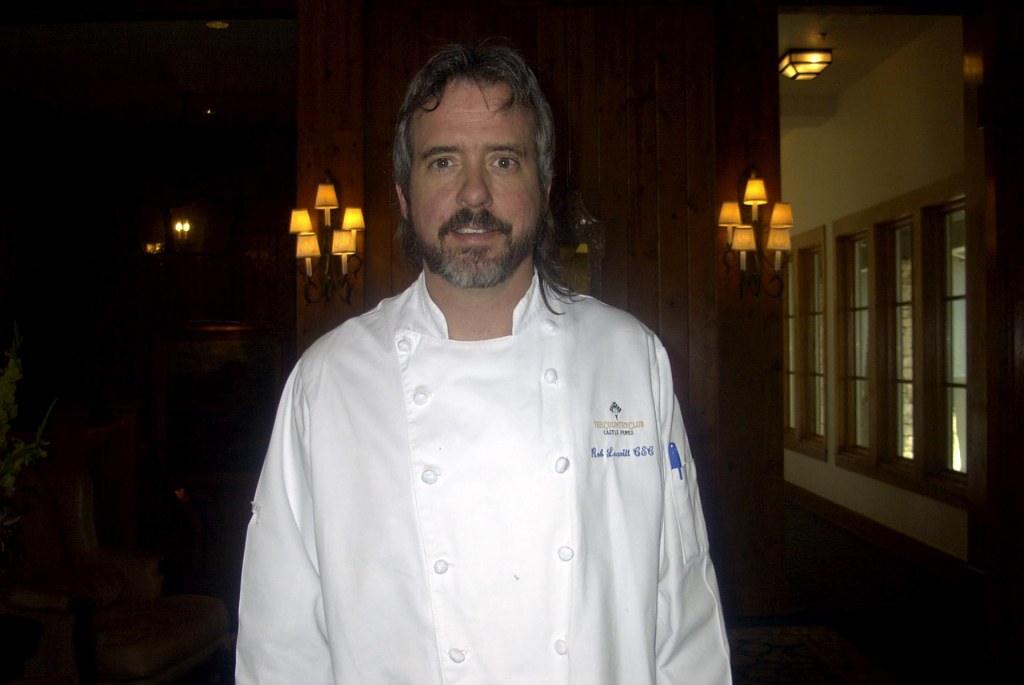
The last year was a little rough, not because of “exit syndrome” but because of management. There were three different food and beverage managers the last three years. They didn’t know the nuances of the club; they didn’t know me and my years of dedicated service. The last guy was a real a-hole to me, but I kept my mouth shut and as I told Staci I would, after ten years, I moved on. The money was good, and Staci and I were conservative with finances, and we paid off the mortgage on the new house we built as newlyweds. I was fifty-five years old. In my mind I still had the desire and love of making music as the seventeen-year-old me.
“Big Muddy River”
After gaining my freedom, my release from the grind of employment, sounds like getting out of prison, doesn’t it, I started looking again to play music in a band. Right off the bat I conversed with this guy who lived in Golden, not far from the Buffalo Rose. He was looking for a bass player to start a band. I was honest with guy, Rob Medina, telling him I’d been in a blues band for two years and that I had my own original music band before that. Didn’t need to tell the whole story, no need to live in the past, but I said that I was an okay bass player and played guitar and some slide guitar. Told him on bass I could nail any blues he threw at me but that I’d need to work on any rock material, I was not that well versed on such a huge genre.
He gave me some songs to work on and it started a bit slow. We played in this one drummer’s garage with another kid on acoustic guitar and keys, I say kid, he was probably thirties. Rob was close to my age and the drummer somewhat younger but older than the kid. After we got done that night, Rob told me we weren’t coming back, that he didn’t like the kid’s playing and that the drummer was crazy, fucking nuts, which he kind of was.
Interacting with new folks, getting to know them, it takes time, and it takes time for them to get to know you. I hung with Rob as the thing evolved from the ground up. Eventually we were over at another drummer’s house in Golden that Rob knew, Dennis. I’d been working on the tunes Rob gave me, so I was able to hang, was mainly blues, with some Creedence Clearwater and JJ Cale added in. These sessions had a very good guitar player named Jon Simiski, one of the best blues players I’d ever played with. He could play Elmore James slide guitar, Clapton style, like “From the Cradle” album. Superior, incredible tone, Fender tube amp, the real deal, nice guy. At this point I did not miss the guitar work in Roadhouse Joe.
Nice and Warm / Big Muddy / audio from the Buffalo Rose rehearsals:
We might have done one Buffalo Rose set with that lineup: Jon on lead guitar, that drummer, Dennis, plus me on bass and Rob singing and 2nd guitar. It was good, it was fun, I was glad to be back in the saddle playing music. Rob was a good front man, great guitar player, a cocky short guy, raspy voice, he did what you had to do when performing, he “lived” the song. Some of what we played that night was “Hoochie Coochie Man”, “Backdoor Man”, Boom Boom”, “Born on the Bayou”, like that. I’d come up with dynamic, steady, hard charging bass lines for “Backdoor Man” (done in the Doors style) and “Born on the Bayou”, signature basslines I would use for years in that band.
VIDEO: Big Muddy – BOOM BOOM
Robbie Leavitt, bass / Jon Simiski, guitar
Next time we were at that drummer’s house practicing, Jon was there, and Rob had brought on another guitar player, Don Milan. So, we now had three guitars, bass and drums. A little confusing for my tastes, but maybe Rob knew something I didn’t. Don was very good, an elite guitar player that could play anything by ear, but very different style than Jon. Somehow the band ended up with the name “Big Muddy”, shortened from Big Muddy River. On business cards, posters and promo, Rob used the moniker “Heavy Blues” after the words ‘Big Muddy’. We did play a fair share of blues, but also various rock songs not too close to blues. I was along for the ride and this band didn’t have the pompous vibe of the last one.
The next time we rehearsed, it was a new drummer, Derek Hall, I’m sounding like a skip in the record, aren’t I. He lived the next street over from Rob in his subdivision in Golden and we played in Derek’s basement. In that late spring of 2011, we had a few gigs in Golden, Staci came to see one of them where Rob had this thing for a “big band” type of ensemble. And not the “big band” of the 1930’s and 40’s. It was me on bass, Jon and Don on guitar, Rob on guitar and keys, Derek on drums, this guy on dobro who you couldn’t hear him, plus a harmonica player and this girl named Gemma singing.
Off and on through the years in Big Muddy there might be an additional musical ornament or two joining us for a gig. Rob did put on a show at the D-Note in Arvada once with Jon, Don and a friend of his from Chicago all on guitar, me on bass, Derek on drums along with a conga player that was a pretty cool show. Always though, I told Derek we sounded better as a four-piece band, and we did.
Rob was driving the bus and by this time as my second stint as “the bass player” I was comfortable in my role. Plus, the weight and grind of working a job was gone and I had a fair amount of free time. Rob began incorporating himself on keyboard for a few songs, so that saved the ears from having three guitar players. At some point into the fall of 2011, Jon was still with us. He lived in Boulder, was a very big ski enthusiast along with his wife and young family and said playing with the band was causing hearing loss and tinnitus. Shortly, he was gone from the band, leaving the core of Rob, Don, Derek and me.
I hung with Rob because I loved playing music and was curious to see where this was going. Being part of an ensemble, playing your role, making the whole sound good was something I liked being part of. I enjoyed that some of the blues we played that were very heavy. Maybe the booming bass lines from the James Cotton Blues Band I saw in San Francisco made an impression on the sixteen-year-old me. Playing the bass line to “Born Under a Bad Sign” with Rob vamping on vocals and keys, Don Milan crushing it on lead guitar and me on bass with Derek’s excellent drumming, this was fun any time, rehearsal or gigging.
Born Under a Bad Sign – Big Muddy – 2011
Robbie Leavitt, bass / Derek Hall, drums
As a bass player playing blues, the “walking basslines” are really where it’s at, in terms of pure musical fun while playing. That you are keeping things moving along with the drummer while two guitarists interface with vocals in a classic old song like T-Bone Walker’s “T-Bone Shuffle”, for me, this was what gave me soulful grounding while playing bass.
T-Bone Shuffle – Big Muddy – 2012
Robbie Leavitt, bass / Dax Hunter Jordan, drums
Most of my life I had been called ‘Rob’, so Derek and Don took to calling me Robbie to ease any name confusion with Rob Medina. I have taken the name ‘Robbie” ever since in musical and stage settings. A very good kid at Castle Pines named Kevin Marquet always called me Robbie as well. He was a bus boy at Glenmoor Country Club and asked me if I could get him off the floor and into the kitchen to work. I took him in and gave him an opportunity, like others had done for me, told him it was all up to him to take it as far as he wanted. He worked his way up to be my sous chef before I left Glenmoor Country Club. He ended up as sous chef at the Country Club at Castle Pines and was instrumental in getting management to interview me for the executive chef job there.
Kevin loved music and in the kitchen at Castle Pines he had his buddies in grounds maintenance drill holes in the kitchen floor to run speaker wires from the chef’s office in the basement. He convinced me and Staci to join him for a concert at Red Rocks with The Dead, this was like 2003. As Staci and I got back to our car after the show, some hippies had broken the window and stolen the car stereo. In my book, being a hippie is about peace, love, happiness, music and pretty flowers, not ripping off your fellow man. Guessing the kids that broke into our car, like Charles Manson, they never got the memo.
In this 2011/2012 time frame with Rob playing some keyboards, I might have tooled around on them at rehearsal or late in a gig when no one was really around. In Jakobz Laddr, I had fooled around with a cheap Yamaha keyboard that I won at some kind of food exhibition when I was a chef. Even had used them for a Jakobz Laddr gig at Cricket on the Hill where I sang and played “Voodoo Child” on keys, along with my song “Soundtrack of my Mind” with one of Jeff Miles’ friends sitting in on guitar.
Won’t say that I was particularly good on keys but wasn’t incompetent. I approached it like rhythm guitar and knew when to change chords. Finding a melodic scale to fit the song on keys might be easier than guitar and if you give it a little ‘verve’, you can get by. The sonic qualities and timbre of keyboards often get washed out in many electric band settings.
Stage sound for performers is always a bugaboo to be able to hear yourself and to hear fellow musicians as you play. In these musical performances it varied whether the band provided their own sound/PA/public address system or if the venue where you played provided the sound. In this, sound/PA was often mainly for the vocals and sometimes the amplifiers would also be run through the PA/public address system.
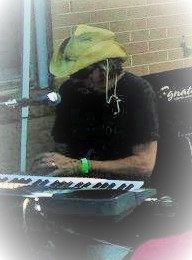
Big Muddy was a good fit, it was Rob’s band, he drove the bus. Being in a band is like being on a sports team, you’re not good friends with everyone, but as long as you are capable and can pull your own weight, then people get along. I was Robbie, the bass player, we were all friendly but I didn’t really socialize with them outside the band. Derek and I got along a little better, he always gave me grief, teased me like we were high school buddies, teased me that I was an old timer, an old man. He was about fourteen years younger, like Staci. Derek and I were tight musically as a drummer and a bass player should be. We had fun being in the pocket on songs like Tab Benoit’s “Nice and Warm”.
As things progressed, Rob was a creative sort and with him incorporating more keyboards into the repertoire, somehow, he would take up the bass and I would play keyboards, I didn’t play keyboards a great deal, but enough on some very interesting songs. One was the Allman Brothers’ “In Memory of Elizabeth Reed”. Rob played bass and Don did a very nice lead guitar rendition, superb guitar swells and leads. I was no Greg Allman on keys, but adequate on most all of the song, with the keyboard solo sketchy at times, but I always worked hard to improve my parts.
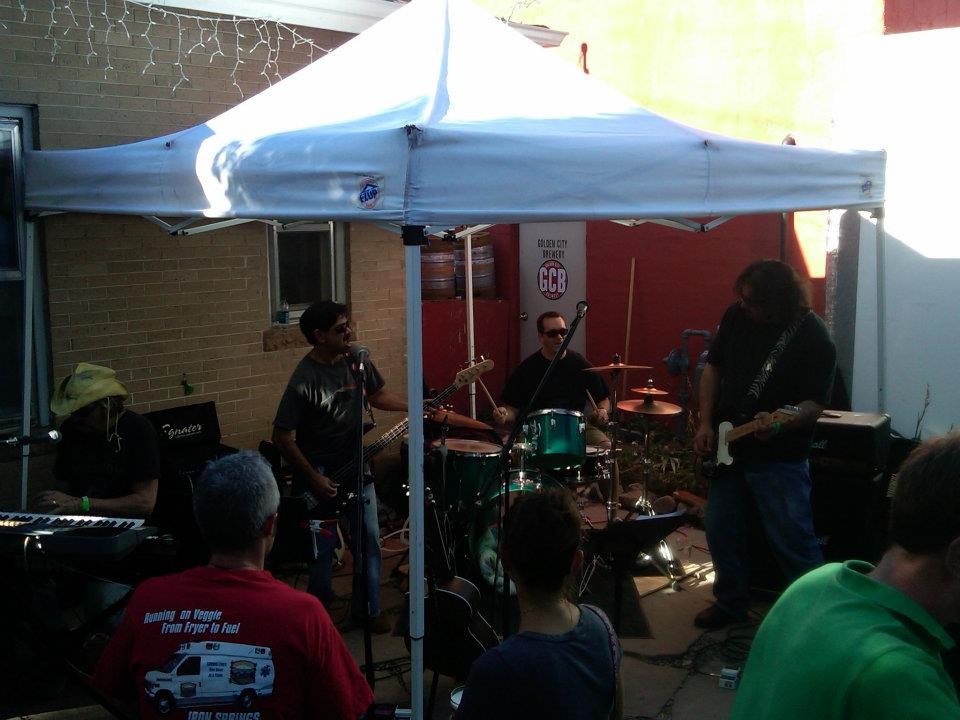
Another song Rob played bass on was “Chilly Water” by Widespread Panic, with me on keys. I really liked the song; it was heavy and perhaps a bit loud but always fun and well received. Rob gave it a lot of energy on vocals and bass. That we were progressing with a varied repertoire, varied instrumentation and that I was trusted enough to play keys, was a welcome change from the inflexible minds of Roadhouse Joe. Rob found this vintage Korg stage organ with drawbars and a wooden frame that we went half/half in on it. It was a relic from the past.

I liked playing bass, I knew my role and I worked hard to be good, make the band sound good. It was icing on the cake to sit in on keys for a couple of songs. With Rob playing bass on some songs, and me on keys, in my mind I’m thinking “I’m a better guitar player than a keyboard player, maybe see if they throw me a bone and let me play guitar on a few songs”. It was a drawn-out process to bring it up, to take time in rehearsal to show a song, to demonstrate to two very good guitar players that I could play guitar and sing well enough to incorporate a song or two into a set list. By now it was 2012.
Even though I was leery of what people can be like in situations like this, I had been in the band since 2010 and demonstrated reliability showing up on time for rehearsals, demonstrated capability as a musician on bass in performances. I wasn’t trying to give up my role as bass player, but as Rob had initiated playing some bass and me some keys, I gave it a shot. Rob was a rather intense front man who could bring it, so in a three or four-hour set, having a break from fronting and having someone else front a few songs seemed logical.
Eventually I ended up playing a number of songs in open G tuning playing slide guitar. The first one was “Rollin’ n’ Tumblin”, which I had always played as “Louisiana Blues”, same melody, really. I’d played the song all my life, so it was very comfortable for me. Again, icing on the cake having someone on drums, bass and second guitar backing me up. Don and I traded solos, and in the arrangement, we incorporated a peppy, drawn-out instrumental outro ending with a Savoy Brown vibe.
“Blue Matter” had long been one of my favorite Savoy Brown albums since I was a pot smoking sixteen-year-old. Way back in the Black Bordeaux days, John Buckley and I went to see Kim Simmonds and a later configuration of Savoy Brown play at a dinky club in Denver under the railroad trestles by Union Station in the early 1990’s. Also saw a dynamic Savoy Brown show at the Rainbow Music Hall back about 1980.
Another song I played on guitar was a rocking version of “Six Days on the Road” using a hammer-on shuffle beat, again trading solos with Don. My singing was okay, but I learned to give it a good “showman” vibe with energy. Additionally, we played a rockin’ Bluesbreakers tune, “Stepping Out” with Don on guitar, me on slide guitar, Rob Medina on bass and Derek on drums. Whatever rock songs we did was fun, but for me, the “Heavy Blues” of Big Muddy was the most fun, “Traveling Riverside Blues”, case in point.
Steppin’ Out – Big Muddy – 2011
Robbie Leavitt, slide guitar Derek Hall, drums
Travelling Riverside Blues – Big Muddy – 2012
Robbie Leavitt, slide guitar / Derek Hall, drums
One day in rehearsal I heard Don plinking around on the Stones version of “Love in Vain”. In any band rehearsal anywhere in the world, someone might be noodling on something, and a new song is written or an unthought of song brought to the lineup. Years ago, somewhere in the first Jakobz Laddr/North Denver Allstars era, 1993-94-ish, as I mentioned, I’d played slide guitar on the song with Bud Hall on rhythm guitar and singing.
This Stones version of “Love in Vain” was among the songs the North Denver Allstars would play, when I learned the Mick Taylor slide guitar part from the live Stones album “Get Yer Ya Ya’s Out”. It had been nearly twenty years since I had played it, but I was determined to re-learn it. I’d have to sing it as well. The arpeggiated rhythm guitar in 6/8 time is actually quite rigorous to flat pick. Don Milan was a natural at it and always played it flawlessly.
Again, I’m not Mick Jagger, so singing it and singing it well, is pretty demanding. Re-learning the slide guitar part took a lot of effort and while I did not replicate the solos, note for Mick Taylor glissando-ed note, I managed a decent, professional part. This song took a lot to get up and running, to sing it, with slide fills and two slide guitar solos. I stuck with it, as laborious as it was for the boys to put up with my voice cracking in nervousness as I tried to gain confidence playing and singing the piece in rehearsal. That Rob played a tasteful, educated bass line, Derek on drums and Don carrying the rhythm part, that made it easier, and the song eventually made the live set repertoire.
Playing bass in a band that you are not fronting or singing in, it’s not that you are a wallflower, but the spotlight is not on you, it’s on the singer and guitar players. For me to get up with this song and pull it off, took some fortitude.
For slide guitar I had this funky beater of a guitar, a “Franken-Tele”, a “First Act” guitar. It was one of the “best guitars under $200” in a 2006 Guitar Player magazine issue – a 3/3 tuner headstock, maple neck and fretboard slapped on a TV yellow Telecaster body. I removed the cheap tuning keys and replaced them with Grovers and raised the action for playing slide. I’d played it in Jakobz Laddr and still love and play that guitar which is also very good for recording.
Now into 2012, Derek took another job and took leave from the band. He was a cop in Indiana where he was from, and his real estate broker job had lost its appeal. Derek went with what he knew and working as a cop for the City of Golden gave him better pay and benefits. It just meant being a cop and as low man on the totem pole, the crappier shifts. Big Muddy was then searching for another drummer, Spinal Tap references, notwithstanding. A younger kid with a family tried out; Rob didn’t care for him, and he had too many family and work obligations to even be a realistic option. In Rob’s Golden neighborhood, Rob knew a lot of people, Rob was social and a good bullshitter, maybe as good as Derek.
We ended up with this thirty something kid named Dax. He was a good drummer, but needy, boisterous and he loved fussing with his long hair. Thinking he had some connection with that gal Gemma, who Rob would bring her around for band purposes every now and then. During my years with Big Muddy, Rob also had an acoustic side project called Drama Americana, in which Gemma would sing. In jest I would call it “light hits from the ‘60’s and ‘70’s”. Rob was good, he had a strong musical drive, so having more than one musical ensemble, more power to him, to use a phrase from the ‘60’s and ‘70’s.
VIDEO: Love in Vain /Big Muddy / Arvada Blues Festival at the D Note, 2012
Rob was pretty good at booking Big Muddy, I helped when I could and got us a few gigs. My natural instinct was organization, and working with Rob, I was pretty much in charge of writing set list. It’s not rocket science, but it does take a little forethought – slow song/fast song? Song key? Good set opening song? Good closer song? Switching instruments, Rob guitar/keys/bass, Robbie bass/keys/guitar? Dax wanted to write the set lists, but Rob said, “Robbie does a good job at it, it’s not something we should mess with”. Dax pushed and pushed about doing it, so Rob, as a wise person said “Ok”, with both Rob and I knowing this would be interesting. After an unmitigated cluster F of a few sets, that was the last time Dax wrote setlists.
I will give Dax this though, he loved my music, my old Jakobz Laddr tunes. These were the kind of songs I’d play when I picked up Rob’s Les Paul and fooled around with in practice if Rob was taking a break, on the phone or in the shitter. One of these songs was an instrumental jam song I wrote called “Bluz for Sancho”. I’d written it after playing with Black Bordeaux ended, jamming with Greg Livingston.
It is actually a twelve-bar blues in A with additional sections added on that gave the song some very interesting elements. The twelve bar phrase cycles through the twelve bars, then goes into two different funk stop patterns in the A/D/G/C box section of the fretboard before interluding into a chordal refrain. That whole thing is repeated once more, then the song stays in A using the main phrasing lick for an extended ‘outro’ jam. A great song for drummers, bass players and lead guitarists, and for me, doing what I have always loved, playing interesting and consistent rhythm guitar. Rob played my bass, and I played his Les Paul. The song actually made the repertoire till the end of Big Muddy.
Though a number of old Jakobz Laddr tunes got jammed around with in Big Muddy rehearsals, “Bluz for Sancho” was the only one that saw light of day. Don Milan once made a comment like “wow, your original songs are so good and fun to play”. We played a fun gig that Dax had organized at the Buffalo Rose late December 2012, and we opened with “Bluz for Sancho”, he introduced it as my song, and said “Kick it, boys!” as we tore into it. More on “Bluz for Sancho” later in this program.
In this time frame, I was mostly free to make any rehearsal and any booked gig. Staci and I had started a small teashop/coffee shop in the lobby of a bookstore in Englewood. It was an espresso cart we bought from Jeff Miles of Jakobz Laddr. It was a pretty casual operation, and we named our shop Moon Kats Tea Shop, using images of our two cats in the logo.
I had been running an online gourmet store that sold tea and gourmet goods since 2001. Back then, I wanted to get in on the dot.com boom and ran it in the background the whole time I was executive chef at Castle Pines. The online store didn’t make a lot of money, but it didn’t lose money and was a good tax write off. We served tea and coffee, and Staci taught herself phenomenal baking skills. From my days working in country clubs, we also offered fancy sandwiches and salads. One person could run the teashop/coffee shop most days if we didn’t have any “high tea” bookings which were becoming lucrative.
The owner of the bookstore where we had our tea shop was a guy named Jeff Harrison. This place was called Isis Books and Gifts on South Broadway in a fairly old, rundown Englewood neighborhood, not very far from the duplex I used to live in in the first Jacob’s Ladder days. This bookstore was of a “metaphysical” nature with tarot readers/psychic readers/palm readers in little cubicles in subdivided rooms in the back. The building at one time had been a mortuary, so fitting with the nature of the bookstore.
Jeff Harrison was a good guitar player and song writer and from what I could tell had aspirations of making it in the music business at one point. I was in Big Muddy doing OK but a little side project with Jeff Harrison evolved called the Galactic Express. We played a lot of Jeff’s original songs with a bit of Hendrix and Cream mixed in as a trio with a drummer Jeff knew. Jeff’s songs were very good, unique, good melodies, interesting lyrics, not run of the mill songwriting.
Jeff was an intense guy, kinda held people at arm’s length to let them know he was always in charge. As the landlord of our teashop, with him I always felt a little underlying tension, so there was not much bonding as friends or as musical partners. I played bass to his repertoire but really not enough time in rehearsal was managed to perform well and I’m not sure he really cared to. He had a nice home studio and was very into producing a band of twenty something kids called Blind Tomorrow.
He put on a show at the Oriental Theater in west Denver promoting Blind Tomorrow’s band “CD Release” event. The Galactic Express (billed as Jeff Harrison) played a set before Blind Tomorrow and another younger aged punk band played as well. The stage was fabulous, huge, with the art deco back drop and curtains of an earlier era of music, movies and entertainment. I saw Johnny Winter play a show there in 2008 that was quite a wonderful concert event.
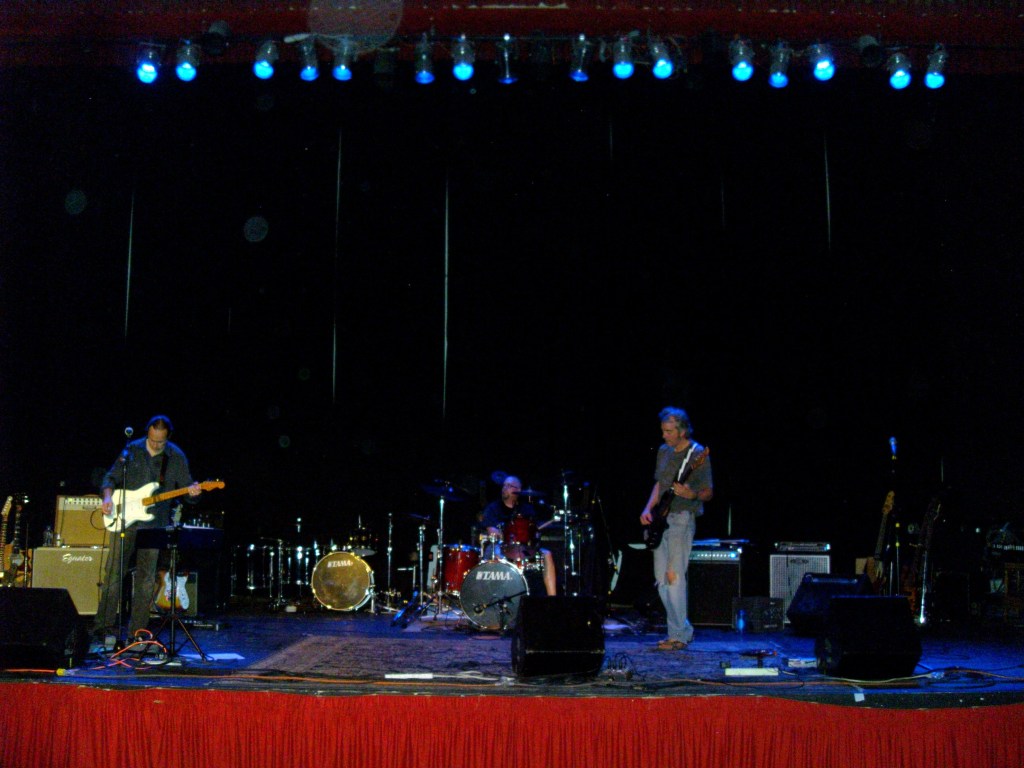
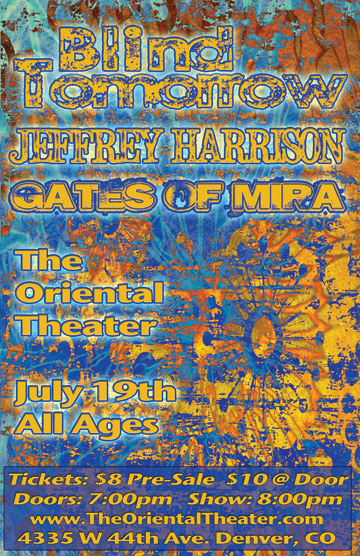
It was fun to play there on the Oriental stage; Jeff was intense and I’m not entirely certain that he was all that into performing. We did put on a decent effort despite really not rehearsing much. In my everlasting love of playing music, I landed an open stage for the Galactic Express at a biker bar in Wheatridge that I’d played at one time in Big Muddy. We had Dax on drums and again, it was not something Jeff seemed all that interested in.
Dax played great but with Jeff, he and I might have had a little disconnect. Whatever the case, the open stage gig at the biker bar with the Galactic Express, there were a few derailments on a couple of the original songs probably due to lack of rehearsal on my part for his material. I’d never been relaxed or comfortable around Jeff, so the Galactic Express was short lived.
With Big Muddy we practiced nearly every week and as had been my habit as long as I could remember, I recorded nearly every rehearsal and every gig. Sometimes a gem would appear, and it kept me in touch with what we were playing. Not all the sound files were stellar, but many were and with me passing along the rehearsal songs via email to the boys, it kept us all in the loop.
For someone who has given a fairly lucid chain of events up until this point, 2013 is a bit hazy in my recollection. Dax on drums was still with Big Muddy through the summer and Rob had us booked several times on the Buffalo Rose patio. It was a great place to play in the summertime, always people there drinking, a big spot for bikers also. The outdoor stage backed against the building and faced a thatched roof island bar. Up and down the street were businesses, but across the street were some apartments. Therein lay some sound ordinance issues.
We did tone it down a bit for a blues rock band, but still…. In the ceiling of thatched bar was some sort of sound decibel meter that you could view from the stage. If it shone green, it meant the sound levels were okay, but if it flashed red….May Day, May Day! We made it work even with quite a few incidences of clipping red.
At some point later in 2013, Dax was out as a drummer and Derek rejoined the band. He was still a cop but had gained seniority leading to better shifts where he could practice and gig. In late 2013 the lease ran out on the teashop in Englewood. Staci and I made a decision to sell our house in Highlands Ranch and move to Estes Park to be closer to her aging parents.
After a two-night gig in February 2014 at the same biker bar in Wheatridge I played at with Jeff Harrison, I let the boys know that I’d be moving. Wouldn’t be moving till we sold our house and found one in Estes Park, so I would be around until summer. We had one more gig booked at a bar in Parker in April that I committed to play. Our last show was a good one, lots of fun for closing out in the band.
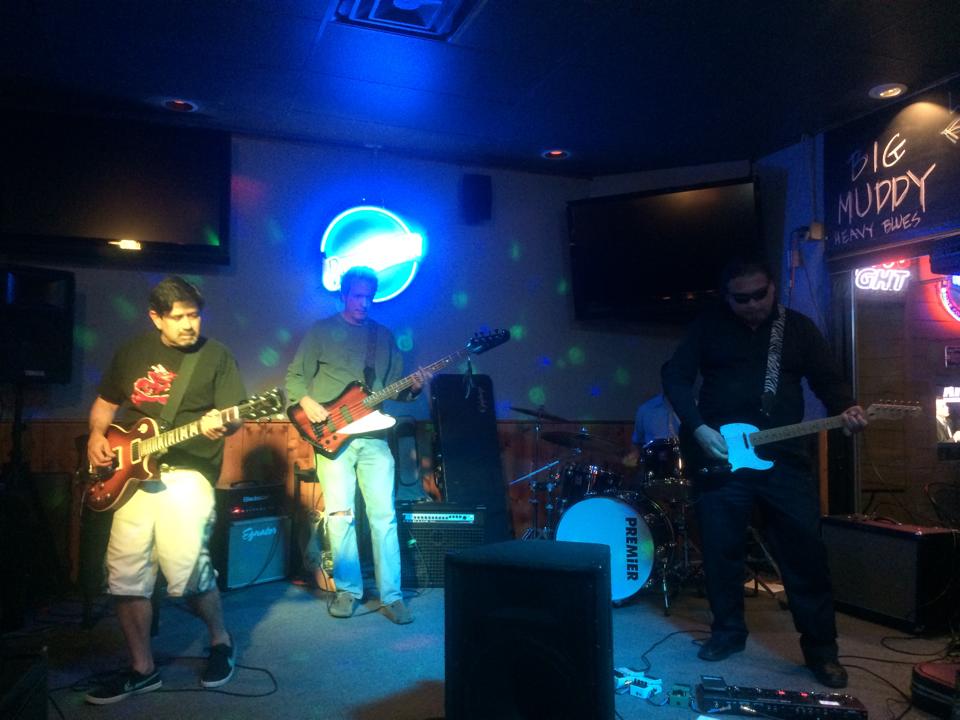
Robbie Leavitt, bass / Derek Hall, drums / Don Milan, lead guitar
At the last Big Muddy show at the 20 Mile House in Parker, Colorado we played a great mix of blues and rock, including Rob Medina’s composition “Alley Song” that had a nice bossa nova feel. Among our best material were some of The Doors songs, evidenced by the psychedelic “Riders on the Storm”. Another great element in the Big Muddy repertoire was our joining of songs together in tasteful medleys, here with “Fool for Your Stockings/Hoochie Coochie Man”. We closed the night with me on guitar and Rob Medina on bass for with a rousing “Bluz for Sancho”.
Alley Song – Big Muddy
Riders on the Storm – Big Muddy
Fool For Your Stockings/Hoochie Coochie Man Medley – Big Muddy
Rob Medina, guitar, keyboards / Don Milan, lead guitar
Robbie Leavitt, bass / Derek Hall, drums
In the three solid years from late 2010 to April 2014, in Big Muddy, I achieved what I set out to do after Jakobz Laddr imploded in 2007, play bass in a gigging band and not have to drive the bus. Roadhouse Joe taught me a great deal; I enjoyed it for the most part. The unceremonious exit left me with a bad taste for years. Recently I listened some of the recordings from that band. After not hearing those recording for many, many years, there were a number of songs I enjoyed listening to again.
In Big Muddy I was in it from beginning to end, that band did not continue after I left. We really did play some top shelf music; I will list the songs in the music ‘bibliography’ at the end. We played at some very cool clubs and a lot of dives. Rob and I were in it the whole time, doubtful he has the same impression about the band that I do. Don Milan, who joined us early along with Jon Simiski, to this day he can play in any band he would like to and does. Drummer Derek Hall took a different tack in music after Big Muddy.
“Rocky Mountain High, Colorado.…
…there’s a Red House over Yonder…”
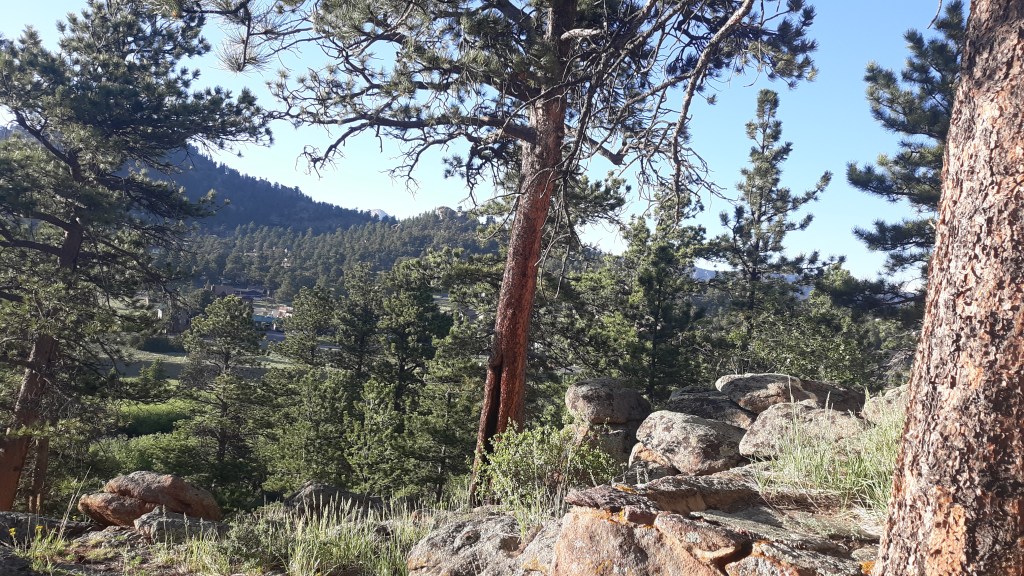
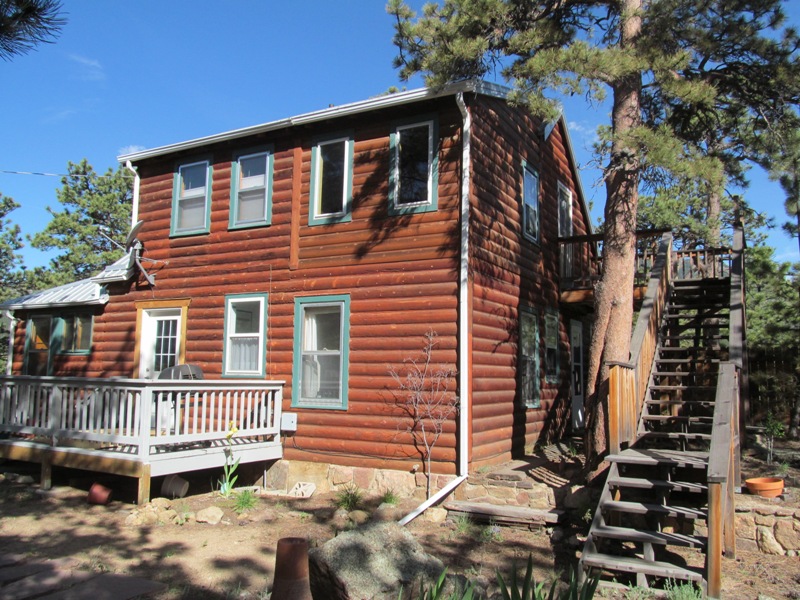
With the move to Estes Park in June 2014, a new chapter in my life and musical life began. The musical life was snuffed out until 2017 as we turned the little teashop we ran in Englewood into a full-fledged restaurant in this tourist town. Not sure that is what either Staci and I truly wanted to do, and it took quite a bit of effort and money to get it running. Might have been a little miscommunication going into it, but we needed to have a reason to move up here. In hindsight probably should have just gotten a job working for someone else, something not attractive in my mind.
Running a restaurant is brutal, though we were well received and fairly successful. Working ten to twelve hours days, six days a week was as bad as the brutal days working in the clubs. We were our own bosses, but slaves to the business, so we had not much of a personal life. Staci was renowned for her self-taught baking skills and the food we offered was a cut above the general tourist restaurant fare in town.
I had no time, energy or opportunity to play music, though the desire was always in me. One afternoon when the restaurant was quiet, this guy came in and ordered tea and started talking to me. He said was a novelist and a venture capitalist, that he was a composer, a bass player and also wrote software. Just another self-absorbed crazy tourist, I thought, with a “enough about me, let’s talk some more about me” attitude. Gary Wayne Clark. I had no idea who he was.
Guessing that Gary may or may not have known who I was at the time. Gary is married to Jill Meyers. My oldest brother Bill, had met Jill’s sister, Nancy Meyers at the University of Colorado in the early 1960’s. They married in 1964, divorced sometime in the ‘70’s. As an eight- and nine-year-old boy in the early 1960’s, we travelled to Estes Park for family events between the Meyers and Leavitt families. At the time, I was like any other boy coming to Estes Park, infatuated with riding on the go carts. The Meyers clan had a hundred acres or so of prime land north of town with majestic Longs peak staring in at the family home.
So, Gary Clark was the ex-brother-in-law, kinda, that I never knew I had. We did connect eventually and did play some music together, nothing serious, I didn’t have much free time. He played bass and I did teach him “Bluz for Sancho” and “Devil” another Jakobz Laddr tune, and I learned a few of his songs like his release “Logan’s Lament”. Gary is active in music and has won numerous awards for his musical releases, notably on Clouzine, a European web-based music outlet/magazine. More on Gary Clark a bit later in the show.
Derek Hall came up to visit, he was really excited and wanted to play guitar with me, this was like 2015. He could barely play chords or barre chords and barely change from one chord to another, but he was excited. I humored him and pulled out a guitar and strummed a bit, but didn’t think much of it, I was too beat to care or notice. Over Christmas 2016 Staci and I decided to sell the business.
In early 2017 I hurt my back in the ice and snow at our storage unit. Back injuries are the worst and I could barely stand, walk, sit or sleep, in pain all the time. Working at the restaurant was bad enough, with a bad back, it was misery. It was looking like back surgery, not a nice outlook. Luckily, a couple of rounds of steroid epidural shots did the trick and my back has been decent ever since. After some lengthy negotiations with a buyer, we sold the restaurant in May. …..June 1st, 2017, free again, at last.
The wonderment we had coming to Estes Park in 2014 when we had first moved into our 1937 red log framed cabin in the woods was back. We could exhale and slowly enjoy life again. Living in a tourist town is not all that groovy. We lived outside of town, so we had some peace and quiet. Staci and I had been together since 1994, she was fun to be around and share life with. Our two cats, Hansel, a bratty orange tabby, and Gretel, a calico princess, made us a happy, silly little family.
It took me a while to get any musical bearings. When I came to Estes Park in 2014, I knew with running the restaurant that it would be difficult to play organized music with other people. In my musical heart and mind, I vowed to dedicate myself to slide guitar, even though I’d been playing it since I was 17. I played music with Gary every now and then, but he was too busy running his business to do anything serious with music.
Gary has a birthday party every year on July 3rd that he calls “Garapolooza” and turns it into a jam. In 2016 I found a drummer named Jerry that Gary paid to sit in with us. Gary and I played some of his music along with a few Jakobz Laddr tunes with Ali, his virtuoso daughter on guitar. Gary is the same age as I am, born in 1955, and he still likes to work. I was glad to be done with it.
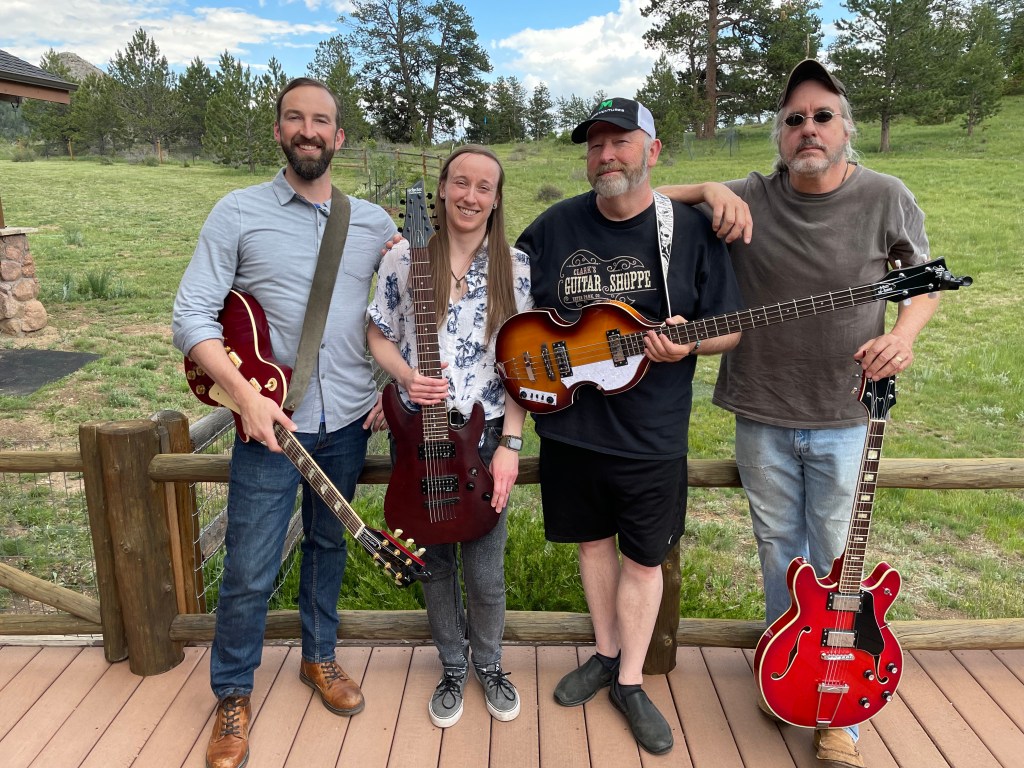
L-R Justin Clark/Ali Clark/Gary Clark/ Robbie Leavitt
Staci and I worked around the house, tied up loose ends and spent time with Staci’s folks every week and more. You can’t toss a squirrel twenty feet in Estes Park without hitting a musician. This is a tourist town but also a lot of retired old geezers like me. Physically, yeah, I’m getting older. Mentally, I still have the bright love of life and love of music I did in high school playing music with Bob Stewart and Tracy Dixon. Yet, I had not made any musical connections of consequence. Bluegrass is big in these them thar hills. So is folk music.
In the summer, the town hosts a John Denver lookalike who gives a sing along in the little park by the town hall that sat right in front of the restaurant we used to run. Brad Fitch looks just like John Denver, same wire rim glasses, blond hair and cowboy hat. He’s really good. And can’t fault anyone for playing music they love and making a little coin doing it. When we were still running the restaurant, leaving work in the summer, often we’d catch Brad playing “Ghost Riders in the Sky” as we were stopped at the traffic light by the park heading home. If Brad had already ridden off into the sunset and was long gone by the time we headed home, we knew it had been a very long day.
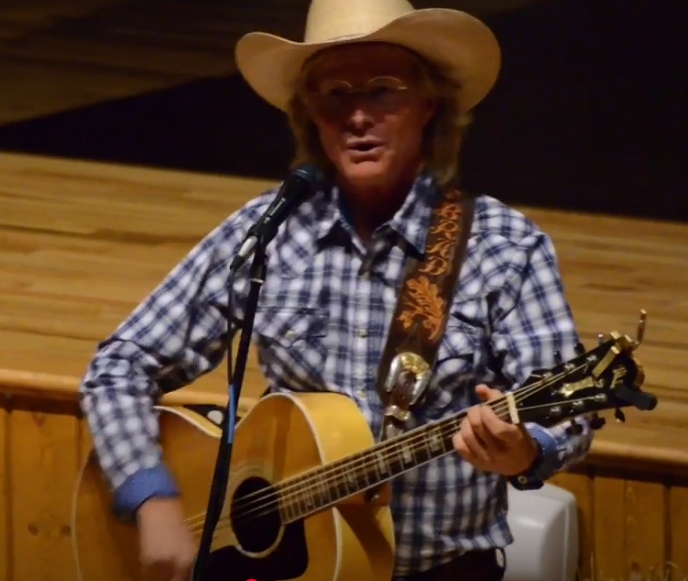
That summer of 2017 Staci and I moseyed on by the small bluegrass festival called the Snowy Grass Music Festival, hosted by Snowy Peaks Winery. We caught a little of the local bluegrass band called “Re-In-tarnation” (…what do you call a hillbilly that is reincarnated? Cute.) They did an admirable bluegrass version of “Honky Tonk Women” at warp speed. Why do bluegrass players play so darn fast? Because they can. A talented local artist named Greg Miles played banjo on the song I just mentioned. He plays guitar and has a solo act and is now part of the Arts District collective.
There is a wildly popular bluegrass group around town called Chain Station. Not exactly pure bluegrass but extremely good with a huge following. Ever see that Dave Chapelle skit with John Meyer on what electric guitar does to white women? Yeah, it’s just like that, whenever they play in town. That small bluegrass festival is now a big one held on the other side of town with a lot of national acts. And Chain Station.
There is another summer festival in town called “Friends of Folk” run by the local Arts District collective. It was started as to honor the memory of Dick Orleans, a local folk music hero who promoted local amateur musicians. Often, amateurs of many skill levels of would perform at the event. Somewhere lost in the connection, the Arts board had money to spend and might have thought the event was turning into a glorified “open mic”. Now a few amateurs sniff the stage as professional acts of many genres perform. I asked someone I knew who was loosely associated with the event, “how’s Friends of Folk going this year?” He looked at me with a straight face and said, “you mean Friends of Hip Hop?” A different driver was driving that festival bus.
There are many acts in Estes Park of all sorts; solo performers, duos, trios, bands, you name it. There’s even a ukulele orchestra that performs at the rodeo in July. In this town, there are many more musical acts than venues for them to perform at. Where I live, there’s a nice restaurant a half mile away across the river that books musical acts in the summer on their patio. Staci will smirk and say something like “so and so’ is playing again, weren’t they there last week and the week before?” as strains of music waft across the valley and she mimics what we’ve heard so very often: “…you can go your own way….” (…lyrics from a Fleetwood Mac song).
And let me talk about open mics, the ubiquitous “open microphone” known and loved all over the world. Famous and highly successful, Ed Sheeran is quoted as commenting he got his start at open mics in England. He said it took a very long time for anyone to even clap for his music. Open mics are fabulous vehicles for amateur musicians to cut their teeth performing in front of an audience. They can be casual affairs, yet novice performers are often quite nervous, voice cracking and hands shaking. Generally, you get three songs or fifteen minutes to show what you got.
Musical partnerships can be formed from an open mic, meeting other musicians with similar musical tastes and talents. Here in Estes Park, I’ve partnered with other musicians that I have met at open mics. Some open mics are better than other based on the venue or the crowd; some open mic hosts are better than others. Jon Pickett of Chain Station hosts an open mic locally when his band is not touring. Smitty at the Platte River Grille in Littleton hosted a great one back in the day. I’ve played open mics, beaming when I was done, at the top of my game and have played some open mics with a deer in headlights performance asking myself why I even got up there. I’ve played blues at open mics with harmonica players I’ve never met and set the stage on fire.
A gal named Nadine Sekerez plays guitar in a bluegrass band with an excellent mandolin player named Erin Dahlby, they have a group called Lost Penny. I’m sure Nadine got her start at an open mic. She used to be a Seventh Day Adventist housewife from Texas who could barely play guitar. Today she tears it up on a vintage Gibson guitar. These days she is the main force behind the Snowy Grass Music Festival. In 2023 at the American Legion, she hosted an open mic that I went to several times.
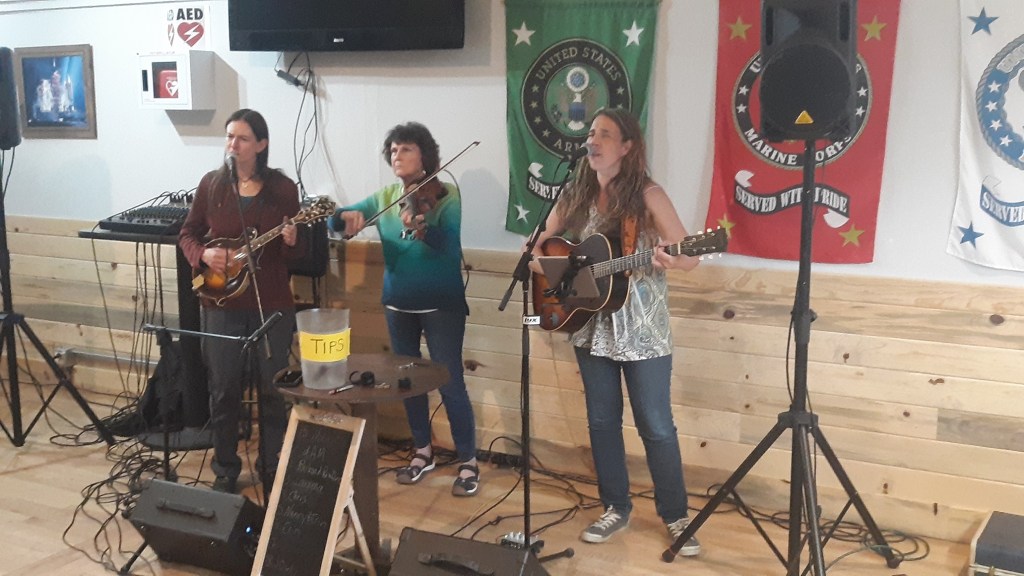
One night I was there at the open mic, Nadine was away, and Erin hosted. I can’t even remember what I played that night; I was with a buddy, and we must have played a few tunes together. This one kid got up, he was a pro, think he said he played in group from the bluegrass mecca of Lyons, Colorado. It showed. He played a few songs but the one I remember was Doc Watson’s “Walk on Boy”. He tore it up. Captivated all those who were present. I can sing and play guitar, but not quite like that.
John Campbell was there that night. John has a bushy walrus moustache and coke bottle horned rimmed glasses. Sometimes wears a cowboy hat or a ‘camo’ ball cap like he did that night. John can play anything and often plays offbeat humorous songs that you’ve never heard. I’ve seen his son get up and play guitar with his dad. Wearing a kilt. Kilts are popular up here; they have a Scottish festival in town every September. With a name like Campbell, you can wear a kilt.
It’s foggy how it all transpired but towards the end of that open mic, John Campbell is on stage talking with the kid from Lyons. “OK, let’s do it” they said as John started playing the intro to “Stairway from Heaven”. The kid from Lyons is playing lead guitar, Erin is grinning and playing right along on mandolin. From behind the bar, the bartender comes out, grabs the mic and starts singing. Sang it great. I’m sure none of them had ever played the song all together before. Played the whole thing through, flawlessly, start to finish, ebb and flow. Wow, did I just witness that? I was there; I saw it, heard it.
Conversely to open mics, around these them thar parts there is another musical phenomenon called a “pick”. ….ah, Pickin’ an’ Grinnin’. Sometimes hosted by an establishment, often a “pick” is held in a person’s home. Unlike an open microphone where each individual gets fifteen minutes of fame, at a “pick” everyone plays all at once. Could be four or five or six or seven or eight guitars, a mandolin or two, upright bass, a few banjos, maybe a fiddle or two. All these instruments playing all at once. I spent nearly forty years in professional kitchens under the thunderous roar of the exhaust hood fans, so my hearing ain’t what it used to be.
‘Picks’ are akin to being in a crowded room of people all talking at once and you can’t hear a word the person next to you is saying. Kinda. Nah, it’s not that bad, well sorta, maybe. It’s all good fun, a good way to socialize, meet people. The elite players show off and everyone plays along. Sometimes the elite players will break off together from the group, so they can play away from the hacks. Everyone gets a solo regardless of skill level, unless they pass. Heard some good songs played and played along to them. … “East Virginia Blues”, “Anabelle” by Gillian Welch, plus some other songs I really liked but did not know the title. It’s not all 1-4-5 music, but often it is a lot of that.
“You got a guitar?”…they asked. “Go grab it.”
Okay, where was I? Sorry, got a bit off track.
Summer 2017 I made a few inroads musically here in Estes Park. There was an open mic that I checked out with Gary Clark. It was in this old club in town with a funky old stage in the back of a place called Lonigan’s. Gary and I once saw a Jimi Hendrix tribute show there that was phenomenal, out of the blue, so unlike the rundown club that it was. Lonigan’s is an Irish pub and restaurant with a small stage and pool hall in back run by a Nepalese family that run a number of other restaurants in town.
At this “open mic” that Gary and I went to in Lonigan’s, a few guys were playing guitar and had a guy on bass. They asked if I had a guitar and said go grab it. I lived close and went home and grabbed my Gibson L6S and small amp. Right off they said….“an L6S”. This wasn’t really so much of an open mic, it was more just a jam session. We hashed out a few riffs and Gary borrowed the guy’s bass and riffed out a song or two. I went back the next week with my guitar but there were already 4 guitars playing onstage, so I went home and got my cheap Yamaha keyboard and jammed out a few tunes with them.
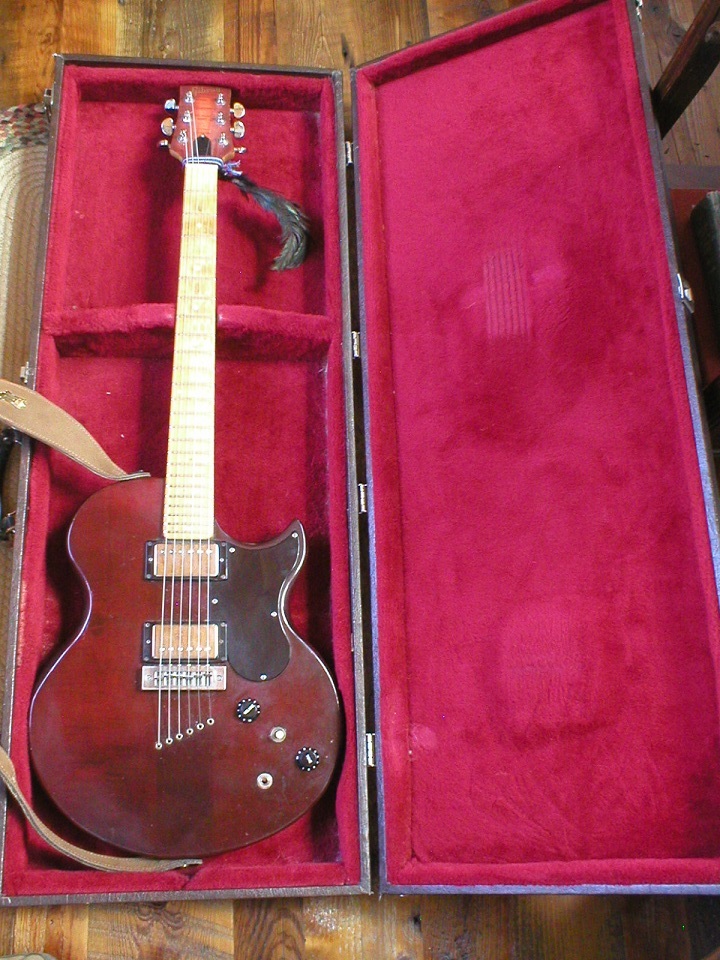
At this jam or the next they asked me to swing by John Weires place and jam with them some night. I showed up at John’s house and it was a cacophony of three loud electric guitars, bass and a drummer….in John’s living room. I plugged in the keys and amp, but it was very loud, and I was not all that familiar with the songs. Also, the main guitarist, John, had this thing about tuning his guitar down a half step to D#, like Hendrix did. All fine and well, but it had been years since I had fiddled with the Yamaha keyboard, that in the heat of battle, I couldn’t figure out how to transpose the keys down a half step. So, I fudged it in my mind and played the root notes and chords using the black keys as best I could.
The next session I made it over to, I did have the manual read and the keyboard transposed down a half step. That made things easier. Still, I was the new guy, and this jam wasn’t too terribly organized or serious. So much for playing bass or guitar, those slots were filled. It was playing music with other people, so I thought I’d hang around to see what shook out. With this configuration of musicians there was a guy on bass, Donnie, his brother Tommy on drums, John Weires on guitar, Mike Rogers on guitar and often this guy named “Robo” on guitar.
They called themselves “Midnight Trampoline” but it was a motley mess compared to the last two bands I’d been in and around. Donnie was erratic on bass and appeared to try and play it like a lead guitar, Tommy was cool and fun on drums. Robo was loud with tasteful chops. I could tell that he didn’t like me. Mike Rogers was goofy but capable on guitar. And loud. On top of all this was John Weires. John could really play, he had superior tone and chops, he was rich, and all his gear was $$$. Like Don Milan from Big Muddy, he could play anything by ear. He was picky, fussy, a perfectionist. He was jovial and congenial, but the world revolved around him. Any story that was told, his story was better.
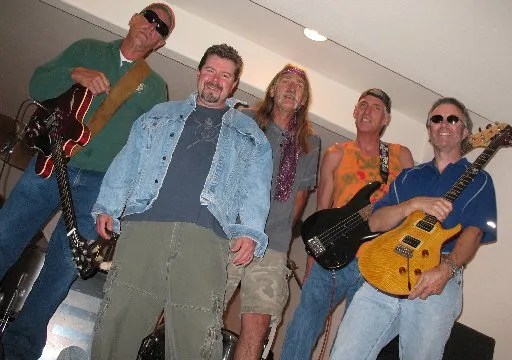
L-R: Mike ‘Robo’ Robinette, Jay Halburnt, Tommy Yaeger,
Donny Yaeger, John Weires
I was still in la la land musically, so I just hung around to be playing music. They played some blues, but were very much into “classic rock”, songs that were very familiar, but not many that I’d ever played, let alone played on keyboards. Some of the songs were okay, a lot of them I was ambivalent about or didn’t care for.
There was a jam or show or get together at the American Legion Hall that Midnight Trampoline was invited to play, it wasn’t very organized, but I tagged along to play keyboards. The stage was big and nice, unlike the pool room where the open mics were held. John Weires was out of town, so it was Robo and Mike Rogers on guitar, Donnie on bass, Tommy on drums, me on keyboards. No one was adept at “driving the bus” so it was pretty much a choppy mess. I played along, best I could, again glad to be playing music, but in a situation very foreign to me. I’m a Virgo, order and organization are my friends.
After a few songs, Robo, who didn’t like me, leaned over and told me “This is the first time I’ve heard anything you’ve played. Didn’t know you could play”.
Of course, you’ve never heard anything I’ve played over at John’s house, Robo. How could you, with four amps turned up to 11? …. On Labor Day 2017 we were invited to play a party at someone’s house up on Pole Hill. A trio with two brothers and a sister played before us, then we played. With John Weires there, it was a little tighter, and since it was a party and people were drinking, it was casual fun.
It was not as if I had practiced much on any of the songs, the guys kinda knew them but I hadn’t been with them long enough to be in the loop. With keyboards, as with playing bass along with people playing songs that I’m not familiar with, as I was a guitarist first in my life, if I watch the guitar player and see what chords they’re playing, I can pick things up pretty quick. It was fun and I bluffed my way through Santana’s “Oye Como Va” and did a yeoman’s job on the crowd pleasing “Mustang Sally”, which Tommy Yaeger on drums did a wonderful job singing. Come the next time practicing at John’s house, Tommy laid $50 bucks on each of us, money that the party’s host had paid us. I was mildly amused.
The “Midnight Trampoline” configuration was an on again, off again type of thing. John Weires had been playing with Robo and the Yaeger brothers for years, stretching back to 2011 and before. Now into 2017, not everyone was present any given week. There usually was something going on at John’s house every week, but it wasn’t organized and not sure you could classify it as a “practice”.
A lot of the time was spent out on the deck, drinking beer, smoking cigarettes and bullshitting, none of which I did. Well, I guess I could bullshit, but I was the new guy and not sure what to think about all of this, so I mostly kept quiet. Mike Rogers was there every week, and he was like John’s “sidekick”. Mike was a nice guy, I kinda liked him, he had a drawl that wasn’t Texan or southern and the other guys teased him incessantly.
Mike played guitar in another band called Tahosa. The name Tahosa is a Native American name for a region in the area or it means “people of the mountain”, take your pick. I went to see Tahosa play a time or two at the American Legion. They had another guy on lead guitar, Ed, and Mike Rogers played rhythm guitar. They were big into “Southern Rock”. Sometimes they had two drummers, ala Allman Brothers and a lead singer named Jeri Barleen. Jeri could belt it out and her family had been musical fixtures in Estes Park since the 1940’s.
On bass was this guy named Joe Fichera, and in the tradition of what I had run into with this cast of characters, he played bass through a Peavey head and two stacked 2 by 12 cabinets. Noel Redding would have been proud. Joe was a very nice guy and a top shelf bass player. I’d met him before, as he was playing bass at the open mic/jam at Lonigan’s where I met all these guys with Gary Clark in the first place. Joe was married to or just recently divorced from Nadine, the bluegrass gal I touched on earlier.
Compared to “Midnight Trampoline”, Tahosa was okay, better than okay, actually. I’d talked with the lead guitar guy, Ed, once or twice, but never had the chance to really converse, but I could see we might have a little connection. In my mind, I would much rather sit in on keys with Tahosa, than muddle through noisily in the confusing mess that was “Midnight Trampoline”.
Mercifully, “Midnight Trampoline” fizzled because of availability issues with a few of the guys. While I had played keys with them, a time or two I sat in on bass, muddling through some classic rock songs I didn’t particularly care for, demonstrating some capability on bass. John and Mike had mentioned they were doing some acoustic sets and asked me if I wanted to sit in on bass. Certainly, I did, because backing up two acoustic guitars on bass meant that I didn’t have face a firing squad of amplifiers turned up to eleven, trying to eke out keyboard notes nobody could hear.
With Mike and John playing acoustic guitar, I could be relaxed and play bass, which I was comfortable with, learning their songs and still be able to hear the birds sing the next morning. Now into 2018, we played together, two acoustic guitars and me on bass four or five times, but it didn’t go very fast for some reason. Nothing really got settled as far as parts and arrangements; John played a Gibson Hummingbird and Mike played a beater with a cheap pickup taped to it that rarely seemed in tune. John had three cars in his heated garage including a Porche Roadster; Mike drove a beater with plastic and duct tape on the broken back passenger window. From what I could tell, they had been friends a very long time.
It started pretty slow without much to show after a number of sessions. A few of the songs we played I really liked, but John seemed inclined to not want to sing, but he did sing on one or two. I’m self-depreciating about my voice, but honest about my singing abilities. Still, I’ve performed with it and learned how to project it best I could with a showman’s vibe. If my voice was weak, thin and flat, Mike’s voice at best was perhaps marginally different. With all the hesitation and stops and starts with them playing and learning the songs and reading the words off the sheets, maybe that’s why we weren’t getting anywhere.
Two of the songs we played I really liked; “City of New Orleans” and “Pancho and Lefty”. I was used to working on songs and getting somewhere, but as it stood, it wasn’t getting very far, very fast. I brought my acoustic guitar over once to see if they’d throw me a bone and let me play some slide guitar. John was an elite musician like Don Milan, and I toyed with the idea of John playing the rhythm part of “Love in Vain” and me singing and playing slide guitar. I’d done it twice before with success, decades apart.
John wasn’t interested in learning something that was not his idea. Mike went to the kitchen and pouted as I broached this musical offering. Then, in my early sixties, guessing I could still be pretty naive and idealistic. I’d only lived in Estes Park three and a half years at this point, but I came to find out that living here fifteen years or more and you’d still be viewed as a newcomer.
“People of the Mountain”
One night, however, we were playing, John, Mike on guitar and me on bass and it seemed like we were getting somewhere and sounding good. I was learning to love the root to five basslines used in folk and country that made the rhythm guitar sound so good. Joe Fichera showed up and had a listen, saying “nice” as he heard us play. Joe had some news. Ed, the lead guitarist in Tahosa, bailed, quit the band. Some of the chatter I had heard about him previously was that he was moody and complained a lot about what was going on. Joe wasn’t there to listen to John, Mike and me make sweet acoustic music. Joe was there to do the logical thing. With “Midnight Trampoline” nearly extinct and Ed gone from Tahosa, John would be the new lead guitarist of Tahosa.
That was the last time John, Mike and I played any acoustic music together. I’m not sure about a few things in relation to all of this. John had once indicated that he liked keyboards in his rock bands, hence why he invited me to sit in with Midnight Trampoline. If I hadn’t been there that night when Joe coronated John lead guitar of Tahosa, perhaps I wouldn’t have been brought along to play keyboards in Tahosa and I could spare y’all the next umpteen paragraphs. Maybe they felt sorry for me because I was there when the news broke and they felt obligated for me to join, kinda like the last kid chosen for the dodge ball game.
Whatever the case, a new sonic chapter for Robbie in 2018. In my usual serious dedication to a musical endeavor, I threw my heart, head and soul into it. If it was a Chicago blues band and I was playing keys, I’d work hard to vary my sound, but it would have been casual and easy for me. Here they were playing a variety of “classic rock” songs I’d never touched before; these were songs that I might change the station if they came on the car radio. The Pretenders, FREE, REO Speedwagon, Marshall Tucker Band (Mike LOVED Marshall Tucker, it fit his non-southern drawl and goofy laugh).
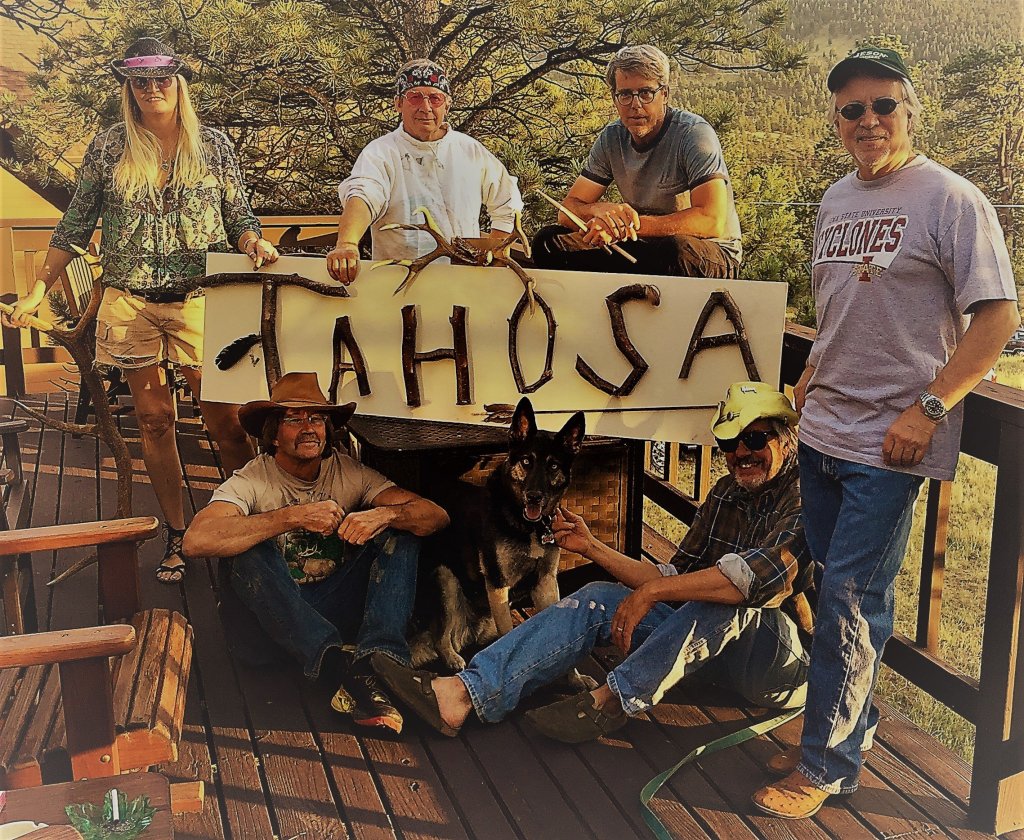
top row L-R, Jeri Barleen, Joe Fichera, Jerry Schrag, John Weires
bottom row L-R, Mike Rogers, “Rocky”, Robbie Leavitt
It wasn’t all bad, some “classic rock” is blues – Hendrix, Stevie Ray Vaughn and Led Zepplin. Santana is groovy. John pulled out a fun 1960’s song, “Secret Agent Man”. This would take some effort on my part. Not to mention learning and playing songs on an instrument that at sixty-two was not my natural instrument. I was still an easy going, music loving hippie at heart, so I was going to see where this ride would take me. It’s always fun to be part of a band, especially if they are good.
One very good aspect of John driving the bus is it gave order and organization. It was now his band. It was unspoken, but this was the case, his skill level on guitar and his powerful personality demanded it. I was okay with that. Shorter men can have those personalities that everything goes through them, focuses on them, it seems. That was the case with Rob Medina as well, but not nearly as much so as with John. He could be fun, be funny, tell a great story, be pleasant. He liked to get people to do things for him. It was like that with John and Mike Rogers, sometimes it appeared Mike would be doing things like staining John’s deck. John wasn’t doing it, Mike was. Maybe Mike needed money. I don’t know, it was a strange dynamic.
John was a hotshot guitar player, incredible tone and chops, I liked hearing him play. In my years playing music, I’ve always enjoyed playing with guitar players that could bring it. John Buckley from Black Bordeaux could bring it, that’s how I got started playing electric guitar in a band in the first place. Playing rhythm guitar or bass and now keyboards with an elite guitar player was always fun for me to be part of those musical moments. Much better than hacking out cheesy jams with fellow hacks “just for fun”. I liked being part of something musical that could produce something worthy. With John now running the show there was palpable excitement among the other members of Tahosa. John was bubbly and energized.
I didn’t understand about John and Midnight Trampoline. Midnight Trampoline was a motley mess of stoned and drunk dudes hashing out some songs, very occasionally out in public. Guessing John when he still lived in Iowa, he came out in the summers and played with these guys. John was heads and tails above any of those guys. It seemed odd that with his good chops and controlling perfectionist nature that he’d enjoy all the clutter.
Midnight Trampoline, I guess was just a musical “social club” to get together to drink beer and play music. Maybe there was no better outlet for him to play guitar. Maybe he’d never had the time, people or place to have a band back in Iowa where he was from, working and running a business. I’ve known guitar players with chops as good as John’s that never really had an interest to be involved with what it entails being in a band.
Tahosa, before John, was capable and musical, but from the few times I saw them, they did not seem to have a dynamic “verve”. I was not certain who was driving that bus. It might have been Ed, who was decent and good on lead guitar, but he did not strike me as such. More likely it was a collective, as sometimes is the case in bands. Now with John pulling things together, “building back better” got underway. For Tahosa, most of the songs were in the bag, it was just adding lead guitar over the top and keyboards on the side.
Good vocals in a band are always problematic, often setting good bands apart from great bands. No matter the skill level of guitarists and musicians, it is nearly always in outstanding vocal dynamics that determine the popularity of commercial, professional bands. With amateur bands, a little slack will be cut. In Tahosa it was a collective on vocals versus a singular focal point. Nothing wrong with that, it can add color and variety to the act.
Jeri Barleen was very good, very fun and she could belt it out, but all songs did not require a female lead. Jeri liked me and we got along great, she made Tahosa fun for me. Her boyfriend was the sometimes second drummer in the previous edition of Tahosa. He didn’t like me either and sometimes ran sound for Tahosa. Mike sang the Marshal Tucker songs with his frail voice. John on lead guitar and Joe on bass did not sing. Scratch that, John sang one song, “Folsom Prison Blues”.
Jerry Schrag, on drums, sang a number of songs, he had a good powerful voice, the highlight being a rousing “Mustang Sally”. He had been in a not so famous local band named the “Marvelous Marmots”. Cute. A marmot is a very large cuddly rodent that lives up in these them thar hills at 7500 feet and higher. Jerry was the drummer that Gary Clark hired to play with us for his “Garapolooza” birthday bash in 2016. Like Robo from Midnight Trampoline, Jerry didn’t like me, and I could tell.
Low man on the totem pole, lowly regarded, newcomer in town, keyboardist Robbie Leavitt, I sang one song, “Six Days on the Road”. I’d sung it in Big Muddy playing slide guitar, now I was playing it in Tahosa on piano, banging out some Jerry Lee Lewis chops. I made it fun, brought energy to the song, gave it a good vibe. Not sure how I weaseled my way getting it into the repertoire, but I did. Figured if I was going to put in the time and effort showing up a to practice every week learning their songs, then standing up to them, getting them to throw me a bone was the least I could do for myself.
Immersing myself to get up to speed, I worked best I could, learning the material on my own. For years I had done that, work on and learn the material at home at my own pace. At rehearsal, you should already know the song and have rehearsal be vehicle to interface it with the other musicians, not waste everyone’s time learning the song. Rehearsal time is valuable; most everyone has work and family obligations and to be able to coordinate it, in this case with six members, it is often challenging.
At first, I bought an Electro Harmonix Leslie cabinet simulator effects pedal to ease the cheesiness of my cheap Yamaha keyboard. I also brought along the vintage Korg organ from Big Muddy. It crapped out pretty quickly. Mike Rogers was allegedly an electronics wizard and offered to fix it. He worked on it in my garage a couple of times, fooling with the array of ancient capacitors and relays and finally got it working. Then he wanted me to pay him for it. Staci was not happy that I gave him $100 for working on it, especially that it lasted only a practice or two before crapping out again. Eventually I traded in the beast at Music-Go-Round. Finally, I shelled out $900 for a nice Roland keyboard.
As things went along, most of the material was manageable and in rehearsal as in performance I tried to be tasteful and professional. Using chord inversions on keyboards helps vary the sound and keep things interesting. It was a new position in a band for me, playing just keyboards. I always treaded a little lightly, knowing from past experience in bands, people can turn on you in an instant. Still, it was fun stretching the brain muscles doing something new.
When it came to the blues material, playing organ is a whole lot of fun and I was decent on blues songs like “Red House”, “Texas Flood” and “Mary Had a Little Lamb”. Jeri was fabulous singing those last two Stevie Ray numbers, she tore them up. At this funky bar in Loveland called “Chillers”, I fun with the organ solo on “Mary Had a Little Lamb”. Even a blind squirrel can find a nut once in a while. Yeah, playing organ can be fun, giving “Mustang Sally” a little Motown life, hashing out a Motown keyboard solo or the organ press in Free’s “Alright Now” bringing the song back in after the bass guitar interlude.
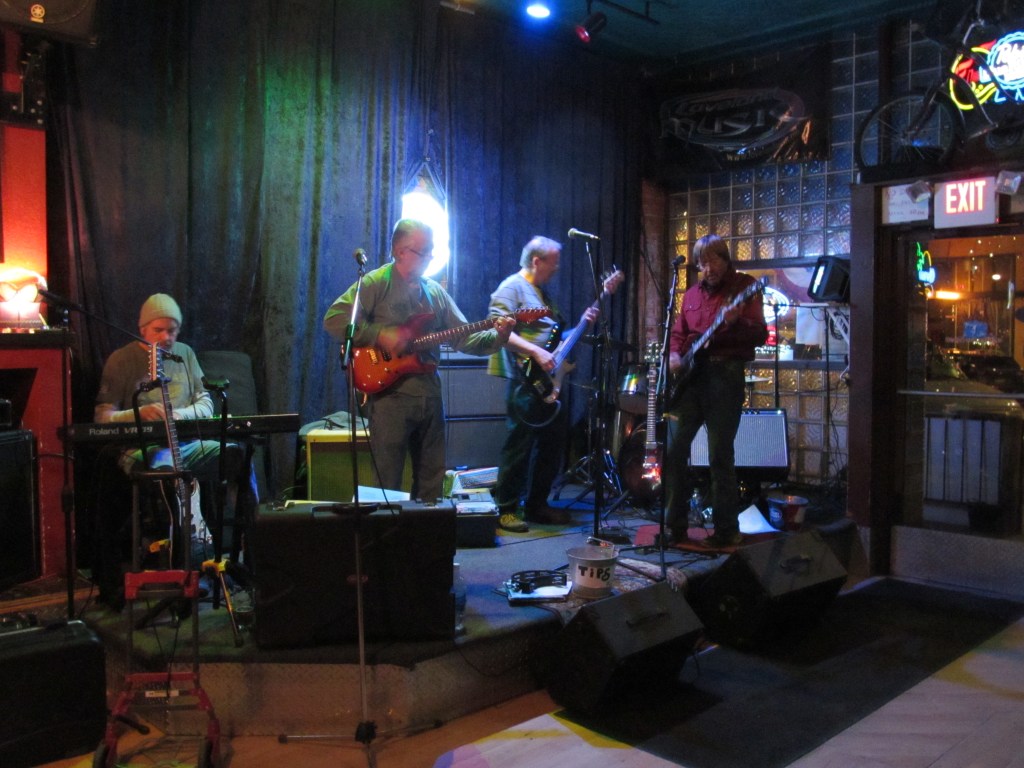
L-R – Robbie Leavitt, keyboards / John Weires, guitar / Joe Fichera, bass / Mike Rogers, guitar, vocals / Jerry Schrag, drums, vocals, he’s behind Mike; drummers always get snapped out of the picture in tight shots / Jeri Barleen, vocals, (not pictured, she’s taking the pic)
Mary Had a Little Lamb, SRV – Tahosa
Now, something a little more demanding was the organ part of the Santana version of “Black Magic Woman”, Greg Rolle, I’m not. It took me many hours of practice and playing along to the original recording to get it up to speed. John Weires played the Santana parts fabulously and Tahosa played the song very well. The organ intro required a bit of work on my part. My organ solo on “Black Magic Woman”, like years before playing the organ solo for “In Memory of Elizabeth Reed” in Big Muddy, was at times shaky, adequate at best.
For a guitar player then a bass player most of my musical life, trying to play keyboards on songs like this required extraordinary effort on my part. I didn’t want to fail and not be able to play it. There were a few times in Big Muddy where I did not get a certain passage right away on bass and I’d get some eyes rolled at me. I pushed myself hard in Big Muddy and Tahosa to be able to be up to the level of the music being played.
Tahosa started gigging in town, often at the American Legion Hall and a few times at this bar/restaurant called “Cousin Pat’s”. Pat had a mattress on the floor in the back office where he’d sometimes sleep. The music room was the subdivided half of the bowling alley that used to be next door. The restaurant at one time was a well-regarded steak house in town and one of the back rooms now was an unused dining room filled with racks of fine glassware and China from the steakhouse days. These days the joint is popular for burgers, beer and wings. The restrooms were still classy with gold wallpaper and nice fixtures from fancier times. Joey Fichera, the bass player, worked there as a cook in the kitchen after quitting his job that he hated as a sales rep for Shamrock Foods.
The sound in the room we played at Cousin Pat’s was awful, a low ceiling, lots of paneling, creaky wood floor. The ambiance was picnic tables, folding chairs, video games and pinball machines that had to be moved to make room for a six-piece band. Gary came in to see us play once at Cousin Pat’s and said he couldn’t hear the organ.
We’ve got the two loudest guitar players on the planet and a bass player with a double stack 2×12 Peavy rig, a drummer echoing off the corner in a small pool room and you can’t hear the organ? I find that hard to believe. ……So, I ditched the Carvin keyboard amp from Jakobz Laddr days and started playing keyboards through my 200-watt Acoustic bass amp head and 15” cabinet to keep up with the heavy artillery.
We played a couple of times in Nederland at the ancient Pioneer Inn, which had a rich musical history that dated back to the early 1970s. Nearby was the Caribou Ranch recording studio, which was popular with many famous recording artists from the early ’70s until it was damaged by fire in 1985. In those days, the Pioneer Inn became a popular hangout for of the musicians. Icons like Billy Joel, Rod Stewart, Carole King, and Waylon Jennings were known to visit the bar during their recording sessions. According to the periodical Westword, John Lennon was said to have once been spotted sitting at the bar, and said Joe Walsh once worked there tending bar. Tahosa was just another band passing through, sometimes we were given a little interest from the locals. Still, it was a fun place to play, and they fed us well.
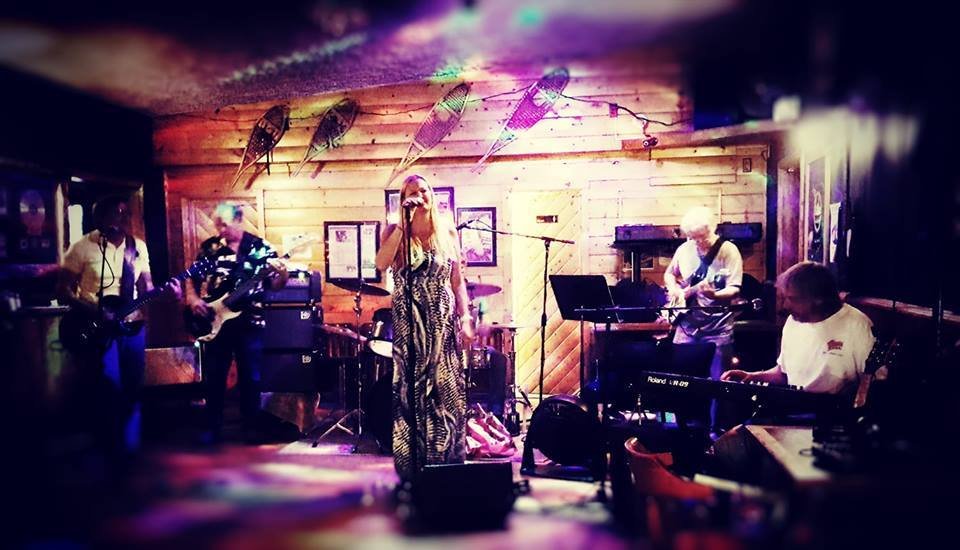
In this June of 2018, I went to see the “Friends of Folk” festival before rehearsal, told Tahosa I’d be a little late. The festival was held at this small wonderful outdoor amphitheater in town called Performance Park. It had a rock face behind the stage, grass seating, towering blue spruce and pine trees with a placid creek running by.
One group I saw had “Frenchy” (Rene) on guitar, John Murphy, another guitar player, plus another guy in a driving cap on lap steel and two gals singing, one of which was Diane, wife of the guy who sold us our house, Christian. Rene’s wife Kathleen was the other gal singing and playing harmonica. Staci’s dad was a starter at the golf course and knew Frenchy well, he was a scratch golfer. Rene “Frenchy” Archambeau and his business partner Mark Donahoe were contractors who put on a small addition to our cabin. The festival was a fun affair and was the event it was as it was intended to be with amateur acts playing before the Arts district decided to bring in paid professional acts.
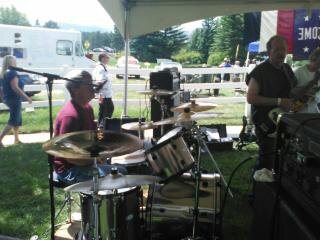
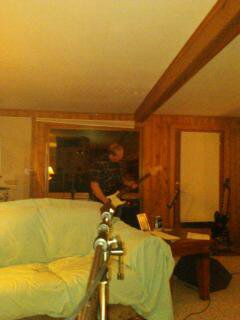
On the 4th of July 2018 Tahosa played a noonish gig at the American Legion and then we played that evening at the Jamestown Mercantile thirty miles away. It was a small old, old restaurant in a tiny old village. The place was dinky, and we packed the six of us into a fifteen by eight space, thunderous amps and all. Usually, acoustic acts or small combos played there. They didn’t pay us, but they did feed us. And they kept telling us to turn down.
“Write Me a Song”
John Weires often left town weeks at a time going back to Iowa. The band would completely stop during these absences, as we practiced in John’s living room. It was during one of these breaks late July, early August 2018 that I’d seen in the paper for an open mic at a place called Coffee on the Rocks. It was down the road a bit from where I lived, with a little coffee shop snack bar with a big duck pond right by the Big Thompson River that runs below my house. The place was frequented by tourists and had a nice outdoor patio by the duck pond. This “open mic’ was not so much an open mic, but a “pick” with eight or nine guitars playing all at the same time.
Eventually once the crowd thinned out, I ended up sitting in with the two hosting musicians, Bev and Rex. Beverly was effusive, animated and fun and Rex was the guy I’d seen at the Friends of Folk Festival with the driving cap playing lap steel. With Bev and Rex, I might have played and sung one song on slide guitar and also played some tasty slide licks to the folk and country that was being played.
At the end, after all had left, the host, Bev, was bubbly and nice to me. Rex and Bev talked with me for a bit, happy that I finally got up and played with them. Then perky and bubbly, she said “I just got this gig for August 30th at Performance Park, do you guys want to play with me that night?” I got their contact information, and this chance meeting precipitated another musical chapter in my life.
It was flattering to be offered to play a gig at Performance Park meeting two strangers after playing a handful of songs with them. All of this is a little foggy but we got together again at Rex’s place, played a few songs and I got a feel for what we were going to do for this show about a month away. Bev had two hours slotted to perform and as was my nature, I tried to cull as much information to see what we might be doing. I had never played with either of these two people before but figured we could do it. I was glad that Bev was going to play nearly all original music and even happier when she gave me a CD recording of her songs to listen to so I could learn them.
She was madly in love with her banjo, and she was also an adept fingerstyle guitar player. Listening to her CD at home I tried to come up with a game plan. Most of her songs I was able to figure out by ear by playing along to them. What I came up with, was to play bass on her banjo songs and slide guitar or open G tuned guitar on her guitar pieces. That they let me, as a veritable stranger, help organize this show, in itself was rather interesting.
In that month leading up to the show, I enjoyed putting it all together trying to not step on their toes, basically getting a feel for instrumentation as I learned Bev’s songs. Rex had known her for many years and often played mandolin along with her. For me it was a godsend, released from the monotony of being a piece part in Tahosa playing loud music. This music I played with Rex and Bev harkened back to my days playing acoustic music in high school with my buddies Bob Stewart and Tracy Dixon. It was refreshing.
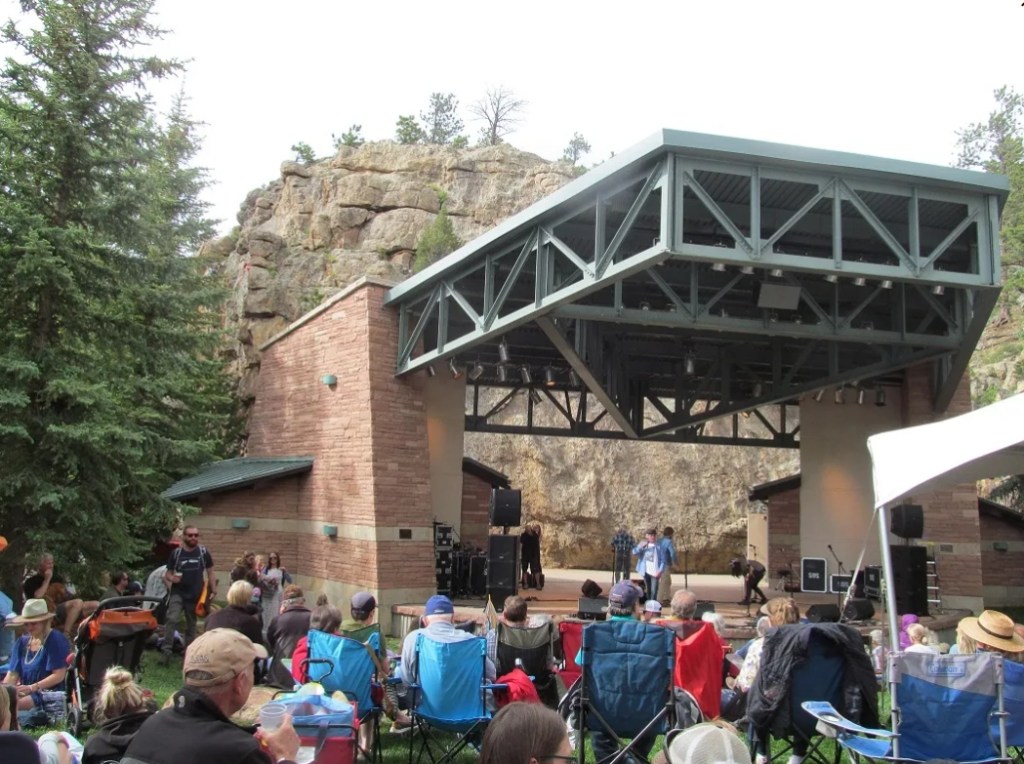
August 30th came, and the show went on remarkably well. In my lifetime I have played all types of venues, stages large and small, have been stuck into the corner of rooms on linoleum floors scrunched and cramped, I’ve played in dark dismal rooms filled with cigarette smoke, but nothing could ever compare to the beauty and serenity of playing on stage at Performance Park amphitheater. The stage was a huge concrete all weather space, three feet off the ground, well-lit at night, pillared on each end with large collum’s that housed utility and staging rooms, a roof twenty-five feet high from the stage. It looks out onto the grassy seating area that rose to the pine trees and walkway behind, with the creek in back of that.
For the show, I had written the set list and, in my zeal, and zest we had roughly two long sets with an interlude in the middle. Looking back, it boggles my mind that I played four different instruments for the show. We opened with Bev on banjo singing a he-haw folk ditty she wrote called “Pigs in a Blanket” with me on mountain dulcimer, which seemed appropriate accompaniment.
Bev was also madly in love with bluegrass, but many of the songs she wrote for guitar, for the most part, were not even close to bluegrass. I accompanied Beverly on bass and also electric slide guitar without loudness or effects, depending on which song. Rex played guitar and mandolin. Bev’s friend Diane sang a few numbers with Bev. Diane was really one of the few people around that had a true connection with the late Dick Orleans, the Friends of Folk hero.
Bev could be funny and entertaining; she had this song called “Write Me a Song” and went into a diatribe about how she came to write the song. She went on saying that “it’s harder than you think to write a good song, it’s real easy to write a crappy song, I’ve done that”. It was a lovely song in A; Bev on guitar and singing, Rex on mandolin, I played in open G, capo-ed at the second fret, playing chords and then a somber slide guitar pull-on note when the song went to the minor chord. The song rang pretty into the night.
Write Me A Song by Beverly Sencenbaugh
Bev did a few solo numbers in the middle with Diane singing on the songs with her that all of us together hadn’t had time to work on. In this middle part, there was some loud clanging from the lid to a dumpster from a motel nearby; a bear was getting into the trash. He made some noise for a while before getting shooed off. We closed with me on my acoustic guitar, me singing “Long Black Veil”. Kathleen, Frenchy’s wife, and Diane joined on the chorus with us all and Kathleen played a sweet harmonica solo in the middle. It was a fun night.
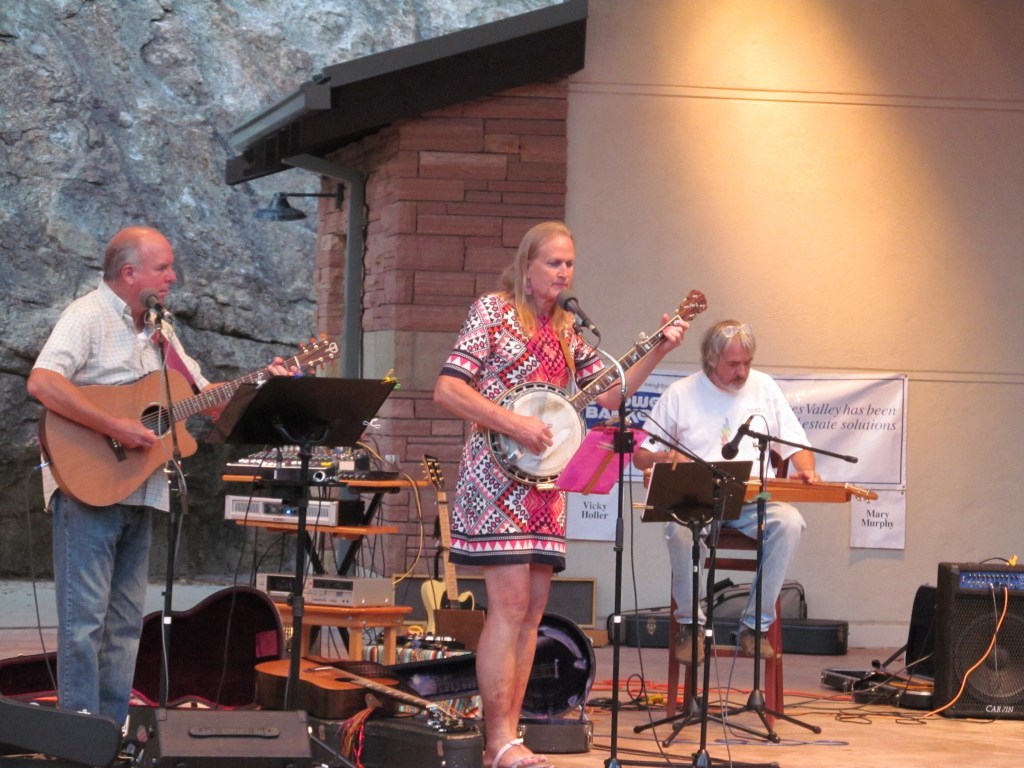
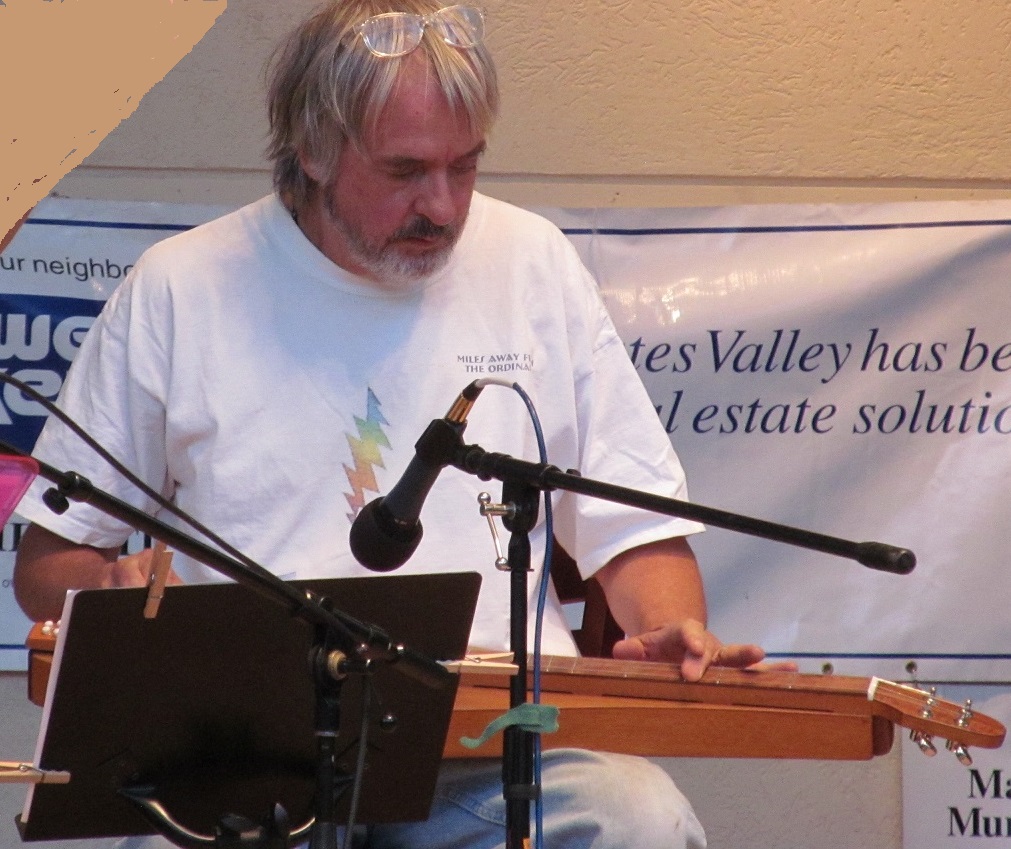
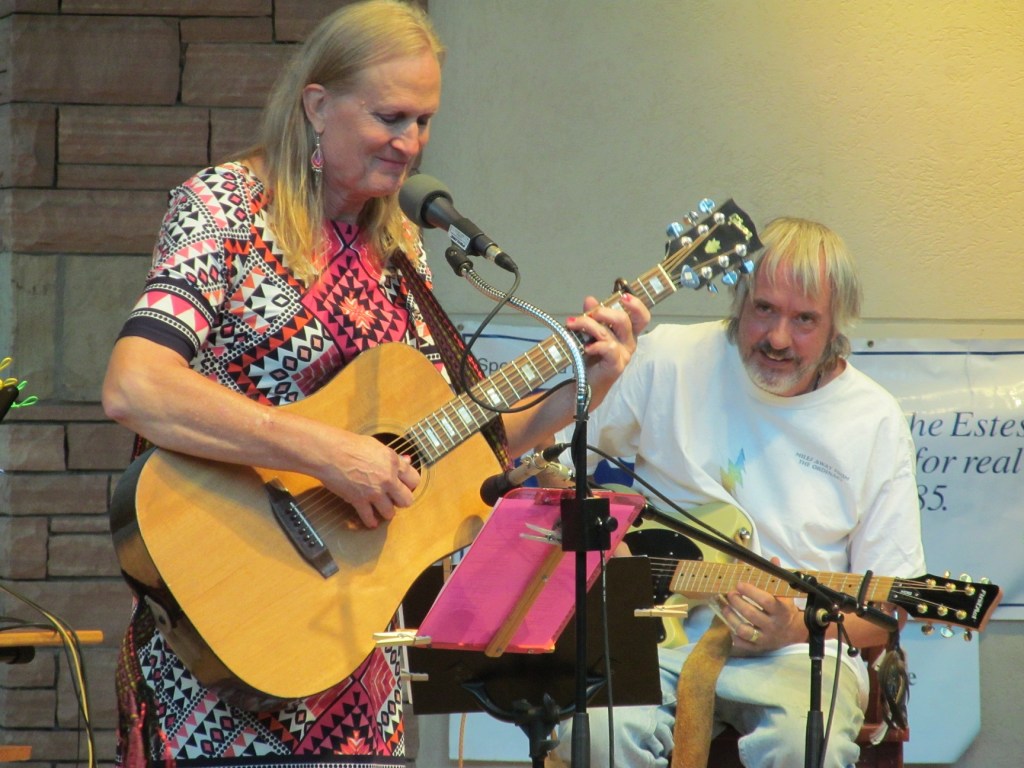
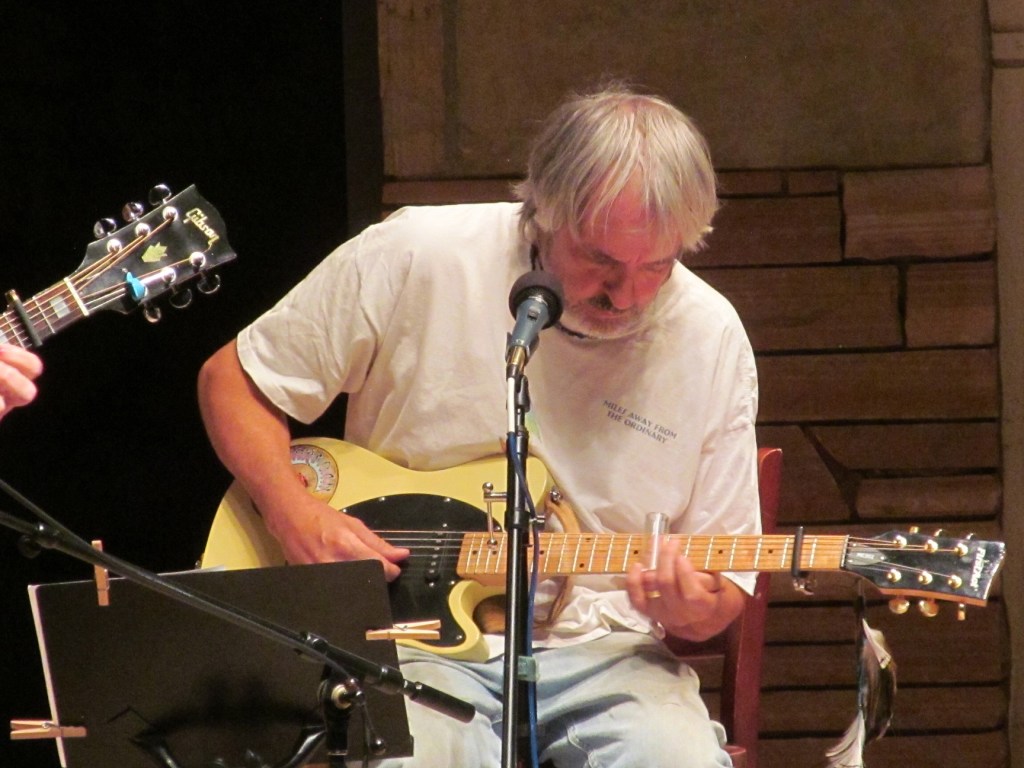
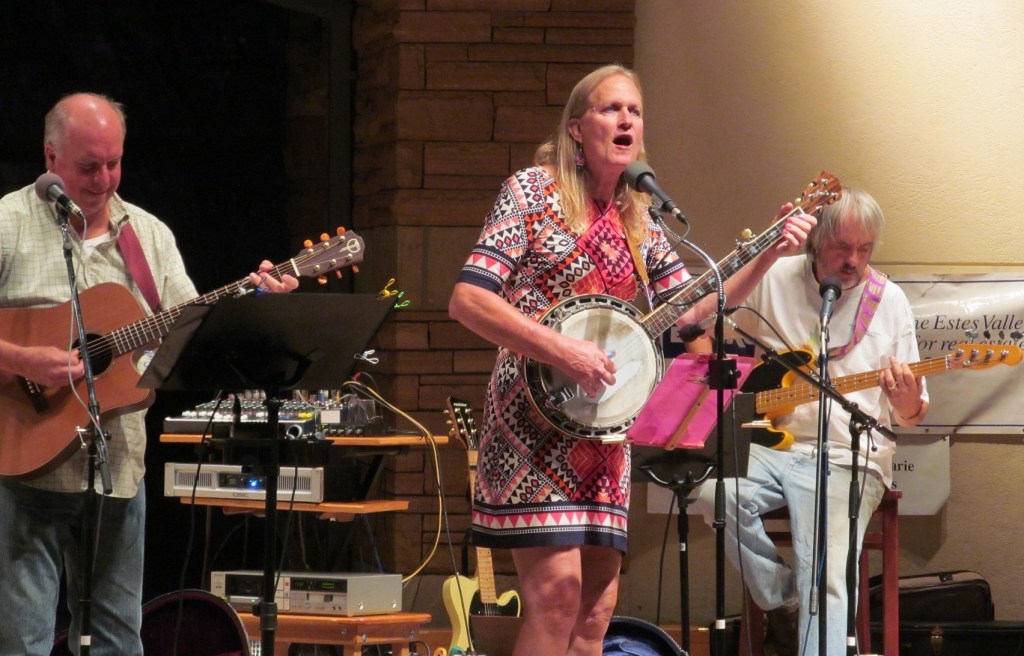
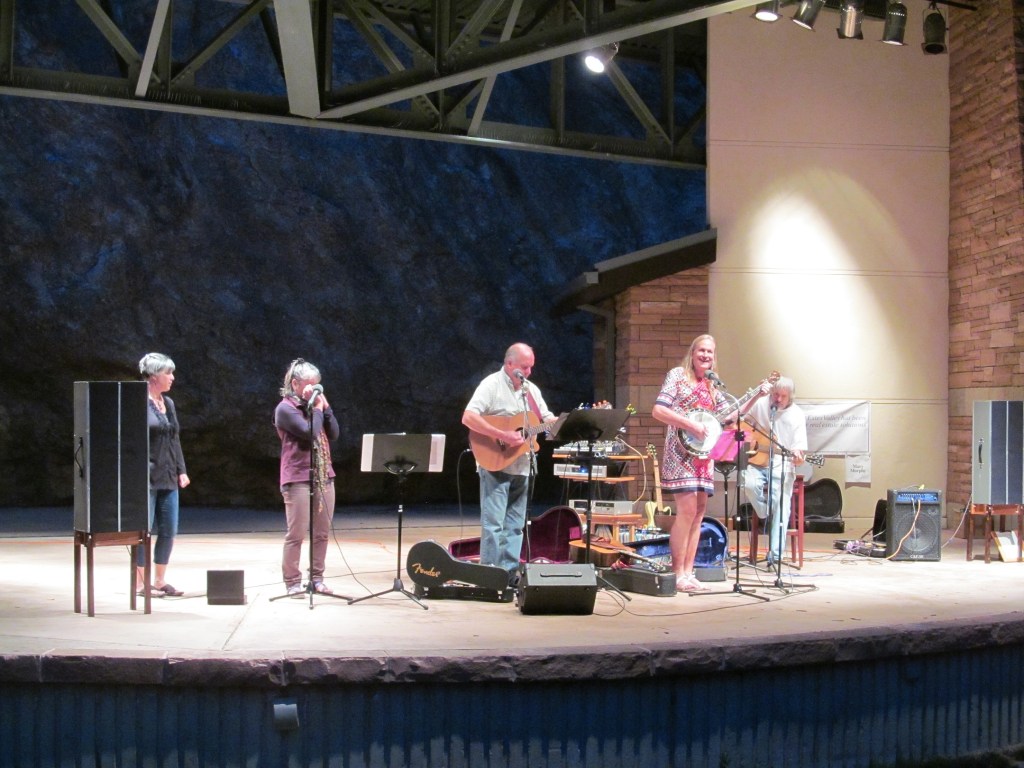
Long Black Veil Beverly Sencenbaugh & friends 08.30.18
In this time frame I was still playing keyboards in Tahosa, gigging here and there but not a lot. Tahosa did practice most every week and I was attentive and gave it my best. Bev was a ‘snowbird’ as they call folks that leave the chilly snowy mountain winter climate for less harsh locales. She had a nice cabin in Allenspark but it was not winterized so she lived in Colorado Springs from October to May. Rex had indicated to me about getting together as we had a commonality of music, and he thought perhaps we might be able to gig around town as a duo when Bev was out of town.
I sent out feelers to him to try and get together and play music but he was still working part time and it took a while to even connect. Eventually in late 2018 into spring 2019 we did get together and play some music. I was ambitious and wanted to put together a musical entity that I could participate in freely exchanging ideas and songs. In Tahosa, I liked being part of a musical ensemble, but I had little comradery with that group where I was expected to play keys on their songs without much other input from me.
The idea of playing acoustic guitar and slide guitar with Rex was attractive. He could play guitar, mandolin and lap steel and had a rich deep voice. In my always bright positive outlook seeing an opportunity to play music, creating an entity that I was an integral member, rather than just a piece part, this had appeal. With Rex, I was more than happy to learn the songs that he played; he was a veritable encyclopedia of songs. Way too many to list, but playing old Jimmie Rodgers songs, Merle Haggard, Hank Williams and John Prine songs harkened me back to my youth playing with Scott Miller and before that with Bob Stewart and Tracy Dixon.
With Rex, I was thrilled to play slide guitar as he sang and played guitar on Hank Williams “Lost Highway”. On “Columbus Stockade”, he sang and played guitar as I played second guitar and a lead guitar in the break. One song that I pulled out from my high school days with Bob Stewart and Tracy Dixon was Lead Belly’s “Little Children’s Blues” which I sang and played slide guitar with Rex on rhythm guitar.
Still, at this point over that winter, Rex seemed ambivalent about committing to anything organized like a musical duo, though it was his idea at the outset that had suggested it. The harder you pull on a mule’s reins to get it to go somewhere it doesn’t want to go will only make it dig in its hoofs and make it impossible to get it to move. I had other things going on, so I didn’t press the issue. Rex played in another ensemble with Rene Archambeau and his wife Kathleen, John Murphy and Diane Collinet called “Sexy Rex and the” ……” (the “the” being whatever they felt like calling themselves… Sexy Rex and the Bobcats, Sexy Rex and the Alpen Glow, etc. etc.)
Rene Archambeau, guitar
Another musical activity going on in town after Staci and I sold the restaurant in June 2017 was at an old 1920/30’s house in the heart of old downtown Estes Park which was dubbed “the Lawn Lane Listening Lounge”. It was run by Craig Soderberg who was a friend of Gary Clark’s and Craig had at one point been in charge of the Estes Park Arts District. The house was owned by Barb Marshall whose family were of Hallmark cards fame.
Craig would bring in small touring acts; solo performers, duos, trios and such and they would put on shows in the large living room of the home. He knew Staci and me from when we ran our restaurant in town and asked us if we’d cater the food for the shows. Out of our kindness, we did, we were paid for it, but after the beatdown of running the restaurant, it was not something we were all that fond of doing. The kitchen in our cabin was pretty small and just not suited for doing this.
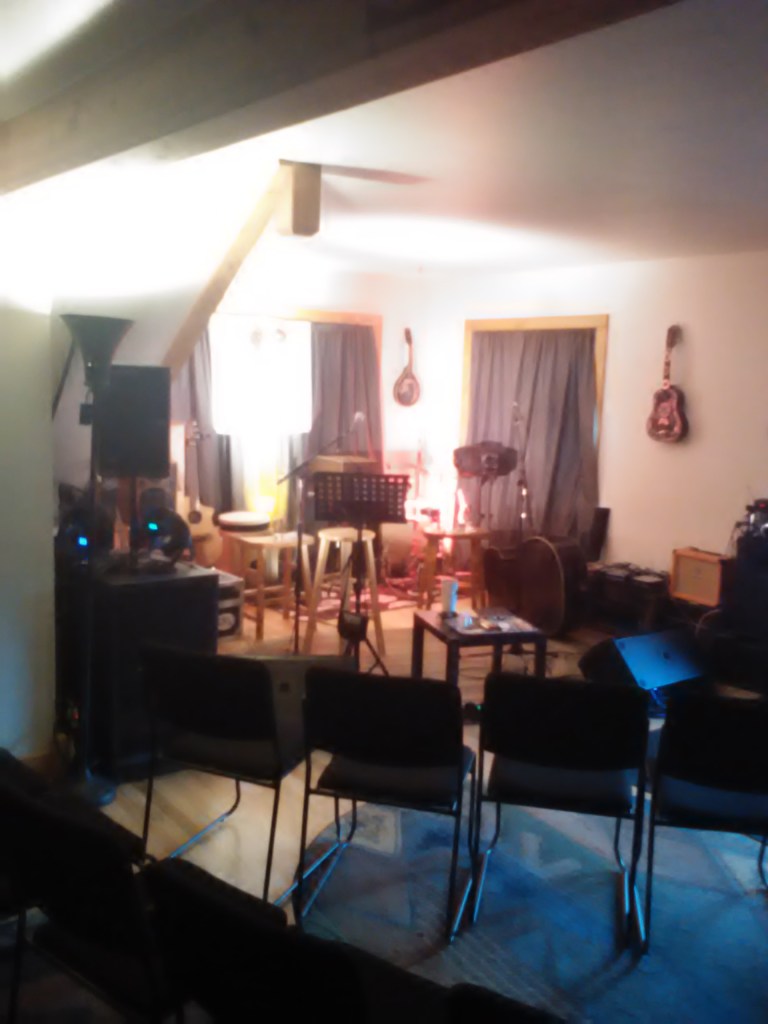
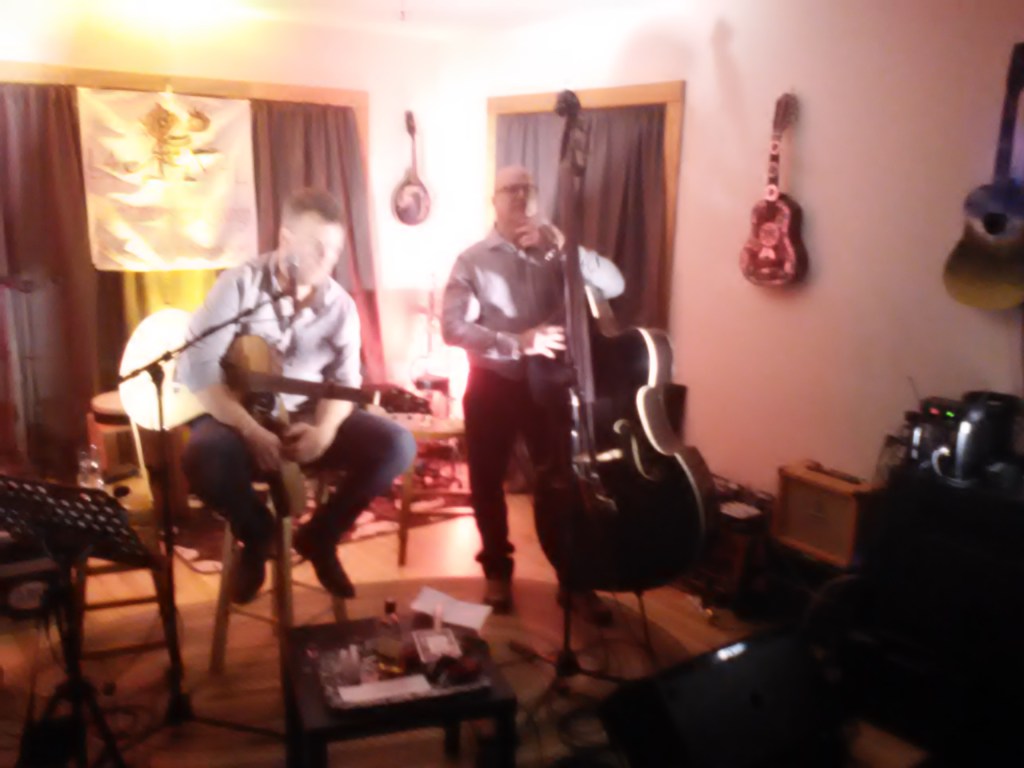
For the performers at the “Listening Lounge” it was heaven, being brought up to a Colorado mountain town, being paid for performances, being put up in the house and food catered by a professional chef and baker. The performances were by invitation and at no charge, being asked for a donation only. Alcohol was provided but not sold due to licensing codes. We ended up catering about a half dozen of these shows and several “retreats” for musicians and musical art organizations up at Barb’s house.
Gary Clark did his “Garapolooza” party at the “Listening Lounge” in 2018, replete with a PowerPoint presentation on himself and his business that many folks were afraid might never end. We jammed a few songs at the end until Craig chased us out. Nancy Leavitt, sister of Gary’s wife Jill, and ex-wife of my oldest brother Bill, was there until someone stumbled and dumped a glass of red wine on her.
Nancy was always very kind to me and at one time in the early 1980’s we both worked in “LoDo”, lower downtown Denver and nearby Union Station, which was then undergoing urban renewal. It was still mostly undeveloped at that time when homeless people were still called “winos”. I worked at the Oxford Hotel and Nancy designed clothing at a nearby office.
In the early 1980’s I was part of the management team with Jim Shoffstall and Bob van Burren for the Oxford Hotel which was being fabulously restored and refurbished by Dana Crawford and Charles Calloway. I was in management as the purchasing agent for the hotel until 1985; it was this exposure to fine dining that helped me decide to become a classically trained chef. The Oxford Hotel was where I had at onetime seen Scott Miller perform, back when it was a rundown flophouse in the 1970’s.
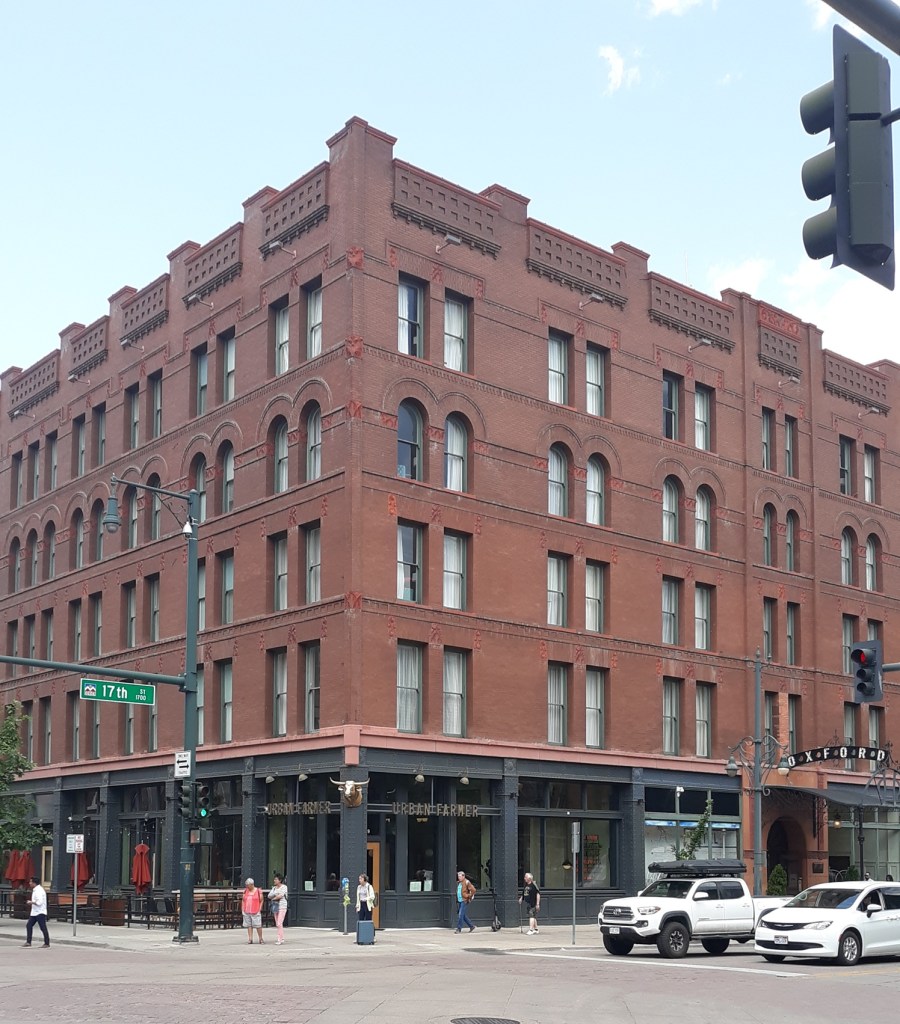
The “Lawn Lane Listening Lounge” brought in some national acts, Missy Raines on upright bass and her ensemble, put on a memorable show. One local gal from Fort Collins, Hannah Brown, on guitar, sang a rendition of “Tennessee Waltz” during sound check that to this day might have been the most stunning performance of the song I’ve ever heard.
Craig Soderberg was an effusive promoter of the arts and music and quite the philanthropist in all of this, except for one tiny issue. He really had no money of his own, was not working, had moved in with Barb and it was all on her dime. When that union dissolved, mainly because of the ‘tiny issue’, the shows ended. Staci and I were happy to not do any more catering, especially as my friend Gary put it, because we were viewed as “the help” by Craig.
“Rivers Move On”
In late September 2018, I was back in the Denver area visiting my daughter Dominique and I told Derek I would be in town. He wanted me to drop by his place in Golden and hear some of his songs he had written. In the three years since Derek had come to visit me in Estes Park in 2015, barely able to carry a tune on guitar, and now this encounter, a remarkable blossoming had occurred. Derek could play decent, very good guitar and he had written some quality songs.
I had brought a guitar with me and played along, backing him up. We sounded pretty good together. He had a very good voice, and I enjoyed the songs he had written. Coming from my background of creating original music since I was 17, seeing and hearing Derek play these songs was a grand moment. That Derek had this particular musical drive and ambition, was kindred to my own musical spirit. I had recorded some of the songs that day and emailed them back to him when I got home.
Roll the Dice – Derek Hall / September 22, 2018
Derek Hall, guitar, vocals, harmonica / Robbie Leavitt, guitar
It’s a little fuzzy what exactly transpired from there, but Derek had been busking solo in downtown Golden working on his performance chops. He had also been playing with Don Milan, the lead guitarist in Big Muddy, backing up Derek on lead guitar. The three of us got together again at Derek’s house, and Don and Derek came up to my house in Estes Park once and the three of us all played music together. It was all fine and good, but with Don’s lead guitar capability and Derek playing rhythm guitar and singing, having me on slide and 3rd guitar, that seemed like three guitars might be too much.
Derek and Don seemed to like my slide guitar playing; my goal was to do what I could to help make Derek sound good. I loved the possibilities of this new musical entity and thought if I played bass, then it would round out and professionalize the sound. And if I was on bass, why not add drums to the mix for the full Monty? I’m sure Derek would have gone there eventually, but my nudging seemed to spark it sooner.
After Thanksgiving, Derek had booked a gig at small brew pub in Golden. Rob Medina as Drama Americana opened doing a short set, Don Milan played guitar with him in that set. Rob always knew a lot of songs and did a tasteful, intense set. If I remember correctly, he did a nice rendition of a Who song. Then, Derek had another performer play a short set, it might have been a friend of his, Mark D. He was good, but I thought having two opening acts at a casual brew pub gig might have been a little much.
When Derek came on, I backed him up on bass and slide guitar with Don on lead guitar. It was a nice first set and we had practiced the songs a time or two at Derek’s house some weeks before. A drum kit was set up behind us and eventually we were joined by Joe Lasser, another friend of Derek’s on drums. It was a fun, easy going night, not loud, just good music.
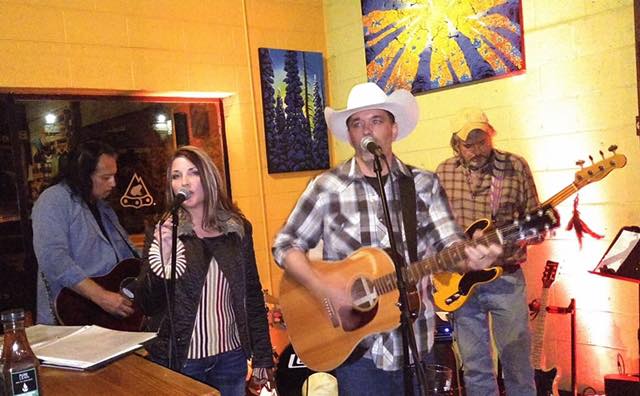
16 Days / Derek Hall and the Possibilities
As my playing music with Derek moved along, he was progressing and prolific as a songwriter. I’ll give him his due, because his songs were very good and for the most part were in the genre he was breaking into, roughly alt country. With some of the songs, while in a I/IV/V/mVI format that is thematic to that musical style, he was creative in many ways often employing nice changes in tempo and structure. His lyrics were thoughtful and deep on some songs and perhaps appropriately suitable for some of the more straight-ahead modern country songs. “Savin’ Money / Last Night / Bad Luck for Good” were a few of the titles and he was a good storyteller in the songs.
Would not classify any of his songs as “Bro Country” (the “if you disrespect the flag, yer face is gonna meet my boot” or sickly-sweet cheesy love song types of country songs, like my song “Heather”). One of his signature songs was “Rivers Move On”, a song in C with a catchy hammer-on melody followed with superb chord bursts then swings to the minor chord and later included a nice tempo change with intelligent lyrics. Other songs of his that were top shelf were “Divide by Zero”, “Kickin’ Ass” “Nice Quiet House” “Roll the Dice”. Playing bass on most of his songs and slide guitar on a few others, was a lot of fun. With Don Milan on lead guitar the band could create a buzz, especially if it was a venue where we had a drummer playing with us.
Divide by Zero by Derek Hall 2019
Robbie Leavitt, bass / Joe Lasser, drums
One thing about having an original music act, is that interspersing the many original songs with cover songs helps round things out. A cover song grounds the audience with something familiar if it is a known song or it might be a tasty cover song that wows the audience. Derek was pretty good at interspersing covers in the sets; “Long White Line” by Sturgill Simpson, “Drinking Problem” by Midland, “Ring of Fire” were all fun songs to play, among others. Derek was driving the bus; it was his show.
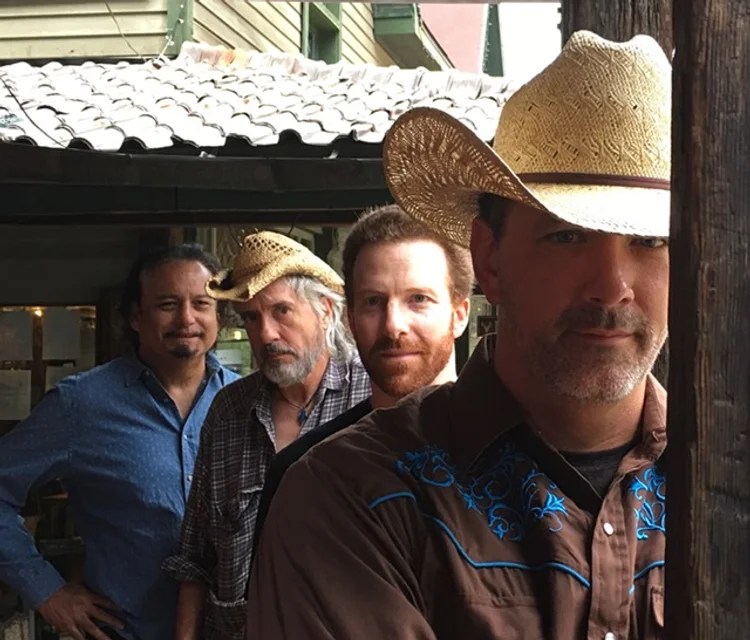
L-R, Don Milan, lead guitar / Robbie Leavitt, bass / Joe Lasser, drums /
Derek Hall, guitar, vocals
Playing in a combo with Derek in Golden was a bit problematic; I lived in Estes Park, an hour and a half away. In my time playing music him, which lasted into 2020, we did rehearse some, mainly for new material, but my travels down the mountain, more times than not, were for me coming to Golden or other locations for gigs. I was conscientious and attentive working on material from recordings or charts Derek had given. I was retired, had spare time and even though I was still playing in Tahosa, this was eminently more enjoyable, even travelling down and back from Estes Park to Golden.
In late winter and spring 2019, into summer and fall, Derek was good at booking gigs, and we played often as trio with Don Milan and at times with a drummer, depending on the venue. Derek had a great personality with outstanding socialization skills and continued to grow his circle and fans. As a showman/frontman Derek had natural charisma with a good vibe, honest and genuine, not needing to be intense or showy.
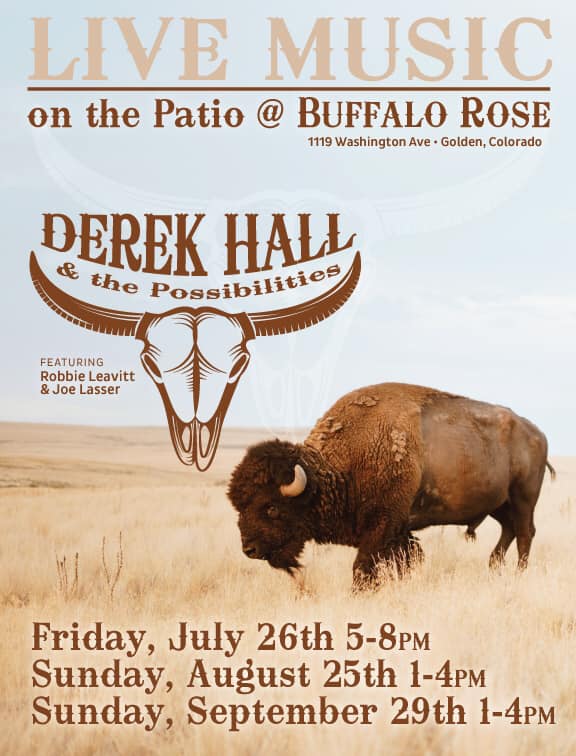
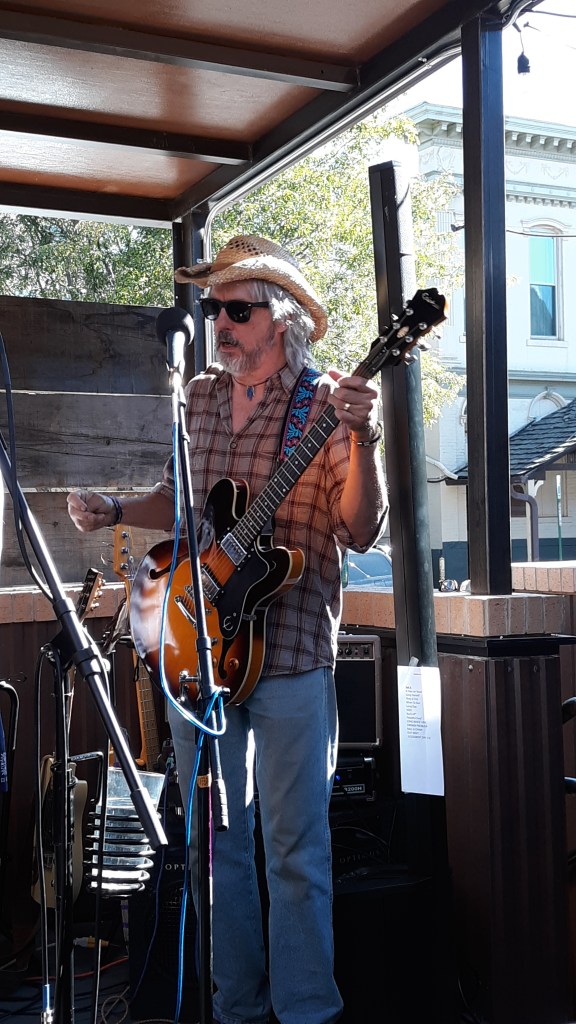
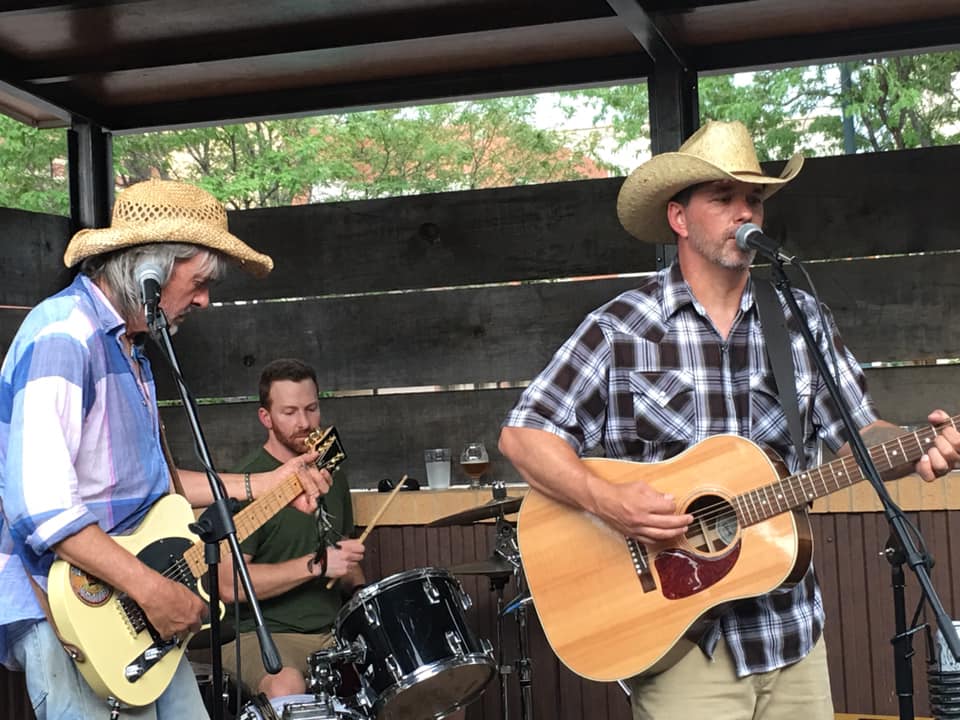
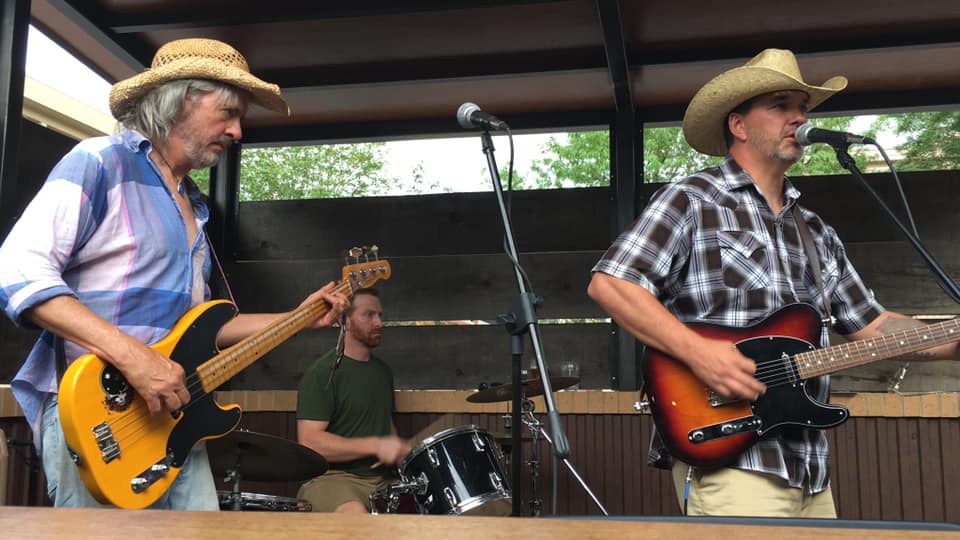
I loved playing bass for him and his ensemble, and I was grateful playing any guitar parts. Mostly when I did play guitar it was slide guitar, but on some of his songs, I played second guitar in open tuning with no slide or only light slide embellishments. Playing fretted chords in open tuning will give the sound a nice timbre that sets the song apart from two guitars just playing “cowboy chords”. I’d learned while playing with Bev and Rex, fretted chords in open tuning varies the sound.
With Don also on guitar playing his excellent leads, triads and fills, for some of these numbers with me on open tuned guitar, this was my contribution on guitar. Not sure Derek really noticed but it was fun for me to play. Always, I tried to take a professional attitude and do what I could to make the whole thing sound good. Derek would throw me a bone and I’d play “Six Days on the Road”, sometimes on his Gibson acoustic and I’d give it a good vibe singing it, always it seemed well received. At times I’d add a little backing vocals on covers like “Dead Flowers” or “Friend of the Devil”, but I could tell it made his skin crawl with me doing this, so I backed off.
“Smoke signals from the teepees….”
As summer 2019 evolved musically, I was playing in three musical entities; Tahosa, Derek Hall and the Possibilities, and with Rex and Beverly. With Derek I was the most active, he was good at booking gigs several times a month, so I was very busy and playing a lot. With Tahosa, it had lost any luster that I might have enjoyed. Again, in my naivety, I was under a false sense of belonging in the band. I’d mastered all the material and was punctual and dedicated as a member of the group and fairly good friends with Joey Fichera, the bass player and perhaps co-leader of the band.
In Tahosa there was not one original song being played. It was like classic rock radio in the flesh. I’d broached the possibility of playing guitar on a song or two, you know, throw Robbie a bone. I remember playing slide guitar on one song with them once or twice, Rollin n Tumblin? But the song I felt would be the most fun for me and the band was “Bluz for Sancho”. Joey learned it and liked it, the drummer Jerry, who didn’t like me, he played great on it and seemed to enjoy it. Mike, the other guitar player liked it. In my naive unawareness I assumed that with a lead guitar player like John Weires, the song would shred. Don Milan on lead guitar had always turned “Bluz for Sancho” into a masterpiece.
We played “Bluz for Sancho” at one rehearsal and John played a few tasty licks, then he just stood there like a wax museum figure for the rest of the song and played nothing. Before the song was finished, he did the “cut it off” signal waving his hand at his throat. He said he didn’t know what to play, which translated to, the song was not his idea, and he wasn’t going to contribute to it. From that point on I knew my time in Tahosa would be coming to a close. John and I were civil after that, but it was one of those relationship ruptures that is difficult to hide. There were times previously that I was peevish and irritable around the group where it was hard for me to hide disinterest or displeasure in certain situations.
At my wayward insistence, we played “Bluz for Sancho” live once to close a gig at Lonigan’s, but as I remember, it was so loud in the small space of the gig then playing in the front dining area, not the back hall, everyone in the band complained how loud it was. Of course it was, two other loud guitar players, a monster bass rig, drummer and me trying to play loud enough over that din to hear myself.
By that time, my hearing was pretty much shot, barely being able to hear much out of my left ear. Towards the end while gigging with Tahosa, I made a point to set up “stage right” so my left ear, my bad ear, was to the decibel breakers to my left. I’d put an earplug in my left ear and could still hear everything they played and would leave my right ear unplugged so I could hear what I was playing and save that ear from the onslaught of decibels to my left.
Tahosa got this gig playing in the dining hall of this RV park called Elk Meadows, Fred Willard of Spinal Tap fame would have been proud. I could see this place from my cabin about a mile across the river from where I lived. It was July and the place was packed with tourists; there was a pool for the kids and teepees on the grounds to give the place that wild west Colorado feel.
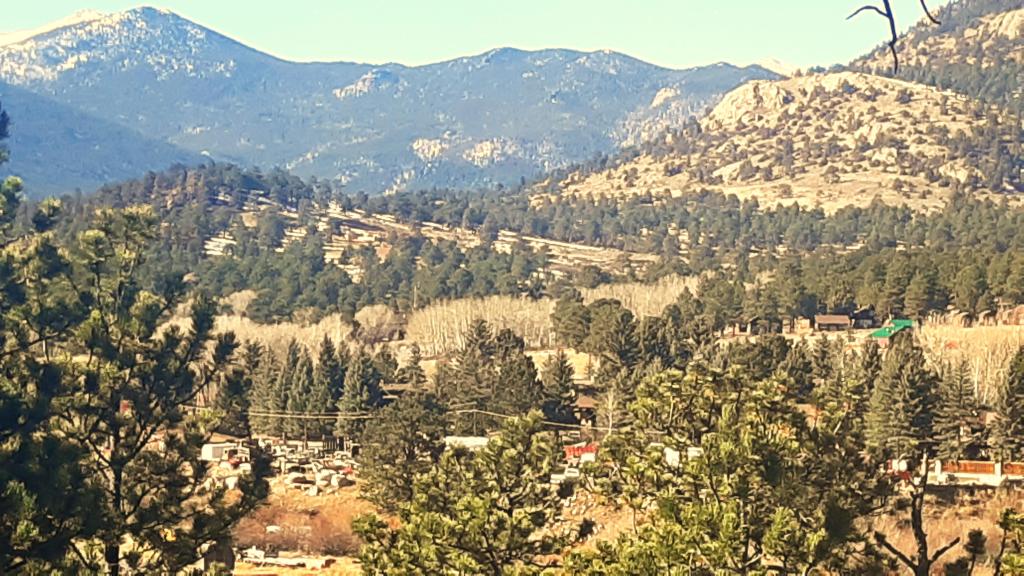
We set up in the afternoon and the guys all left their amps, said they had errands to run, so I said I’d finish setting up. Even at my age, I wasn’t above sometimes being a punk, and I set the two guitar players amps on the other side of the drums so I could hear Joe on bass with me stage right and not be blown into the next county by Mike or John. When John got in, he was not too happy about the set up but said just leave it. Personally, after having to deal with a number of cocky sous chefs who didn’t want to do things my way, I’d have changed the set up how I wanted it and dealt with the issue later. Regardless, that was the last time I played with Tahosa.
“Hillbilly Orchestra riding the rails….”
Nothing was really said to me and there was a lot of downtime for Tahosa with people out of town. I saw Joey a month or so later, he knew I was playing with two other groups and said it was “better this way”, meaning ‘adios, muchacho’. My hearing was relieved. I was busy with Derek, as well as trying to put an ensemble together with Rex and Bev. Over the winter and spring Rex and I played a fair amount, and we did a bit of recording together. My mind is always trying to think ahead with ambition and ideas. With Bev out of town more than half the year, it was logical in my mind to give the duo of Rex and me a name.
Rex was hard to read sometime, so I’d have to get straight to the point if he was interested in engaging as a duo for gigging. It was his idea in the first place. He indicated he was, even though the reins to the mule were still taut and not moseying gingerly. With “R”’s in both our names, I came up with “The Railroad Ramblers” as a name. Perhaps a bit cheesy but appropriate as a moniker for an ensemble playing old timey music.
Always need a schtick, right? I never used this as a selling point, but in truth, unintentionally, we knew quite a few songs with railroad references – Jimmie Rodgers’ “Train Whistle Blues” and “Waiting on a Train”, Utah Phillips’ “Going Away”, Doc Watson’s “Blue Railroad Train” to name a few. Check that, I DID use the list of railroad songs as a selling point, sending off a press kit to a railroad museum that hosted events. Never heard back from them.
With Rex, I will say that I really enjoyed playing music with him. He was as kind and conscientious soul as you’d ever find, and we’d trade songs. He’d accompany me on my songs as I would on his. It was a good give and take. In my everlasting love of recording, I’d always see what we could come up with, though I’d be careful not to put too much weight on the back of the mule. On more than one occasion, I’d record Rex on voice and guitar, then go back and record my parts over the top with 2nd guitar, bass and sometimes mandolin, evidenced here with Rex singing “The Old General Store is Burning Down” by the Tillers:
“The Old General Store is Burning Down” by The Tillers
Robbie Leavitt, 2nd guitar, bass, mandolin
When Bev got back in town, we’d back her up. As an ensemble, with Bev on guitar and banjo, she was so madly in love with her banjo, Rex on guitar and mandolin, sometime lap steel, and me on guitar, open tuned guitar, slide guitar and bass, we had a nice variety of songs that had a special timbre that was pleasing to my ears.
I’d joke that we sounded like a hillbilly orchestra with all the different instruments and type of songs. Pretty much I’d defer to Bev and Rex for their songs, but as Rex and I had played a fair amount with Bev out of town over the winters, we’d do some of my songs. One of the songs was one that I wrote in about 1992, a stark ballad in D minor called “Fields of Eylau”, a song set in the Napoleonic wars.
It was pleasing to be part of a collective working on music, rather than the unappreciated noisy role in Tahosa. With Derek, I was a piece part in his ensemble, but I really enjoyed playing his music and he was fun to be around. Beverly landed a follow up gig at Performance Park in August 2019, “Beverly Sencenbaugh and the Railroad Ramblers”, we were billed. Now as a three- and four-piece ensemble, we had a fair piece more time to prepare for it. I tried to be conscientious and not step on toes, but for this performance it was pretty much up to me to drive the bus.
Bev’s songs were the main focus and we incorporated a few songs for Rex to lead and a couple for me. My task in writing the setlist was to sort everything out by Bev’s songs on banjo, Bev’s songs on guitar, Rex songs, songs Rex accompanied on guitar or mandolin, Robbie songs and songs Robbie accompanied on guitar, slide guitar and bass guitar. This was a bit of a jigsaw puzzle, yet interesting for me to coalesce.
In all of this, something occurred that would change things musically for me down the road. My friend Gary Clark played bass, and I invited him to play bass on my ballad “Fields of Eylau” at the 2019 Performance Park show, to give him an opportunity to play on that wonderful stage. Gary knew the song and we had played it together several times. He said that he would, but then a week or so before the show he changed his mind and said he couldn’t make it.
Can’t remember exactly how it all transpired, but half-jokingly, I asked Staci if she wanted to give it a try on bass. She had never played a stringed instrument in her life. On bass, it’s actually pretty easy for a two-chord song that drones on but has a four-chord chorus. We practiced it every night with her playing my Fender P51 bass, which for her tiny hands was a huge instrument.
The Performance Park August 2019 show was a bit more complex and in depth than the previous year. We did pull it off, but in terms of vibe and performance, it was quite different. One thing was the crowd was much larger. In 2018, the crowd might have been in the several of dozen’s range. Bev, for all her outgoing bluster and love of attention, might not have been ready for the paces of a rather large production like this.
It was mainly her songs, with Rex singing two songs and I was singing two. Perhaps that put a lot of pressure on her; the previous year she was relaxed and basked in the limelight. For this show she was nervous and many of the things we’d practiced weren’t quite as sharp. It wasn’t bad or noticeable, but the show didn’t have the same easy-going liveliness as the year before. Bev said she didn’t feel well, and that may have been the case, though she was often more friendly with wine than I thought was good for performance.
Still, it was a very nice experience for us all, Rex and I were always happy to back Beverly up on her many varied and wonderful songs. Bev had this song called “The Least of Us”, perhaps her signature song. It had many caring and illuminating lyrics and was as complex of a song musically as you might find for a piece that she performed on banjo. “The Least of Us” had an array of chord changes with verse, bridge and chorus sections. Learning it took quite of bit of concentrated effort to follow and make whole. Rex accompanied the song on guitar, Diane Collinet sang on it, and I played bass. For Bev’s banjo songs, I found playing bass helped keep things “on the rails”.
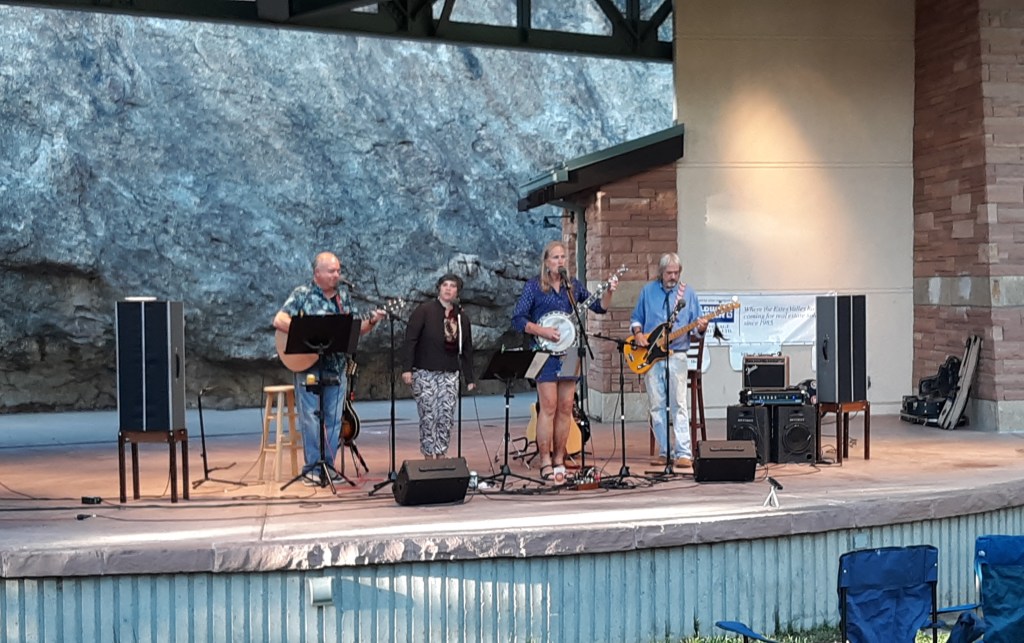
L-R Rex Hedlund, Diane Collinet, Beverly Sencenbaugh, Robbie Leavitt
The Least of Us by Beverly Sencenbaugh
Bev Sencenbaugh, banjo, vocals / Diane Collinet, vocals
Rex Hedlund, guitar / Robbie Leavitt, bass
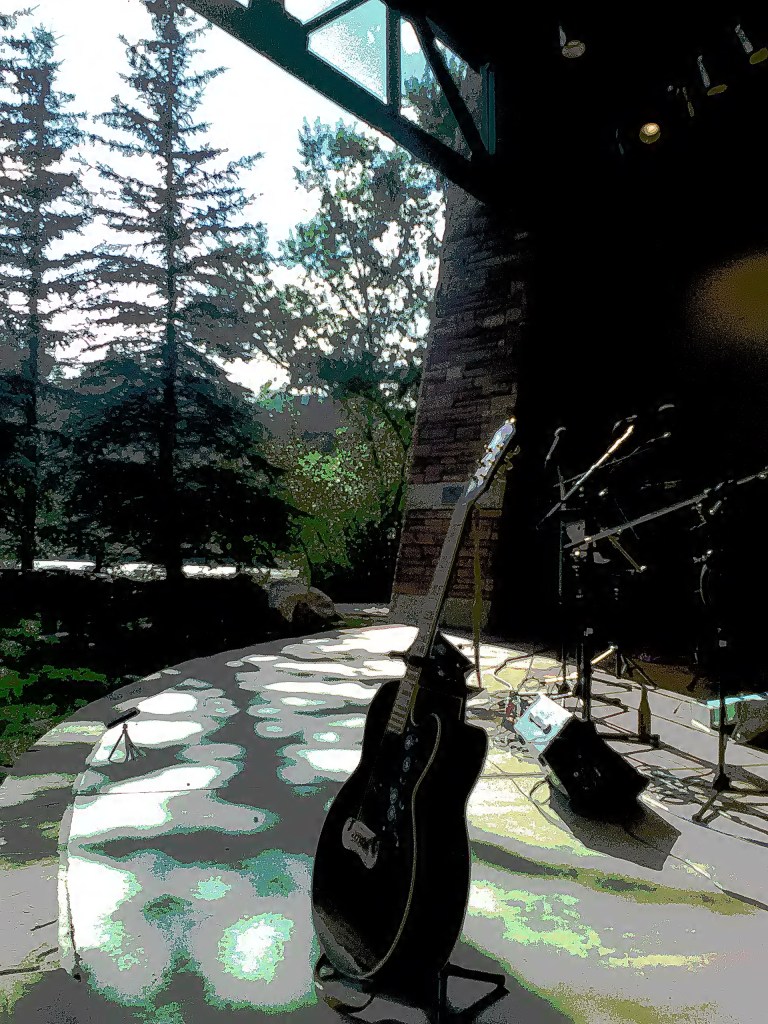
note digital recorder at front of stage….
……..another ZTE phone ‘posterized’ image.
The two songs Rex sang and the two songs I sang were interspersed in the two roughly fifty minutes sets. Rex and I played the songs that we had played together often; “Columbus Stockade”, “Lost Highway”, “Little Children’s Blues”.
Lost Highway
Rex Hedlund, guitar & vocals / Robbie Leavitt, slide guitar
The show really was a showcase for Beverely and with Diane singing along to songs they knew well, they sounded very nice. Bev really did have quite a number of very well written, signature songs: “Standing on the Outside”, “When Nothing’s Left”, “She’s a Wrangler”. We played those songs along with her on guitar, along with her bluegrass infused songs on banjo.
In an effort to be artistic and break things up, in between sets I read a poem that I had written, “The Song of N’Nesotaiuex”.
This was actually a song I had written in open G tuning with spoken word lyrics. N’Nesotaiuex is the Arapahoe Indian name for nearby Longs Peak. It was suitable to read as a poem as it would have been difficult to play guitar to the spoken word. Estes Park is now motels, gift shops, rental cabins, restaurants and microbreweries; in my mind I can still envision where the native American encampments were along the Big Thompson River, rather than the present-day structures.
The Song of N’Nesotaiuex © by Robbie Leavitt
(…with the recording arrangement for the song)
mournful Native American flute riff
(Fade in -> Main melody + birds / wind / water, -> then spoken word)
“The elk graze in the meadows
In the forest game is plentiful
– deer, rabbit, many birds flying
In the streams and ponds there are beaver and fish
the sound of the waters is soothing, we drink
By the light of four sunrises, we find buffalo
Hides and meat for us, we cannot count their numbers
We take only what we need, leaving the rest to flourish
in the fields, the grasses and flowers give our world beauty
Warily we watch for bear, he will not disturb us
if we cast no shadow upon his den
mountain lions watch us from afar
and then disappear into the forest
In the shadow of the mighty N’Nesotaiux the wind howls
and Coyote Feather searches for Ten Bears
Time slips by, it is here and then it is gone
our ancestors speak, as we will speak to those that follow us
(Thunder claps)
(‘tension’ melody):
Thunder lights the sky at night, the spirits are angry
The sunrise is black, dark clouds fall before us
Many raven lie dead on the trail
Bad omen for the people, trouble lies ahead
Hosa will no longer dance with the maidens
the children will not laugh or play
Many tears will fall and wash away the sand in the creek
The Song of N’Nesotaiux will be sung no more”
Outro -> tension melody -> fade out with bugles, war hoots, gunfire, cavalry charge -> tension melody -> interlude -> native dances -> main melody -> flute -> owl hoot
Perhaps a little ambitious to do this but reading it as a poem it filled a slot of time between sets.
Towards the end of the show before finishing up with several more of Bev’s songs, we played “Fields of Eylau”. I stood and played acoustic guitar, Rex was on mandolin and Beverly on banjo. Staci joined us on stage from the audience and played bass, she was shaking like a leaf on a tree. “Fields of Eylau” is a very long song with the refrain beginning every verse, four verses, two choruses, and a half verse to end it. It has no instrumental breaks; yet the song runs close to eight minutes. Staci played wonderfully despite her stage fright.
The Fields of Eylau © – by Robbie Leavitt
Bev Sencenbaugh, banjo / Rex Hedlund, mandolin
Performance Park / August 8th, 2019
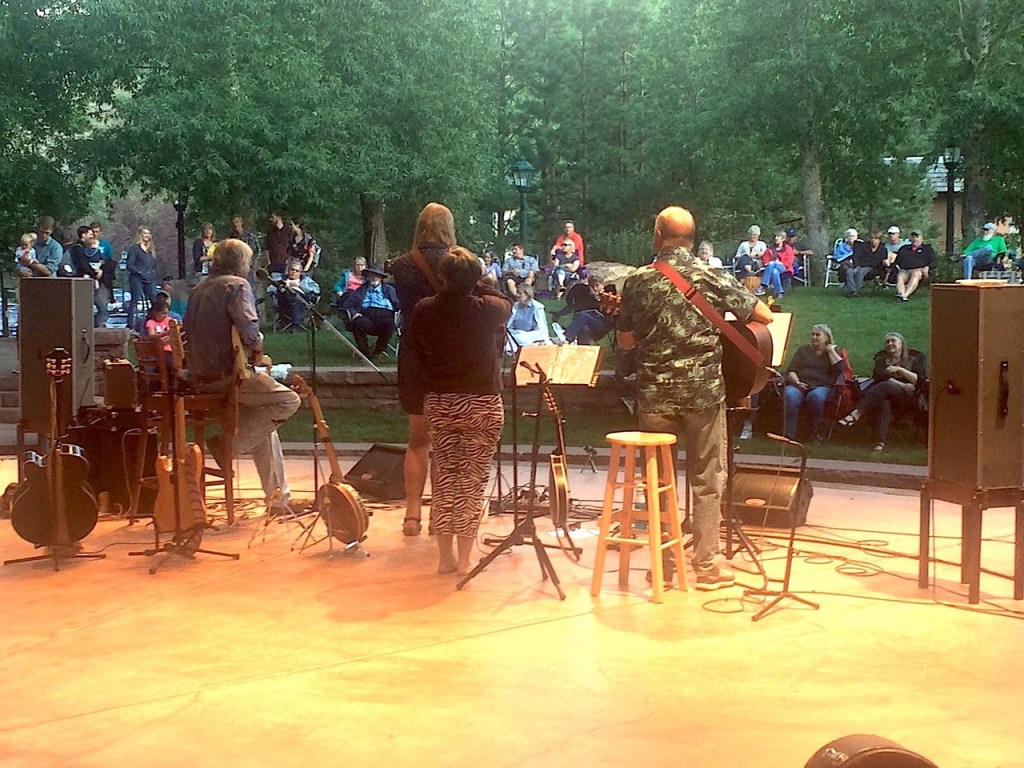
L-R, Robbie Leavitt, Bev Sencenbaugh, Diane Collinet, Rex Hedlund
The 2019 show was a success regardless of any quivering moments from any of us. We would play Performance Park again the next year under very different circumstances.
“There’s a Bad Moon on the Rise”
Going into the fall of 2019 I played a little bit with Bev and Rex but nothing serious and no other organized performances. With Derek, we gigged a great deal; the Buffalo Rose had redesigned and remodeled their patio and restaurant, making it very music friendly for acts that weren’t loud and the patio stage was moved into the corner facing in away from the troublesome apartments across the street. Derek was very good at PR and congenial with a lot of friends and business acquaintances in music circles.
The Buffalo Rose patio was a joy to perform at on a late summer and early fall Saturday afternoons. In the winter, Derek got his act booked inside without a drummer in the back hall of the spacious Buffalo Rose bar/dining area. That fall we played several times in Evergreen at an old club called the Little Bear. I’d played there once with Roadhouse Joe and remember seeing Delbert McClinton perform a raucous show there in the 1970’s with my friend Scott Miller. A black and white photo of a young, moustache’d John Prine was on the wall, off stage. The Little Bear stage was famous for all the brassieres that hung down over it.
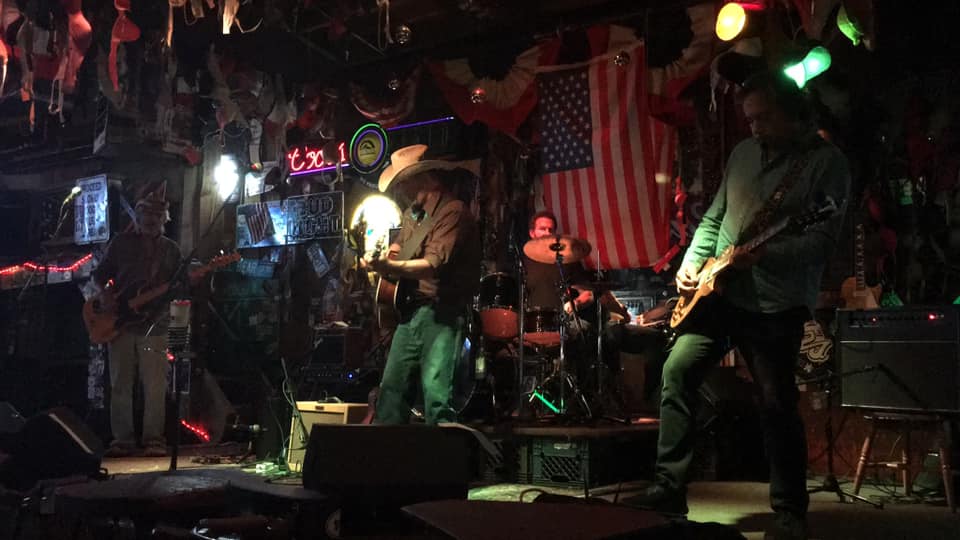
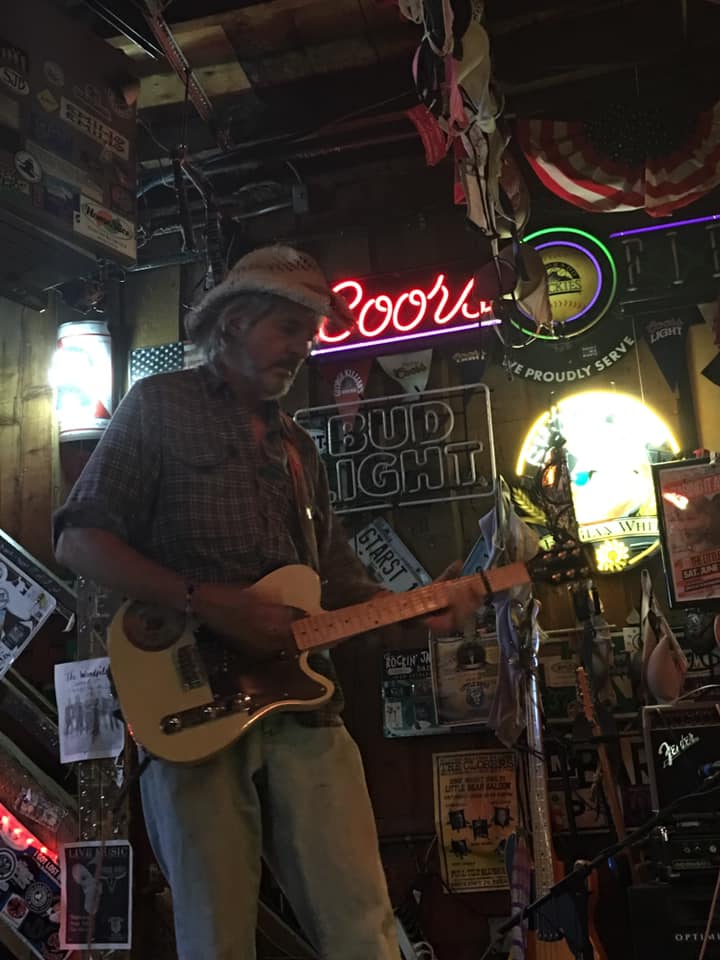
Wherever Derek booked us, I was dedicated and loyal, glad to be part of his act. Playing music semiprofessionally suited me just fine, even with the travel time from Estes Park between Golden, Evergreen and Denver. That fall we played in a funky old bar outside of Evergreen called the Sit-n-Bull, a place we’d once played at in Big Muddy. We played few other times in Evergreen at the Woodcellar; once with Joe Lasser on drums, the other time with some other cat who I can’t remember his name, Steve? As fall 2019 turned into winter, then into late winter 2020, I kept playing with Derek as he booked his act, many times it was just Derek, Don and me at the Buffalo Rose or Cafe 13.
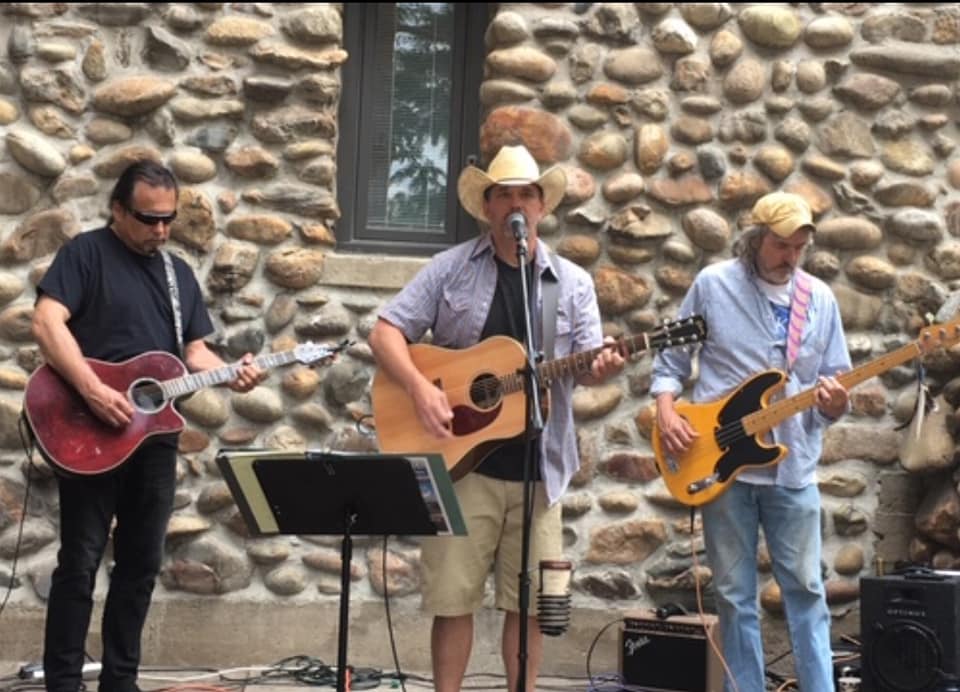
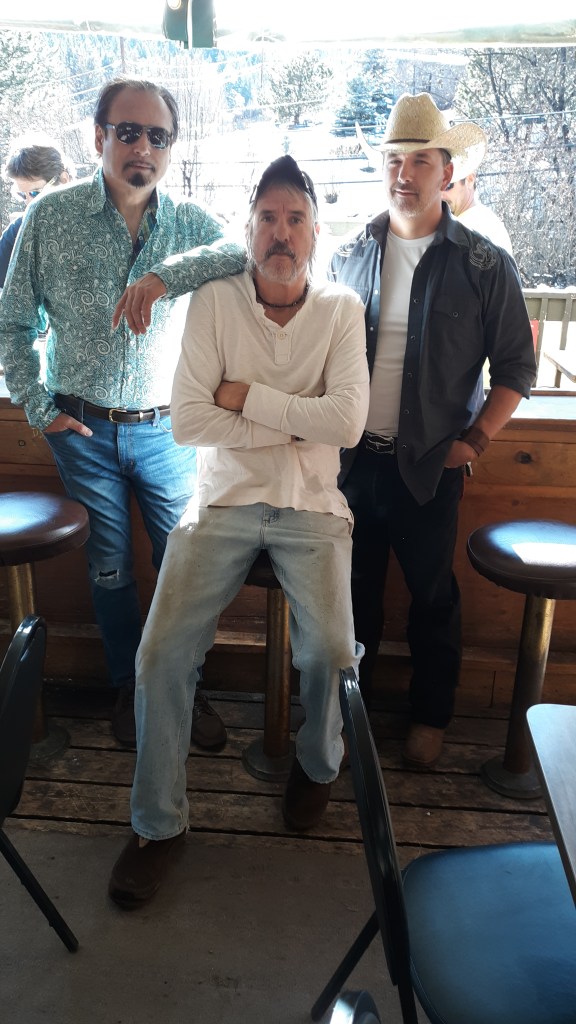
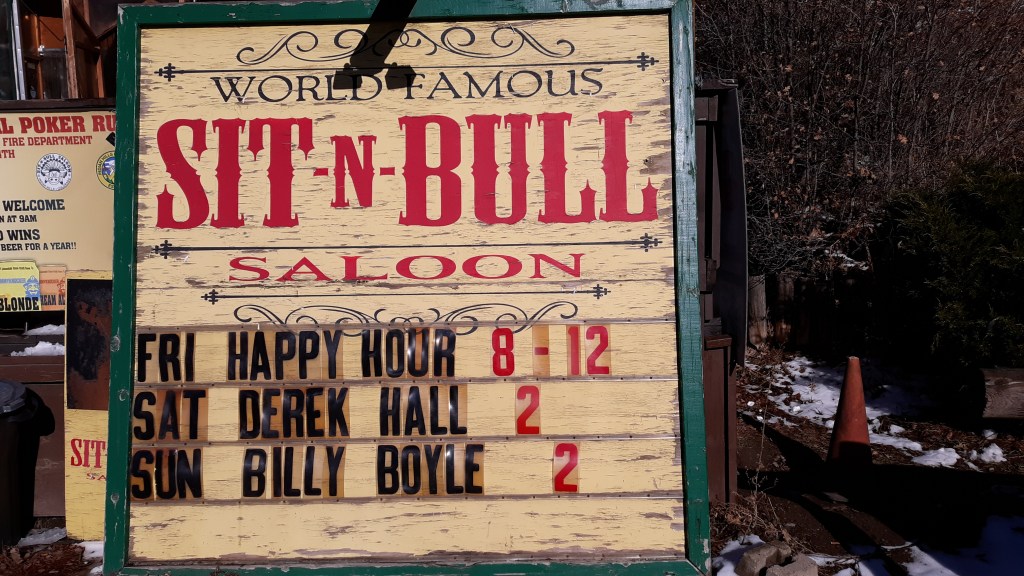
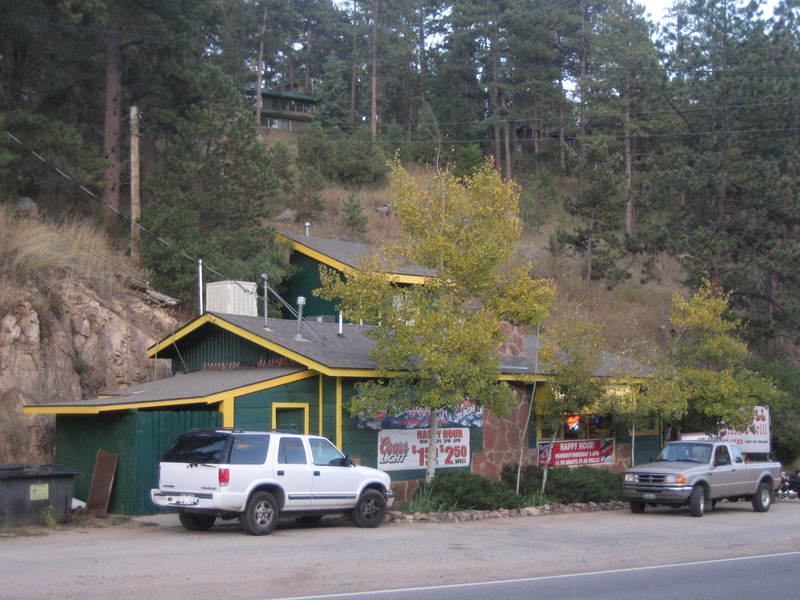
In this late winter of January, February and March 2020, the upheaval of the covid pandemic was creeping into the unwary populations of the world. Snippets of news about the dreaded infections spreading around the globe went from a drip to a firehose of alarm. By late February and early March, the frightening reality of what was upon us was stark and unavoidable.
The last weekend in February, I saw a local duo, Great Blue, perform at Snowy Peaks Winery. Steve Kaplan was an old timer, older than me and he performed an eclectic variety of old songs with his wife singing along with him. He did some interesting open tuning pieces that I enjoyed. Great Blue had performed at Gary Clark’s house in 2016 for the first “Garapolooza” “festival” that I played at with Gary, his daughter and the drummer from Tahosa. As Steve and his wife performed that evening in 2020, everyone looked cautiously and suspiciously at one another, wondering “does he/she” have “it” as people tried not to get too close to one another.
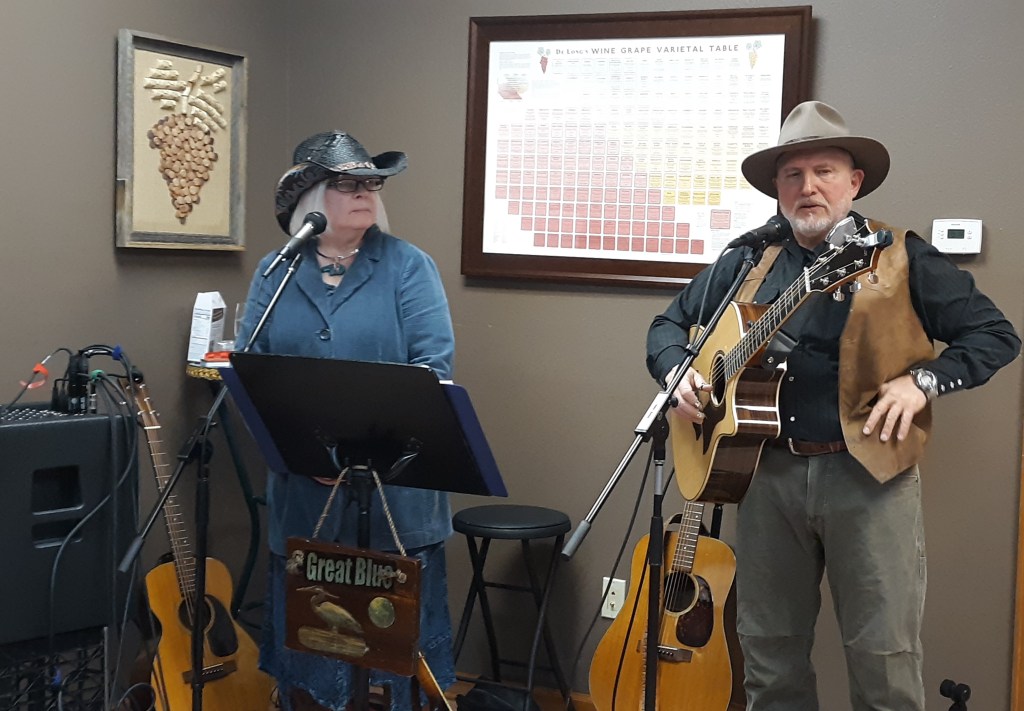
At an open mic the following Monday, in a packed, elbow to elbow restaurant, a local doctor/musician boisterously proclaimed as he threw back shots, “Whiskey kills the virus! Whiskey kills the virus!!”. On Thursday, March 5th, 2020, I performed with Derek and Don at the Buffalo Rose in Golden, inside the back hall by the dining room. By that time, in gigging with Derek, I had my rig and setup down and knew the routine quite well travelling from Estes Park to Golden and back home. At night returning home, there was never much traffic.
That Saturday, March 7th, Derek had a gig at El Rancho, an old log hewn restaurant/bar/music establishment off Interstate 70, not far from Evergreen. El Rancho had been around from the 1940’s and before and was well known in the area. Don was not going to be there to play guitar with us; he had a gig with another band that paid him more. Derek appreciated that I was there.
I had decided to take the backroads to El Rancho rather than drive through Lyons, Boulder, Golden and Denver back up I-70 to El Rancho. There was a way to get to El Rancho taking mountain roads; highway 7 to highway 72, the “Peak-to-Peak Highway”, through Nederland, then eventually pass by the gambling meccas of Black Hawk and Central City, catching highway 40 and the I-70 service road that drops you right in at El Rancho. It was peaceful mountain driving all the way there, versus the cluster of traffic the lower route.
It was an OK gig, I had fun, Derek was fun always, along with his wife Kaylie. As usual, Derek had a big group of friends and that kept things lively. I played some slide guitar, but I felt a little choppy and discombobulated, might have been all the driving of the past two drives from Estes Park.
I played bass for the second set and thought things sounded better. I had a recently acquired vintage Epiphone Rivoli archtop bass with a “mudbucker” pickup that was fun to play. The atmosphere was a little uncertain because of the unknown about the virus. Driving home on the mountain roads I had come in on was a joy, barely any traffic, a cloudless starry night with the moon shining off some the distant snowcapped peaks and finally home again near midnight. With so many things unknown on the horizon of the pandemic, it was unknown, but that night was my last gig with Derek Hall.
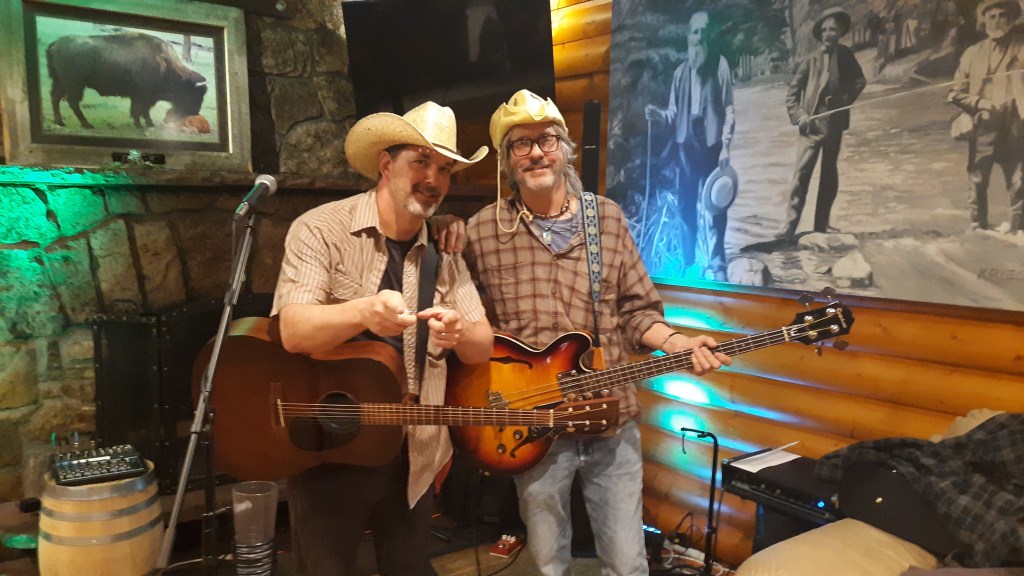
at El Rancho, Colorado, March 7th, 2020
We’d all just as soon forget about the pandemic and lockdown, but it was something none of us could avoid. The world changed, people changed, situations and the way people lived their lives changed. Staci and I hunkered down like everyone else and we lived our isolation in our old mountain home, and we kept up with Staci’s folks bringing over a meal over every Sunday as we had done every week since we’d moved to Estes Park.
Staci’s folks, Ann and Don Martin, were the reason we had moved here in 2014. I had been up to their nice mountain home outside of Glen Haven since before Staci and I were married. When we were dating, very, very early in our courtship, we even came out to see the lot where the concrete foundation stood before their house was built. We were married here in 1997; Ann and Don had always been so kind and nice to me, taking me into their family as their own.
For as long as I can remember, we came to visit for holidays and birthdays many times before we moved up to Estes Park. Now being over at the Martin’s house every week, there was an old guitar leaning against the wall in the basement rec room, next to the piano. No one in their family played guitar and it had no strings or tuners, was an unfinished classical guitar and seemed to have a blotch on the front like a stain from a colored wet newspaper.
I’m sure I had asked about it at one point, but it always just sat there leaning against the wall. On the headstock in hand drawn white paint, it read “Martin”. So, all these years Don Martin had his “Martin” guitar sitting there, unused, un-played, unloved. It was rather amusing having ‘Martin” painted lazily on the headstock of this old guitar. Don Martin surely had no idea about the significance of Martin Guitars, who had been building the finest acoustic guitars in the world for over a hundred and fifty years. Don was a golfer and knew everything about golf, about guitars, not so much.
Evidently back in the late 1960’s Don and a friend of his back in Hoxie, Kansas had gotten these guitars as kits to finish and for whatever reason the guitar did not get finished and the wet newspaper stain happened. Actually, except for the blotch on the front of the guitar, the finish on the sides and back was not too bad. It was right before the pandemic, and I offered to work on the guitar to get it up to beauty. In this time frame just before the pandemic, I had been working on my own guitars. I had this Epiphone ESJ-200, that while a new guitar, I was not all that happy with some of the elements and had replaced the stock nut and bridge saddle with Graphtec parts.
Don gave me the bag of parts and the working manual for the guitar; it was made in Mexico and the date on the booklet was 1967, before Staci was born. It didn’t take much to get the guitar up to snuff, I had to sand down the front to get off the newspaper stain and gently match the front finish and flake off the white paint on the headstock. I used the old saddle from the Epiphone to replace the thin piece of plastic from the kit that was the saddle. Upon attaching the classical tuning keys, the teeth on the gears had corroded through from sitting for decades and I bought replacement tuning keys from eBay. Didn’t really know what I was doing, but I used some thinned shellac on the front and the headstock, and it actually turned out okay.
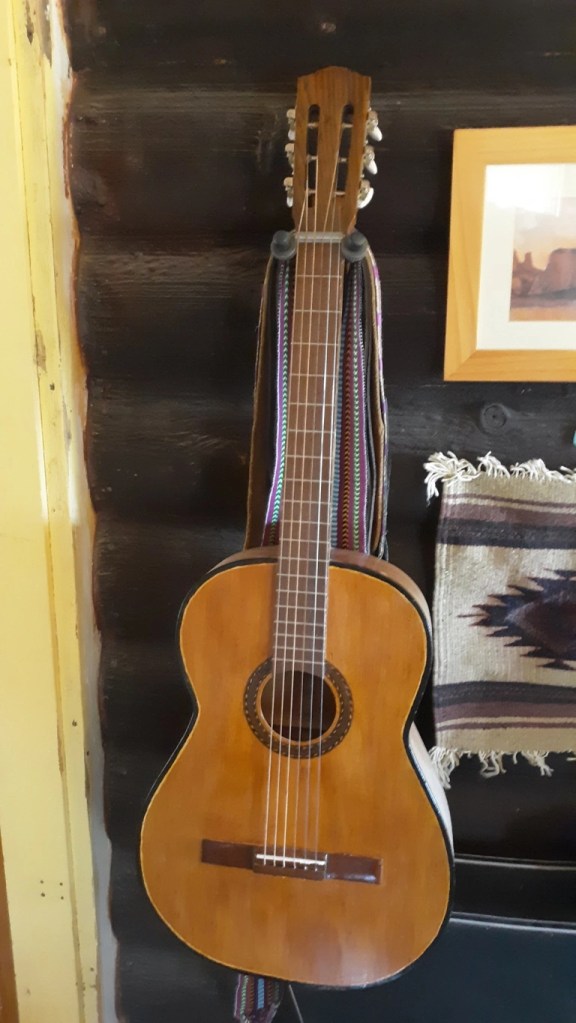
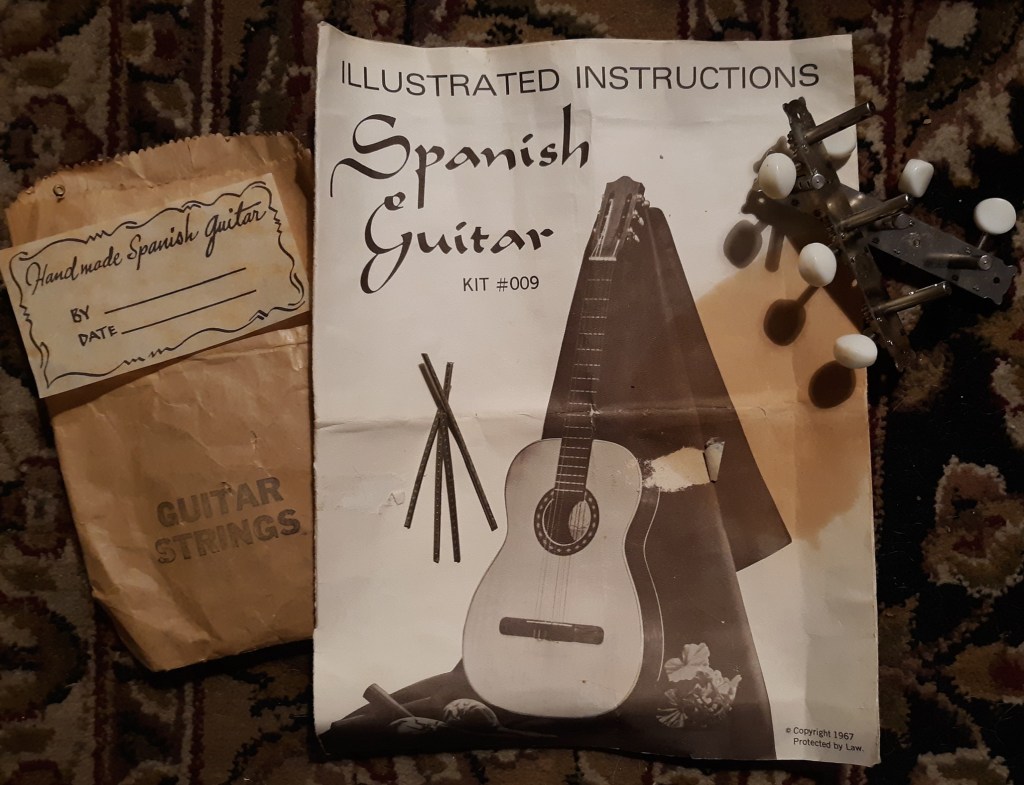
With these minor luthier projects in the backdrop, as the pandemic lockdown raged, I became enamored with guitar repair and restoration. There was no gigging going on, no going over to people’s houses for music and socialization. To learn a little bit about luthier skills, YouTube provided decent information and from eBay I purchased parts and a number of beater guitars in need of love. Mainly I purchased beat up used Epiphone Les Paul Juniors, Special I’s and Special II’s to refurbish, plus a cheap beat-up Washburn electric and a couple of DeArmonds. I’d repair and restore these neglected instruments, bring them back to respectable playability and beauty and sell them back on eBay or Reverb.com.
These were pretty easy electric guitars to work on; the mechanics of electric guitar electronics, tuning keys, bridges and nuts is pretty cut and dried. Working on blemishes, dings, cracks in electric guitar bodies were always the most difficult part. To do luthier work on finishes and structural repairs for acoustic guitars was not something that I wanted to mess with. This was beyond the scope of my tiny eight foot by four-foot shop which I could heat in the brutally cold winters here at 7500 feet; the rest of the garage was unheated.
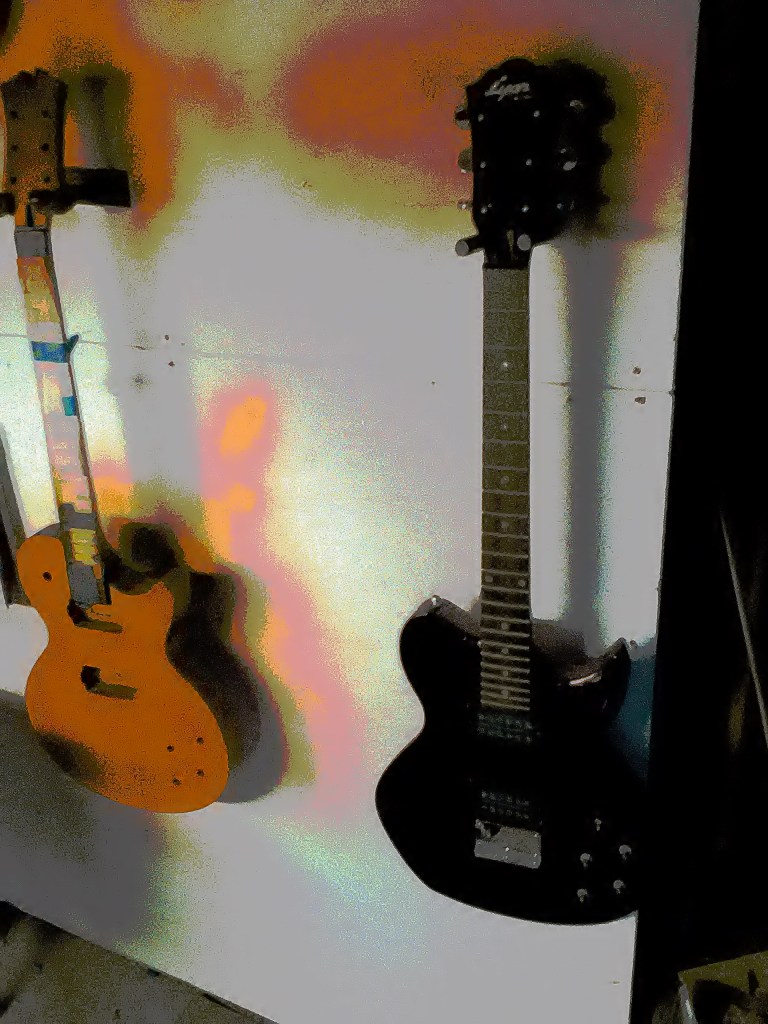
In my enthusiasm working with guitars in the bleakness of the pandemic lockdown, I made a number of new guitars. These were electric guitars that I had bought blank parts, put a finish on them, attached all the hardware and electrical wiring, producing a few functional and also good-looking electric guitars. Most of these creations were sold on eBay for at least what I paid for the parts plus a little more.
Rex always called me a “horse trader” when it came to guitars with me buying/fixing/building/selling guitars online. Guitars are not that easy to pack and ship but with my tongue in cheek “Cat Caster Guitars” and the gold mountain lion logo that I drew, I made it fun. And living here in Colorado mountains away from metro areas, I’d always find a guitar online to buy and play; if after a while I was not enamored with it, I’d sell it online.
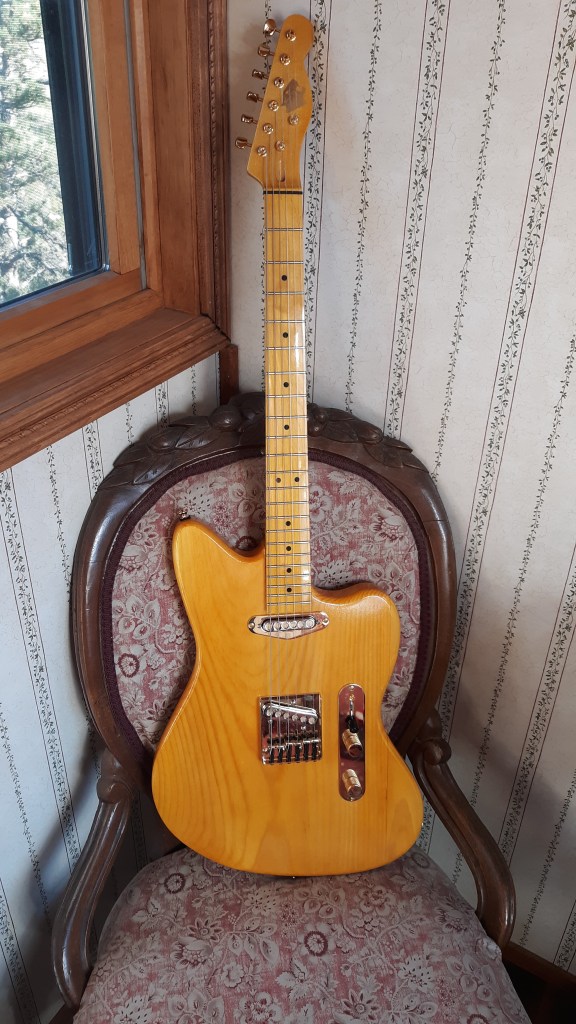
In these times of uncertainty, people dying in droves, political unrest and general bad news, we hunkered down like so many people across the globe. After the sad news of John Prine succumbing to the virus, I called Rex from my workshop, and we talked about it. If there was anyone I had ever known, who could play a repertoire of John Prine, it was Rex.
Not wanting to meet indoors and play music, when Bev was back in town during that summer of 2020. I came up with the idea that we play music outside at Performance Park. It was a public park hosted by the town with a sanctioned rock-climbing wall on the rock cliff that was the backdrop to the stage. I drove my vehicle to the back of the stage, unloaded guitars, amplifiers, chairs and recording equipment and we played there on stage about four or five times, we weren’t bothering anyone and staying safe. Except the powers to be in the town got word and chased us off one day.
My indignation was supreme; here we were town residents playing music outside to be safe. Yet it was OK to host the rock climbers, all of whom were tourists, at the same facility, but they chased us off. That’s the vibe residents of the town receive; if you are a tourist or business owner, the town falls all over themselves to accommodate them, if you are a resident, they’d just as soon you go away.
To an Old Friend by Beverly Sencenbaugh
Bev & Rex recorded on the Performance Park stage, summer 2020
Robbie Leavitt, guitar, bass / recorded in my studio
“I Don’t Need No Doctor /
Fire on the Mountain”
“I Don’t Need No Doctor” was a popular rock song by the band Humble Pie in the early 1970’s when I was about fifteen years old. Surprised Tahosa didn’t play this classic rock standard. In September 2020 I turned sixty-five and entering the Medicare portal began. Up until this point in my life, yes, I’d had some health issues; the back, an appendix removed, but nothing major. That autumn after wellness visits and blood tests, it was revealed that my PSA, a marker for prostate cancer, was elevated at 6. The pandemic was still raging, and masks were mostly required everywhere, especially at medical facilities. Examinations and tests would need to be performed at some point.
In September, a modified “Friends of Folk” festival was performed at Performance Park with no audience and the event live streamed. Nadine’s bluegrass ensemble played as did a number of other local acts, including Beverly Sencenbaugh and the Railroad Ramblers. We played about five songs, closing with my song “Blowin’ Cold”, my mountain song contribution to living up here in the pines.
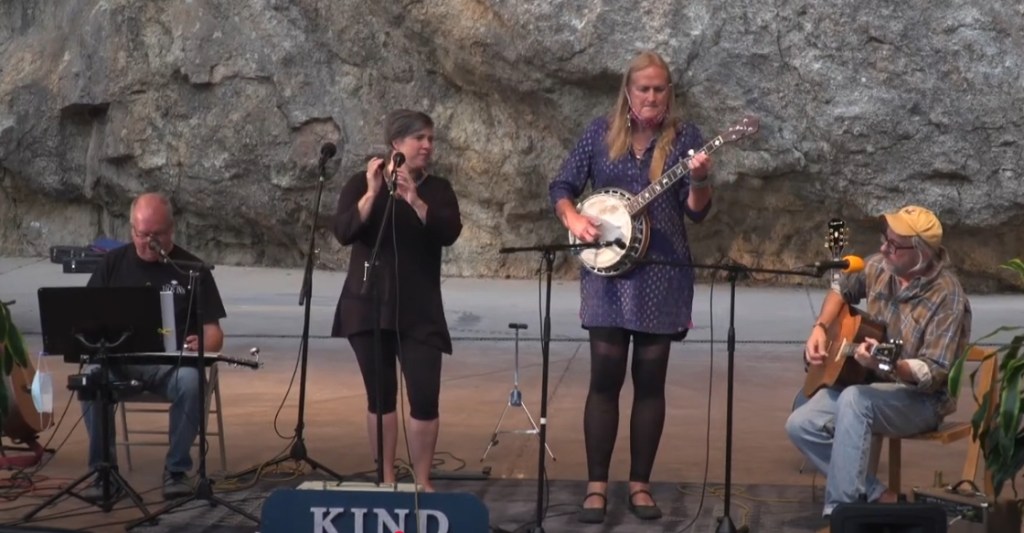
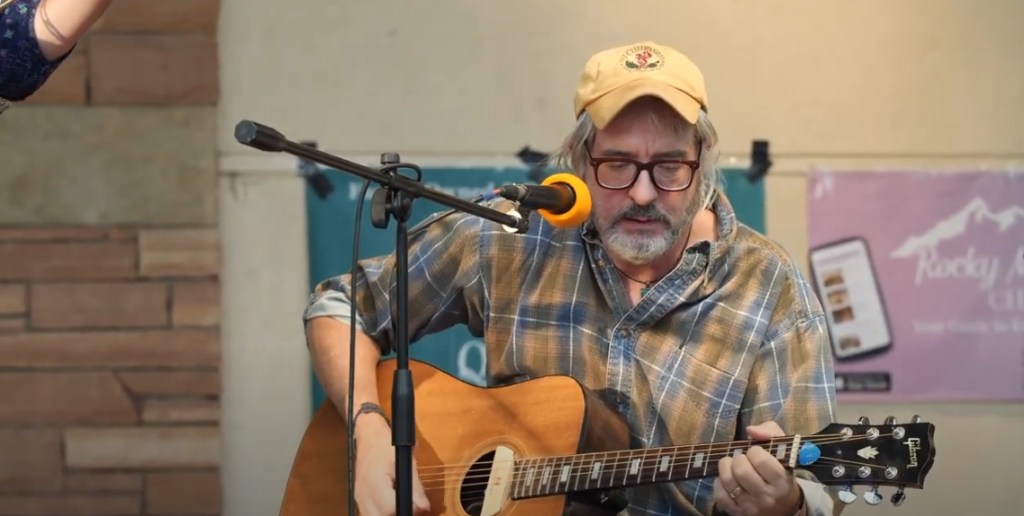
“Blowin’ Cold” is a nod to the wind that blows here in Estes Park most all year, but especially bad November until May. In late August, a forest fire simmered in the national forest in the Cameron Peak area behind Glen Haven where Staci’s folks lived. Our “Friends of Folk” performance was originally slated for September 8th but a not so uncommon September snowstorm of eight inches of snow pushed our performance back to September 15th. The snowstorm quieted the fire but did not extinguish it.
Wildfires in the mountains are nearly impossible to extinguish, only with a little help from nature and concentrated efforts of fire crews can the fires be managed to mitigate loss of homes and forests. Fires in the region had been burning most of the summer and smoke choked the air weeks on end where we lived. The September snowstorm gave a false sense of safety as the Cameron Peak fire still simmered into October.
And then as the winds kicked up, the fire exploded and raced east with the wind howling from the west. In these conditions a fire can consume whole forests, racing miles in hours’ time. In the first week in October, Staci’s folks, now in their eighties, were forced from their home outside of Glen Haven by mandatory evacuation orders and they came to stay with us. We welcomed them with their two cats into our small fifteen hundred square foot cabin. The news was not good about the fire, and the wind continued to blow; the worst was yet to come.
Staci and I came back from shopping in Longmont one afternoon and the smoke was so thick at our cabin that it was like fog. All night sleeping with windows closed the smoke choked us. We didn’t understand why with the Cameron Peak fire fifteen miles away why the smoke was so bad. The wind continued to blow. On the other side of the continental divide on the western slope near Grand Lake, another wildfire tore through the area, destroying multitudes of homes and cabins and it raced eastward, unchecked into Rocky Mountain National Park towards the continental divide. It was from this fire, the East Troublesome Fire, from where the thick smoke was choking us.
It seemed inconceivable that the fire would cross the barren rock peaks at fourteen thousand feet, but that’s exactly what happened. The violence of the raging fire and the incessant heavy, nearly hurricane gale wind carried massive burning embers of trees over the continental divide, setting the forests ablaze on our side, the eastern side of the divide. The East Troublesome Fire now was burning into the forest on this eastern side into Rocky Mountain National Park and the wind was blowing the fire towards Estes Park.
With the Cameron Peak fire burning out of control and now the East Troublesome Fire barreling towards Estes Park, with the pandemic and the fires, it was a little Armageddon-esque. At 10:30am October 21st we received a voluntary evacuation warning with a mandatory evacuation notice coming around noon.
The eight of us, Ann, Don, Staci and I, Hansel, Gretel, Smokey and Shadow packed as quickly as we could, with what we could, in four vehicles and in bumper-to-bumper traffic made our way to Highway 34 towards Loveland and Greeley, where Staci’s sister, Pam, lived. At one pm in the afternoon the smoke was so thick, and the sky was so dark that the streetlights were on as were the headlamps on our vehicles.
The Red Cross put Staci and I up in a motel in Greeley and in the following days we watched the forest service reports which had the fire perimeter maps updated regularly. The East Troublesome fire which was had blown over the mountain tops and ignited Rocky Mountain National Park on fire was hurling towards Estes Park. The Cameron Peak fire was also consuming the area near Glen Haven where Ann and Don lived, burning within yards of their home.
We’d been evacuated on a Thursday, and by Saturday afternoon the outlook was pretty grim, except for one glimmer of hope; a snowstorm was forecast for Saturday night. In something of a miracle, the storm dumped a foot of wet snow on the area, effectively stopping the fire in its tracks. The fire came about a mile from our house but reached within yards of Ann and Don’s Glen Haven house, their home saved by some local firefighters.
Once back home safe, the next few months and longer began some medical issues for me with far-reaching consequences. By January 2021 my PSA had reached 8 and a biopsy was schedule in Loveland in early February. Hindsight is always so clear, but the biopsy was a horrible experience.
Arriving at the medical facility on a Thursday in early February 2021, the waiting room was packed and even wearing masks and sitting six feet apart from others sitting there for over twenty minutes, it gave me the heebie geebies, as did my creepy doctor. I was given an antibiotic injection and then sat in the exam room for a half hour until the doctor and his male nurse came in to perform the biopsy. I was awake on my side as they went in up my rear and took biopsy core samples from my prostate.
When they were finished, I stood up to ask some questions and the doctor told me that he’d call me Monday with the results. As I stood there talking with him, in a flash, blood was literally peeing out my penis creating a huge puddle of blood on the floor. Lightheaded and disoriented, the nurse led me to a bathroom to collect myself and clean up. I went to a holding room and drank some juice to steady myself as I waited for Staci to pick me up. The worst was yet to come.
As Staci drove me home on from the medical center that Thursday, Rex called, and we chatted a while before cell phone service cut off driving up US 34 canyon. That Saturday Staci went back to Loveland, shopping with her mom. Upon her arrival home, I had roasted off some red peppers that smelled heavenly; Staci said she couldn’t smell them. That night we played a little music together, but she said she didn’t feel well, so we quit. The next day we watched the Superbowl over at her folks’ house, by that evening neither of us felt very good.
On Monday morning it was apparent that we had covid, both of us feeling like shit and neither of us being able to smell. After being so careful up until this point in the pandemic, then contracting it from the medical facility was crushing. The doctor never called with the results of the biopsy and the haunting specter that we had contracted the disease that had killed so many cast a disturbing pall upon our lives.
With us so ungodly ill and at my age knowing how bad it could be, anxiety was crushing as well. People say that covid is “just like having a cold”, bullshit. The granite upon brain headaches, lung congestion, body aches knowing that something had gotten into your body and was trying its best to kill you was the worst that either of us had ever been sick. By Wednesday the doctor still hadn’t called with the results of the biopsy so I messaged him in the portal. Later that day I received a message from an administrative assistant stating “You are cancer free, just as the doctor suspected, see you in six months”.
The doctor suspected that I was probably cancer free and I went through all of that and caught covid? Dick. That Staci’s folks didn’t catch it from us watching the Superbowl was a miracle, we always wore masks around them on our weekly visits up until that point. We were very sick for a very long time; it was nearly two months before we tested negative, and we were able to resume our Sunday visits over at her folk’s house. Physically and psychologically, it took quite a toll on us. During this time, Staci’s father, Don Martin, was beginning to show signs of and was diagnosed with dementia/Alzheimer’s.
As we had in our alone time together during the pandemic, Staci and I did play guitar and bass together when we felt well enough to do so. The winter of 2020 into 2021, Staci and I played music with her on bass guitar and me on guitar and singing. Staci’s hands were very small and even a 30″ scale bass (versus the common 34″ scale of most electric basses) was almost too large for her small hands to fret and reach. I had gotten her a Fender Squire Bronco bass and Epiphone EB-0, both 30″ basses that she could play, though they still taxed her reach.
In my zeal and love for my wife, I decided to build her a 25.5″ scale bass, the scale common for most electric guitars. 25.5″ scale basses just didn’t seem to be available. I used a blank “P-Bass” style body that I put a French Polish, shellac finish on. For the neck, I acquired a 25.5″ electric guitar neck with a blank ‘paddle’ on the headstock. I would then be able to cut my own tuning key holes and attach tuning keys similar to what the Epiphone EB-0 bass had, the big “elephant ear tuners”.
As this was a bass guitar in the “Cat Caster Guitar” line of instruments, for two crazy cat people, cat ears were cut at the top of the headstock. The neck was however a little smaller at the heel than the neck pocket on the bass body and had to be shimmed and collared to fit in stable and aligned. Once the bridge and electronics were put in and strings in place, there was a slight issue as the neck had frets spaced for guitar strings and the intonation and tuning were way off. This led me to have to remove all the frets, fill and sand the fret slots, then purchase a fret saw to cut new fret slots.
In doing so, I had to intonate and mark every new fret, then cut and install new frets at the proper intonation distances. None of this I had ever done before. Yet once finished, Staci had a new custom-made bass of remarkable tone and beauty that we dubbed “the Boss”, named after our golden tabby, Hansel. Mark Donahoe was the one who gave Hansel the nickname “The Boss” when Hansel would supervise construction work around the cabin. This bass is unique with only 12 frets; a song or two requires Staci to go fretless above the 12th fret, but not very often. With flat wound strings, he purrs……
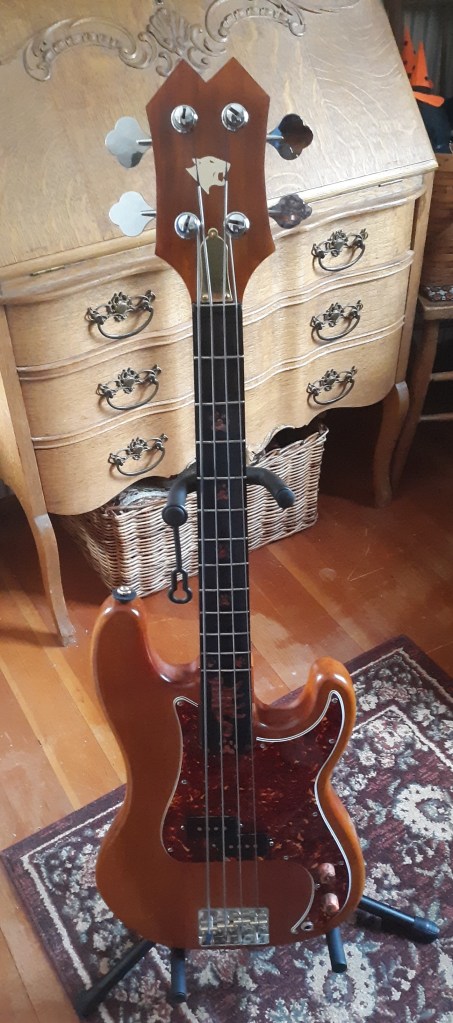
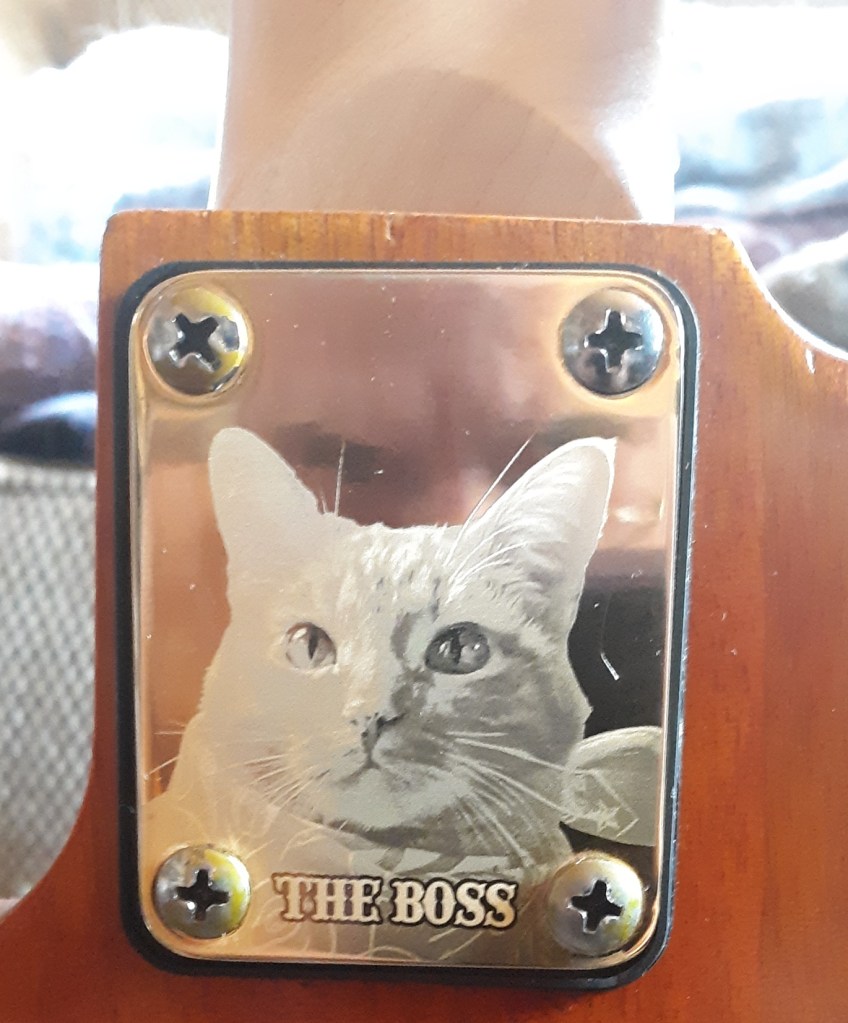
Staci playing the bass was her own impetus, I didn’t prod her to play, it was her desire to learn and play. She was at so much of a disadvantage never knowing or playing the guitar or knowing the notes on the strings and fretboard. If you have ever played guitar even with a basic proficiency, then playing bass guitar can be much easier. Staci had none of that ever before, not knowing any of this.
With me teaching her the way around with some basic folk songs, it started rather slowly, and it taught me patience. Everything we’d done together in our married life; we’d always been a good team and had fun doing it, even the tough times running the restaurant, we made it work because we knew and loved and trusted each other working for a common goal.
Three chord folk songs were our starting point. I’d taught Staci the root to five basslines common in folk and country on three chord songs like Jimmie Rodgers’ “Train Whistle Blues”. One of the earliest songs we did together was “Going Away” by Utah Phillips. I’d received news a few years back that my high school buddy and musical compatriot Bob Stewart had passed away from a heart aneurism in Vancouver. “Going Away” was a cherished song we’d played together in 1976, me on bass, Bob on guitar.
I set out to re-know it and re-learn it in his honor and memory. “Going Away” is actually more complex than just three chords. In C, the song has a verse step down to E minor, then to A minor, to G and F, back to C, then a chorus progression to A minor then to the ‘two’ chord, D7, before circling back to G to F then back to C.
It was slow going and I had to learn it and the words also. Yet we made progress and the fact that the song was more than three chords helped Staci in learning the notes as well as stops and chromatic step ups and step downs. Two other songs with similar complexity that we worked on were “City of New Orleans” and “Pancho and Lefty”. I’d worked on them with John Weires and Mike Rogers back when they had me sit in on bass, but they were songs that were never made whole playing with those guys. Staci was able to absorb and play them with me, being able to complete “Pancho and Lefty”, a little less so at the time with “City of New Orleans”.
“In the year 2525…er 2021”
Going into late spring 2021, as Staci and I progressed musically, another element with the music arose, Beverly was back in town. Rex and I had been playing music together with Bev since 2018 and knew her songs. Incorporating Staci on bass would be my own ‘Yoko Ono’ contribution. At this point in her playing, Staci was adequate on bass, but not very confident in her abilities even just playing music alone with me; while playing with Rex and Bev, two seasoned, excellent musicians, this gave her a great deal of trepidation and apprehension.
We bludgeoned on ahead and fairly incorporating Staci into the ensemble on bass, with Bev on banjo and guitar, Rex on guitar and mandolin and me on guitar and slide guitar. We had an impromptu ‘audition’ with Staci playing bass along with Bev, Rex and me to see how it would interface. We actually sounded pretty good, and Bev was thrilled that Staci was taking up the bass and playing with us.
It was an interesting phenomenon, as it was I who was teaching Staci Bev’s songs. I’d always joke that I knew Bev’s songs better than she did, at least I knew them well enough to teach them to Staci. Bev had a boisterous, Alpha personality that intimidated Staci. Bev got us a paying gig from Greg Miles playing music at the Visitor’s center for the “Bike to Work” celebration. It was mainly Bev’s gig, so Rex and I backed up Bev on her songs with a few of the songs that Rex and I played interspersed. Staci was not up to speed on all the songs, so I played bass on some of the songs. John Murphy from Rex’s other band sat in for a few songs.
That summer of 2021 as the world slowly tried to shake the yoke of the pandemic, The Railroad Ramblers, Bev, Rex, Staci and I played at the Allenspark 4th of July celebration, playing a set before the parade and a short set afterwards. The four of us also played two other impromptu sets in Allenspark at Distant Harbors, one in August and the other in early September. Distant Harbors was the gift shop who hosted us for the 4th of July show. None of these shows were paying gigs; the tips were pretty good even split four ways.
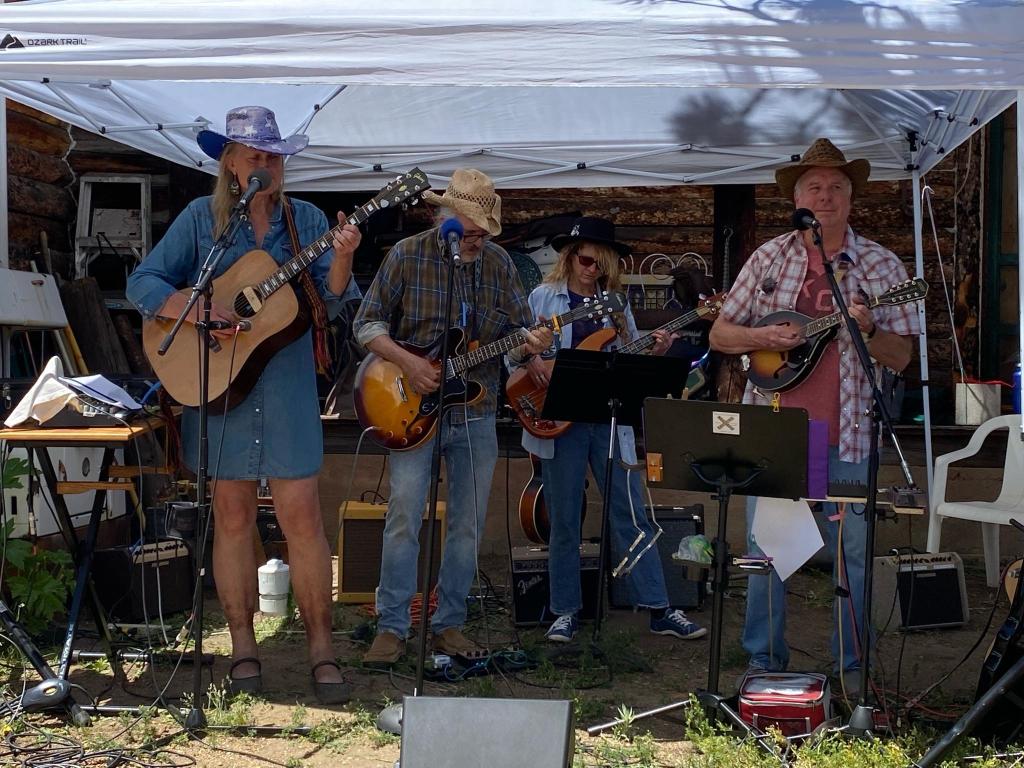
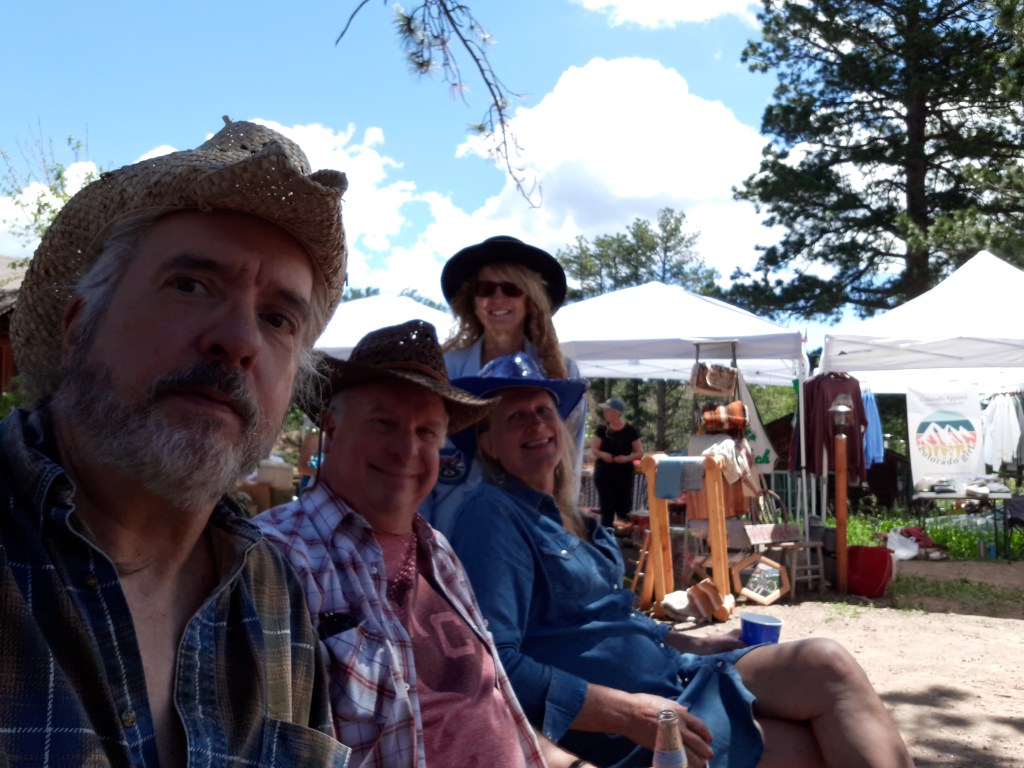
Rex and I played an open mic at the Avant Garde Ale Works in late August and by happenstance, the booked act for the Sunday before Labor Day could not make it, and they asked us if we could play. We accepted, so it turned out that we played a Saturday show in Allenspark and a paying gig Sunday show in Estes Park at Avant Garde Ale Works. In October and early December, Rex, Staci and I played two hour sets in Greeley at an art gallery called “The Bean Plant” that was run by Susan Herrod, a friend of Staci’s sister Pam.
At the October show in Greeley, friends of Susan’s who were part of the Greeley Blues Festival happened to pop in when we were playing some of our blues’ material. They invited us to submit for the 2022 Blues Festival. A little later in December 2021 the Railroad Ramblers had a three-hour paying gig at the Rock Inn Mountain Tavern. Staci didn’t feel confident enough playing on all of the material, so Rex and I played the first hour, Staci joined us for the second hour and my friend Gary Clark played bass the third hour, it was a well received, fun show.
“I Don’t Need No Doctor…coda”
In this December of 2021 I was still having some medical issues from the covid infection. In talking with the doctor, I mentioned about my PSA levels from the biopsy. After a blood draw, my PSA came back at 10, so it was imperative I have the prostate looked at again. It was March 2022 before I was able to see a urologist at a different facility in Denver as the Omicron covid infection was raging and I was a little gun shy about being out at medical facilities.
Long story short, after examinations, an MRI in April and a fusion guided biopsy in June, it was determined that yes, I did indeed have prostate cancer. The urologist pushed surgery, but I opted for radiation treatment. A PET scan in late July 2022, then hormone deprivation therapy starting in August, eventually led to six weeks of radiation treatments in November and December. It was a necessary path to get me to good health again.
Musically, I had secured a spot at the Greeley Blues Festival in June 2022 for one of their Friday night “club events” the day before the festival. This was a June 3rd show at Patrick’s Irish Pub from 9pm to midnight. It was our first show of 2022 and Rex, Staci and I had a few months to rehearse many blues numbers that were not part of the repertoire that we played with Beverly, who would not be playing with us for this gig. We were cramped into small corner of the pub, but it was a fun show and a well-paying gig.
With Staci on bass, Rex on guitar, harmonica and dobro, I played guitar and slide guitar. Along with our blues songs, we interspersed in some of our country numbers like “Ring of Fire” that went over quite well. At the end of the evening, some gal came up to us and said “you guys are good, but you ROCK” as she pointed to Staci. After packing up at midnight and then the hour and a half drive back to Estes Park, it was a long night, but well worth the effort.
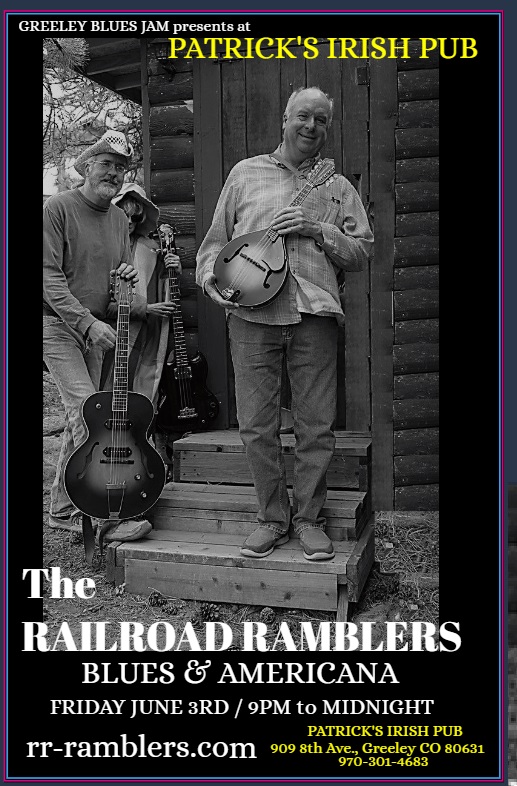
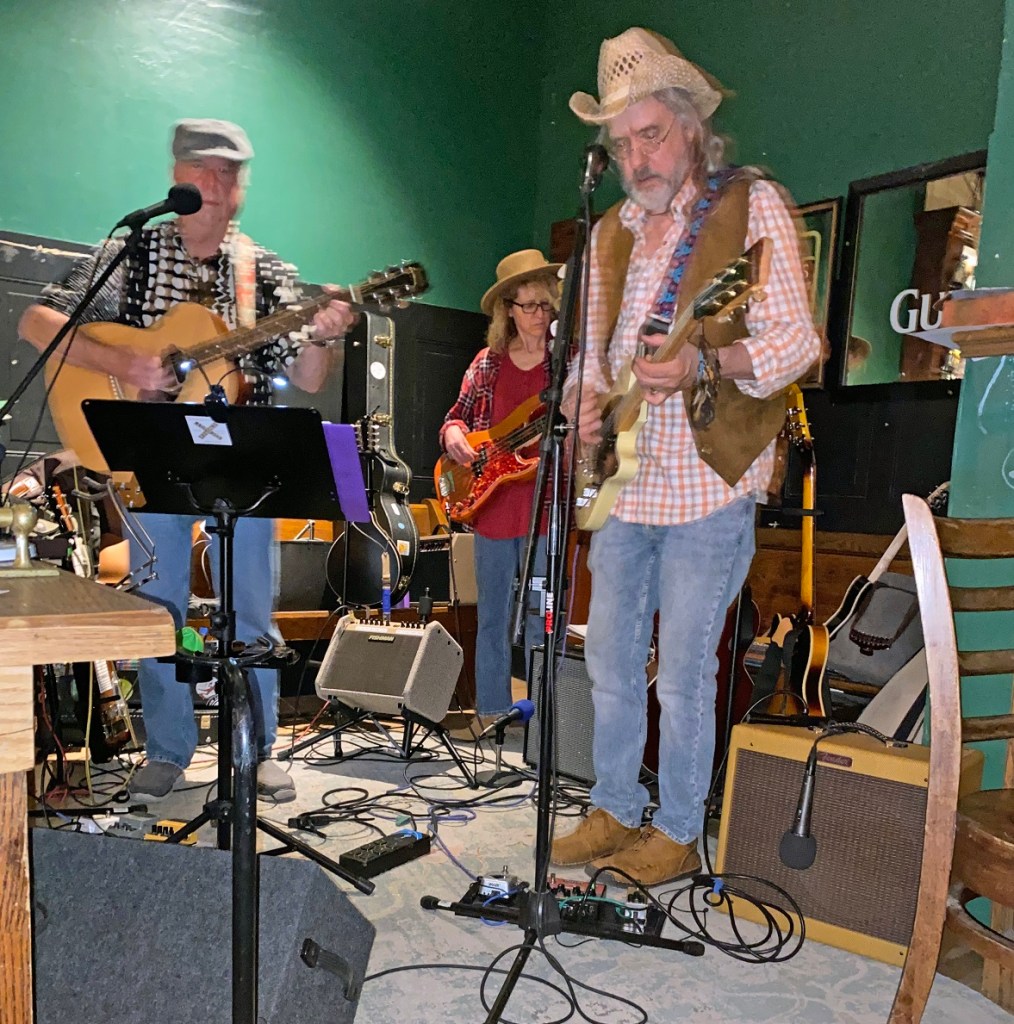
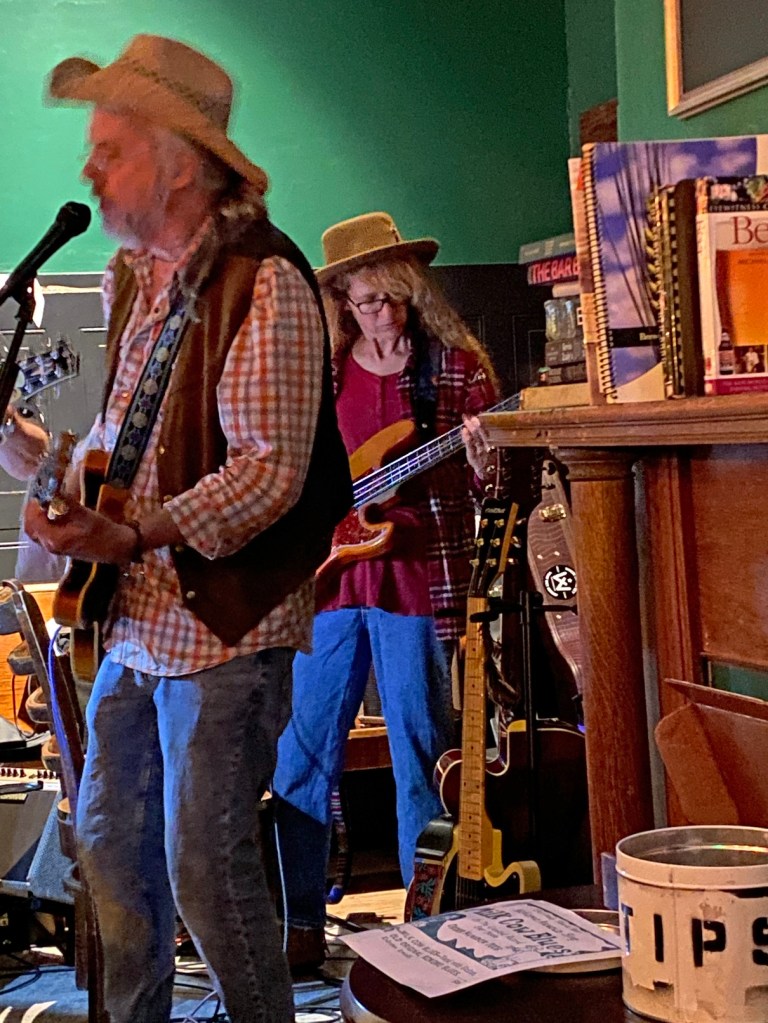
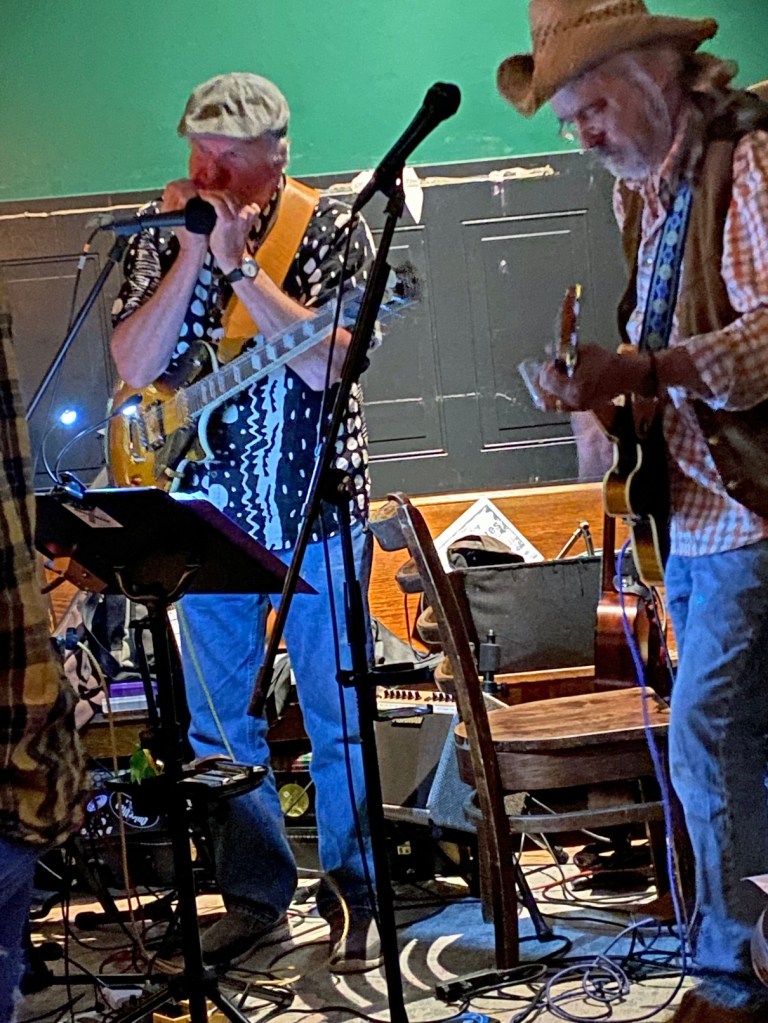
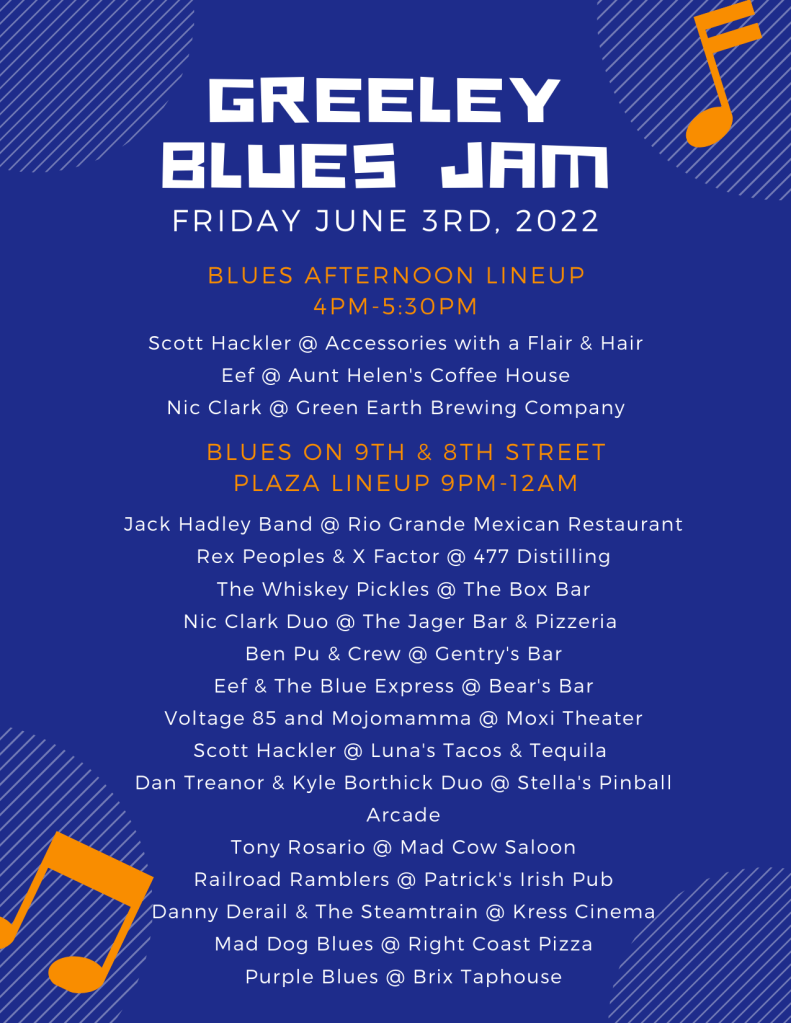
That summer of 2022, the four of us played a Saturday morning show in Lyons at the Stone Cup in June. In July we played 3 shows again; in Allenspark for the 4th of July, at the Jamestown Mercantile, and at Snowy Peaks Winery. I’d been knocking on the door to get us to play at Snowy Peaks since before the pandemic and they finally gave us a slot. It was a fun show on their nice patio by the park. In August we played a benefit for the Hilltop Guild at the Kelley House in Allenspark followed by another show at Snowy Peaks in early September.
Susan Herrod in Greeley asked us to play again at the Bean Plant Studio in October. It was going to be Rex, Staci and me, but Rex instead had a trip planned to Kansas City. Staci and I had not played as a duo, but we wanted to do the show, and we put in a lot of time practicing and it was a fun show that we played well at. The Bean Plant Studio had us back for a December show which Rex joined us playing.
Winter 2022/23 was pretty quiet, with Staci and I rehearsing just the two of us and occasionally with Rex. Beverly generally didn’t come back to her cabin in Allenspark till late May, but I had a gig booked again at Snowy Peaks in March 2023 and asked her if she wanted to join us, which she did. March 17th, St. Patrick’s Day, it was a fun gig with a nice crowd. Pounding the pavement and knocking on doors in the winter to book gigs for the rest of the year is always a crapshoot. Now into 2023 what shook out was four gigs in June and two in early July. The last gigs on June 30th and on July 2nd and July 4th were three gigs in five days.
“Blue Eyes Crying in the Rain”
Fourth of July 2023, The Railroad Ramblers played in Allenspark outside of Tree Huggers, the new name of the store that had been called Distant Harbors. Tree Huggers was now run by Jen Bell and her husband Rick. They were a couple originally from Kansas, like Staci and I were, though Staci always gave me grief that I only ever lived in Kansas for my first four years. Jen Bell was at the time the president of the Hilltop Guild in Allenspark, and like Susan Steele at the Kelley House Hilltop Guild, they had been very kind to us in getting our ensemble to perform. We were happy to donate our time for good causes.
This was our third year playing at the Fourth of July parade and event. We’d play a set before the local parade went by, and the marching band played to the festivities of the parade. As always, I tried to have a good lively set written for the event, divvying up songs for Rex, Bev and me to sing. We were on fire, playing well to a great crowd, with a great response.
Rene, “Frenchy”, of Rex’s other band, lived down the road in Allenspark, and he showed up. He listened a bit and stepped up between songs and said, “you’ve gone electric!”. Rene was always fun and would flash a quarter whenever he saw us play and quip, “you got change for a quarter? I’d like to leave a tip.”
Yes, in these them thar hills, where bluegrass is king, we’d “gone electric”. Rex was playing his Les Paul; I had an Epiphone 335 playing slide and a Gretch 2420 playing standard tuning. Staci was on the electric bass I built her. For Staci who was often nervous and unsure of herself playing in front of big crowds, she was relaxed, played great and she made Rex and me sound as good as we ever have. It was actually one of our better outings. Bev was plinking uninterestedly on banjo or guitar.
We played until the parade started, then after the parade we started to play a second set, like we’d done the previous two years playing at the Allenspark parade. Bev groveled like, “do we have to?” when the skies open up with a quick downpour. We scrambled to protect the equipment under the tent. The rainstorm did not last long and as we tried to figure out if we were going play again, Bev melted down in a huff.
“I’m done. I’m not playing with you anymore. It’s over. I don’t like this. No more.”
Well, that was awkward, but now it made sense and was not surprising. Peace, Love and Kumbaya were over.
We’d played gigs/shows/events a lot in sequence on June 11th, June 23rd, June 30th, July 2nd and now July 4th. Staci, Rex and I had played, the three of us, June 2nd in Greeley. That’s a lot for a bunch of old geezers, but I checked with everyone first as the bookings came in if they were okay with a string of performances like this.
Bev had been distant, moody, unfocused, uninspired and uncharacteristically rude to me at various stages of these last five shows. If she didn’t want to be a part of this ensemble, fine, but it would have been better if she had not committed to all these shows, rather than going through the motions, playing half assed, being miserable. Staci was scared to death of Bev and her Alpha personality. Oh well. And as mentioned before, what’s a band without a little band drama.
When Staci and I returned home that afternoon, we were beat, but cheery. We’d had fun playing, had a good time despite Bev’s meltdown and drama. Three gigs in five days – Friday, Sunday, Tuesday – with all the playing of music, schleping equipment, driving to and fro, it was a little taxing, but we didn’t have another show until August 6th. Around the cabin we decompressed and chilled on a sunny and warm July 4th. We weren’t going into town to watch fireworks, didn’t need to, Bev had already provided them.
At seven o’clock Staci’s mom called. Dad had fallen out of his chair, his dementia so bad she couldn’t get him up. Ann, Staci’s mom, was petite like Staci and couldn’t move a big man like Don. The weather had turned rainy and damp as we met mom at the hospital when the ambulance brought him, and things were not looking good. Dad was taken to a care facility for hospice in Loveland a few days later. On July 9th, mom and the two daughters, Staci and Pam, and the two sons in laws, me and Paul, were with dad at the care facility in Loveland. As in any family, these were difficult times. Very soon after this, Dad passed away.
Don Martin was a good man. He was born on the same day as I was, nineteen years earlier, September 10, 1936. I never heard him cuss, knew he never drank. Just a good man, born barely a generation before me. When I was a very young child in Kansas, he was a young man from in the Navy, wooing Staci’s mom somewhere else in Kansas. That he and Ann took me into their family, a divorced man, hippie at heart, fourteen years older than their sweet youngest daughter, let me take her away from them, this was a cherished honor I have always upheld and guarded.
Staci often told me she wondered why I would want to be in her boring family. Being with her, I now had a family, something that I lacked mostly ever since I returned from the Philippines at eighteen. I loved the gentleness, peace, calmness being in her family as opposed to the chaos in my family with its anger and dysfunction, dishes being shattered in alcoholic rages. Don Martin had a great, dry sense of humor. Staci wanted to have this kitten when she was a little girl, Don said she could, but only if he could name it. It was a black cat, and he named it “Snowball”.
The August 6th show, also in Allenspark for the Hilltop Guild, was a little anticlimactic, a little awkward. Bev got up and played solo first, playing her songs on banjo, doing what she loved, on her own. She didn’t need Robbie embellishing her songs, giving them order, adding sweet timbre. She didn’t need no hillbilly orchestra. Bev has a wonderful spirit and breaking away from the ensemble was her own way to downsize her commitments. Ruptures in relationships aren’t often handled cleanly. We all still love one another.
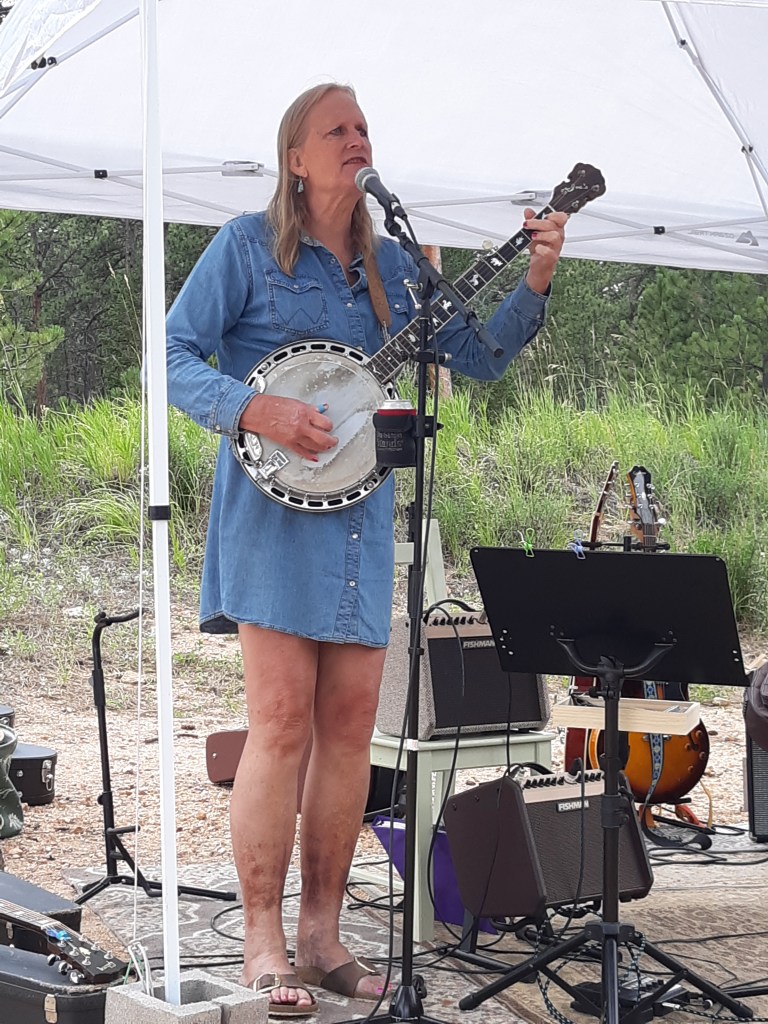
Sharon Arms played next, solo. She was another Allenspark gal, originally from the bayou, still had the sweet Louisiana drawl. She played fun music and played both fiddle and guitar. I loved her songs; Jimmie Rogers’ songs, and also songs like “Jambalaya”, and many old songs you never heard any more like “Dicky Licky Low” and “These Boots Are Made for Walking”.
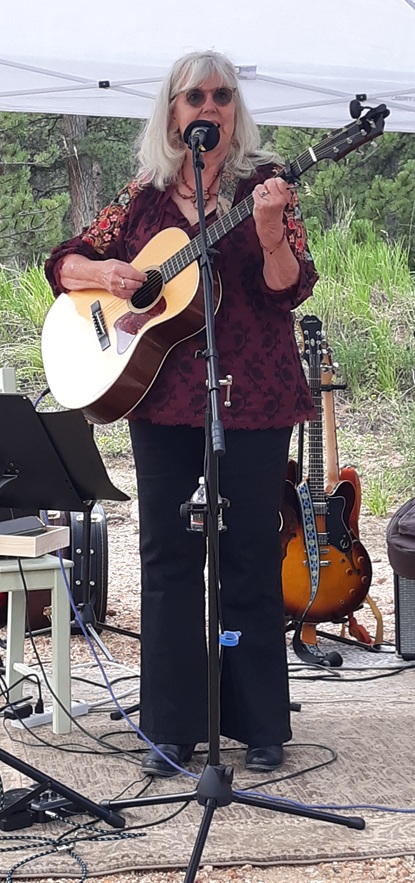
Rex played on guitar and mandolin with Staci and me. It was a little awkward, he had been friends with Bev decades longer than the few years he had known me. Rene Archambeau and John Murphy from the Sexy Rex ensemble, both excellent guitar players, sat and listened. We did our best to have fun, and we did; the show must go on. Staci and I loved playing along with Rex when he played Robert Johnson’s “Malted Milk”. Staci’s bass line gave it a ragtime feel, and I played second guitar with blues seventh triads and step ups, playing counterpoint to Rex’s playing and singing.
Mom and Staci’s sister Pam sat and listened as well. For me, as it always had been, playing music was never about being rich and famous, it was about having fun playing music. That we had reached a level that we could perform at small events and not embarrass ourselves, took work and concentration to make it fun. Somewhere in our set, we played “Blue Eyes Crying in the Rain”, the old Fred Rose standard that Willie Nelson made famous. Hank Williams had played it. I loved stumbling upon old songs, toying with them, seeing if I could play them and make them work. Staci’s mom, Ann, loved Willie Nelson, so this song was a little special.
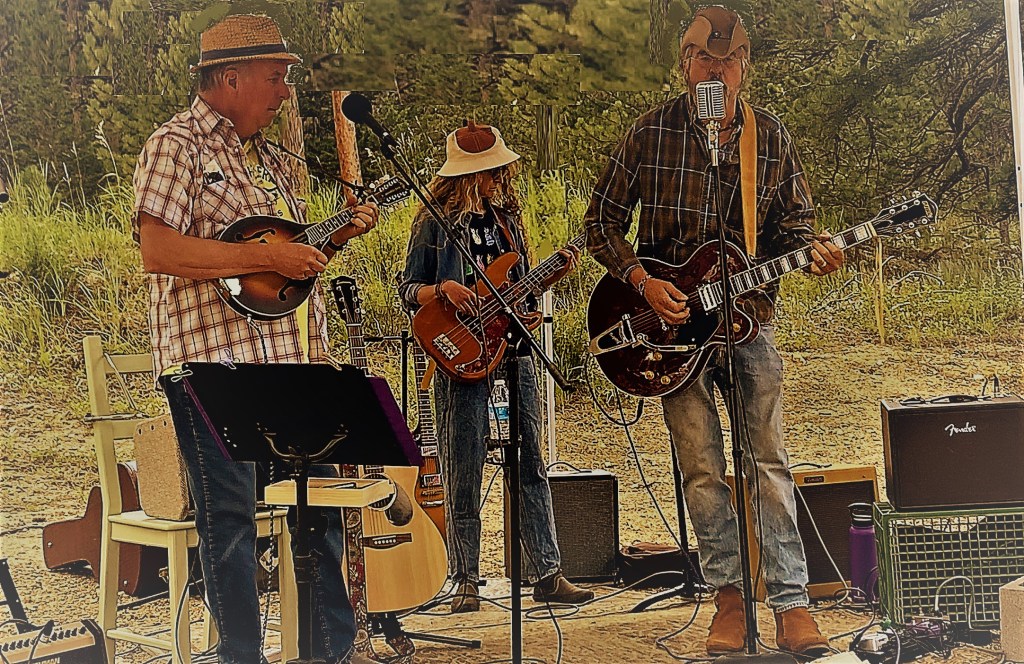
“Blue Eyes Crying in the Rain” is a simple love song, timeless, doesn’t ever get old or stale like so many country hits do. We hadn’t played it or practiced it together much but we still gave it a go. For the instrumental solo I eked out a simple solo at the ninth fret E major triad, not as fluid as I had hoped but capable. As the solo ended and the song returned to the verse, the twenty or so folks sitting and listening clapped and let out a little cheer. This wasn’t for me, in my heart, it was for Ann and Don Martin.
“….when we meet again up yonder, we’ll walk hand in hand again.”
I certainly hope so. Don had such clear blue eyes.
“Yellow Barn Sunset”
In the aftermath of the Fourth of July and Kelley House shows, Staci and I were a bit discombobulated about the Railroad Ramblers with Bev’s abrupt departure. Nothing was on the books for any gigs, so musically, things were pretty quiet. We had sent out feelers to play at various venues, never knowing if any response would come. We lived in Estes Park but always did our shopping in Longmont as the one supermarket in Estes Park was always a mob scene of tourists with empty shelves on most visits. Nelson Road went into Longmont from the road between Lyons and Boulder, US 36. Where Nelson Road began on US 36 there was a yellow farmhouse/barn on the other side of the highway called the Yellow Barn Farm.
This “farm” was nestled in the foothills of Boulder County and not really sure how much farming went on, but their Instagram and web presence was very kumbaya in Boulder County fashion with yoga classes and healing classes and the like. Travelling to Denver for my radiation treatments in the fall of 2022, I drove by the farm every day. We were always amused by the “piggies” in their pens, especially so when their yard was full of broken pumpkins. To this day we call Nelson Road “the piggy road” when we take that route to Longmont.
In mid-September, the Yellow Barn Farm asked us if we wanted to play for an event for a fall festival on the back of their music truck. It was a big old farm truck with one side removed and back bed of the truck used as a stage. Checking with Rex, he said he’d join us, so Staci and I accepted the gig. It was nonpaying gig but as we liked new experiences and liked to play music, we thought we’d give it a go. The next day after we’d accepted the gig, Rex called, had changed his mind, he’d been sick, but was getting better. Even though the gig was nearly two weeks off, he bowed out. Can’t say that I blamed him, he’d been friends with Bev for many years and the “rigors” of riding the rails with the Railroad Ramblers had lost its sheen.
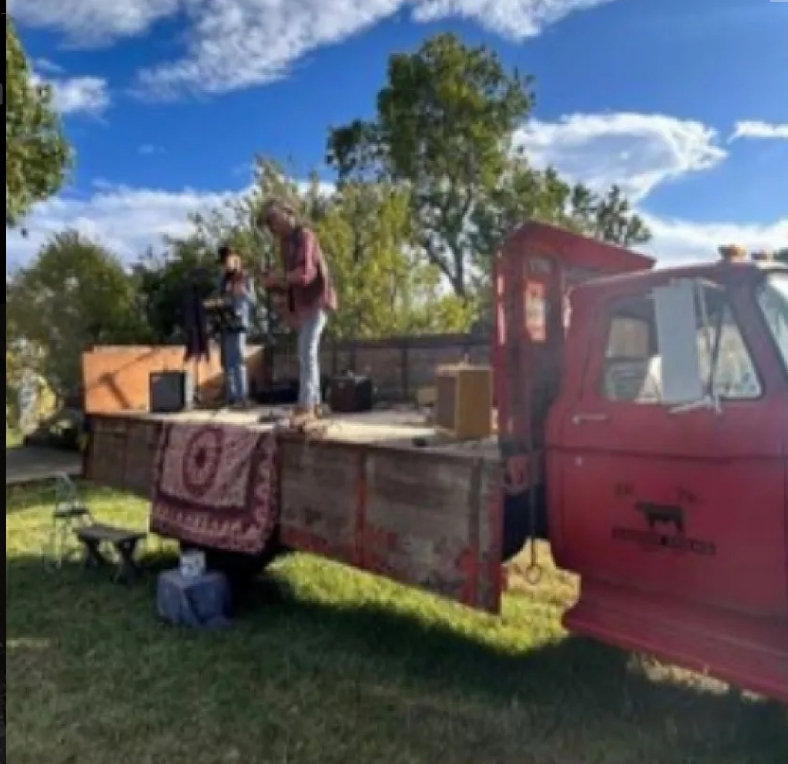
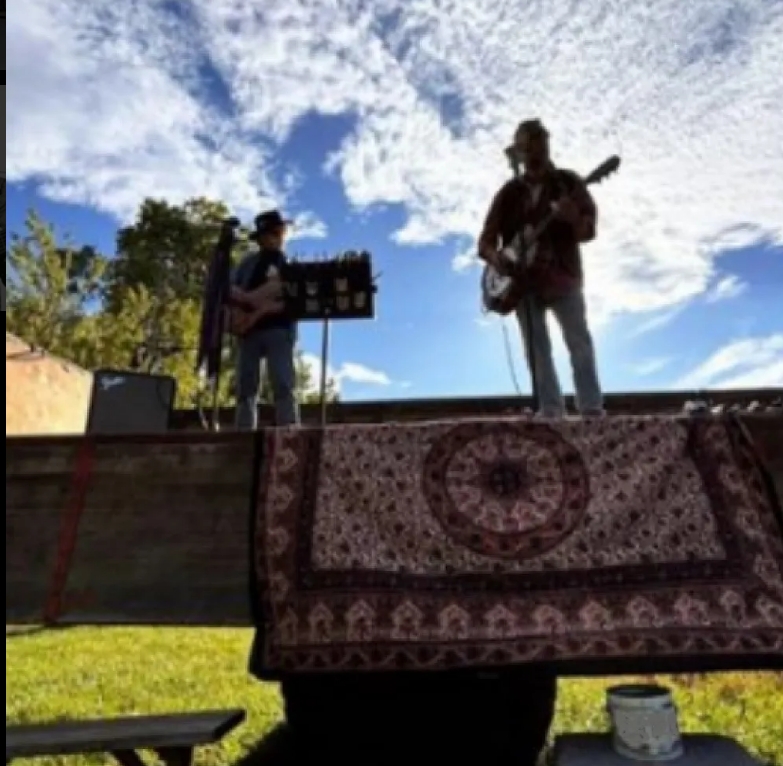
Staci and I had performed as a duo a time or two before in Greeley at the art studio, so we knew we could eke out a show. As is my nature, I always want to scope out a venue prior to playing a show, if I had never played there before. We stopped by the farm and viewed the truck where we were going to play and got a lay of the land. They wanted us to play from five to eight pm on September 26th. There in, was one issue and I asked if there were lights on the truck.
No, no lights on the truck, hmmmmm. A bit of problem it would be, as there on September 26th the sun sets before 7pm and the farm location butted up against the first hills of the mountains means that it would be pitch black, shortly after 7pm, hmmmm. Was not sure there were enough flashlights to play nor pack up gear and leave in the dark at 8pm. A week or less before the show, the Yellow Barn Farm contacted me and asked that another group wanted to perform that evening as well, could they come on before us?
We were not sure exactly what the deal was, maybe the farm sent out feelers for someone to play that night and “Earth to Aaron”, as the husband wife duo was called, wanted to play that night also, but were late in responding? We didn’t really have a problem with that as it was a nonpaying gig, and the vibe and organization seemed lacking. If “Earth to Aaron” was going to play, then they could “headline” and come on after us and play in the dark. And no, they could not use our PA as that would mean the old timer, me, would have to wait until they were finished before we would travel back up the mountain to Estes Park from Lyons.
As it turned out the ‘gig’ was a total bust. The “fall festival” was about 15 people huddled around picnic tables and a tire swing by the irrigation creek. Of the fifteen or so people, it appeared that easily three quarters of that were staff and friends of staff along with the parents of “Earth to Aaron” watching their very young grandchildren as their parents performed. Staci and I played till about six twenty-five to give us time to offload and the other act to get set up before dark. The term ‘playing for crickets’ applied for us and for “Earth to Aaron” also, as the “crowd” just talked amongst themselves and didn’t look up or notice that music was being played. Rex made the right choice. In the aftermath of Yellow Barn Farm, as we drove home at sunset, this would be the sunset of the Railroad portion of the Ramblers.
“A Reckless Road”
With nothing much musical going on musically, we’d joke around the house about the train that was the Railroad Ramblers had derailed. It was time to move on. Jokingly, I called us the “Reckless Ramblers” and the name stuck. Get rid of the train imagery, go old timey like a 1930’s sedan image and rebrand. Staci and I played a set in December in Greeley at the art studio and we used that name. In some ways it made it easier, just the two of us. With Bev and Rex, I tried to evenly divide the songs, so in trying to please everyone, it pleased no one. Rex was fine whichever way things went, and we had fun playing rockabilly and blues with him, but in the end, Bev didn’t care for a lot of those songs and wanted to play more of her songs, especially without me having to keep them organized with the addition of me, Rex and Staci.
I’d joke that I knew Bev’s songs better than she did, as I learned them well, to know my parts to make the whole sound good, which it did. And to sound good with Staci on bass, organized structure to songs was needed as to not derail the songs. All things must pass, time to move on. Musical relationships, not unlike romantic relationships, once broken, are often hard to reconnect with the same luster.
Staci and I had been on the same team working together as a married couple for nearly thirty years at this point, working together building a life together while working at jobs, then at the cafe and restaurant in those years and now working together as a musical team. She had a taste of what it was like to practice and perform, and for her who had never played a stringed instrument, she had come a long way in a relatively short amount of time. Staci’s birthday was a significant day in music history – it was the very date of the last public performance of the Beatles, the “rooftop” concert.
She’d played some piano, flute and drum in school in Kansas, but no working knowledge of a guitar and bass fret board, it took a while to grasp and learn. But she kept at it. I’d let her go at her own pace and she had a desire to stick with it. And quite naturally, the repertoire changed. We played my songs that I had sung with Bev and Rex, but then we started playing a wide palette of songs I might have played somewhere through the years and new songs we had an interest in. There were a number of songs that Staci had heard me play through the years, my own compositions or songs from Jakobz Laddr days that she had heard/known/loved. These were songs that were a little more complex than a I/IV/V blues or country/folk songs. Even some Black Bordeaux songs from ages ago were touched upon.
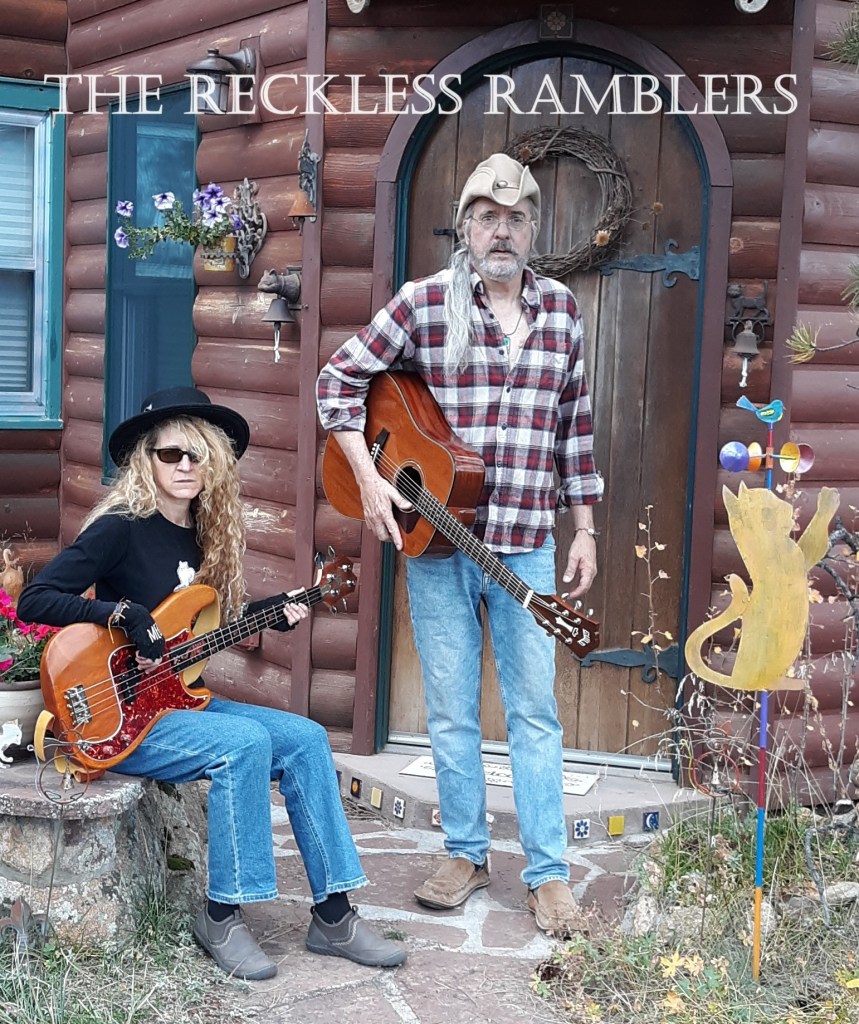
And so, in 2024 we took it slow, practicing new and old songs, getting ready for the summer gigging season. Landing gigs always takes a little effort but we managed seven gigs in 2024, in July, August, September and October. We played the 4th of July in Allenspark for the fourth year in a row, we were well received, and we gave it a fun vibe. Also, in Allenspark we were invited to play at a 5k run at the Old Gallery at the end of July, as well as at the Kelley House for the third year in a row for the Hilltop Guild bazaar benefit.
From there, as we liked to joke, we went on the Fred Willard/Spinal Tap/Air Force Base circuit (well, maybe not quite as low as the time we saw the once famous “hair band”, Quiet Riot, perform in the stands of the mezzanine area between periods at a Colorado Avalanche hockey game) – we landed three gigs at the Greeley Farmers Market playing from 8am to noon in August, September and October. These were paying gigs, and the tips were good, so it made up for getting up so early and driving down an hour and a half from Estes Park. Being it four hours of playing required us to hone in on quite a bit of material.
Basically, these were not a “shows’, per se, at the farmers market, because not too many people would watch and listen for even a whole song, but it is a good music playing experience and Staci and I had fun doing it. Staci’s sister Pam lives in Greeley so that was a good reason to be there, and we often visited the cemetery with Ann, Staci’s mom, after we’ve packed up and finished. Later in October we finished the year with a two-hour paying gig at Snowy Peaks Winery.
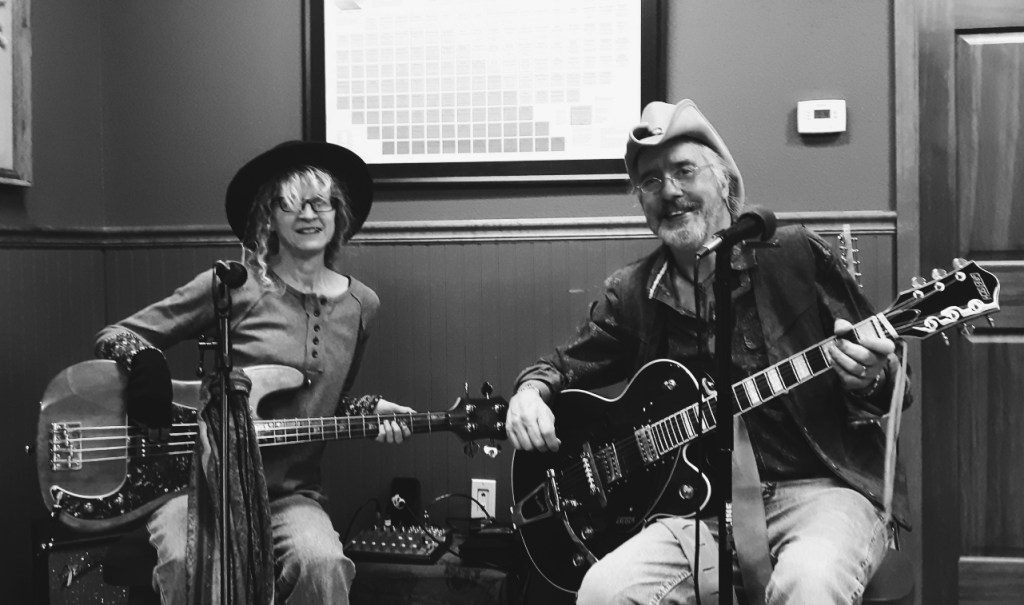
◆◆◆◆◆
So, in all of this, one element stands out, an everlasting love of music and playing the guitar, among other instruments.
I’ve played on the same stages as Johnny Winter, Joe Bonamassa and Robben Ford. What? Cheeky for me to say this, but true. I didn’t say that I played at the same time on the same stages with Johnny Winter, Joe Bonamassa and Robben Ford as those famous musicians, but I did play on those stages where they performed. I’ve played on the Quixote’s stage with Jakobz Laddr where Joe Bonamassa once performed. I saw Robben Ford perform at Herman’s Hideaway, where Jakobz Laddr had performed at one time. With the Galactic Express, I performed at the Oriental Theater, where I saw Johnny Winter perform. I’ve performed at Woofstock, how many people can say that? (…now you’re stretching, Robbie – WOOF-stock, a musical benefit for shelter dogs in Evergreen Colorado, 2019, with Derek Hall and the Possibilities).
If you want to catch Joe Bonamassa, back when he was a nobody, play a scorching version of an old Jeff Beck/Rod Stewart classic, “Blues Deluxe”, check out this video of him playing at Quixote’s in Denver in 2003.
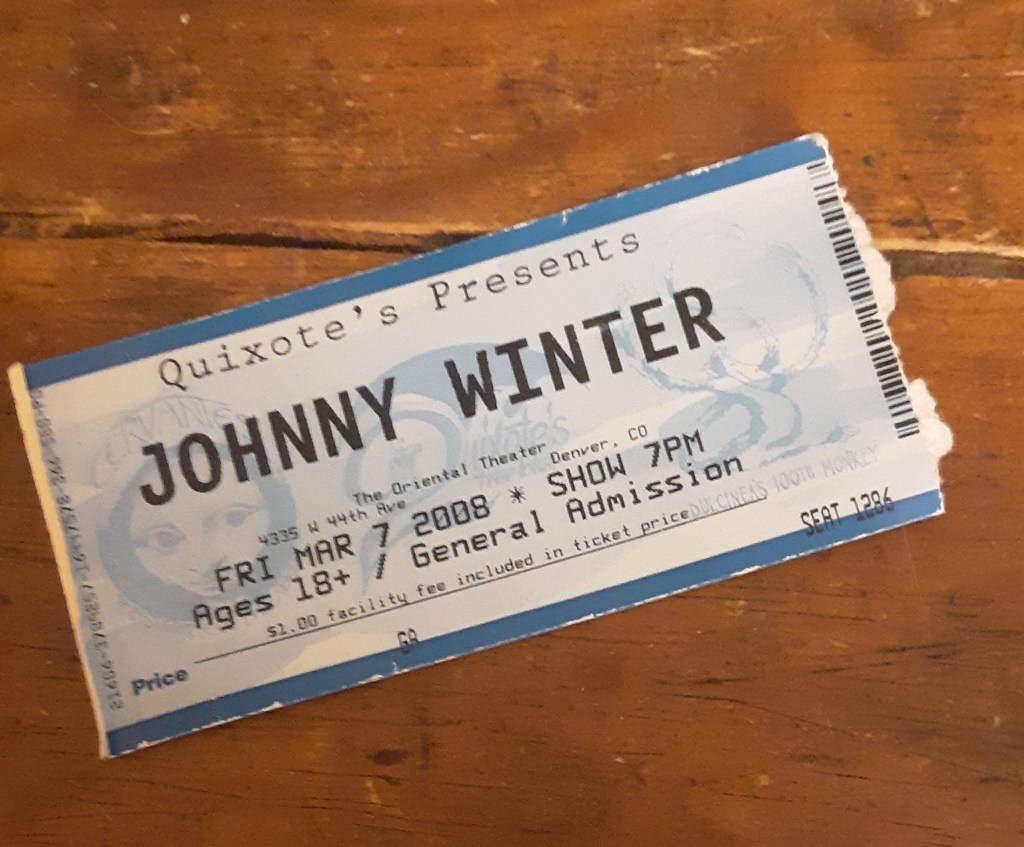
Why are you telling me all this, Robbie, and why should I care, you might be asking yourself? Good question.
Well, for starters, for what it’s worth, this is a record of my musical time on earth. Many times, in life, a recollection of what you did through the years is not passed on. At sixty-nine, I am in my seventh decade in this world and my sixth decade playing music. My life is and has been much more than playing music, though through the guitar, music holds a preeminent spot in my life. I share a life outlook much like Horace Walpole, 4th Earl of Orford (1717-1797):
Many things I have been interested in profoundly, music among them. Recording music has been a passion of mine since I was 17 and I still have some of the reel-to-reel recordings made with Bob Stewart and Tracy Dixon from 1973. With Staci, I would have to say that as she continues to learn and grow playing music, my guitar playing and singing has gotten better, I never stop trying to learn and improve, and to quote a famous musician – “Know your song well before you start singing”.
Not good at lead guitar? Work to make yourself better. Not good at flatpicking or fingerpicking? Work to make yourself better. Not good at singing? Work to make yourself better. A pattern is developing here…. I’ve strived to find a method of learning/writing/arranging songs in a professional manner, for my own satisfaction and love of music. Through the years, there were stretches where life, work, family and personal issues kept me apart from music and the guitar. Yet, it seems that when I spied the old Silvertone guitar in the basement playing pool with a friend, that a musical fire has burned bright within me, ever since. Below is a chronology of my musical life, to my best recollection.
In closing I will leave with some lyrics from the song “Time Slips By”, written by my good friend Bob Stewart, along with a recording of the song I recently unearthed. Now fifty years on from first playing guitar with Bob, his lyrics resonate appropriately with this story.
“Time slips by, before you know it, it’s already gone
I’ve tried and I’ve tried, to recapture some of the good I have known”
Time Slips By – Bob Stewart
Bob Stewart, vocals & guitar / Rob Leavitt, slide guitar
AUDIO RECORDING of “Time Slips By”, recorded 1976, Littleton Colorado
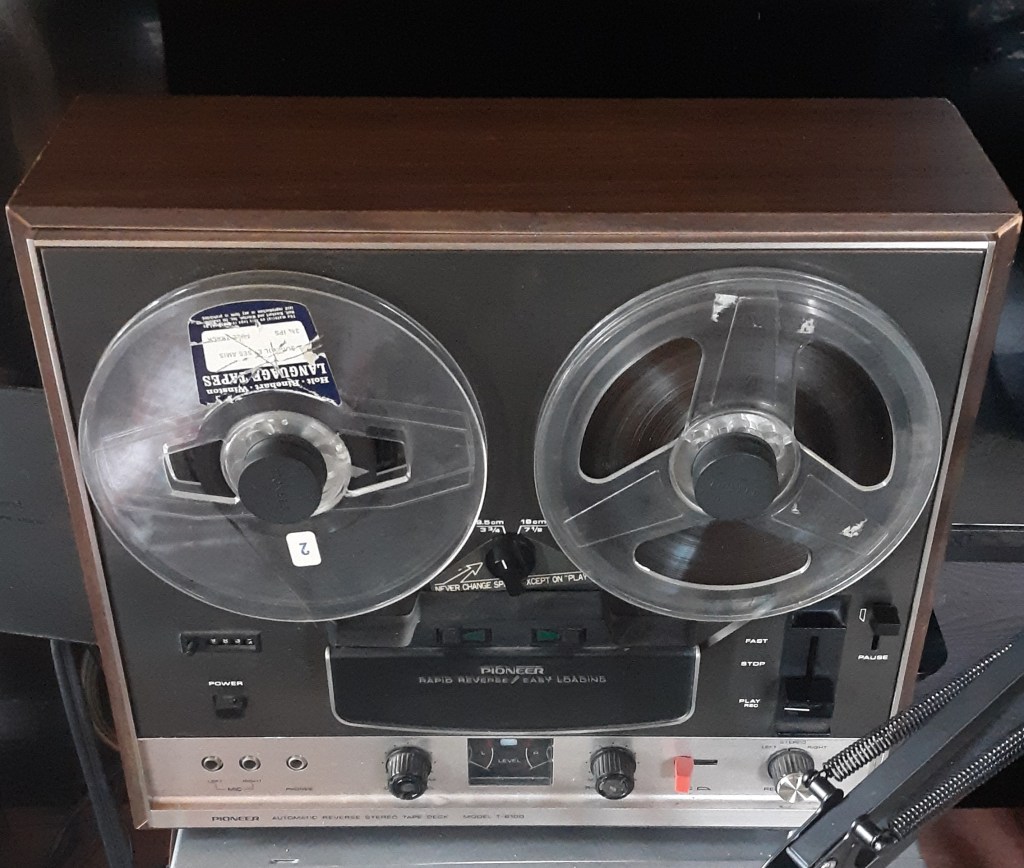
◆◆◆◆◆
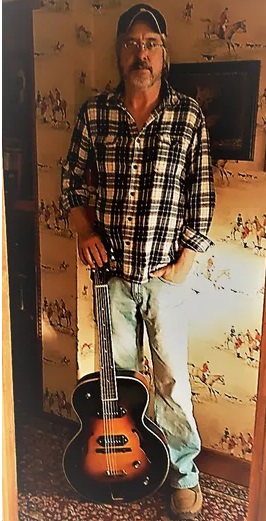
Robbie Leavitt
Estes Park, Colorado
◆◆◆◆◆
….a great deal of info is contained here below- specifics can be found in text and media files such as song repertoires, images, sound files and video links:
Disclaimer:
The music recordings featured on this blog are performed by various artists that I have been a part of and are intended solely for informational and educational purposes.
We do not claim ownership of other’s original compositions, and no copyright infringement is intended.
These recordings are not for commercial use and are shared to promote the appreciation of this music and the talents of the ensembles being highlighted.
All rights to the original compositions remain with their respective copyright holders.
Chronology of Music….
…….1971 through 2025:
in Manila, Philippines / 1972-74
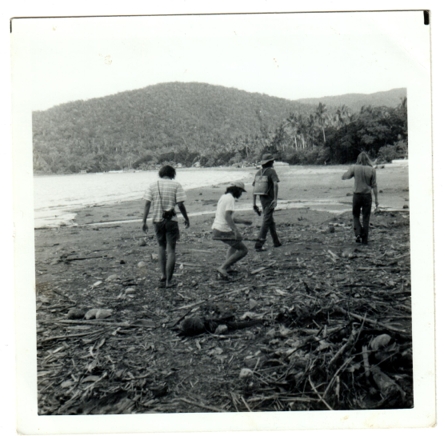
Bob Stewart, guitar, vocals / Tracy Dixon, vocals, harmonica
Rob Leavitt, guitar, slide guitar, bass, vocals
- SONGS (info incomplete):
- Little Children’s Blues – Lead Belly
- On a Monday – Lead Belly
- I Pity the Poor Immigrant – Bob Dylan
- Oxford Town – Bob Dylan
- There’s a Man Going Round Taking Names – Lead Belly
- National Defense Blues – Lead Belly
- Moonshiner – Bob Stewart
- Baler Blues – Tracy Dixon/Bob Stewart/Rob Leavitt
- Midnight Special – Lead Belly
- Hobo Pay – Tracy Dixon/Bob Stewart/Rob Leavitt
- She Came in Through the Bathroom Window – The Beatles
- Third Day – Rob Leavitt
- Next Exit, Then Left – Rob Leavitt
NOTES….this is where it all started, playing music together with others, with the dear friends you make in high school, cutting my teeth on guitar and slide guitar, writing songs and a lifelong love of recording the music being played.
…sound file from Manila Philippines, 1973
“Midnight Special“(Lead Belly)->”Hobo Pay“
Bob Stewart, vocals & guitar / Tracy Dixon, vocals, harmonica
Rob Leavitt, guitar, backing vocals
Tracy Dixon made up the words on the spot for “Hobo Pay” as “Midnight Special” ended and a spontaneous song jam ensued.
◆◆◆◆◆
with Scott Miller / 1974-75
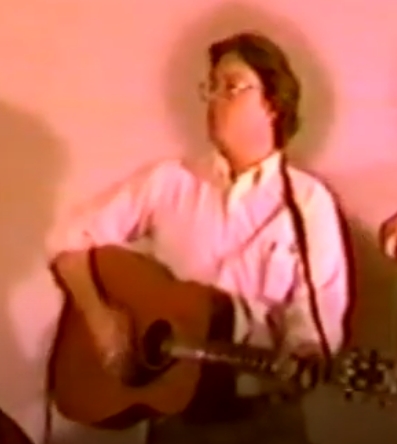
- SONGS (info incomplete):
- (I Got) Custody of Your Memory – Scott Miller
- Cheating Heart – Hank Williams
- Mind Your Own Business – Hank William
- Hey Good Looking – Hank Williams
- Honky Tonk King of Denver – Scott Miller
- I Told You – Rob Leavitt
- I’m Crying – Rob Leavitt
NOTES…. Scott was a really good songwriter and guitar player; he had the vibe. He was a few years older than me, he told me that my older brother, Johnny, gave him his first job at the small Woodlawn Theater, in Littleton, Colorado. I grew up with his brother Fred Miller, who my best friend all the years in grade school in Littleton, before moving overseas to Peru at age 11 in 1967. When I returned to the USA from overseas in the Philippines in 1974, Fred and I were roommates at few apartments in early college days.
Scott and I would spend evenings over at his place playing guitar and drinking a lot. I had fun playing music with him, he was very good, I was contributing what I could on slide guitar, and my guitar playing was fairly average at the time. I was not more than nineteen or twenty, was finding my way in life and this was a short, foggy period. This was the era of “Shotgun Willie” and Waylon Jennings. Somewhere in the deep recesses of my musical mind, from this experience and stimuli playing music with Scott, it gave me a strong affinity for classic country music.
“The Honky Tonk King of Denver” is Scott Miller’s song that is a country classic on par with many of the 1950’s/1960’/1970’s country music greats. In researching this story, I happened upon an old reel to reel tape that had some songs Scott, and I recorded at the back end of a tape with my recordings with Bob Stewart and Tracy Dixon. I almost missed it, but the last song on the reel was Scott and me playing “The Honky Tonk King of Denver”…upon further research, Scott Miller is none other than “Scotty Omaha”, professional country music songwriter and performer…. Scott and I reconnected over the phone after more than forty years. One of the guitarists that Scott used on a recent recording was none other than Big Muddy/Derek Hall guitarist Don Milan, aka Donny Dark.
YouTube link to Honky Tonk King of Denver / from 2015 entry
Honky Tonk King of Denver sound byte…. somewhere in Littleton Colorado 1975 / Scott Miller with Rob Leavitt:
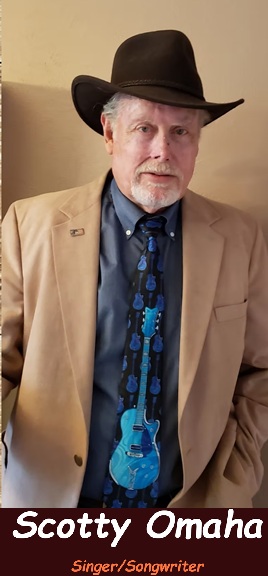
◆◆◆◆◆
with Bob Stewart / 1976
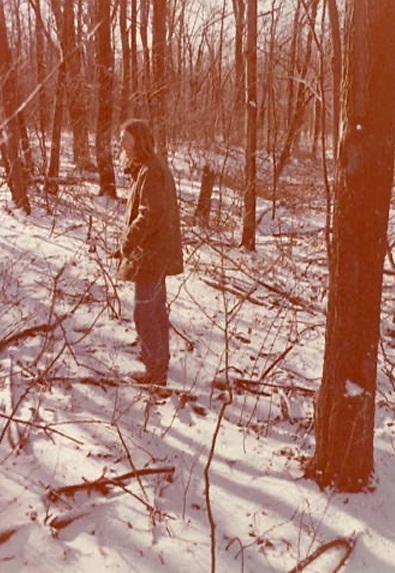
Bob Stewart, guitar & vocals / Rob Leavitt, bass, slide guitar
- SONGS:
- Time Slips By – Bob Stewart
- The River – Bob Stewart
- Up on Cripple Creek – The Band
- Going Away – Utah Philips
- Crazy Cassidy – Bob Stewart
- Santa Fe Trail – Bob Stewart
- Oklahoma – Bob Stewart
- Let’s Try it Again – Bob Stewart
- I Told You – Rob Leavitt
NOTES…. Bob came out to visit me in Colorado twice after he left the Philippines and returned to Canada, once in 1975 the other time in 1976. In 1975 we played a little music and an open mic, but Bob was a little unsettled as far as work, transportation and money and returned to Canada. Can’t exactly remember the circumstances, but he came back to Colorado in 1976 and seemed more energized, more settled and we did a few nice reel-to-reel recording sessions.
His songwriting had really developed by this time; that was Bob, he lived to write music, to sing and to play guitar. Thinking we were like twenty years old. His song “Time Slips By” is a seminal piece. Last time I saw Bob was in March 1977 in Florida when I got married to Sherry. At twenty-one, I was just a kid.
…recorded in Littleton Colorado 1976
Crazy Cassidy – Bob Stewart
Bob Stewart, vocals & guitar / Rob Leavitt, bass guitar
The River – Bob Stewart
Bob Stewart, vocals & guitar / Rob Leavitt, slide guitar
Going Away – by Utah Phillips
Bob Stewart, vocals & guitar / Rob Leavitt, bass guitar
◆◆◆◆◆
BLACK BORDEAUX 1991-1992
John Buckley, lead guitar, vocals / Rob Leavitt, guitar, vocals
Joe Conti, bass / Glen Milan, drums
- SONG REPERTOIRE (incomplete):
- Nothing Left – Rob Leavitt
- Stormy Eyes – Rob Leavitt
- Heather – Rob Leavitt
- Firebird Blues – Rob Leavitt
- Tomahawk Chop – Rob Leavitt
- Van Wailin – Rob Leavitt
- Train – Leavitt/Buckley/Conti/Milan
- Live with Me – Rolling Stones
- Honky Tonk Women – Rolling Stones
- Sympathy for the Devil – Rolling Stones
- Born on the Bayou – Creedence Clearwater Revival
NOTES….In the midst of “Silvertone Blues”, this was the beginning of playing in an organized band for me, with electric guitars and bass and drums. I had been divorced and single since 1984 and was quite aimless in a lot of ways. It was a long stretch of time since I had played any organized music with other people. At this stage of my life, I was still finding my way and career path. Reuniting with the Silvertone guitar in that basement while playing pool, was the spark that reignited my musical flame. I gravitated into playing music in a band setting with an internal fire, despite no real experience or road map. In this time period I began writing songs again in my newfound musical direction. There may be a cassette somewhere of the soundboard recording of a Black Bordeaux show at the Mercury Cafe from 1991 or 1992.
Jacob’s Ladder / 1993-94
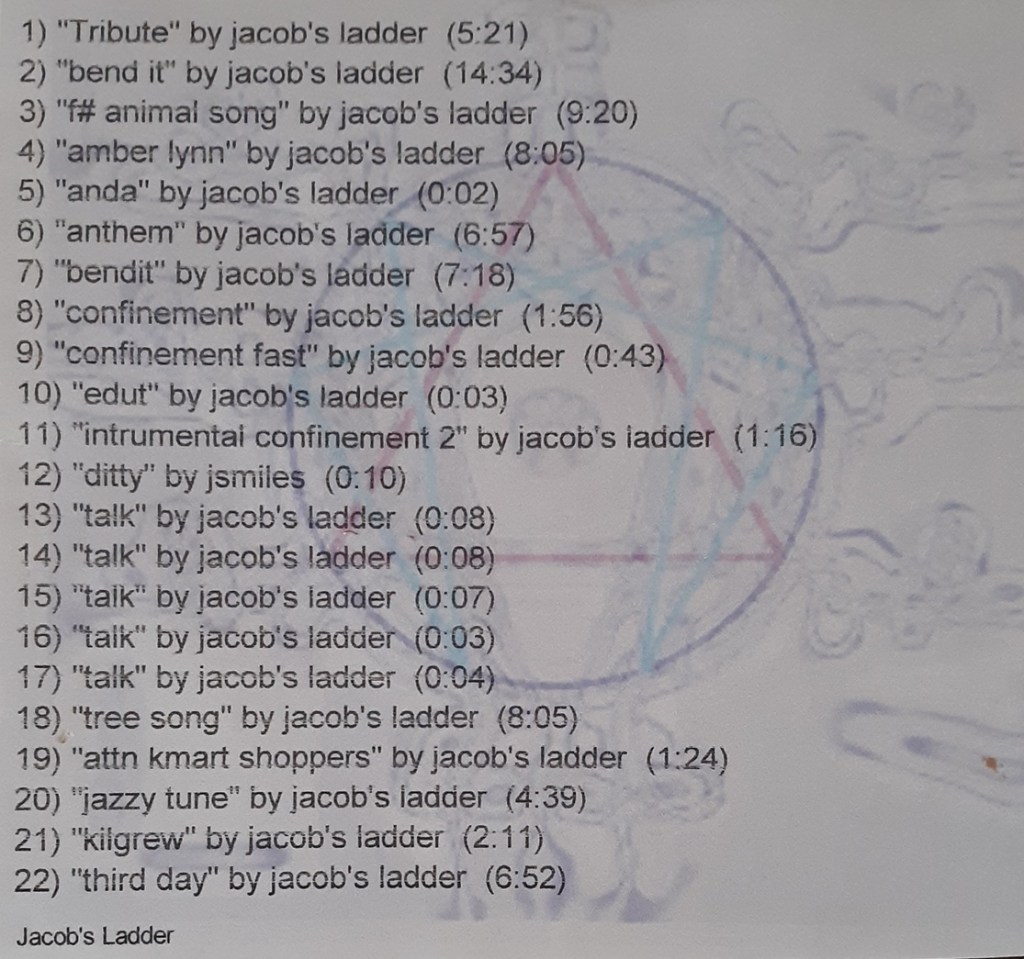
Jeff Miles, guitar, vocals / Rob Leavitt, guitar, vocals
Jeff Martinez, bass / Mike Ansbury, drums
- SONGS (incomplete):
- Amber Lynn – Jeff Martinez, Rob Leavitt, Jeff Miles
- Animal Song – Jeff Miles
- Anthem – Jeff Miles
- Attn: K-Mart Shoppers – Jeff Miles, Jeff Martinez
- Kilgrew – Jeff Martinez, Jeff Miles
- Confinement – Jeff Miles
- Tree Song – Jeff Miles
- Bend It – Rob Leavitt
- Bluz For Sancho – Rob Leavitt
- Funk 47 – Rob Leavitt
- Jump and Shout – Rob Leavitt
- Let Me Go – Rob Leavitt
- Lost – Rob Leavitt
- Next Exit, Then Left – Rob Leavitt
- Azul/Spanish Blue – Rob Leavitt
- Sunday Blues/Tribute – Rob Leavitt
- Van Wailin – Rob Leavitt
- Good Morning Little School Girl – SB Williamson
NOTES…. a friend at work, John Paul Jones, yes, that really was his name, (John Paul as we called him, he had fun with his name when he got stopped by the cops and they didn’t believe that was his name), was a musician that we sometimes played music with, and he introduced me to Jeff Miles. The spark lit inside me from Black Bordeaux reignited here. I was newly clean and sober, so this was a fun diversion. This itineration fell by the wayside right before I started dating Staci, and my career as a chef began taking off for the second time.
In this time, I also studied classical guitar, starting in my last stint in college in ‘93/’94. Classical guitar was captivating and something I could pursue on my own time at my own pace. For all my love of blues/folk/rock/jazz, discovering baroque music through classical guitar was enlightening. I was adequate on classical guitar and continued with it till that day in 2003 that I plugged in the Gibson L-6S.
Jacob’s Ladder had this song called “Amber Lynn”; Jeff Martinez came up with this hard charging funk/R&B/Rick James bassline that I threw together some fun lyrics about a blue movie star and a lead guitar run. The song was also resurrected in the second Jakobz Laddr.
Amber Lynn –
by Jeff Martinez/Rob Leavitt/Jeff Miles
Jeff Miles, guitar / Mike Ansbury, drums
…North Denver Allstars 1993/94
Bud Hall, guitar, vocals / Greg Livingston, harmonica
Mike Fogerty, drums / Rob Leavitt, guitar, slide guitar, vocals
- SONGS (incomplete):
- Empty Arms Hotel – Bud, guitar, vocals / Rob, guitar
- Not Fade Away – Bud, guitar, vocals / Rob, guitar
- Love in Vain – Bud, guitar, vocals / Rob, slide guitar
- Sweet Virginia – Bud, guitar, vocals / Rob, slide guitar
- Hoochie Coochie Man – Bud, guitar, vocals / Rob, slide guitar
- Spider and the Fly – Bud, guitar, vocals / Rob, guitar
- Highway 61 – Bud, guitar, vocals / Rob, slide guitar
- Mercury Blues – Bud, guitar, vocals / Rob, slide guitar
- Prodigal Son – Bud, guitar, vocals / Rob, slide guitar
- If Six was Nine – Bud, guitar, vocals / Rob, guitar
- Little Sister – Bud, guitar, vocals / Rob, guitar
- Message to You – Bud, guitar, vocals / Rob, guitar
- You Don’t Love Me No More – Bud, guitar, vocals / Rob, guitar
- Fortune Teller -Bud, guitar, vocals / Rob, guitar
- Jump and Shout – Rob, guitar, vocals / Bud, lead guitar
- Louisiana Blues – Rob, slide guitar, vocals / Bud, guitar
- Heather – Rob, guitar, vocals / Bud, lead guitar
- Open G Slide Guitar Vamp – Rob, slide guitar
NOTES…. this short-lived ensemble was fun and listening to the lost recordings that Greg Livingston recently sent me was joyous recollection of my playing electric guitar with these cats, all excellent musicians. Plus, as always, for me playing music in an ensemble, it was a blast. In the back of my mind, I always recalled playing slide guitar on “Love in Vain” with Bud Hall, Mike Fogerty and Greg Livingston, giving me impetus to give it a go in Big Muddy two decades later. In researching this story, I had almost forgotten the depth of my musical interfacing in those years with Greg.
In all of this, listening to the old recordings, recorded on a cassette deck with two external microphones, cheap little beater dictation microphones, some of the recordings actually were decent. I had contacted Greg in writing this story and he sent me 5 old cassette tapes from back in like 1993 & 1994. I had long since forgotten they even existed. Four of them were from the “Silvertone Blues” apartment and the place by Cherry Creek, just me on guitar and some singing and Greg on harmonica. A short sound byte of “Firebird Blues” above is fun.
1993 was right after Black Bordeaux so a lot of those songs were still fresh in my musical palette. The one cassette recorded over at Mike Fogerty’s house was a gold mine of memories and some pretty good tunes.
Before contacting Greg about this story and before having these old tapes, out of the blue I started playing the song “Heather” with Staci, after thirty plus years.
North Denver All Stars / 1993/1994
Little Sister – 1993/1994
Mike Fogerty, drums / Rob Leavitt, guitar
Sketch in Open G by Rob Leavitt
Rob Leavitt, slide guitar/Mike Fogerty, drums/Greg Livingston, harmonica
◆◆◆◆◆
JAKOBZ LADDR / 2003-2007
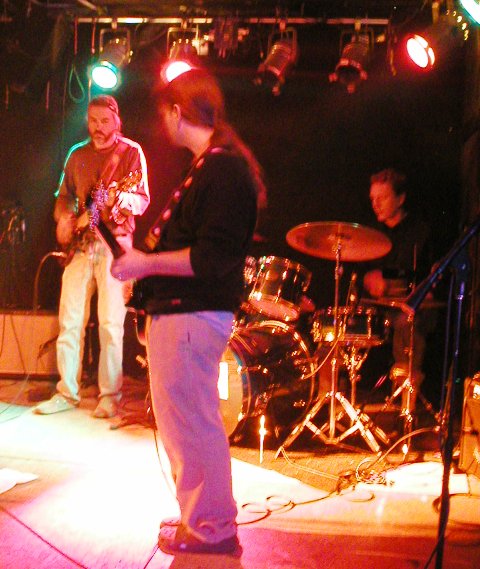
~~~~~~~~~~~~~~~~~~~~~~~~~~~
Jeff Miles, guitar, vocals / Rob Leavitt, guitar, vocals, keyboards,
Juan Dominguez, bass, drums / Rey Dominguez, drums
Graham Knight, drums / Alora A., keyboards, vocals
Shawn Riley, drums
- SONG REPERTOIRE:
- Amber Lynn – Jeff Martinez, Rob Leavitt, Jeff Miles
- Animal Song – Jeff Miles
- Anthem – Jeff Miles/Rob Leavitt
- Bend It – Rob Leavitt
- Bluz for Sancho – Rob Leavitt
- Confinement – Jeff Miles
- Devil – Jeff Miles
- Duppy Conqueror – Bob Marley & the Wailers
- Have You Seen the King – Miles/Leavitt
- Funk 47 – Rob Leavitt
- Jump and Shout – Rob Leavitt
- Let Me Go – Rob Leavitt
- Lion 222 – Miles/Leavitt
- Lovelight – Grateful Dead
- Lost – Rob Leavitt
- May Be Wrong – Savoy Brown
- Next Exit, Then Left – Robbie Leavitt
- Tree Song – Jeff Miles
- Smokestack Lightning – Howlin’ Wolf
- Soundtrack of My Mind – Rob Leavitt
- Azul/Spanish Blue – Rob Leavitt
- Spoonful – Howlin’ Wolf
- Rolling and Tumblin – Muddy Waters
- Voodoo Child – Jimi Hendrix
- Vudu Funk – Rob Leavitt
- Kokomo – Fred McDowell
- Cortez the Killer – Neil Young
- China Cat Sunflower – Grateful Dead
- Scarlet Begonias – Grateful Dead
- Fire on the Mountain – Grateful Dead
- Season of the Witch – Al Kooper/Mike Bloomfield/Donavon
- Born Under a Bad Sign – Albert King
NOTES…. when it comes to a lot of things in my life, I never give up. Didn’t have a culinary degree, yet I worked my way up from dishwasher to executive chef in my working life. Early on, getting into hotels and restaurants with only Mexican food experience, I kept at it, despite any lack of knowledge and experience and doors slammed in my face.
Same thing with creating music and starting a band; my love of music and playing it superseded any lack of experience. I had no illusions of fame and fortune, I just wanted to play music in this arena, regardless of the time, effort and money required, not to mention having to “drive the bus” while herding cats. Sure, at this point in an original music band I might have thought a little too highly of myself. Reality and a “crashed bus” are a great cure.
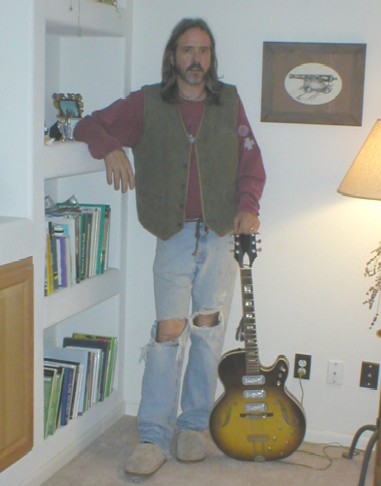
JAKOBZ LADDR / 2003-2007
YouTube links to a little psychedelica……
LION 222 / Buffalo Rose, Golden, Colorado
VUDU FUNK / Cricket on the Hill, Denver
SOUNDTRACK OF MY MIND / Cricket on the Hill, Denver
◆◆◆◆◆
ROADHOUSE JOE / 2008-2009
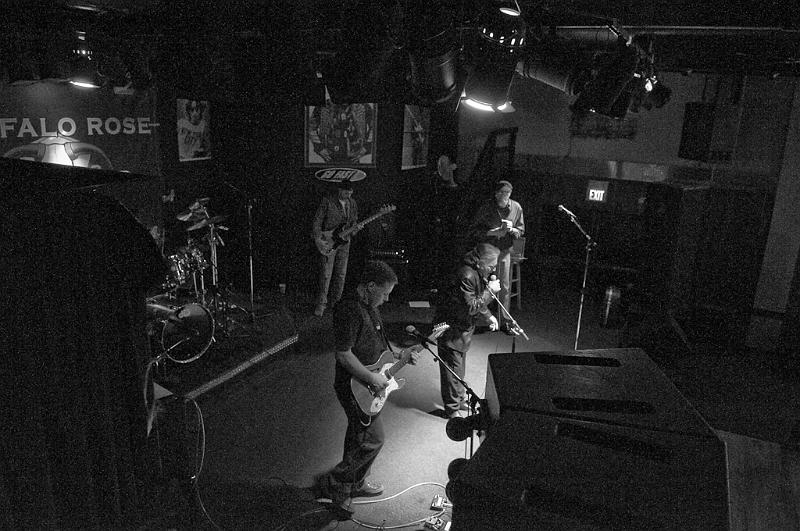
Scott Mishoe, guitar, Stu Aron, drums, Rick Davis, harmonica
Rob Leavitt, bass, Scott “Hunt” Huntington, vocals
- SONG REPERTOIRE:
- All Your Love I Miss Lovin’ – Otis Rush
- Ain’t No Sunshine – Bill Withers
- Born Under a Bad Sign – Albert King
- Blow Wind Blow – Muddy Waters
- Blue Jean Blues – ZZ Top
- Cold Sweat – James Brown
- Crosscut Saw – Albert King
- Dust My Broom – Elmore James
- Going Down – Freddie King
- Good Morning Little Schoolgirl – SB Williamson
- Hideaway – Freddy King
- Help Me – SB Williamson
- Hoochie Coochie Man – Muddy Waters
- I Smell a Rat – Buddy Guy
- It Hurts Me Too – Elmore James
- I’m Tore Down – Freddy King
- Killing Floor – Howlin’ Wolf
- Key to the Highway – Big Bill Broonzy
- Messin’ With the Kid – Junior Wells
- Mustang Sally – Wilson Pickett
- Outside Woman Blues – Cream
- Red House – Jimi Hendrix
- Rock Me – BB King
- Shake Your Money Maker – Elmore James
- Standing on Shaky Ground – Delbert McClinton
- Spoonful – Willie Dixon
- Stormy Monday – T Bone Walker
- The Thrill Is Gone – BB King
- The Sky Is Cryin’ – Elmore James
- Too Many Dirty Dishes – Albert Collins
- T-Bone Shuffle – T Bone Walker
- 40 Days and 40 Nights – Muddy Waters
ROADHOUSE JOE / 2008-2009
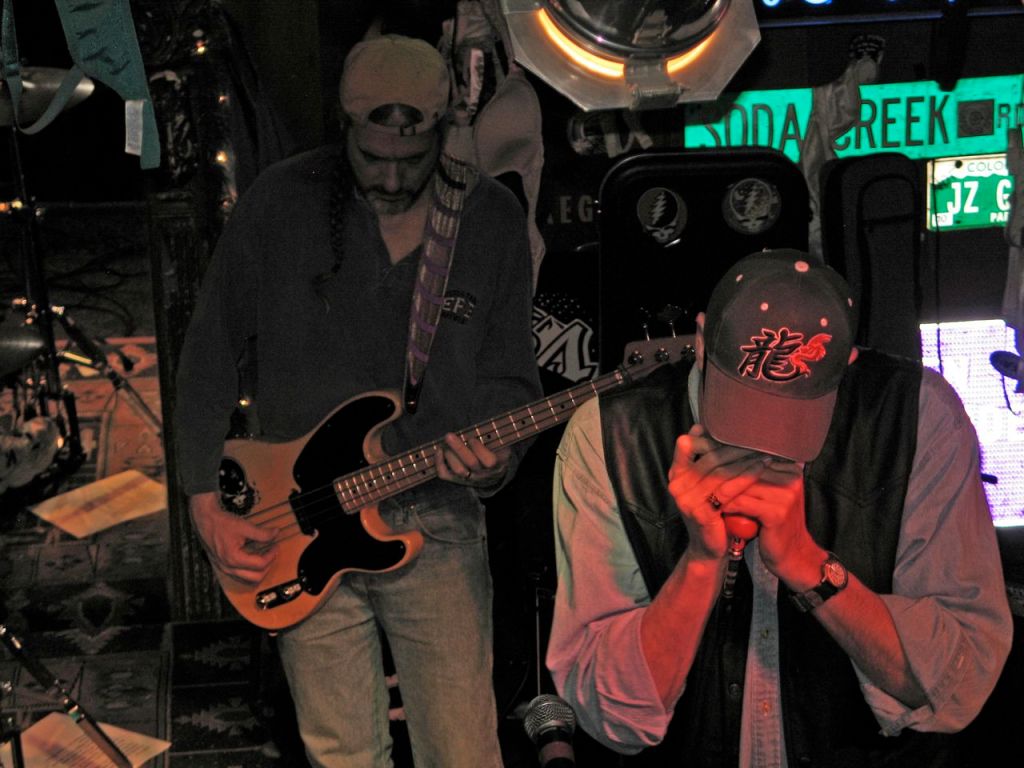
Shake Your Money Maker – Elmore James performed by Roadhouse Joe
Rob Leavitt, bass / Scott “Hunt” Huntington, vocals
Blue Jean Blues – ZZ Top performed by Roadhouse Joe
NOTES…. here I accomplished what I set out to do; play bass in a blues band. Tons of fun doing this, even if the personalities were not all that compatible. One thing in my life I will say, is, while in my own mind I am as conscientious and considerate as can be, not everyone sees it that way. It’s on me as, if I am in a situation where I am feeling things are not all that good and I don’t have input or control of the situation, I’ll clam up. It freaks people out and it happened here. Playing the basslines to these many classic blues songs was thrilling to my soul, in my lifelong love of the blues.
◆◆◆◆◆
BIG MUDDY / 2010-2014
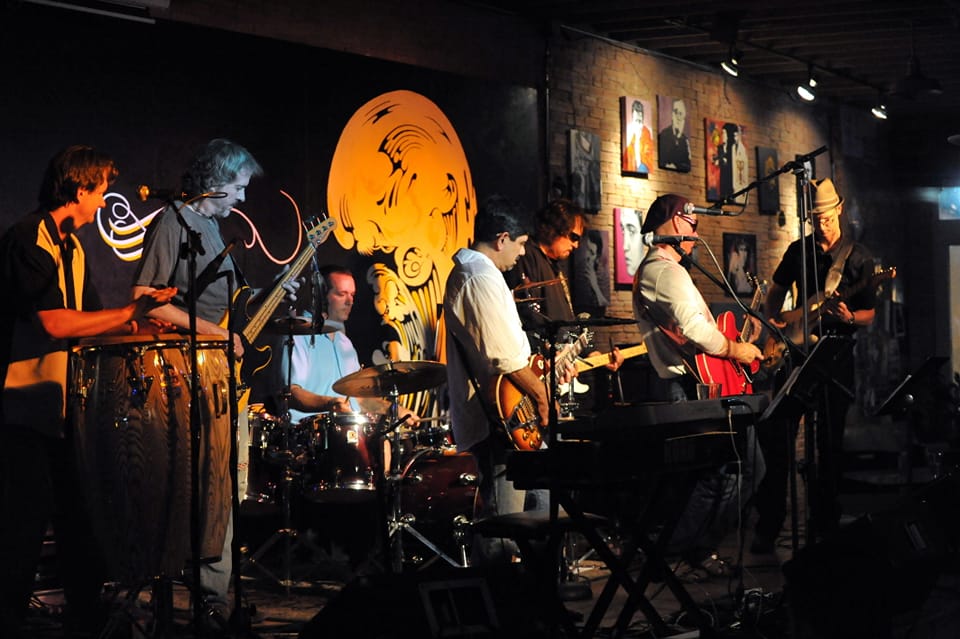
Rob Medina, guitar, vocals, keyboards, bass / Don Milan, lead guitar
Robbie Leavitt, bass, keyboards, slide guitar, vocals / Derek Hall, drums
Dax Hunter Jordan, drums / Jon Simiski, guitar
- SONG REPERTOIRE:
- Alley Song – Rob Medina
- Ain’t Superstitious – Jeff Beck
- A Fool for Your Stockings – ZZ Top
- Born On the Bayou – Creedence Clearwater Revival
- Born Under a Bad Sign – Cream
- Brown Sugar – ZZ Top
- Boom Boom – John Lee Hooker
- Broken Heart Savior – Big Head Todd and the Monsters
- Crazy Mama – JJ Cale
- Travelin’ Light – JJ Cale
- Hoochie Coochie Man – Muddy Waters
- In Memory of Elizabeth Reed – Allman Brothers
- Going Out West – Tom Waits
- Gravity – John Meyer
- Chilly Water – Widespread Panic
- Going Down – Freddie King
- Medicine Man – Keb Mo
- Miss You – Rolling Stones
- Mystery Train – Junior Parker/Elvis/The Band
- Me & the Devil – Robert Johnson
- Mr. Soul – Buffalo Springfield
- Nice & Warm – Tab Benoit
- Porch Song – Widespread Panic
- Yer Blues – The Beatles
- Revolution – The Beatles
- Come Together – The Beatles
- Get Back – The Beatles
- I Want You – The Beatles
- She’s so Heavy – The Beatles
- Backdoor Man – The Doors
- Riders on the Storm – The Doors
- Soul Kitchen – The Doors
- Roadhouse Blues – The Doors
- Sympathy for the Devil – Rolling Stones
- Southbound – Allman Brothers
- Stop Breaking Down – Robert Johnson – Rolling Stones
- Steppin Out – Blues Breakers
- T-Bone Shuffle – T-Bone Walker
- Take Me to the River – Talking Heads
- Traveling Riverside Blues – Led Zepplin
- Rollin & Tumblin – Muddy Waters
- Love in Vain – Robert Johnson – Rolling Stones
- 6 Days on the Road – Dave Dudley
- Bluz for Sancho – Robbie Leavitt
NOTES…. ….this was a fun band to be in, and I approached it in a disciplined, professional manner. I wanted to pull my weight and help make the whole good, yet be able to contribute, knowing what the boundaries were. Quite a variety of music here and a nod to Rob Medina on his drive and musical ability. Not the straight-ahead Chicago blues of Roadhouse Joe, but the rock music we did was a bit “blues-i-fied”; case in point the Beatles repertoire of “Yer Blues/I Want You-She’s So Heavy”.
Rob Medina had an affinity for the Doors as well. We did this rendition of “Backdoor Man” ala The Doors, where Rob would start out on organ, sing a couple of verses, we’d jam through the I-IV-V a time or two, then jam in the root chord for a while with Don Milan’s crushing guitar riffs, then bringing it softer. Rob then switched to his Les Paul guitar, and we’d jam it up some more before Rob would light it up with the last verse and ending. The whole journey in this song, especially the middle jam with the drums and bass in tempo thumping it and the segue from organ/guitar to guitar/guitar, you’d think you were at the Filmore West, 1968.
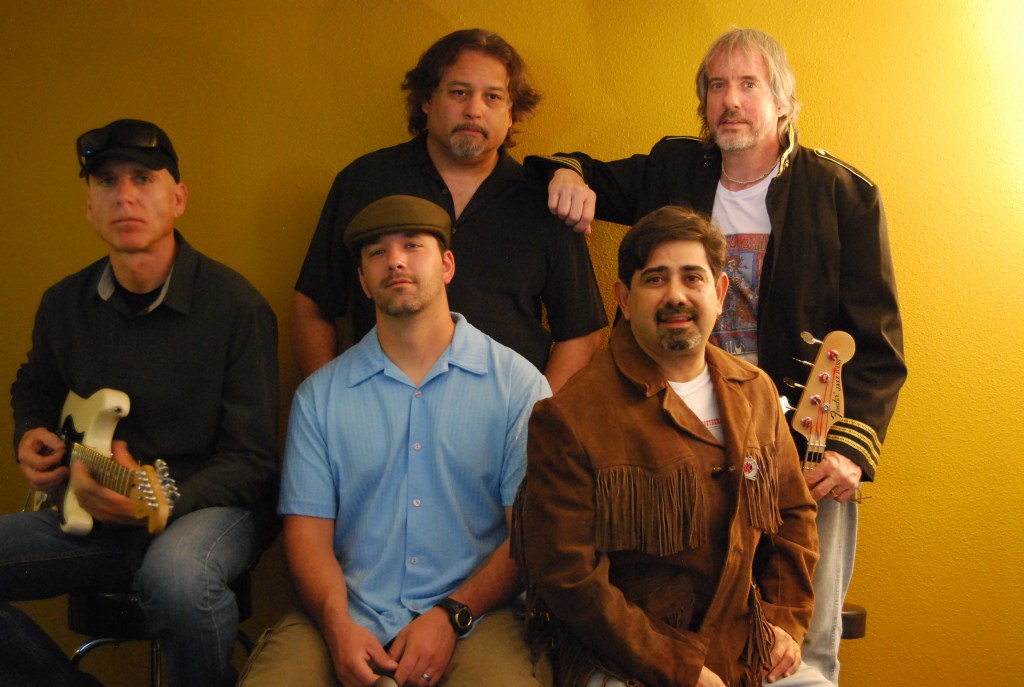
back, L-R, Don Milan/Robbie Leavitt
Backdoor Man / Buffalo Rose, Golden Colorado December 28th, 2012
Robbie Leavitt, bass / Dax Hunter Jordan, drums
Bluz for Sancho © by Robbie Leavitt
Buffalo Rose, Golden Colorado / Dec. 28th, 2012
Rob Medina, bass / Dax Hunter Jordan, drums
Come Together – She’s So Heavy – The Beatles
Robbie Leavitt, bass / Derek Hall, drums
BTW…..how fun was it to play these two Beatles classics?
◆◆◆◆◆
JEFF HARRISON and the Galactic Express
side project 2012/2013
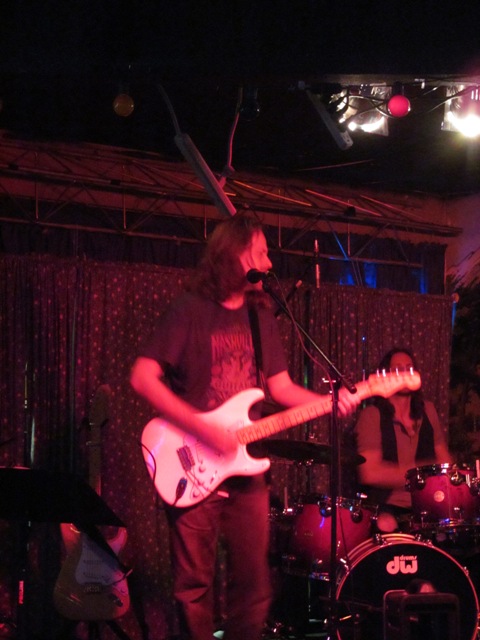
Jeff Harrison, guitar, vocals / Robbie Leavitt, bass
Tracy Mullins, drums Dax Hunter Jordan, drums
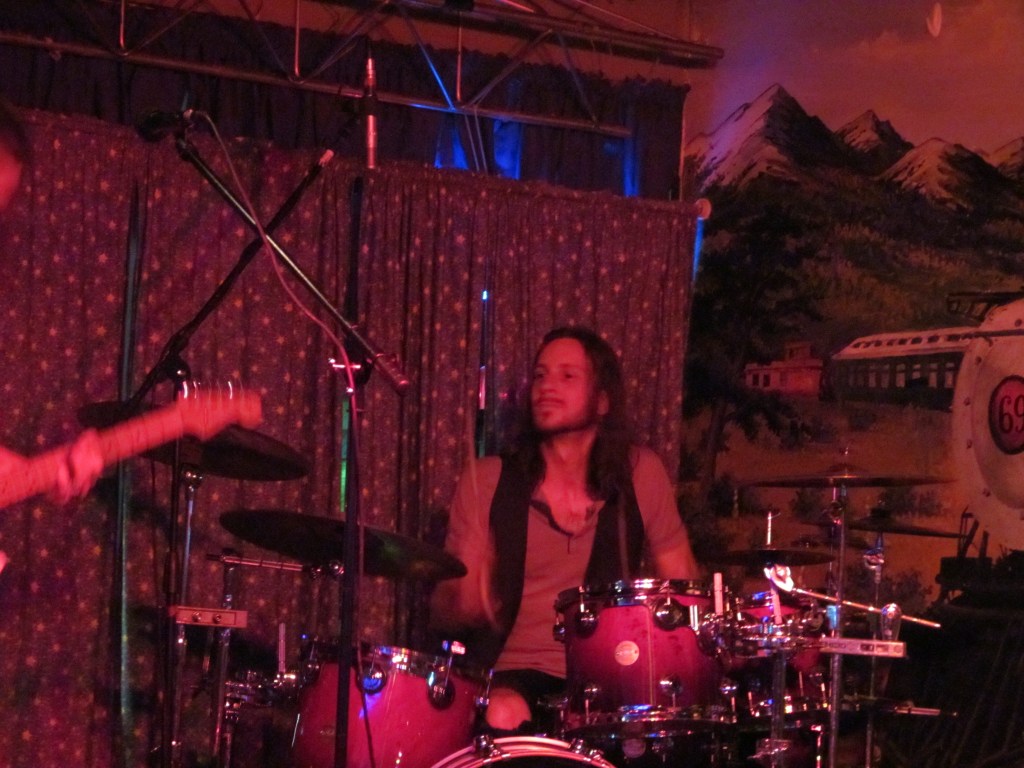
- SONG REPERTOIRE:
- Have You Ever Loved a Woman – Eric Clapton
- Every Day I Have the Blues – BB King
- Spanish Castle Magic – Hendrix
- I’m Tore Down – Eric Clapton
- Sunshine of Your Love – Cream
- Like a Hurricane – Neil Young
- White Room – Cream
- Rocking the Free World – Neil Young
- Every Day I Have the Blues – BB King
- Take Me to the River – Talking Heads
- Reason to Live – Jeff Harrison
- Venus of Astoria – Jeff Harrison
- 3rd Degree – Eric Clapton
- Thrill Is Gone – BB King
- Voodoo Child – Jimi Hendrix
- Spanish Castle Magic – Jimi Hendrix
- Couldn’t Stand the Weather – Stevie Ray Vaughn
- Reconsider Baby – Eric Clapton
- Green Light Girl – Doyle Bramhall
- Pretty Woman – Albert King
JEFF HARRISON / 2012-2013
and the Galactic Express
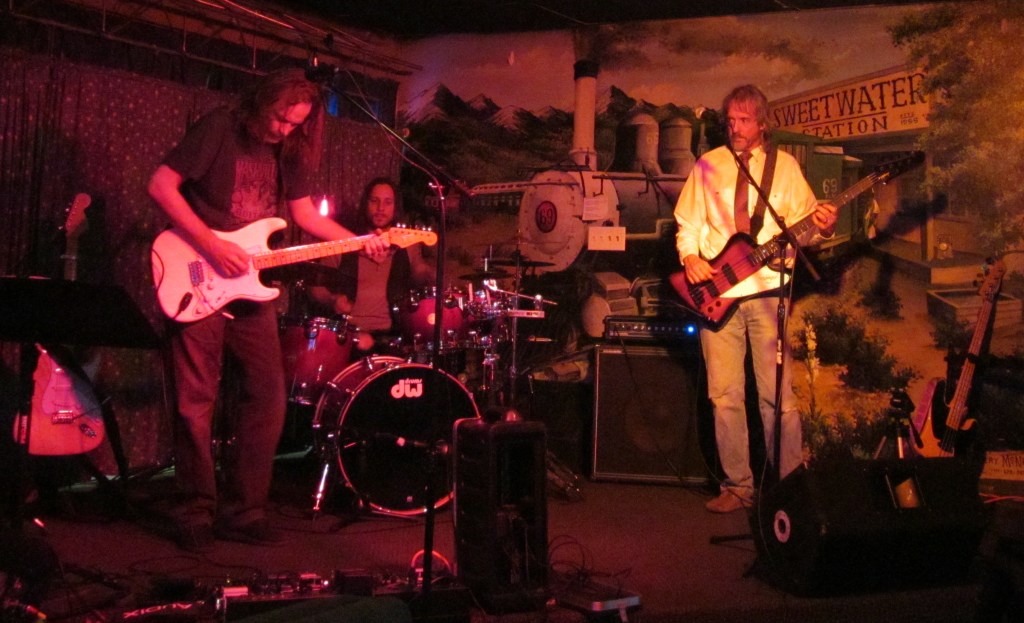
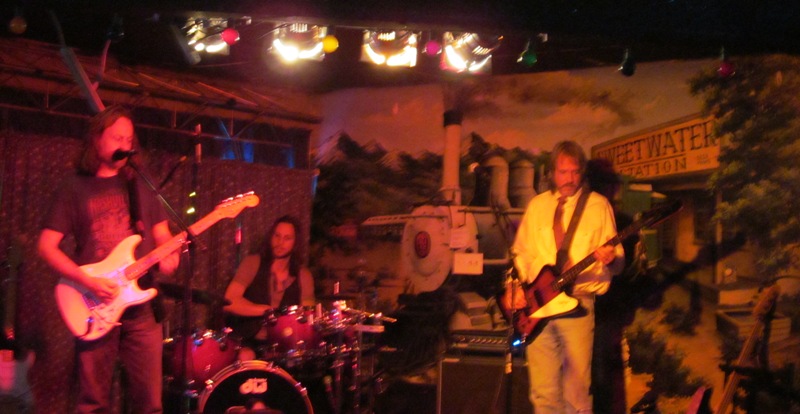
NOTES…. ill-conceived on my part, but I was semi-retired, and my musical drive was hard to suppress. Jeff Harrison was a great guy, conscientious and talented, but as it was more my drive than anything else, so he pretty much kept me at arm’s length. Since the dynamic was brittle and I was not able to play/practice/connect very well with him, it did not show well in my playing. Plus, the landlord/tenant element was not conducive in overall scheme of things.
◆◆◆◆◆
TAHOSA / 2017-2019
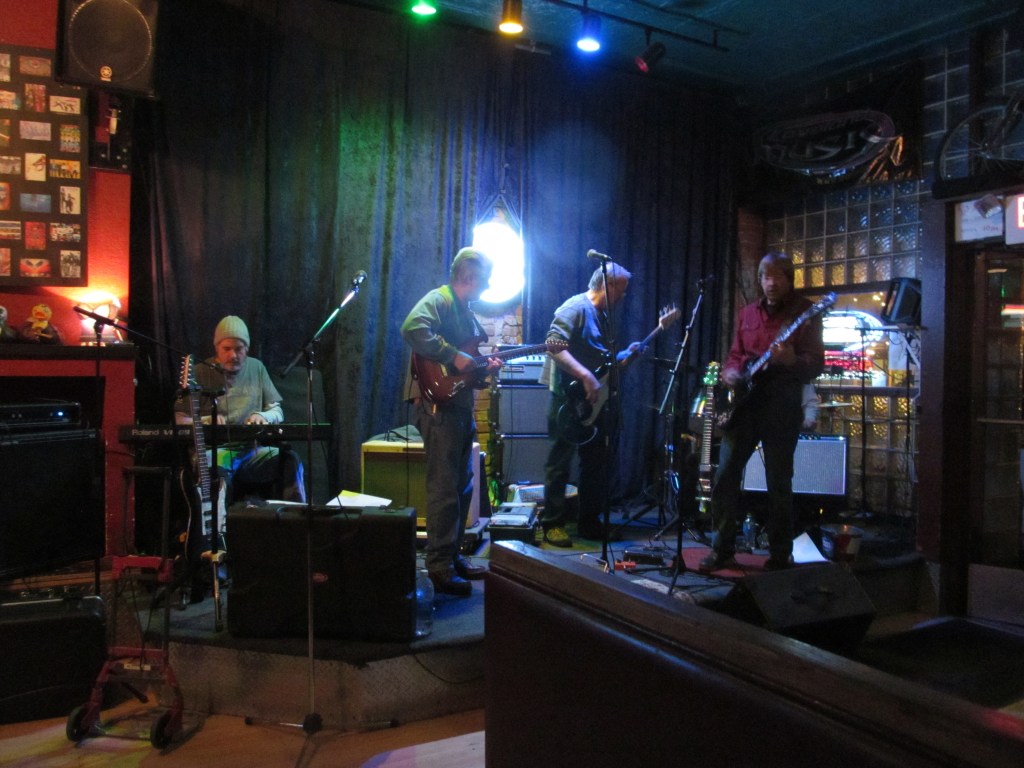
John Weires, lead guitar / Mike Rogers, guitar, vocals / Joey Fichera, bass
Jeri Barleen, vocals / Jerry Schrag, drums, vocals
Robbie Leavitt, keyboards
- SONG REPERTOIRE:
- Alright Now – Free
- Black Magic Woman – Santana
- Secret Agent Man – Johnny Rivers
- Red House – Jimi Hendrix
- Voodoo Child – Jimi Hendrix
- Mustang Sally – Wilson Pickett
- Green River – Creedence Clearwater Revival
- I Thank You – ZZ Top
- One Way Out – Allman Brothers Band
- Southbound – Allman Brothers Band
- One More Morning – Allman Brothers Band
- Mary Had a Little Lamb – Stevie Ray Vaughn
- Texas Flood – Stevie Ray Vaughn
- Rock and Roll – Led Zepplin
- This Ole Cowboy – Marshall Tucker Band
- Fire on the Mountain – Marshall Tucker Band
- 24 Hours At a Time – Marshall Tucker Band
- Middle of the Road – The Pretenders
- Chain Gang – The Pretenders
- Six Days on the Road – Dave Dudley
- Going Down – Freddie King
- Further on up the Road – Eric Clapton
- Dreams – Molly Hatchet
- Folsom Prison Blues – Johnny Cash
- Revival – Allman Brothers
- Thank You – ZZ Top
- Tush – ZZ Top
- Tube Steak Boogie – ZZ Top
- Oye Como Va – Santana
- Roadhouse Blues – the Doors
- Down by the River – Neil Young
Texas Flood – Stevie Ray Vaughn
Mustang Sally – Wilson Pickett
Green River – Creedence Clearwater Revival
Little Sister – Elvis
John Weires, lead guitar / Joey Fichera, bass / Jeri Barleen, vocals
Mike Rogers, guitar, vocals (vocals on Green River)
Jerry Schrag, drums, vocals (vocals – Mustang Sally & Little Sister)
Robbie Leavitt, keyboards, backing vocals
NOTES…. stumbled into this one, taking what I could get to be in a band… at the chair of the keyboards, first dicking around with Midnight Trampoline, then seriously with Tahosa. I pretty much enjoyed the ride, but as in Roadhouse Joe, the personality disconnect with John Weires led me to keep to myself. I approached the musical aspect professionally, but it was difficult for me to hide some disinterest after my naivety wore off and knew I was outside the clique.
◆◆◆◆◆
DEREK HALL & the Possibilities /2018-2020
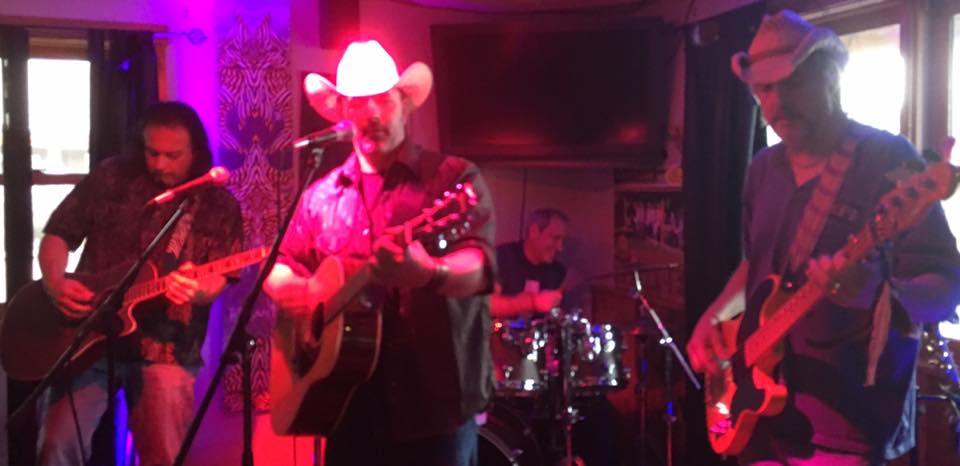
Derek Hall, guitar, vocals / Don Milan, lead guitar
Robbie Leavitt, bass, slide guitar / Joe Lasser, drums
- SONG REPERTOIRE:
- Alright Guy – Todd Snider
- Ball & Chain – Sonic Distortion
- Bad Luck for Good – Derek Hall
- Better off at the Bar – Derek Hall
- Buckoff Song – Derek Hall
- Country Honk – Rolling Stones
- Dead Flowers – Rolling Stones
- Dreaming aint Doing – Derek Hall
- Drinkin Problem ~ Midland
- Diggin Holes – Brent Cobb
- Divide by Zero – Derek Hall
- EZ Money – Todd Snider
- Goin Out West – Tom Waits
- Hide Your Love Away – The Beatles
- Fast As You – Dwight Yoakam
- Friend of Devil – Grateful Dead
- G in Jesus – Derek Hall
- Judgement Day – Robbie Leavitt
- Just Seen a Face – The Beatles
- Kickin Ass – Derek Hall
- Life of Sin – Sturgill Simpson
- Love ain’t a Game – Derek Hall
- Long Day – Derek Hall
- Last Song – Derek Hall
- Long White Line –Sturgill Simpson
- Long Haired Country Boy – Charlie Daniels
- Maybelline – Chuck Berry
- Nice Quiet House – Derek Hall
- Old Shit –Miranda Lambert
- Pink Houses – John Mellencamp
- Peaceful Easy Feeling – Eagles
- Queen of California – John Meyer
- Ring of Fire – Johnny Cash
- Ride Home – Derek Hall
- Rivers Move On – Derek Hall
- Roll the Dice – Derek Hall
- Savin Money – Derek Hall
- Too Smart for Friends – Derek Hall
- Working Man’s Blues – Merle Haggard
- Yer So Bad – Tom Petty
- 16 Days – Whiskeytown
- 14 Gears – Midland
- Love in Vain – Robert Johnson/Rolling Stones / G – slide
- 6 Days on Road – Dave Dudley
- Fields of Eylau – Robbie Leavitt
DEREK HALL & the Possibilities / 2018-2020
Rivers Move On by Derek Hall 2019
video at the Little Bear, Evergreen, Colorado:
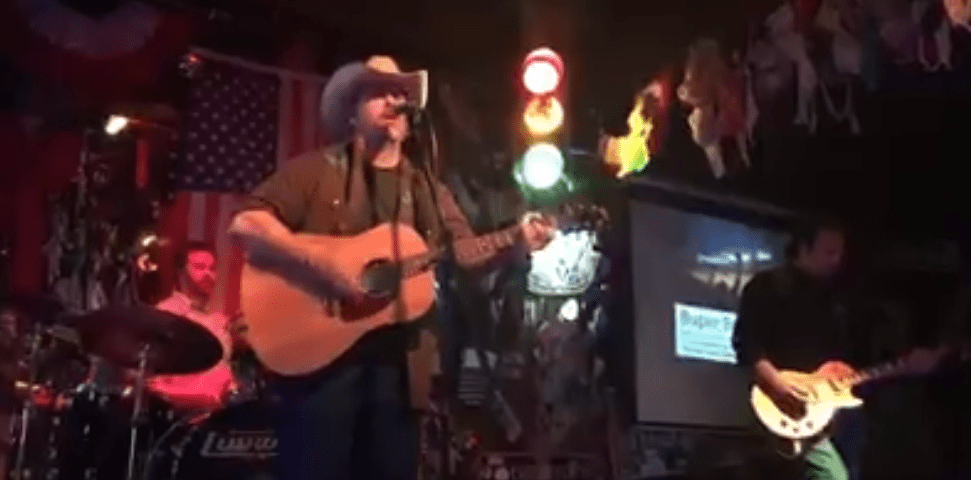
Kicking Ass by Derek Hall 2019:
Working Man’s Blues
video at the Little Bear, Evergreen, Colorado, 2019:
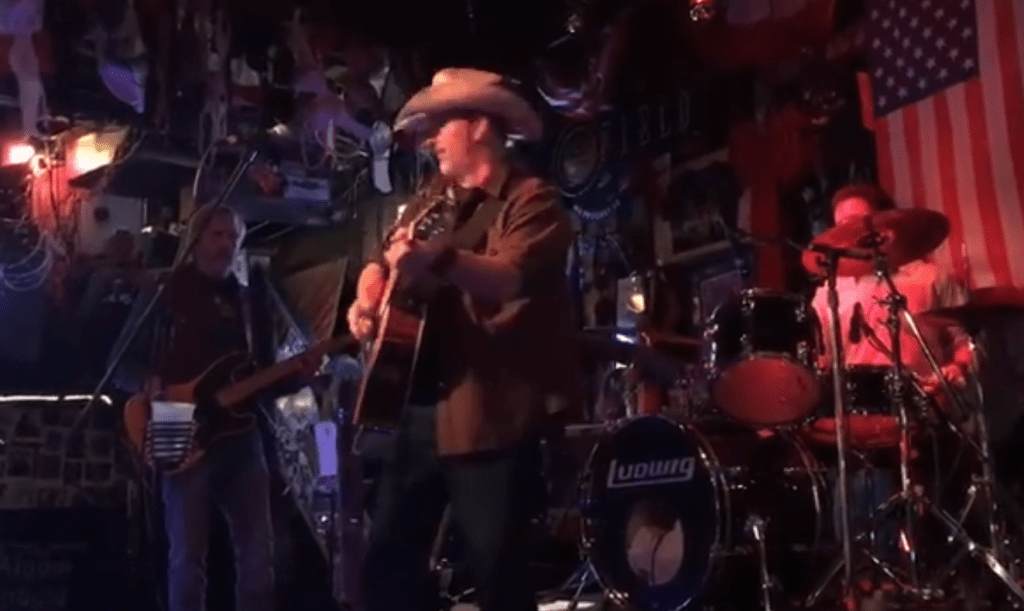
NOTES…. ……knowing people, liking people, friendships over time count for a lot. We were buddies in Big Muddy, even with Derek’s weaving in and out of band on a few occasions. That he kept in contact with me when I moved to Estes Park and included me in his nascent musical re-direction meant he must have had a little respect for me as a musician and a person. That I travelled all that distance to Golden to and from Estes Park to be part of his band, it showed how much I enjoyed playing music with him. The pandemic changed a lot, and rivers moved on.
◆◆◆◆◆
THE RAILROAD RAMBLERS 2018-2023
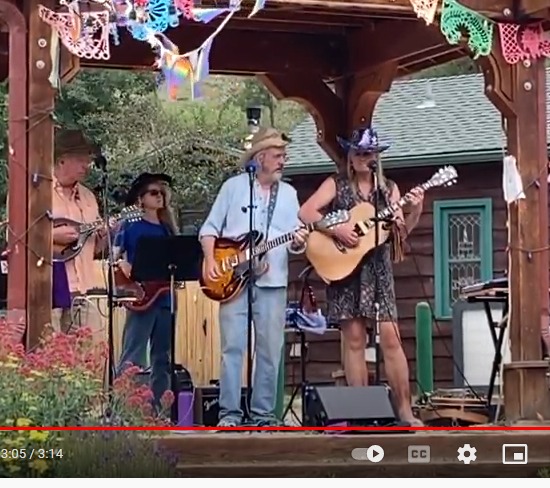
Beverly Sencenbaugh, banjo, guitar, vocals
Rex Hedlund, guitar, mandolin, lap steel guitar, dobro, harmonica, vocals
Robbie Leavitt, guitar, slide guitar, bass, mandolin, vocals
Staci Leavitt, bass
- SONG REPERTOIRE:
- Annabelle – Gillian Welch
- Anthem – Robbie & Staci Leavitt
- Blue Eyes Crying in the Rain – Willie Nelson
- Blue Railroad Train – Doc Watson
- Blue Yodel #1 (T for Texas) – Jimmie Rodgers
- Bubbles in My Beer – Bob Wills
- Bucket’s Got A Hole in It – Hank Williams
- Blowin’ Cold – Robbie Leavitt
- Big Boss Man – Jimmy Reed
- City of New Orleans – Steve Goodman/Arlo Guthrie
- Columbus Stockade – Doc Watson
- Come & Go with Ease – Bev Sencenbaugh
- Corrina, Corrina – Traditional, Bo Carter
- Crazy as A Loon – John Prine
- Dark Hollow – “Blow your whistle freight train” – Delmore Brothers
- Deep River Blues – Delmore Brothers, Bob McCarthy / Doc Watson
- Delta Cat – Robbie and Staci Leavitt
- Dim Lights Thick Smoke – Flatt & Scruggs
- Driving Nails – Ernest Tubb
- Dust My Broom – Elmore James
- Feliz Navidad – Jose Feliciano
- Fergus County Jail – Front Range
- Fields of Eylau –Robbie Leavitt
- Friend of the Devil – Garcia/Hunter/Dawson
- Going Away – Utah Phillips
- Hot Tamales – Robert Johnson
- In The Pines – “…the longest train I ever did see” – Lead Belly
- It Hurts Me Too – Elmore James
- It’s Always Sunrise – Bev Sencenbaugh
- Jambalaya – Hank Williams
- Kokomo – Fred McDowell
- Little Children’s Blues – “as the train came rolling by” Lead Belly
- Long Black Veil – Lefty Frizzel
- Love in Vain “..when the train left the station”
- Lost Highway – Hank Williams
- Malted Milk – Robert Johnson
- Mama Tried “..lonesome whistle blowin” – Merle Haggard
- Midnight Special – Lead Belly
- Milk Cow Blues – Bob Wills
- Mr. Bojangles – Nitty Gritty Dirk Band
- Mystery Train – Junior Parker/Elvis
- Nothing Left – Bev Sencenbaugh
- Old Buddy Goodnight – Utah Phillips
- Old General Store is Burning Down – The Tillers
- One Kind Favor – Blind Lemon Jefferson, Traditional, Lightnin’ Hopkins
- Pancho and Lefty – Townes Van Zandt
- Rain in Durango “..down from Telluride on a steam train” – Guy Clark
- Rank Stranger – The Stanley Brothers
- Ring of Fire – Johnny Cash
- Right or Wrong – Bob Wills
- Rolling in my Sweet Baby’s Arms / “aint gonna work on the railroad
- Rocky Mtn Peace of Mind – Bev Sencenbaugh
- San Francisco Bay Blues – Jesse Fuller
- She Caught the Katy – Taj Mahal
- She’ a Wrangler – Bev Sencenbaugh
- Ships – Bev Sencenbaugh
- Standing on the Outside – Bev Sencenbaugh
- Steel Guitar Rag – Bob Wills
- Six Days on the Road – Box Car Willie
- St. James Infirmary – Traditional
- Sitting on Top of the World – Flatt & Scruggs
- Summers End – John Prine
- Spaghetti Western – Robbie and Staci Leavitt
- Silent Night (on the Range) – Traditional, arranged by Robbie Leavitt
- Sweetest Winds – Bev Sencenbaugh
- Take The Time – Bev Sencenbaugh
- T-Bone Shuffle – T-Bone Walker
- The Journey – Bev Sencenbaugh
- The Least of Us – Bev Sencenbaugh
- Truck Driving Man – Buck Owens
- Two More Bottles of Wine – Delbert McClinton
- Train Whistle Blues – Jimmie Rodgers
- That’s Alright Mama – Arthur “Big Boy” Crudup/Elvis
- Talking to Casey – Mississippi John Hurt, Doc Watson
- To an Old Friend – Bev Sencenbaugh
- Trouble in Mind – Lightnin’ Hopkins
- The L & N Doesn’t Stop Here – Norman Blake
- Waiting on a Train – Jimmie Rodgers
- Waiting Up – Rex
- Walking Up and Down – Bev Sencenbaugh
- When Nothings There – Bev Sencenbaugh
- Whiskey River – Willie Nelson
- Willin’ – Little Feat
- Working Man’s Blues – Merle Haggard
- Write Me a Song – Bev Sencenbaugh
Creating a set list with multiple instrumentation assignments is an interesting challenge……
Getting the ensemble lined up when someone plays banjo & guitar, another plays guitar, mandolin and lap steel, another plays guitar & slide guitar and doing it where it’s not a cluster F of changing instruments and songs led by different singers requires a little forethought:
Snowy Peaks 07.22.22 / 4:30pm / Set list instrumentation listing order:
Bev (banjo, guitar, vocals) Rex (guitar, mandolin, dobro, vocals)
Robbie (guitar, slide guitar, mandolin, vocals) Staci, bass
Set One
- instrument order – Bev Rex Robbie Staci
- Blowin’ Cold /G/ banjo/dobro/guitar/ bass / Robbie, vocals
- Bubbles in My Beer /C/ banjo/guitar/slide guitar/bass / Rex, vocals
- She’ a Wrangler G / guitar/mando/slide guitar/bass / Bev, vocals
- To an Old Friend /D, C form capo 2 / guitar/mando/guitar/ bass / Bev, vocals
- Pancho and Lefty guitar/mando/guitar/ bass / Robbie, vocals
- Driving Nails /C/ banjo/mando/guitar/ bass / Rex, vocals
- Milk Cow Blues /A/ banjo/mando/guitar/ bass / Robbie, vocals
- Walking Up and Down /G/ banjo/mando/guitar/ bass / Bev, vocals
- Deep River Blues / E guitar/guitar/guitar/ bass / Rex, vocals
- L & N Doesn’t Stop Here / Am / banjo / guitar / Robbie, mandolin /Staci, bass / Rex, vocals
- Sitting on Top of the World/G/ banjo/guitar/ Robbie, mandolin /Staci, bass / Rex, vocals
Set Two
- Six Days on the Road/G/ banjo/dobro/guitar/bass / Robbie, vocals
- Ring of Fire /G/ banjo/dobro/guitar/bass / Robbie, vocals
- Sweetest Winds /G/ drop D guitar/guitar/guitar/bass /Bev, vocals
- Working Man’s Blues /A/ banjo/guitar/guitar/bass / Rex, vocals
- Blue Railroad Train / E / banjo/guitar/guitar/bass / Robbie, vocals
- Write Me a Song /A /guitar/mandolin/slide guitar/ bass / Bev, vocals
- Spaghetti Western/Am/banjo/guitar/guitar/ bass / instrumental
- Old General Store’s Burning Down/ Bb/banjo/guitar/guitar/ bass / Rex, vocals
- Going Away /C/ banjo/mando/guitar/ bass / Robbie, vocals
- Lil Children’s Blues /D/ banjo or guitar/guitar/ slide guitar/bass / Robbie, vocals
- Take The Time /C/guitar/mando/slide guitar/ bass / Bev, vocals
- Mystery Train /E / banjo/guitar/guitar/bass / Robbie, vocals
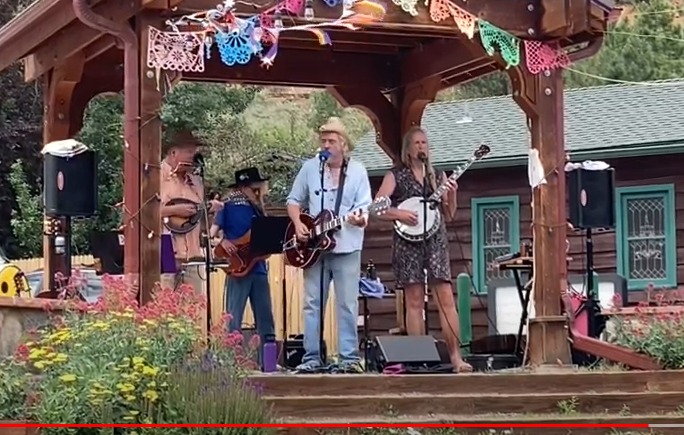
Write Me A Song by Beverly Sencenbaugh:
Robbie Leavitt, open G guitar, bass guitar
Bev & Rex recorded on Performance Park stage, summer 2020
Columbus Stockade – Doc Watson:
City of New Orleans – Steve Goodman:
Rex Hedlund, mandolin, vocals
Fergus County Jail – by Front Range:
NOTES…. …..another stumbled into affair that I tried to mold into a cohesive musical entity. Never give up, do I? This was a fairly long running and loose association, starting in 2018, then through the pandemic and into 2023. Beverly is a wonderful spirit with a heart of gold. This whole thing started with me and Rex backing her up for the first Performance Park show. Then, as is my nature, I tried to turn “something” into “something more”. With Bev spending half the year in Colorado Springs, over a period of time, Rex and I worked on a lot of material of with each other. Rex has a palette of songs greater than what I could even imagine on my own. We bonded in folk/country/blues. Bringing Staci in on bass gave us a good sound.
The Railroad Ramblers were never all that highly regarded in town, we gigged when we could and tried to do the number one thing in my mind about playing music, having fun. For me, having fun playing music requires a little work to be together on track and sound good. It was a fun train trip, and we did a lot of songs.
◆◆◆◆◆
THE RECKLESS RAMBLERS 2023/Present
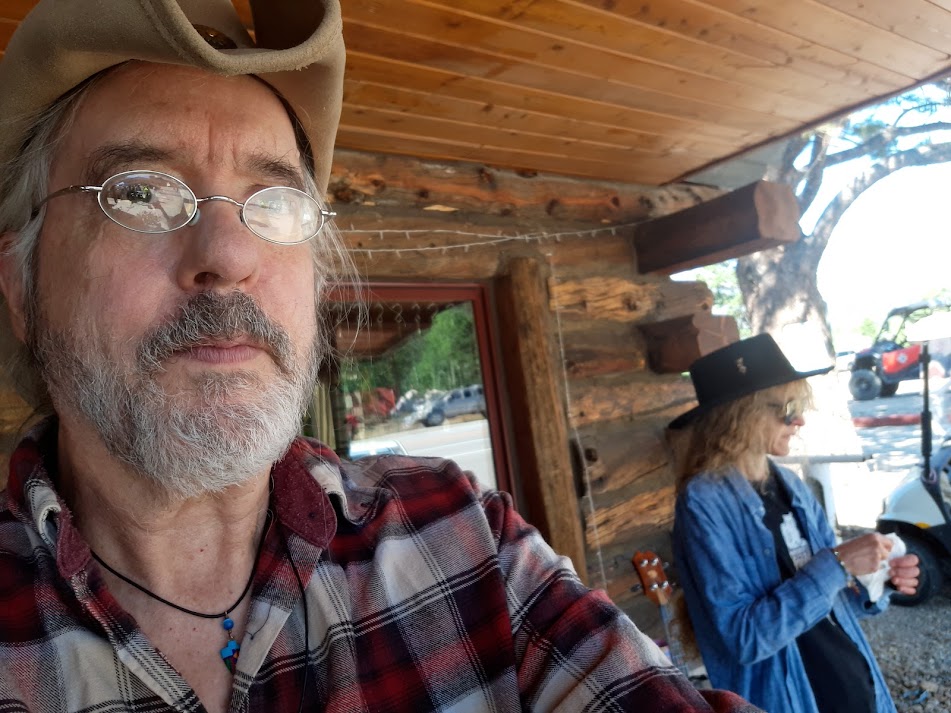
Robbie Leavitt, guitar, slide guitar, 12-string guitar, harmonica, vocals
Staci Leavitt, bass, vocals
- SONG REPERTOIRE:
- Going Away – Utah Phillips
- A Penny in the Fields – Robbie and Staci Leavitt / 2023
- Anthem – Robbie Leavitt / 2022
- Bend It – Robbie Leavitt / 1992
- Blowin’ Cold – Robbie Leavitt / 2019
- Blues for Sancho – Robbie Leavitt / 1993
- Delta Cat – Robbie and Staci Leavitt / 2022
- Falling Felines – Robbie and Staci Leavitt / 2022
- Fare Thee Well – Robbie Leavitt / 1993
- Fields of Eylau – Robbie Leavitt / 1992
- Firebird Blues – Robbie Leavitt / 1991
- Heather – Robbie Leavitt / 1991
- Jump and Shout – Robbie Leavitt /1993
- Next Exit, Then Left – Robbie Leavitt / 1973
- Let Me Go – Robbie Leavitt / 1993
- Lost – Robbie Leavitt /1993
- Spaghetti Western – Robbie and Staci Leavitt / 2022
- Stormy Eyes – Robbie Leavitt /1991
- Third Day – Robbie Leavitt / 1973
- In This World – Robbie Leavitt / 2003
- The Black Forest – Robbie Leavitt / 2003
- Day Break – Robbie Leavitt / 1994
- Variations on a Theme – Robbie Leavitt / 1994
- Etude in C / Robbie Leavitt / 1994
- Islands – Robbie Leavitt /1971
- Confinement – Jeff Miles
- Have You Seen the King – Jeff Miles/Robbie Leavitt
- Big Boss Man – Jimmy Reed
- She Caught the Katy – Taj Mahal
- Hurts Me Too – Elmore James
- Dust My Broom – Elmore James
- Kokomo – Fred McDowell
- Rollin & Tumblin – Muddy Waters
- Love in Vain – Robert Johnson/Rolling Stones
- Malted Milk – Robert Johnson
- Lil Children’s Blues – Lead Belly
- Little Sister – Elvis
- Trouble in Mind – Lightnin Hopkins (written by R. Jones)
- T-Bone Shuffle – T-Bone Walker
- St James Infirmary – Irving Mills/Louis Armstrong
- Mystery Train – Junior Parker/Elvis
- That’s Alright Mama – Arthur Crudup/Elvis
- Tulsa Time – Don Williams
- Matchbox – Carl Perkins
- One After 909 – The Beatles
- She’s a Women – The Beatles
- Right or Wrong – Bob Wills
- Milk Cow Blues – Bob Wills
- Steel Guitar Rag – Bob Wills
- Ring of Fire – Johnny Cash
- Blue Eyes Crying in the Rain – Willie Nelson
- City of New Orleans – Steve Goodman/Arlo Guthrie
- Mama Tried – Merle Haggard
- Working Man’s Blues – Merle Haggard
- Jambalaya – Hank Williams
- Pancho and Lefty – Townes Van Zandt
- Long Black Veil – Lefty Frizzel
- Two More Bottles of Wine –Delbert McClinton
- Talking to Casey– Doc Watson
- Deep River Blues – Doc Watson
- Blue Railroad Train – Delmore Brothers/Doc Watson
- Dark Hollow – Bill Browning
- Wayfaring Stranger – Traditional
- I know You Rider – Traditional
- Friend of the Devil – Grateful Dead
- San Francisco Bay Blues – Jessie Fuller
- The L & N Doesn’t Stop Here Anymore – Norman Blake

Wayfaring Stranger – Traditional:
Robbie Leavitt, guitars & vocals, drums / Staci Leavitt, bass guitar
Mystery Train by Junior Parker:
Robbie Leavitt, guitars & vocals, keys, drums / Staci Leavitt, bass guitar
Blowin’ Cold © by Robbie Leavitt
Robbie Leavitt, guitar & vocals, slide guitar, mandolin
Staci Leavitt, bass guitar, vocals
Talking to Casey/Kokomo – Doc Watson/Fred McDowell:
Staci Leavitt, bass guitar
NOTES…. …here we go….still playing music and still loving it. Now as a duo with Staci, it’s a little easier. I don’t have to try and herd folks in any direction, and we play songs that I love and are fun to play. Yet, I have always enjoyed playing on other people’s songs, seeing what my musical part could add to make the whole thing sound good. Now I can relax and toy with songs I might have neglected.
Top of the list is “Going Away”, the dear song I first played with Bob Stewart in 1976. It was one of the first songs Staci learned when she started out on bass. At Staci’s insistence, we are playing a lot of original songs from days of yore – songs she heard many times from Jakobz Laddr days before she picked up the bass and also songs of mine that I have resurrected like “Stormy Eyes” and I lied, yes, “Heather” from the Black Bordeaux days. It’s a fun little rocker and we’ve given Staci a fun bassline in it. Whatever talent or ability I might have on guitar, it’s always better when she is on bass.
There’s a fair number of blues, a little rockabilly and old timey country….and a vast variety of various original songs. When we play a gig, I don’t use song sheets… “know your song well, before you start singing” keeps the mind working and sharp.
Every time I pick up a guitar and start playing it, I fall in love with the guitar all over again. Whether it’s playing and singing “Mama Tried” or a Jimmy Reed shuffle line, joy.
So……….that’s my story. If you’ve hung in there and made it this far, thank you.
THE RECKLESS RAMBLERS / 2023/Present
Special thanks to Greg Livingston for long lost music on cassette tapes and images. His contributions to this story are immeasurable.
Special thanks to Tom Leavitt for many images from years long past.
Special thanks to Jim Chaney for images from years long ago in the Philippines.
◆◆◆◆◆
Miscelania……
The Nightowls Blues Band
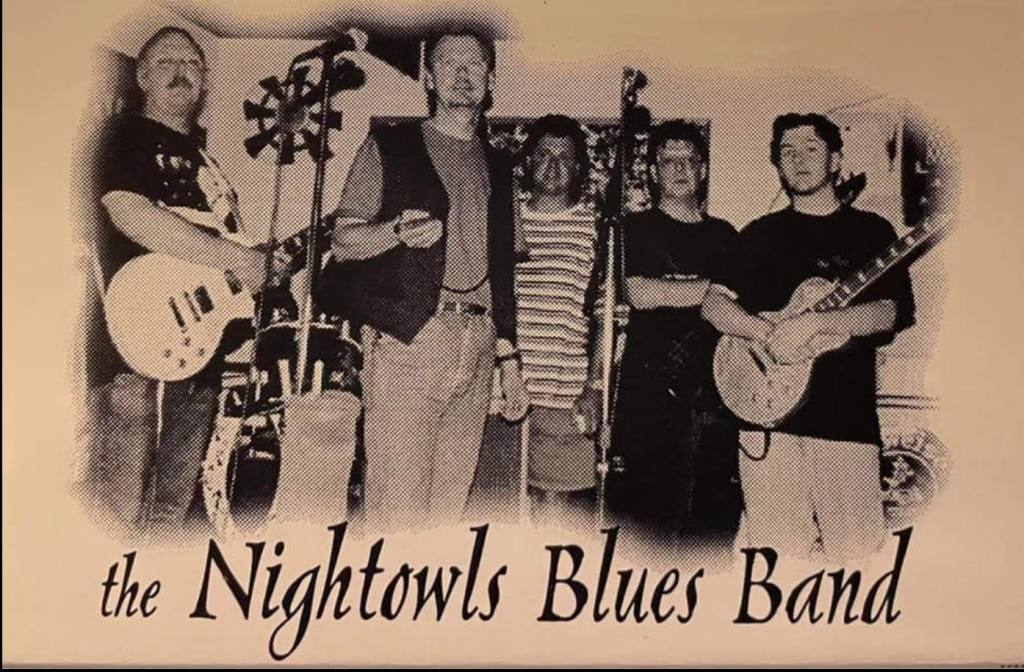
Aint Got You
Tom Cousineau, bass / Rob Heskett, drums
GARAPALOOZA
2016-2017-2018-2019-2021-2022-2023-2024-2025
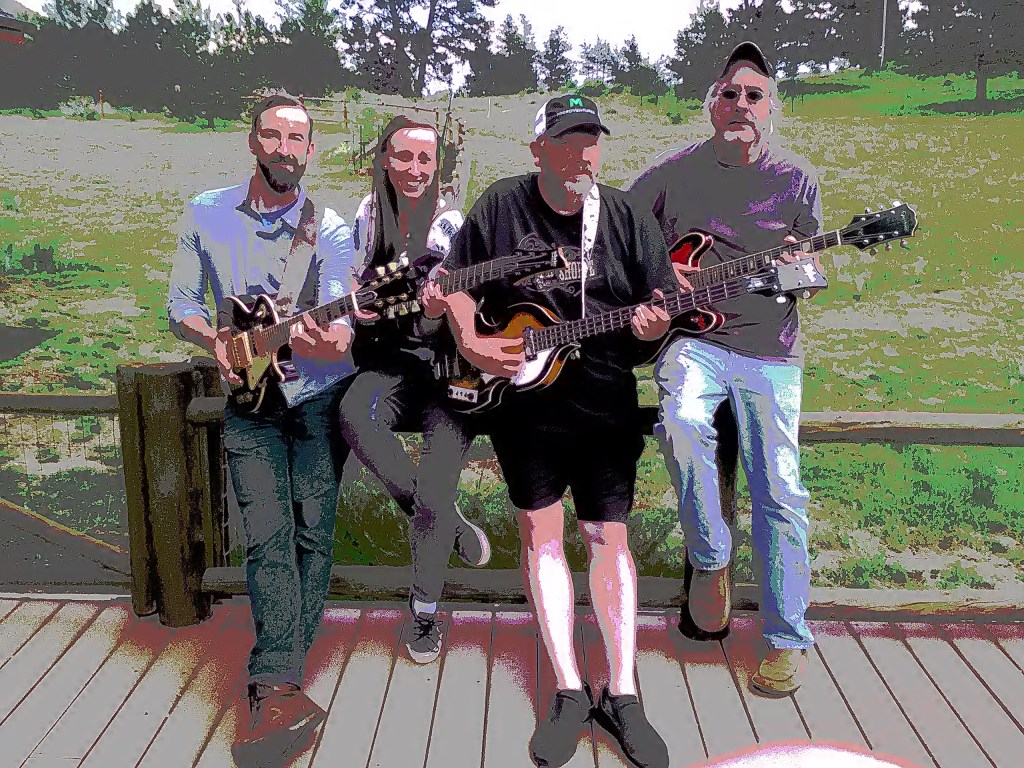
….with Gary Wayne Clark at the Clark Ranch
Gary Clark, aka 10 Bears, bass guitar /Ali Clark, guitar, percussion
Justin Clark, guitar, percussion
Robbie Leavitt, aka Coyote Feather, guitar, keyboards
“Confinement” / 2021 / written by Jeff Miles
A & J Vibronics – Garapalooza 2021
NOTES… don’t take the brown acid.
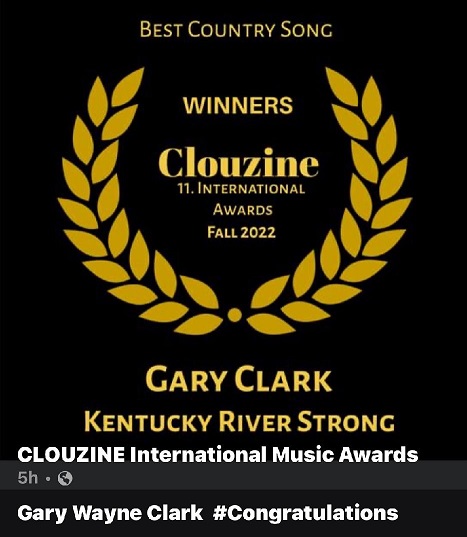
…..look up Gary Wayne Clark on Spotify or Clouzine, he’s quite prolific. Kentucky River Strong has won awards, and his daughter Ali contributed here as did I with a little slide guitar.
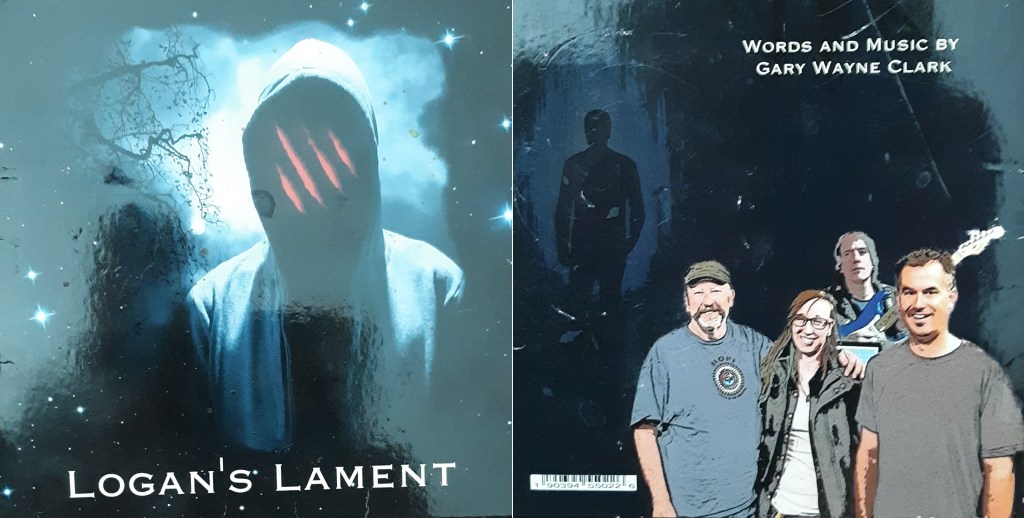
“Logan’s Lament” by Gary Wayne Clark:
https://open.spotify.com/album/6dW0lgUHSFvLRi1fe6Qcst?si=x7pvSTHPSUCq5qUziKjSng
◆◆◆◆◆
Miscellaneous tunes
Z Project Blues – Robbie Leavitt/2024
Next Exit, Then Left © by Robbie Leavitt
Etude in C © by Robbie Leavitt – 1999
Islands © by Robbie Leavitt
◆◆◆◆◆
 Silvertone Blues
Thank you reading, thank you for your comments.